
Intro
Storing infant formula safely is one of those everyday caregiving tasks that can feel deceptively simple until you are sleep-deprived, holding a hungry baby, and trying to remember whether a bottle has been out for 45 minutes or two hours. If you have ever second-guessed yourself, you are not alone. Formula feeding can be safe, nourishing, and practical, but it does require consistent handling because infants, especially newborns and medically fragile babies, have immature immune defenses.
The goal is not to create anxiety around every bottle. It is to build a calm, repeatable system that reduces microbial contamination, preserves nutrient quality, and helps you know when to use, refrigerate, or discard formula. The guidance below focuses on storage of powdered, concentrated liquid, and ready-to-feed formula, with special attention to timing, temperature, and contamination prevention. If your baby was born premature, is younger than 2 months, has a weakened immune system, or has specific medical needs, ask your pediatrician or neonatal care team whether you need stricter preparation and storage steps.
Highlights
Prepared infant formula should generally be used within 2 hours of preparation, or within 1 hour from the start of feeding.
Refrigerated prepared formula should be stored at 40°F or below and used within 24 hours.
Unopened formula should be kept in a cool, dry indoor location, not in a car, garage, or near heat and moisture.
Powdered formula is not sterile, so careful hand hygiene, clean equipment, and correct water temperature matter.
When in doubt about time, temperature, or contamination, discarding formula is safer than trying to salvage it.
Why formula storage matters
Infant formula is carefully manufactured to provide appropriate macronutrients, micronutrients, and fluid for babies who are fully or partly formula fed. Once a container is opened or formula is mixed with water, however, it becomes more vulnerable to contamination. Bacteria can enter through hands, bottle nipples, preparation surfaces, water, measuring scoops, or the baby’s saliva during feeding.
For most healthy term infants, small lapses do not automatically mean harm will occur, but the risk is not theoretical. Organisms such as Cronobacter sakazakii and Salmonella can cause serious illness in young infants. Powdered formula is not sterile, which is why caregivers are advised to prepare and store it carefully, especially for babies at higher risk of infection.
Good storage is also about predictable feeding routines. Families often prepare bottles during the night, send formula to daycare, or pack supplies for travel. A clear system helps every caregiver follow the same rules without relying on memory alone.
Storing unopened formula
Unopened powdered, concentrated liquid, and ready-to-feed formula should be stored in a cool, dry place indoors. A kitchen cabinet or pantry shelf away from the stove, dishwasher, sink, direct sunlight, and heating vents is usually appropriate. Avoid storing formula in places with temperature swings, such as a car, garage, basement with humidity, outdoor storage area, or windowsill.
Before buying or using formula, check the container carefully. Do not use cans or containers that are dented, leaking, swollen, rusted, or otherwise damaged. Also check the use-by date. Formula quality and nutrient content are only guaranteed through the date specified by the manufacturer when stored as directed.
Try to rotate formula so older containers are used first. If your baby uses a specialized formula, it may be helpful to keep a small backup supply, but avoid overstocking beyond what you can use before expiration. If there has been a product recall, follow the manufacturer or public health instructions and contact your baby’s healthcare professional if you are unsure what to feed next.
After opening a formula container
Once a powdered formula container is opened, close it tightly after each use and keep it in a cool, dry location. Moisture is the enemy of powdered formula because it can cause clumping and may support microbial growth. Do not store the scoop on a wet counter, rinse it and put it back damp, or leave the lid open during feeding.
Use the scoop that came with that specific formula container because scoop sizes vary. Keep the scoop clean and dry. If it falls on the floor or touches a contaminated surface, wash and dry it thoroughly before using it again, or use a clean replacement if available.
Opened ready-to-feed or concentrated liquid formula containers usually need refrigeration after opening and should be used within the timeframe on the product label or your healthcare team’s instructions. Many opened ready-to-feed containers are used within 48 hours when refrigerated, but label instructions should guide you because packaging and formulations vary.
Do not transfer powdered formula into decorative jars, reusable bins, or unlabeled containers. The original container includes the lot number, expiration date, preparation instructions, and recall information. Keeping formula in its original package reduces mix-ups and helps preserve safety information.
Preparing formula for safe storage
Safe formula preparation starts before the bottle reaches the refrigerator. Wash your hands with soap and water, clean the preparation surface, and use clean bottles, nipples, rings, and caps. For very young or medically vulnerable infants, your healthcare professional may recommend sterilizing feeding equipment after washing.
Always follow the formula label for the correct water-to-powder ratio. Adding too much water can dilute electrolytes and calories; adding too little water can increase renal solute load and gastrointestinal intolerance. Do not change formula concentration unless directed by a clinician.
For powdered formula, some public health guidance recommends using hot water to reduce germ risk. This usually means boiling water, allowing it to cool to no less than 158°F, mixing it with the powder, and then cooling the bottle to a safe feeding temperature before giving it to the baby. This step may be especially important for infants younger than 2 months, premature infants, or babies with impaired immunity. Because water safety and clinical risk vary, ask your pediatrician which preparation method is best for your baby.
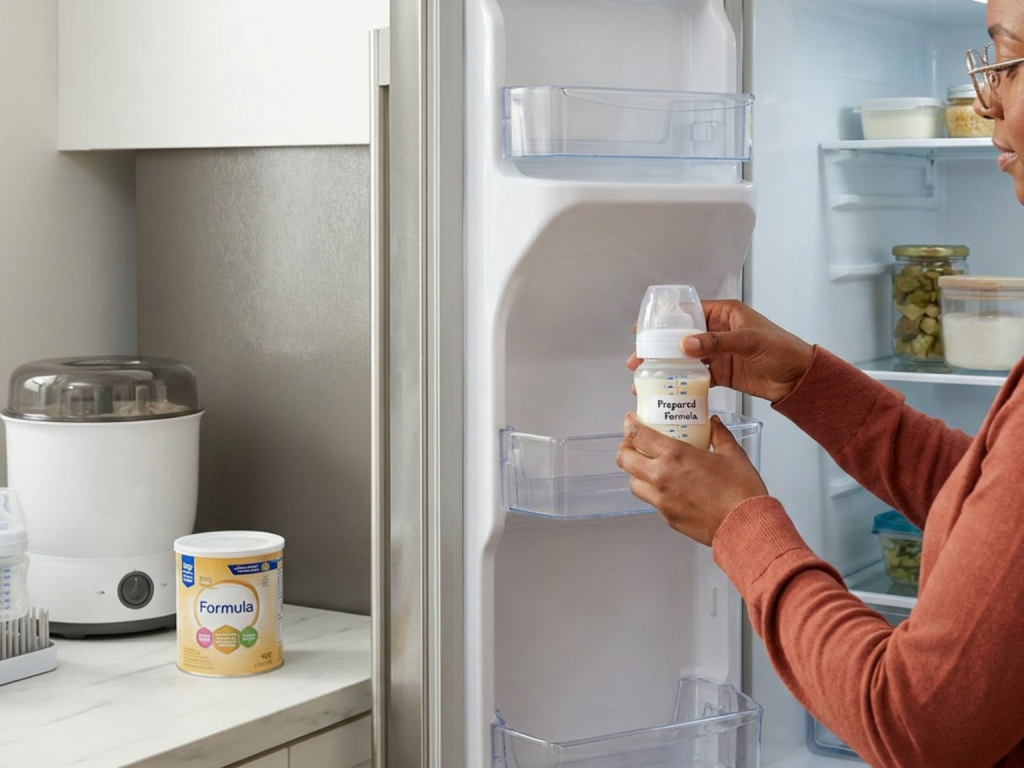
After mixing, cool the formula promptly if you are not feeding right away. Place the prepared bottle in the refrigerator immediately rather than letting it sit on the counter. Labeling bottles with the preparation time can be very helpful, especially when multiple caregivers are involved or when formula is prepared for childcare.
How long prepared formula can be stored
Timing is one of the most important parts of formula safety. Prepared formula can support bacterial growth if it sits too long at room temperature. As a general rule, use prepared infant formula within 2 hours of preparation if it has not been refrigerated. If feeding has started, use the bottle within 1 hour from the start of feeding and discard any remaining formula after that time.
If you prepare formula in advance, place it in the refrigerator right away and use it within 24 hours. The refrigerator should be at 40°F or below. Store bottles toward the back of the refrigerator where the temperature is more stable, not in the door where temperatures fluctuate with opening and closing.
- Freshly prepared and unrefrigerated: use within 2 hours.
- Once feeding begins: use within 1 hour, then discard leftovers.
- Prepared and refrigerated promptly: use within 24 hours.
- Opened liquid formula container: refrigerate and follow the label’s storage timeframe.
These timelines are designed to be practical and protective. If you cannot confidently determine when a bottle was mixed or how long it has been out, it is safest to throw it away. This can feel wasteful, especially when formula is expensive, but it is a reasonable infection-prevention choice.
Why leftover formula should be discarded
It is common for babies to leave some formula in the bottle. Their appetite changes from feed to feed, and responsive bottle feeding means noticing hunger cues and fullness cues rather than pressuring a baby to finish a set volume. However, once a baby drinks from a bottle, saliva can enter the milk through the nipple. Saliva contains bacteria and enzymes that can multiply in formula over time.
For that reason, leftover formula from a partially finished bottle should not be saved for the next feeding. Refrigeration slows bacterial growth but does not undo contamination. The safest approach is to discard remaining formula 1 hour after feeding begins.
To reduce waste, consider preparing smaller volumes when your baby’s appetite is unpredictable, then offering more if needed. Over time, your baby’s intake pattern may become easier to anticipate, although growth spurts, illness, teething, and changes in routine can still affect feeding volumes. If you have questions about typical formula amounts by age or whether your baby is getting enough, consult your pediatrician rather than trying to force a strict volume goal.
Warming, cooling, and avoiding hot spots
Formula does not have to be warmed for safety; many babies take it at room temperature or cold from the refrigerator. If your baby prefers warm milk, warm the bottle by placing it in a container of warm water or using a bottle warmer according to the manufacturer’s instructions. Swirl the bottle gently and test a few drops on the inside of your wrist before feeding.
Do not microwave formula. Microwaving can heat unevenly and create hot spots that may burn a baby’s mouth or throat even if the outside of the bottle feels only mildly warm. Microwaving can also overheat formula and complicate safe timing.
Once warmed, the same time rules still apply. Do not rewarm a bottle repeatedly, and do not return a partially fed bottle to the refrigerator for later. If a refrigerated bottle has been warmed but feeding has not started, follow conservative timing and avoid leaving it out beyond the recommended room-temperature window.
Taking formula outside the home
Leaving home with a baby often requires planning, and formula storage is part of that plan. For short outings, one safe option is to carry premeasured powdered formula in a clean, dry container and mix it with safe water when needed. Another option is to use ready-to-feed formula, which is convenient because it does not require mixing before opening.
If you bring prepared formula, keep it cold in an insulated bag with ice packs and use it within the recommended timeframe. Do not leave prepared bottles in a warm stroller basket, parked car, or diaper bag without adequate cooling. Heat accelerates bacterial growth.
For daycare, ask about the facility’s bottle labeling and refrigeration procedures. Send bottles labeled with your baby’s name and the preparation date and time. Clarify whether caregivers discard leftovers after feeding and whether bottles are stored in a refrigerator at safe temperature. Consistency between home and childcare protects your baby and reduces confusion.
Special situations and when to ask for help
Some babies need extra caution. If your infant was premature, has a low birth weight, is younger than 2 months, has congenital or acquired immune compromise, or has been advised to use a specialized formula, discuss preparation and storage with your pediatrician, dietitian, or neonatal team. They may recommend ready-to-feed sterile liquid formula, specific water temperatures, or additional sterilization steps.
If your home has well water, recent plumbing problems, a boil-water advisory, or concerns about lead or other contaminants, ask your local health department or healthcare professional about safe water for formula. Water that is safe for adults is not always automatically appropriate for infant feeding without specific guidance.
Seek medical advice promptly if your baby has signs such as fever, poor feeding, unusual lethargy, persistent vomiting, diarrhea, blood in stool, fewer wet diapers, or behavior that worries you. These signs do not prove formula contamination, but young infants can become dehydrated or seriously ill quickly, and professional assessment is important.
Good storage routines are not about perfection. They are about reducing avoidable risk in a realistic household. A written note on the refrigerator, phone alarms, labeled bottles, and shared instructions for all caregivers can make safe handling much easier.
Formula safety red flags
- Discard prepared formula left at room temperature for more than 2 hours.
- Discard any formula left in a bottle 1 hour after feeding begins.
- Do not use formula from damaged, expired, swollen, or leaking containers.
- Do not microwave bottles because uneven heating can burn the baby.
- Ask a healthcare professional for individualized guidance for premature, immunocompromised, or very young infants.
- When timing or storage conditions are uncertain, throw the formula away.
Tools & Assistance
- Use bottle labels with preparation date and time
- Keep a refrigerator thermometer at 40°F or below
- Set phone reminders for prepared bottles
- Ask your pediatrician about high-risk infant preparation steps
- Review daycare formula storage procedures
FAQ
Can I make a full day of formula in advance?
You may prepare bottles in advance if they are refrigerated immediately and used within 24 hours. Label each bottle with the preparation time.
Can I save formula my baby did not finish?
No. Once feeding starts, bacteria from the baby’s mouth can enter the bottle. Discard leftovers 1 hour after the feeding begins.
Is powdered formula sterile?
No. Powdered formula is not sterile, so hand hygiene, clean equipment, correct mixing, and safe storage are important.
Can I store prepared formula in the refrigerator door?
It is better to store it toward the back of the refrigerator, where the temperature is more stable and less affected by frequent door opening.
Do I need to warm refrigerated formula?
No. Warming is optional. If you do warm it, use warm water or a bottle warmer, never a microwave, and check the temperature before feeding.
Sources
- Centers for Disease Control and Prevention — Infant Formula Preparation and Storage
- U.S. Food and Drug Administration — Handling Infant Formula Safely: What You Need to Know
- Nemours KidsHealth — Formula Feeding FAQs: Preparation and Storage
Disclaimer
This article is for general educational purposes and is not a substitute for medical advice. Consult your baby’s healthcare professional for guidance specific to your infant’s age, health status, and feeding needs.














Please log in to leave a comment.