
Intro
Preparing food for your baby at home can be a practical way to offer varied flavors and textures while knowing exactly which ingredients are included. It can also feel demanding: infants have developing immune systems, immature gastrointestinal defenses, and age-specific risks related to contamination, choking, and certain foods.
Safe homemade baby food depends less on complicated equipment than on consistent hygiene, appropriate ingredients, thorough cooking, controlled temperatures, and careful storage. Use your baby's developmental readiness and advice from a pediatrician or other qualified healthcare professional to guide feeding decisions, especially if your baby was born prematurely, has a chronic medical condition, or has feeding or swallowing concerns.
Highlights
Wash hands, utensils, work surfaces, and produce carefully to reduce contamination.
Cook foods until tender and use textures that match your baby's developmental abilities.
Refrigerate or freeze food promptly, label portions, and discard food that has been mishandled.
Never give honey to a child younger than 12 months because of infant botulism risk.
Food safety is essential, but feeding guidance should also be individualized by a healthcare professional.
Start with clean hands and a controlled workspace
Infants can become ill from relatively small amounts of foodborne pathogens, so hygiene is the foundation of homemade food preparation. Wash your hands with soap and running water before handling ingredients, after using the bathroom, after changing diapers, after touching raw meat or eggs, and whenever your hands may be contaminated. Keep sick household members away from food preparation when possible, particularly if they have vomiting or diarrhea.
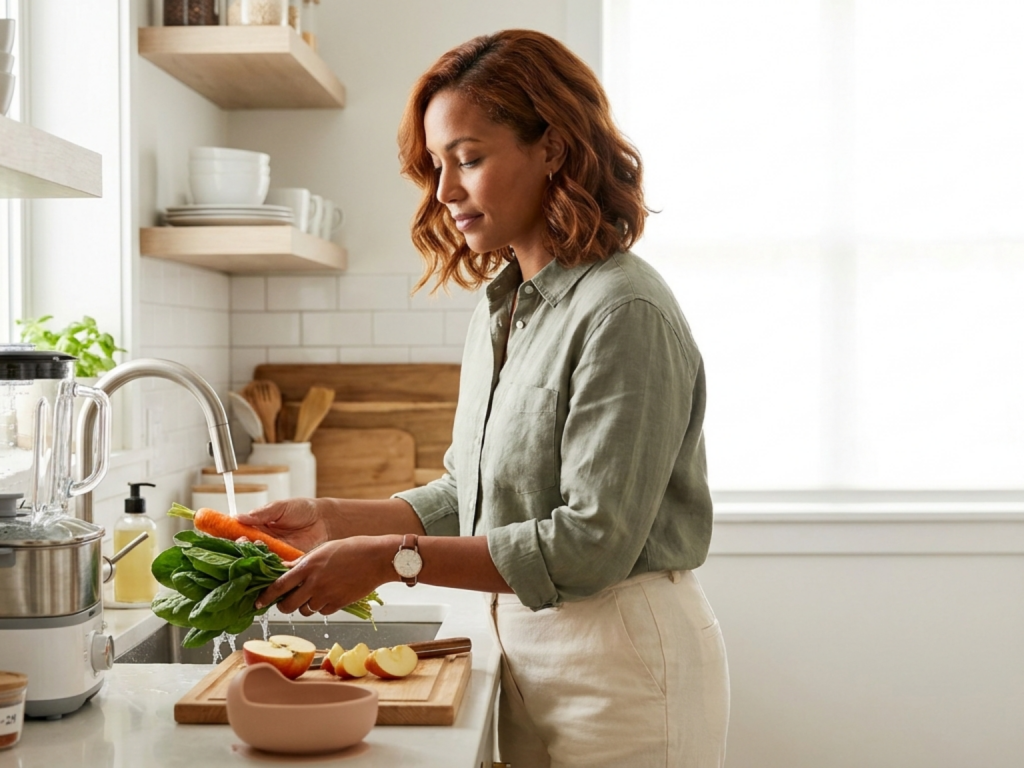
Clean countertops, cutting boards, knives, blender components, food mills, storage containers, and feeding utensils before use. Rinse fresh produce under cool running water, including produce that will later be peeled, because cutting through the surface can transfer organisms inward. Scrub firm produce as appropriate, remove damaged areas, and use separate preparation areas or utensils for raw animal products and ready-to-eat foods.
Cross-contamination can occur when juices from raw poultry, meat, seafood, or eggs contact cooked foods or produce. Wash hands and equipment between tasks, and do not place cooked food back on a plate that held raw ingredients. These measures are straightforward but especially important when preparing several batches while tired or distracted.
Choose ingredients with infant-specific safety in mind
Use fresh, sound ingredients and check packaging for damage, leaks, bulging, unusual odors, or expired dates. When using frozen or canned foods, follow the package directions and avoid products with signs of temperature abuse. Homemade food should not contain honey for babies younger than 12 months because honey can contain spores of Clostridium botulinum, the organism associated with infant botulism. Do not rely on cooking or processing at home to make honey safe for a young infant.
Avoid adding salt, sugar, or strongly seasoned sauces. Infants have different nutritional requirements from adults, and heavily processed foods may contribute excess sodium or added sugars. Do not use unpasteurized milk, juice, or other unpasteurized products for an infant unless a healthcare professional gives specific advice. Follow current guidance about allergenic foods and discuss individualized plans if your baby has eczema, a known allergy, or a strong family history of food allergy.
Breast milk or infant formula remains the primary source of nutrition during the early complementary-feeding period. Homemade purees should complement, rather than casually replace, milk feeds. If a recipe includes expressed milk or formula, use appropriate formula preparation and clean feeding equipment, and follow the product’s instructions exactly.
Cook thoroughly and blend with safe textures
Cook vegetables, fruits, legumes, grains, meat, poultry, fish, and eggs using a method that makes them fully tender and safe to eat. Thorough cooking reduces many microbial hazards. Meat, poultry, seafood, and eggs require particular attention because an attractive appearance does not reliably indicate that they are safe. Use a food thermometer when appropriate, especially for animal products, and follow current food-safety temperature guidance from a trusted public-health or extension source.
After cooking, puree, mash, mince, or finely shred food according to your baby’s developmental abilities. A smooth puree may be appropriate early on, while thicker mashed or soft, lumpy textures can support progression as skills develop. Always check for hard pieces, bones, seeds, skins, and fibrous strands. Some foods require more than blending: whole grapes, raw vegetables, nuts, chunks of meat, and firm fruit can remain choking hazards unless prepared in an age-appropriate form.
Safe textures for infant feeding depend on oral-motor development, not simply chronological age. Sit your baby upright, remain present during eating, and avoid feeding when the baby is reclined, walking, playing, or highly distressed. A pediatrician, feeding therapist, or other qualified clinician can help if your baby coughs frequently, has wet or gurgly breathing during meals, tires while eating, or struggles with texture progression.
Cool, refrigerate, and freeze portions promptly
Temperature control limits the multiplication of bacteria. Divide freshly prepared food into small, shallow containers so it cools more quickly, rather than leaving a large warm batch at room temperature. Refrigerate perishable food promptly and keep the refrigerator at a safe temperature. Store containers covered, label them with the food and preparation date, and place them where they will remain cold and easy to monitor.
Freezing small individual portions can reduce waste and make caregiving easier. Use containers or trays designed for food storage, leave appropriate space for expansion, and transfer frozen portions to a clean, labeled container or sealed bag when practical. Keep a written rotation system so older portions are used first. Storage duration varies with the food, preparation method, freezer performance, and local guidance; use the storage recommendations from a reliable food-safety source and discard anything kept beyond the recommended period.
Thaw frozen baby food in the refrigerator, in a microwave using a suitable container, or by another method recommended by a trusted food-safety authority. Stir thoroughly after microwave heating because hot spots can burn the mouth. Check the temperature before feeding. Do not repeatedly thaw and refreeze food, and do not leave thawed perishable food at room temperature while waiting for the next meal.
Serve safely and manage leftovers
Before serving, inspect the food for changes in smell, color, texture, or packaging integrity, but remember that dangerous organisms may not produce visible or detectable changes. Warm only the amount you expect your baby to eat. Use a clean spoon to transfer food from the storage container into a separate bowl, rather than allowing saliva-contaminated utensils to return to the batch.
Once a baby has eaten directly from a portion, saliva can introduce microorganisms. Discard leftovers from that serving instead of refrigerating them for later. Keep the untouched remainder covered and promptly refrigerated. Do not taste food with the baby’s spoon and then put the spoon back into the storage container. Wash feeding utensils after use, and clean appliances according to the manufacturer’s instructions so food residue does not support bacterial growth.
Never use a slow cooker, insulated bag, or countertop appliance as a substitute for verified refrigeration or hot holding. When transporting homemade food, use an insulated container with adequate cold packs and minimize time outside temperature control. When uncertain about how long food has been unrefrigerated, the safest decision is usually to discard it.
Recognize high-risk situations and contamination concerns
Some infants need more individualized precautions. Premature babies, infants with immune compromise, and children with certain medical conditions may be more vulnerable to foodborne infection. Ask the child’s healthcare professional whether additional restrictions, pasteurization precautions, texture modifications, or feeding supervision are needed. Do not assume a recipe marketed as natural, organic, or homemade is automatically low risk.
Be particularly cautious with raw or undercooked eggs, meat, poultry, and seafood; unpasteurized products; improperly canned foods; and foods stored without reliable temperature control. Home-canned foods require specialized knowledge because inadequate processing can permit toxin formation. Homemade infant food should not be prepared from a jar or can that is swollen, leaking, spurting liquid, or otherwise abnormal.
Food safety does not replace choking prevention or allergy awareness. Introduce foods in a way that lets you identify ingredients, follow professional guidance for allergen introduction when indicated, and seek urgent medical care for signs of a severe allergic reaction or choking emergency. Persistent vomiting, diarrhea, lethargy, dehydration signs, fever in a young infant, or breathing changes also warrant prompt medical advice.
Build a repeatable preparation routine
A written routine can make safe practices easier during busy caregiving days. Before cooking, confirm that containers are clean, the refrigerator has space, and ingredients are within their use period. Prepare one food at a time when possible, record the date, and portion the finished food immediately. Keep raw ingredients separate from cooked food throughout the process.
Use a simple checklist: wash hands; clean the workspace; rinse produce; cook thoroughly; remove bones, pits, skins, and hard pieces; create an age-appropriate texture; cool promptly; label; refrigerate or freeze; and clean equipment. Review the routine whenever your baby moves to a new texture or begins eating foods prepared by another caregiver.
Practical organization should support, not pressure, the family. Commercial baby food can be a reasonable option when homemade preparation is not feasible, provided it is stored and served according to its label. The safest feeding plan is one that your household can follow consistently and that fits your baby’s developmental and medical needs.
Safety warnings
- Do not give honey to babies younger than 12 months because of infant botulism risk.
- Discard food that has been in a baby's mouth or that has an uncertain storage history.
- Avoid raw or undercooked animal products and unpasteurized foods.
- Never leave a baby unattended while eating or offer food in a reclined position.
- Seek urgent help for choking, breathing difficulty, severe allergic symptoms, or marked lethargy.
Tools & Assistance
- Food thermometer
- Shallow, labeled freezer-safe containers
- Refrigerator and freezer temperature checks
- Clean cutting boards and age-appropriate feeding utensils
- Pediatrician, registered dietitian, or feeding therapist
FAQ
Can homemade baby food be frozen?
Yes. Freeze small portions in clean, food-safe containers, label the preparation date, and follow reliable storage-duration guidance. Thaw safely and do not repeatedly thaw and refreeze food.
Can I reheat food more than once?
It is safer to warm only the portion needed for one meal. Repeated warming increases opportunities for temperature abuse and contamination, so keep the untouched portion cold and discard leftovers from the serving bowl.
When can a baby eat honey?
Avoid honey until after 12 months of age because of infant botulism risk. Ask a healthcare professional if you have questions about foods or products containing honey.
How smooth should homemade baby food be?
Texture should match developmental readiness and feeding skills. Begin with an appropriate texture and progress toward thicker, soft, mashed, or finely minced foods as advised by a healthcare professional.
Sources
- MedlinePlus — Food Safety - MedlinePlus
- Academy of Nutrition and Dietetics — How to Make Homemade Baby Food
- North Dakota State University Extension — Safe Food for Babies and Children: Making Homemade Baby Food for Babies 6 Months and Older
Disclaimer
This article provides general educational information and is not medical advice, diagnosis, or treatment. Consult your pediatrician or another qualified healthcare professional for guidance tailored to your baby's age, development, medical history, and feeding needs.















Please log in to leave a comment.