
Intro
Putting a baby to sleep on their back is one of the most important evidence-based steps caregivers can take to reduce the risk of sleep-related infant death. The recommendation applies to every sleep period, including naps and nighttime sleep, and is intended for healthy infants as well as babies born prematurely or with gastroesophageal reflux.
Safe sleep guidance can feel difficult when a baby settles more easily in another position, wakes frequently, or seems uncomfortable after feeding. These concerns are understandable. This article explains the back-sleeping recommendation, how to create a safer sleep environment, what to do when a baby rolls, and when a healthcare professional should be consulted.
Highlights
Place infants on their backs for every nap and nighttime sleep until their first birthday.
Use a firm, flat, non-inclined sleep surface with only a fitted sheet.
Back sleeping remains recommended for most infants with reflux and for babies born preterm.
Once an infant can roll independently in both directions, caregivers do not need to repeatedly reposition the baby, but the sleep space must remain clear.
Room-sharing without bed-sharing can make nighttime care easier while avoiding the hazards of an adult bed.
What back sleeping means
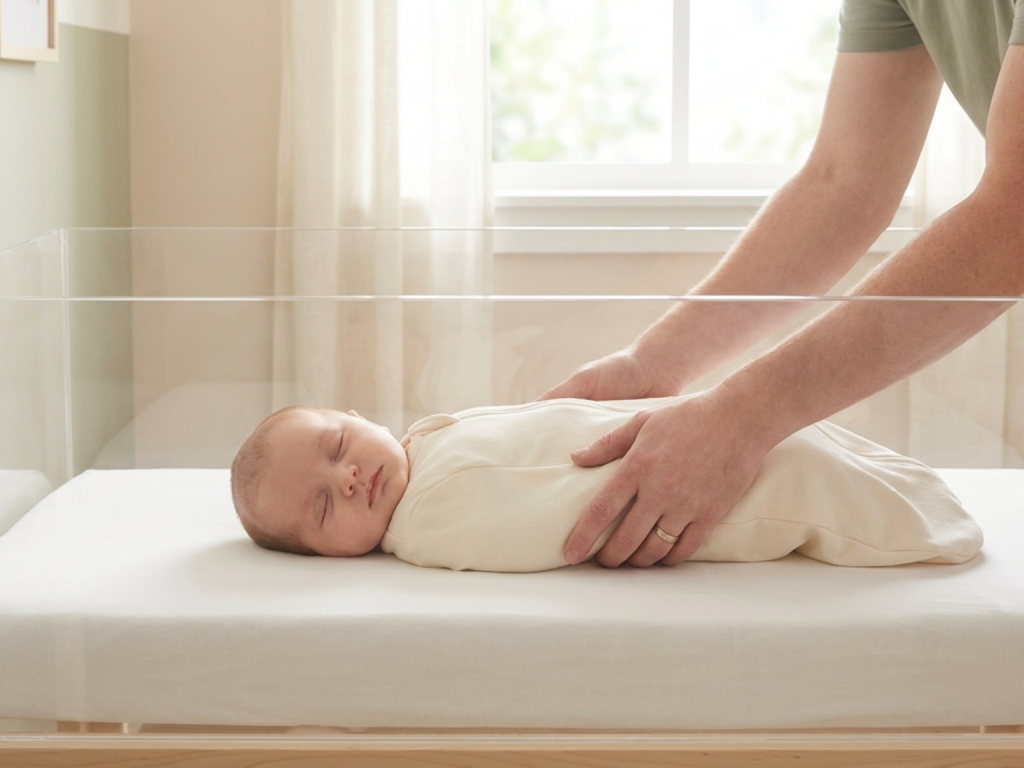
Back sleeping means placing an infant in a supine position, lying flat on the back with the face and airway unobstructed. The American Academy of Pediatrics and the National Institutes of Health recommend this position for every sleep, including naps, nighttime sleep, and sleep away from home, until 12 months of age.
The recommendation is preventive rather than a response to a particular illness. Infants have immature airway-protection and arousal mechanisms, and their ability to move away from an obstructed position is limited. Placing a baby on the stomach or side can increase the likelihood that the nose and mouth become covered or that exhaled air is repeatedly inhaled. The supine infant sleep position is associated with a lower risk of sudden unexpected infant death than prone or side sleeping.
Caregivers should place the baby on the back for sleep even if the infant turns the head to one side, prefers looking in a particular direction, or appears to sleep more deeply on the stomach. Tummy time is valuable for awake, supervised periods, but it is not a sleep position.
Build a safer sleep environment
Back sleeping works together with the physical characteristics of the sleep space. The preferred arrangement is a safety-approved crib, bassinet, or bedside sleeper with a firm, flat, non-inclined mattress and a fitted sheet designed for that product. The mattress should not sag, and there should be no gap between the mattress and the sleep surface that could trap the infant.
The sleep area should contain the baby and the fitted sheet only. Keep pillows, quilts, comforters, loose blankets, bumper pads, stuffed toys, wedges, and positioners out of the space. These items can obstruct breathing or cause entrapment. A wearable blanket or sleep sack may provide warmth without loose bedding, provided it fits correctly and allows free movement of the hips and legs. Choose non-weighted sleep sacks rather than weighted products.
Keep the infant’s head and face uncovered. Avoid overheating by dressing the baby in no more than one additional layer compared with a comfortable adult in the same room, while considering room temperature and the infant’s clothing. A smoke-free environment is also important. Do not smoke or vape around the baby, and avoid exposing the infant to smoke residue on clothing, skin, or household surfaces.
Bed-sharing is particularly hazardous when an adult is very tired, has used alcohol, cannabis, sedating medication, or illicit substances, or when the infant is very young or was born preterm or with low birth weight. A separate infant sleep surface placed near the caregiver supports feeding and monitoring while reducing hazards associated with an adult mattress.
Reflux and premature birth
Many caregivers worry that a baby with reflux could choke while lying on the back. In most infants, back sleeping does not increase the risk of fatal choking. Infants have protective airway anatomy and reflexes that help keep gastric contents away from the lungs. The risk associated with stomach sleeping is greater than the theoretical concern about choking in a baby positioned supine.
Inclining the mattress, using a wedge, or allowing an infant to sleep in a car seat, swing, or other sitting device is not a safe treatment for routine reflux. Semi-upright positioning can cause the head to fall forward and narrow the airway, and the infant may slide into a position that compromises breathing. Reflux symptoms that are severe, persistent, or associated with feeding difficulty should be discussed with the baby’s clinician rather than managed by changing the sleep position independently.
Preterm infants should also be placed on their backs for sleep once they are medically stable, including after discharge from the hospital. Hospital teams may use individualized positioning or monitoring during acute care, but those arrangements should not be generalized to the home environment. Ask the neonatal or pediatric care team for a clear discharge plan if the infant has ongoing respiratory, neurologic, or feeding concerns.
When a baby rolls over
Caregivers should continue to place the infant on the back at the start of every sleep until the first birthday. Development changes the practical advice once the baby can roll independently from back to stomach and from stomach to back. At that stage, caregivers do not need to repeatedly turn the infant back if the baby changes position during sleep, provided the sleep surface is firm, flat, and free of loose or soft objects.
Rolling ability is different from simply turning the head or shifting the body. Babies who can roll in only one direction still need careful attention to how they are placed and to the condition of the sleep space. If a baby rolls onto the stomach but cannot roll back, a caregiver may gently return the baby to the back when noticed, although constant overnight repositioning is generally neither realistic nor necessary.
Swaddling should stop when an infant shows signs of attempting to roll, such as repeatedly twisting, arching, or pushing up. Swaddling can restrict the arm movement needed to respond to a face-down position and may increase the risk of unsafe swaddling after rolling begins. Transition to an appropriately sized, non-weighted wearable blanket with the arms free. Never use a swaddle that tightly compresses the chest or hips, and do not place a swaddled infant prone.
Products and situations that need caution
Products marketed to prevent rolling, reduce reflux, or help an infant sleep longer may not provide the protection their advertising implies. Infant sleep positioners, wedges, nests, loungers, and padded inserts can create suffocation or entrapment hazards. A product should not be used for unsupervised sleep unless it is specifically intended and approved for infant sleep and meets current safety requirements; marketing claims alone are not evidence of safety.
Car seats, strollers, baby carriers, swings, and bouncers are designed for transport or supervised activity, not routine sleep. If an infant falls asleep in one of these devices, move the baby to a firm, flat sleep surface on the back as soon as it is practical. Do not place the device inside a crib or bassinet to continue the nap.
Room-sharing is recommended because it allows caregivers to respond readily and may lower sleep-related risk. The safest arrangement is the baby’s own sleep surface in the caregiver’s room, ideally for at least the first six months. Room-sharing without bed-sharing is different from placing the infant on an adult mattress, sofa, or recliner. Couches and armchairs are especially dangerous places to fall asleep while holding or feeding a baby.
During travel, plan ahead for a compliant sleep space rather than relying on a padded travel product, hotel bed, or improvised surface. Check the sleep area each time the baby is put down, because blankets, toys, and pillows may be added by other household members or lodging staff.
Responding to common caregiver concerns
Some babies protest being placed on their backs, particularly when they are overtired or being transferred after feeding. A predictable routine, dim lighting, gentle handling, and placing the baby down when calm can make the transition easier. These strategies may support settling, but they do not replace the back-to-sleep recommendation or justify using a hazardous sleep position.
If the baby spits up after being placed supine, clean the infant and sleep area as needed and continue to use the recommended position. Seek professional guidance if vomiting is forceful or recurrent, the baby is not feeding well, has poor weight gain, appears distressed, or has breathing changes. A clinician can assess whether symptoms require evaluation without compromising basic sleep safety.
Contact a healthcare professional for individualized advice if the infant has a tracheostomy, significant airway abnormality, neuromuscular disease, complex cardiopulmonary illness, or another condition that could affect positioning. Rare medical circumstances may lead a clinician to give different instructions. Any exception should be specific, documented, and based on the infant’s clinical needs rather than on general product advice or social media recommendations.
Caregiver exhaustion also deserves attention. Share nighttime responsibilities where possible, place the baby back in the separate sleep space before the adult becomes drowsy, and ask family or community services for practical support. A safer routine is more achievable when caregivers have help and do not have to manage every nighttime task alone.
Safety warnings
- Never place an infant to sleep on the stomach or side as the routine starting position.
- Do not use pillows, loose blankets, bumpers, positioners, wedges, or weighted sleep products in the sleep space.
- Do not allow routine sleep in a car seat, swing, bouncer, stroller, lounger, or carrier.
- Stop swaddling when the infant shows signs of trying to roll.
- Seek urgent medical help for an infant who is not breathing normally, is unresponsive, or has blue or gray discoloration.
Tools & Assistance
- Use a crib, bassinet, or bedside sleeper with a firm, flat mattress and fitted sheet.
- Review the sleep space before every nap and nighttime sleep.
- Ask the pediatric clinician or neonatal team about reflux, prematurity, medical conditions, or positioning concerns.
- Arrange room-sharing and nighttime support to reduce the chance of accidental bed-sharing.
- Keep a correctly sized, non-weighted wearable blanket available for cold conditions.
FAQ
Should a baby with reflux sleep on the back?
Yes. Back sleeping is recommended for most infants with reflux because it does not generally increase fatal choking risk. Do not incline the mattress or use a positioner; discuss significant reflux symptoms with a clinician.
What if my baby rolls onto the stomach during sleep?
Continue placing the baby on the back at the beginning of sleep. Once the baby can roll independently in both directions, you generally do not need to reposition them repeatedly, as long as the sleep surface is firm, flat, and clear.
When should swaddling stop?
Stop as soon as the baby shows signs of attempting to roll. Transition to an arms-free, non-weighted wearable blanket that fits safely.
Can my baby nap in a car seat after falling asleep during travel?
Car seats are for transport, not routine sleep. Move the baby to a firm, flat sleep surface on the back as soon as practical after arriving.
Sources
- Safe to Sleep, National Institutes of Health — About Back Sleeping
- American Academy of Pediatrics — Sleep-Related Infant Deaths: Updated 2022 Recommendations for Reducing Infant Deaths in the Sleep Environment
- HealthyChildren.org, American Academy of Pediatrics — Where We Stand: Back To Sleep
Disclaimer
This article provides general educational information and does not diagnose, treat, or replace advice from a qualified healthcare professional. Consult your baby's clinician for individualized recommendations, especially when medical conditions or feeding and breathing concerns are present.
















Please log in to leave a comment.