
Intro
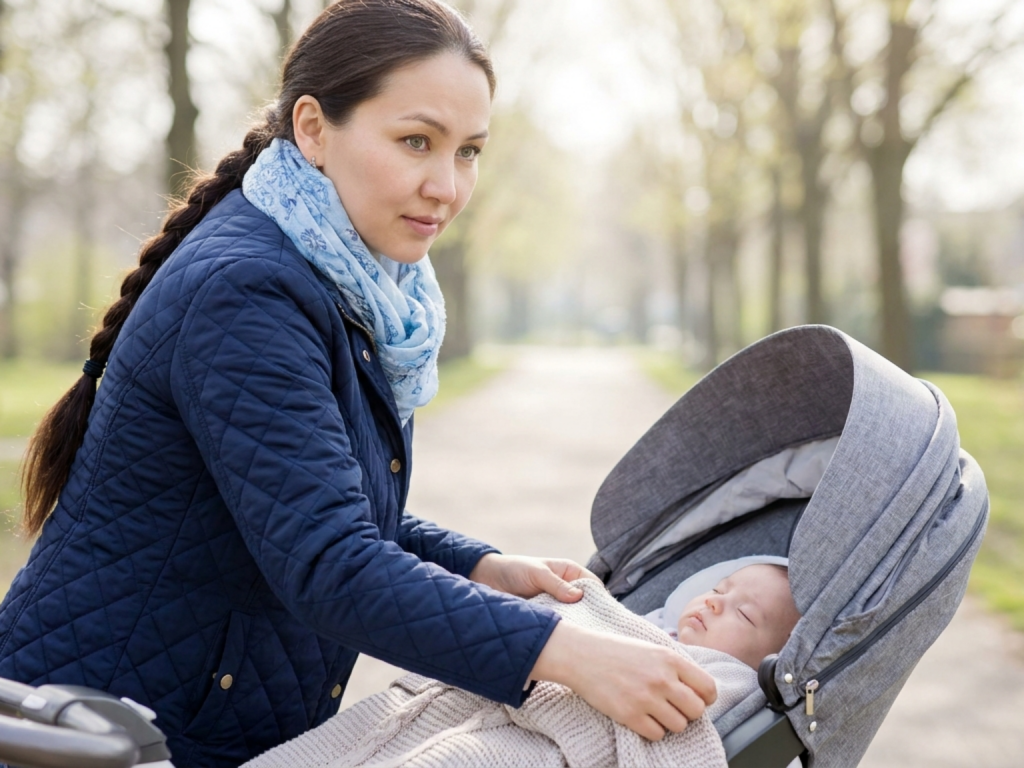
For many parents, the first trip outside with a newborn brings a mixture of relief, excitement, and understandable worry. In most healthy term infants, there is no universal medical rule requiring families to remain indoors for a fixed number of days. A brief, carefully planned outing may be reasonable once the baby is feeding adequately, has stable temperature, and the parent feels physically ready.
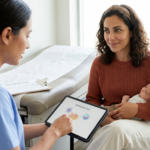
The best timing depends on the baby’s gestational age, birth weight, medical history, current health, weather, and destination. Your maternity, neonatal, or pediatric team can give individualized advice, particularly if your baby was premature, had a low birth weight, required intensive care, or has feeding, respiratory, cardiac, or immune concerns.
Highlights
A healthy newborn may often go outdoors for a short walk when both baby and caregiver are ready; there is no single mandatory waiting period.
Early outings are best kept brief, local, and away from crowded indoor spaces, people who are ill, smoke, and extreme temperatures.
Dress the baby for the conditions, maintain a safe transport position, and monitor feeding, temperature, breathing, and behavior.
Ask a healthcare professional for a specific plan if the baby was premature, medically unwell, or has not yet had the recommended early follow-up.
There is no single correct day
For a healthy, full-term newborn who is clinically stable, going outside does not have to wait until a particular age. The relevant question is less “What is the exact day?” and more “Is this baby ready for this setting?” A newborn can usually leave home for necessary care, including a medical appointment, before a routine recreational outing. A calm walk near home may also be appropriate in the first days if conditions are favorable.
Some hospital guidance suggests waiting approximately four to seven days before a first nonessential outing, with the longer interval more relevant for smaller babies or colder seasons. This is practical advice rather than a universal safety threshold. Babies who were born prematurely, have low birth weight, are recovering from illness, or need monitoring may require a different plan.
Before leaving, consider whether the baby is feeding effectively, producing an expected pattern of wet diapers, maintaining a normal temperature, and behaving in their usual manner. The parent’s recovery matters equally. Pain, heavy postpartum bleeding, dizziness, infection, or exhaustion may make an outing inappropriate even if the baby is well. A trusted adult can help with transport and supplies, but the caregiver should not feel pressured to go out simply because others expect it.
First outing versus public places
An outdoor walk in a quiet area is not equivalent to taking a newborn to a busy shopping center, restaurant, party, or public transport during a respiratory-virus surge. The main early concern in public is exposure to infectious pathogens. Newborns have immature immune defenses, and many have not yet received their routine infant immunizations. Crowded indoor environments also make it harder to control close contact, ventilation, hand hygiene, and the behavior of people who want to touch or hold the baby.
For a first trip, choose a low-density setting such as a quiet street, private garden, or uncrowded park. Keep the baby close to a healthy caregiver and avoid passing the infant from person to person. Anyone who has fever, cough, vomiting, diarrhea, a new rash, or a known contagious exposure should postpone contact. Visitors should wash their hands before touching the baby, and kissing the newborn should be avoided, especially around the face and hands.
There is no need to isolate a healthy newborn indefinitely. Sensible risk reduction allows families to obtain care, fresh air, and social support without treating every outdoor environment as dangerous. When an indoor visit is necessary, go at a quieter time, limit duration, improve ventilation where possible, and follow advice from the baby’s clinician about local infections and immunizations.
Planning a feeding plan for baby outings and learning about infection exposure during baby outings can make later trips less stressful, particularly when the outing involves a clinic, pharmacy, or grocery store.
Prepare for temperature, sun, and weather
Newborns have limited thermoregulatory capacity. They lose heat more readily than older children, but they can also overheat when heavily wrapped, placed in a warm car, or covered with blankets. Dress the baby in approximately one more light layer than a comfortable adult in the same environment, then adjust according to actual conditions. Check the baby’s chest or back rather than relying only on hands and feet, which may feel cool normally.
In cold weather, use several light layers and a hat when appropriate, but remove bulky outer layers before placing the baby in a car seat because they can interfere with harness fit. In hot weather, choose light clothing, shade, and a well-ventilated route. Never cover a stroller or carrier with a blanket in a way that blocks airflow or traps heat. Never leave a newborn alone in a parked car, even for a short time.
Direct sunlight should be minimized. For young infants, shade and protective clothing are preferred to relying on sunscreen alone; ask a healthcare professional or pharmacist about products if significant sun exposure cannot be avoided. Avoid outings during the hottest part of the day, severe cold, strong wind, poor air quality, smoke, or extreme humidity. A practical understanding of infant temperature regulation outdoors helps caregivers respond before a baby becomes too cold or overheated.
Check the baby frequently for sweating, flushed skin, unusual coolness, mottling that does not resolve with warming, lethargy, or abnormal irritability. These findings are not a diagnosis, but they are reasons to move indoors, reassess the baby, and seek medical advice if they persist.
Choose safe transport and a manageable duration
The first outing should be short enough that you can return home easily, perhaps 10 to 20 minutes initially. There is no benefit in extending the trip if the baby is hungry, unsettled, or becoming overtired. Increase duration gradually when the baby tolerates outings and the route, weather, and feeding arrangements are predictable.
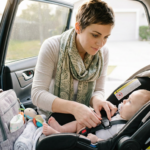
For car travel, use a rear-facing infant car seat that is correctly installed according to the manufacturer’s instructions. The harness should be snug, with no thick clothing underneath. A car seat is designed for travel, not as a routine sleeping space after arrival. Once you reach your destination, transfer the baby to a firm, flat, separate sleep surface if they need to sleep.
For a stroller, use a fully reclined bassinet or a seat specifically approved for a newborn. Do not place a newborn in a standard upright stroller seat unless the manufacturer states that it is suitable from birth. In a carrier, the baby should remain upright with the airway visible, the chin off the chest, the face uncovered, and the head and neck supported. The caregiver should be able to see and monitor breathing without repeatedly repositioning the infant.
Bring only what supports the planned trip: feeding supplies, diapers, wipes, a spare layer, a change of clothing, and any prescribed medical equipment. Keep the route close to toilets, shelter, and transportation home. A short, controlled outing is easier to end promptly than a complicated trip involving several destinations.
Coordinate the outing with newborn care
Newborns usually feed frequently and may not follow a predictable schedule. Feed the baby before leaving if that fits their cues, but do not delay feeding because you are trying to keep to an itinerary. Know where and how feeding can occur safely and comfortably. For bottle-fed infants, follow the preparation, storage, and discard instructions provided by your healthcare professional or formula manufacturer. Breastfeeding in public is a personal choice and may be done wherever the caregiver and baby are comfortable.
Diaper changes, burping, and soothing may be needed sooner than expected. Keep the baby’s face uncovered during feeding and transport, and avoid feeding in a moving vehicle. If the baby falls asleep during the outing, continue to check their position and breathing. On returning home, follow safe sleep practices for infants: place the baby on their back on a firm, flat, separate sleep surface, without loose bedding or soft objects.
Protect the umbilical area according to the instructions given by your maternity team. Umbilical cord stump care generally involves keeping the area clean and dry, but local advice may vary. Avoid swimming or activities that immerse the stump unless a clinician has advised that it is appropriate.
Keep the first outing flexible. If the baby needs repeated soothing, becomes difficult to wake, feeds poorly, or the caregiver feels unwell, return home. The purpose is to build confidence and obtain fresh air, not to complete a demanding schedule.
Know when to postpone or seek help
Postpone a recreational outing and contact the baby’s healthcare professional if the newborn has a fever or feels unusually cold, is breathing rapidly or with effort, has persistent vomiting, is feeding substantially less than usual, has markedly fewer wet diapers, or is unusually sleepy and difficult to rouse. A new rash, worsening jaundice, or a concerning change in color also merits professional guidance. In a newborn, seemingly minor changes can progress quickly, so caregivers should not rely on an outing checklist to replace clinical assessment.
Seek urgent medical care for severe breathing difficulty, blue or gray coloration, unresponsiveness, seizure-like activity, or a baby who cannot be awakened for feeding. In infants younger than three months, a rectal temperature of 38°C (100.4°F) or higher is generally treated as a medical emergency requiring prompt clinical assessment; follow your local healthcare service’s instructions for measuring temperature and obtaining care.
Families should be especially cautious after discharge from a neonatal unit or when a baby has a complex medical history. Ask the neonatal or pediatric team about exposure precautions, transport, oxygen or monitoring requirements, and whether the baby should avoid particular environments. The first newborn follow-up visit is also an opportunity to review feeding, weight, jaundice, temperature, and plans for future outings.
A gradual plan can make the first weeks easier
Start with a purposefully simple trip: choose a mild part of the day, confirm the weather, feed and change the baby as needed, and walk or travel somewhere close to home. Tell other people in advance that visits will be brief and that handwashing and no kissing are required. Keeping a phone charged and arranging a reliable way home reduces practical pressure.
After one or two comfortable short outings, you can gradually add time or distance, but change only one variable at a time. A longer walk in a familiar quiet area is usually easier to evaluate than a first visit to a crowded indoor venue. Continue to prioritize ventilation, hand hygiene, shade, appropriate clothing, and safe transport.
Parents often need permission to stop early. Newborn care is responsive rather than performance-based, and an outing that ends after five minutes can still be successful. If anxiety remains high, discuss the plan with a pediatrician, midwife, health visitor, or family physician. Their advice can account for the baby’s examination findings, local infection patterns, season, and the family’s circumstances.
When to get medical advice
- A newborn younger than three months with a temperature of 38°C (100.4°F) or higher needs prompt medical assessment.
- Seek urgent care for blue or gray color, severe breathing difficulty, collapse, seizure-like activity, or inability to wake the baby.
- Contact a clinician for poor feeding, substantially fewer wet diapers, repeated vomiting, worsening jaundice, or unusual lethargy.
- Ask the neonatal or pediatric team before outings if the baby was premature, had low birth weight, or has a significant medical condition.
- Do not use a stroller cover, loose blanket, or bulky clothing in a way that could cause overheating or compromise airway or harness safety.
Tools & Assistance
- Pediatrician, family physician, midwife, or health visitor for an individualized readiness plan
- Local maternity or neonatal unit discharge advice line
- Weather and air-quality alerts for planning outdoor timing
- Manufacturer instructions for newborn stroller, carrier, and rear-facing car seat
- A charged phone and a simple diaper-and-feeding bag for short trips
FAQ
Can I take my newborn outside before the first pediatric appointment?
A healthy, stable newborn may sometimes go outside briefly before the first routine appointment, but medical visits should not be delayed. Ask your clinician for individualized advice if the baby was premature, medically unwell, or feeding poorly.
Should I wait until my newborn has received vaccines?
Routine vaccines are important, but a healthy newborn does not generally need to remain indoors until all vaccines are given. Avoid crowded indoor settings, sick contacts, and unnecessary close handling, and follow local immunization and infection-control advice.
How long should the first outing last?
Begin with a short trip, such as 10 to 20 minutes, close to home. Return earlier if the baby is hungry, distressed, too warm or cold, difficult to wake, or breathing abnormally.
Can my newborn go to a store or restaurant?
A quiet outdoor walk is usually a lower-exposure choice than a busy indoor venue. When an indoor trip is necessary, choose a quiet time, keep it brief, avoid close contact, and use appropriate transport and hygiene precautions.
How do I know whether my newborn is too hot or too cold?
Check the baby’s chest or back, observe behavior and skin color, and consider the environmental conditions. Remove or add light layers as needed, avoid overheating, and seek medical advice if the baby remains unusually cold, hot, lethargic, or distressed.
Sources
- MedlinePlus — Infant and Newborn Care
- Wirral University Hospital NHS Foundation Trust — When to go out
- KidsHealth — When Can I Take My Newborn out in Public?
Disclaimer
This article provides general educational information and is not a substitute for medical evaluation, diagnosis, or individualized advice. Contact your baby’s healthcare professional for guidance specific to your newborn, and seek urgent care for emergency warning signs.










Please log in to leave a comment.