
Intro
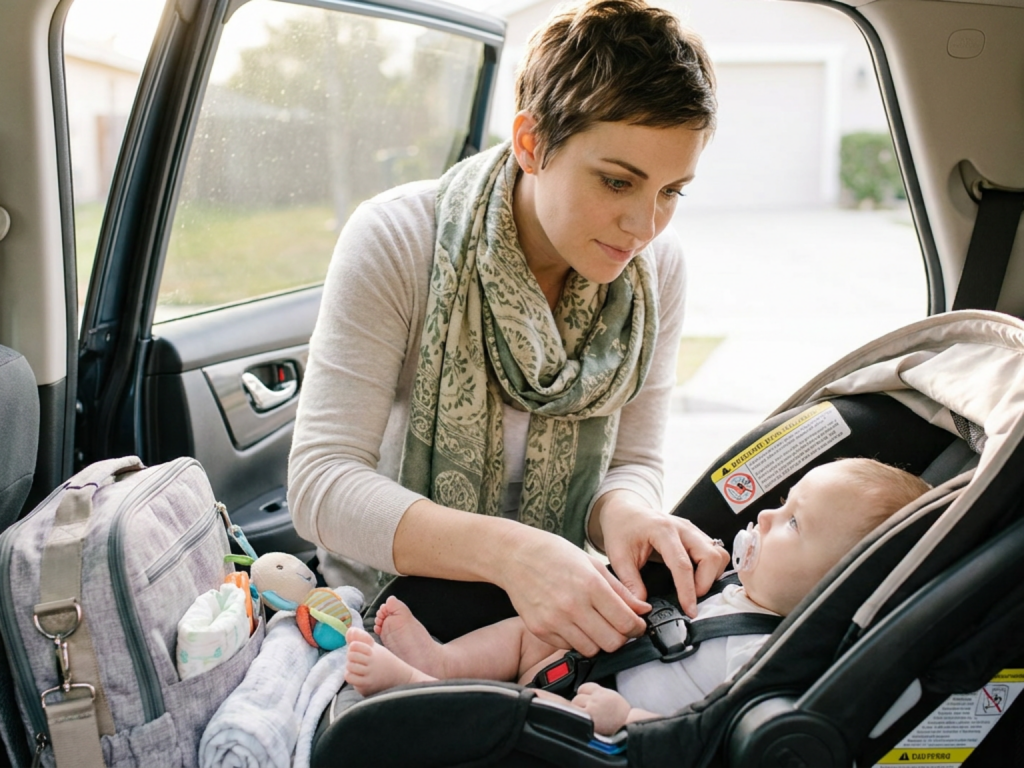
If your baby cries in the car seat, you are not failing. Many infants protest restraint, separation from a caregiver’s body, temperature shifts, glare, motion, or simply being overtired at the wrong moment. The challenge is that the safest place for a baby in a moving vehicle is still a correctly installed, correctly harnessed rear-facing car seat, even when the crying is intense.
Highlights
Safety comes first: do not loosen harness straps, add unapproved padding, or remove your baby from the car seat while the vehicle is moving.
Crying often improves when parents adjust timing, temperature, light, sound, feeding routines, and the car seat recline angle within the manufacturer’s instructions.
A predictable pre-drive routine can help babies associate the car seat with calm, not sudden separation or discomfort.
Persistent distress, breathing concerns, vomiting, poor weight gain, or suspected pain should be discussed with a pediatric clinician.
Start with safety, then solve comfort
When a baby screams in the car, it is natural to want an immediate fix. The first rule is to protect the non-negotiables: your baby should remain in the appropriate car seat, correctly harnessed, in the back seat, and rear-facing for as long as the seat’s height and weight limits allow. Comfort strategies should work around car seat safety, not replace it.
Before changing routines, check the basics. The infant car seat should be installed according to both the car seat manual and vehicle manual. The seat should not move more than about an inch side-to-side or front-to-back at the belt path. Harness straps should lie flat, without twists, and should be snug enough that you cannot pinch excess webbing at the shoulder. For a rear-facing baby, the harness usually comes from at or below the shoulders, and the chest clip belongs at armpit level. Avoid bulky coats under the harness because compressible layers can make the harness appear snug while leaving unsafe slack during a crash.
Also verify the car seat recline angle. A newborn or young infant needs enough recline to keep the head from falling forward and compromising the airway, but the angle must still be within the manufacturer’s permitted range. If your baby is premature, has low tone, has a history of respiratory instability, or had difficulty in a car seat tolerance screening, ask your healthcare team whether any additional travel guidance is needed.
Understand why babies cry in the car seat
Car seat crying is rarely about one single cause. A baby may be restrained, separated from direct body contact, facing away from you, and experiencing unfamiliar vibration all at once. Some babies dislike the vestibular stimulation of acceleration and braking; others are soothed by motion but become upset when the car stops. Developmentally, young infants have limited self-regulation, so discomfort can escalate quickly.
Common triggers include hunger, gas, a wet diaper, overheating, cold hands or feet, bright sunlight, noisy traffic, and overstimulation from toys or siblings. Overtiredness is another major factor: a baby who is already dysregulated may find the harness and posture intolerable. On the other hand, some babies cry because they are not tired enough to drift off and dislike being confined.
There can also be physiologic discomfort. Some infants with reflux-like symptoms may seem more upset when buckled because abdominal pressure, recent feeding, or the semi-reclined posture is uncomfortable. This does not mean you should diagnose reflux from car crying alone. Instead, look for patterns such as recurrent vomiting, feeding refusal, blood in stool, poor weight gain, coughing, choking, or persistent distress outside the car as well. If these are present, discuss them with your pediatrician.
Build a calming pre-drive routine
A predictable routine helps many babies transition into the car seat more peacefully. Think of it as a short regulation sequence: meet basic needs, reduce sudden sensory changes, then buckle with calm repetition. The goal is not to make every ride silent, but to lower the intensity and frequency of distress.
Before leaving, consider a quick checklist: diaper changed, clothing appropriate for the cabin temperature, feeding timed safely, burping attempted if helpful, and any pacifier or approved comfort item ready. If your baby tends to spit up, avoid strapping them in immediately after a large feed when possible. Many families find that waiting 10 to 20 minutes after feeding, while keeping the baby upright, reduces discomfort; for specific feeding or reflux concerns, ask your clinician.
Use the same gentle cues each time. You might say, “Car seat now, I’m right here,” sing the same short song, then buckle in the same order. Keep your own body language slow and confident. Babies are sensitive to caregiver stress, and repeated urgent attempts to “fix” the crying can sometimes add stimulation. If you have time, practicing brief, pleasant car seat sessions at home while the seat is not in the car may help the baby become familiar with the harness, but always supervise closely and never use a car seat as a routine sleep space outside travel.
Adjust temperature, light, and sound safely
Small environmental changes can make a large difference. Babies can overheat quickly in a rear-facing seat, especially with direct sun through a window or heavy layers. Dress your baby in thin, close-fitting layers and warm them with a blanket placed over the secured harness if needed. Remove the blanket when the cabin warms. Feel the back of the neck or chest rather than relying only on hands and feet, which can feel cool even when the baby’s core temperature is adequate.
Bright light can be another trigger. A properly used vehicle window shade or the car seat’s approved canopy can reduce glare, but avoid anything that interferes with the driver’s visibility, the seat installation, or air circulation. Do not attach hard toys, mirrors, tablets, or accessories unless the car seat manufacturer allows them; unapproved items may become projectiles or affect crash performance.
Sound can be calming or overwhelming depending on the baby. Some infants settle with a caregiver’s voice, rhythmic singing, or low-volume white noise. Keep audio at a safe volume because infant ears are sensitive, and the driver must still hear traffic. If a toy is used, choose a soft, lightweight, age-appropriate item that can be secured according to manufacturer guidance. The simplest option is often the safest: a parent speaking calmly from the front seat when another adult is not available to sit near the baby.
Use safe soothing while the car is moving
Once the vehicle is moving, the safest soothing options are hands-off or low-risk. Talk, sing, hum, play gentle music, or use a pacifier if your baby accepts one. A rear-seat adult passenger can offer verbal reassurance, replace a dropped pacifier when safe to do so, and observe whether the baby looks too hot, slumped, or distressed. The driver should not reach back, adjust the harness, feed the baby, or attempt anything that compromises attention to the road.
Never loosen the harness to “help the baby breathe,” reduce crying, or make room for a coat. If you suspect the harness is too tight because of redness, poor positioning, or restricted movement, stop in a safe location and reassess the fit. A snug harness is different from an incorrectly routed or twisted harness. If you cannot get a comfortable and secure fit, consult a certified Child Passenger Safety Technician.
Do not take the baby out of the car seat while the vehicle is moving, even for feeding or soothing. If your baby is inconsolable and you feel your concentration slipping, pull over safely. It is reasonable to stop, take a few breaths, check the diaper, offer a feed if appropriate, burp, hold the baby briefly, and then rebuckle correctly before driving again. Safety includes the driver’s emotional regulation too.
Plan timing, breaks, and realistic expectations
Some babies do best when car trips align with their natural sleep window; others become furious if they are placed in the seat already overtired. Track patterns for a week. Note the time of day, feeding interval, nap status, temperature, and whether crying begins at buckling, during stops, or after a certain duration. Patterns often reveal practical solutions.
For longer drives, plan breaks before the baby is in full distress. Many families aim to stop every couple of hours, and more often for newborns, premature infants, or babies with feeding or medical concerns. During breaks, take the baby out of the seat, check skin and diaper, allow gentle movement, feed if needed, and reset the environment. Avoid letting a baby remain asleep in the car seat after reaching your destination; transfer them to a safe sleep surface as soon as practical.
It also helps to reduce unnecessary trips during phases when car seat tolerance is low. Combine errands, use delivery when feasible, or schedule appointments at calmer times of day. This is not avoidance forever; it is a temporary strategy that protects everyone’s stress level while your baby matures. Many infants become more tolerant as neck control improves, visual engagement increases, and routines become familiar.
When to seek extra help
If you have tried reasonable adjustments and your baby remains extremely distressed, you deserve support. Start with a car seat fit check. A certified Child Passenger Safety Technician can identify installation problems, incorrect recline, harness routing issues, or incompatibility between the seat and vehicle. Sometimes a small correction dramatically changes comfort while improving safety.
Medical advice is appropriate when crying seems pain-related or is accompanied by concerning signs. Contact your pediatric clinician if car rides trigger recurrent vomiting, choking, color change, labored breathing, persistent coughing, poor feeding, poor weight gain, unusual lethargy, fever, or crying that is new, severe, and difficult to console in other settings too. Babies with prematurity, airway anomalies, neuromuscular conditions, significant reflux symptoms, or cardiac or respiratory disease may need individualized travel guidance.
Finally, consider caregiver wellbeing. Listening to prolonged infant crying while driving can be physiologically stressful: heart rate rises, attention narrows, and frustration can build. If you feel overwhelmed, stop in a safe place, place the baby securely in the car seat or another safe location while parked, and take a moment to breathe or call someone. Calm caregiving is not about never feeling stressed; it is about creating enough pause to keep both you and your baby safe.
Safety warnings
- Never remove a baby from the car seat while the vehicle is moving.
- Do not loosen harness straps, add bulky padding, or place bulky coats under the harness.
- Do not use unapproved car seat accessories unless the manufacturer permits them.
- Pull over safely if crying distracts the driver or if the baby needs feeding, changing, or repositioning.
- Seek medical advice for breathing difficulty, color change, recurrent vomiting, poor feeding, fever, or severe unexplained distress.
Tools & Assistance
- Schedule a car seat check with a certified Child Passenger Safety Technician.
- Review the car seat manual and vehicle manual together before changing installation or recline.
- Keep a one-week car ride log noting feeding, naps, temperature, and crying patterns.
- Pack a safe travel kit with diapers, thin layers, a pacifier if used, and soft approved comfort items.
- Discuss persistent car seat distress with your pediatric clinician, especially if medical symptoms occur.
FAQ
Is it safe to keep driving if my baby is crying?
Crying alone does not usually make the car seat unsafe, but driver distraction can be dangerous. If you cannot focus, pull over safely, check your baby, and rebuckle correctly before continuing.
Can I loosen the straps a little to help my baby calm down?
No. A loose harness can fail to protect your baby in a crash. If the fit seems uncomfortable, stop safely and reassess for twists, clothing bulk, strap height, and correct chest clip position.
Can my baby sleep in the car seat after we arrive?
A car seat is for travel, not routine sleep outside the vehicle. When you arrive, move your baby to a firm, flat, safe sleep surface as soon as practical.
What if my baby cries every time I buckle the harness?
Check fit, temperature, timing, and routine. Practice calm short transitions when supervised, and consider a professional car seat check if crying starts at buckling every time.
When should I call the pediatrician?
Call if crying seems painful, is new or severe, or comes with vomiting, choking, breathing difficulty, color change, fever, poor feeding, poor weight gain, or unusual sleepiness.
Sources
- National Highway Traffic Safety Administration — Car Seat & Booster Seat Safety, Ratings, Guidelines
- Orbit Baby — My Baby Hates the Car Seat (Causes of Crying & What to Do)
- Chicco — What to Do if Your Baby Hates the Car Seat
Disclaimer
This article is for general educational purposes only and is not a medical diagnosis or treatment plan. Consult your pediatrician or another qualified healthcare professional for concerns about your baby’s health, breathing, feeding, or persistent distress.















Please log in to leave a comment.