
Intro
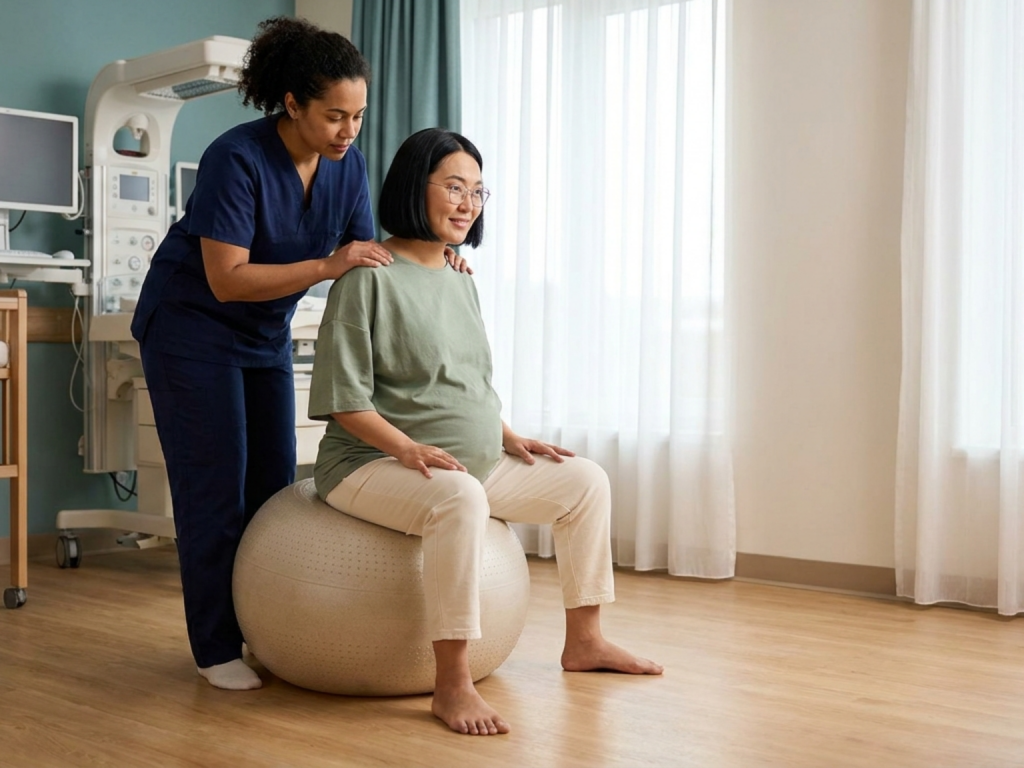
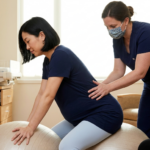
A birthing ball, also called a birth ball or labor ball, is a large, inflatable exercise ball used to support comfortable movement, posture, and position changes during pregnancy and labor. Sitting, rocking, circling the pelvis, leaning over the ball, or kneeling beside it may help some people manage pressure and contractions while remaining relatively upright.
The ball is a comfort and mobility tool, not a method that guarantees faster labor, vaginal birth, or a particular fetal position. Its usefulness depends on comfort, balance, pregnancy or labor circumstances, and the guidance of the maternity team. Learning safe techniques before labor can make it easier to use the ball confidently when the need arises.
Highlights
A birthing ball can support upright posture, gentle pelvic movement, and comfort during pregnancy and labor.
Research suggests that birth ball use may reduce labor pain, with benefits measured after approximately 20, 60, and 90 minutes in a systematic review.
There is no single correct time to begin; use may be appropriate at different points in pregnancy or labor when it is comfortable and medically suitable.
Safety depends on correct ball size, a stable surface, supervision when needed, and compatibility with monitoring, analgesia, and other care.
What a birthing ball can do
A birthing ball provides a broad, resilient surface that allows the pelvis and trunk to move while the person remains supported. Compared with sitting on a rigid chair, the ball may make it easier to shift weight, widen the space between the knees, tilt the pelvis, or lean forward. These adjustments can reduce sustained pressure on the lumbar spine, sacrum, pelvis, and coccyx. During pregnancy, improved posture and frequent position changes may ease musculoskeletal discomfort for some people.
During labor, the ball can support upright or forward-leaning positions. Gravity may assist fetal descent when the birthing person is upright, although the ball should not be described as a way to force descent or alter labor physiology predictably. Rhythmic movement can also provide a focal activity during contractions and may help a person feel more in control. The most meaningful benefit is often individual: one person may prefer slow circles, another may find still sitting or leaning forward more comfortable.
Using a ball can complement other nonpharmacologic pain strategies, such as breathing techniques, massage, heat, water immersion, or support from a partner or doula. It does not replace analgesia, clinical assessment, or treatment when those are needed.
When to start during pregnancy
Some people begin using a birthing ball in the second or third trimester to practice balance, sitting posture, and gentle mobility. Others wait until late pregnancy or labor. A ball may be used at any point in pregnancy or labor if it feels comfortable and the person’s clinician has no safety concerns. Starting before labor can reduce the cognitive load of learning a new movement while experiencing contractions.
Practice should be brief and comfortable at first. Sit with both feet firmly supported, keep the knees slightly lower than the hips when practical, and use a wall, sturdy chair, or another adult for additional stability. Gentle pelvic tilts, small side-to-side shifts, and slow circles are generally easier to control than large or rapid movements. The goal is mobility without pain, dizziness, breathlessness, pelvic instability, or fear of falling.
Pregnancy-specific advice matters when there are complications, significant pelvic or back symptoms, balance impairment, a history of falls, or restrictions on activity. A midwife, obstetrician, physiotherapist, or other qualified professional can help determine whether ball use is appropriate and demonstrate safe positioning. Stop and seek advice for vaginal bleeding, leaking fluid, regular painful contractions before the expected time, severe pain, faintness, or any symptom that raises concern.
Timing during early and active labor
In early labor, a birthing ball may be useful for alternating between rest and movement. Sitting upright while breathing through contractions can provide a supported position without requiring prolonged standing. Rocking or making small pelvic circles may help with comfort, while leaning forward over the ball on a bed or raised surface can reduce pressure through the back. A partner can apply counterpressure or provide physical support, but should avoid pulling the ball or destabilizing it.
As contractions become stronger, people often benefit from changing position rather than remaining on the ball continuously. A practical pattern may include sitting for several contractions, standing or walking briefly, leaning over the ball, and resting in a side-lying position. There is no therapeutic requirement to reach a particular duration. Evidence from a systematic review and meta-analysis found reductions in reported labor pain after 20, 60, and 90 minutes of birth ball use, with moderate-quality evidence. These findings support trying the ball for a meaningful period when it is comfortable, but they do not establish a universally optimal schedule.
In active labor, the ball may support upright positions during labor and forward-leaning postures. The maternity team should determine whether the person can safely remain mobile, particularly when there is continuous fetal heart rate assessment, intravenous therapy, hypertensive disease, bleeding, fever, suspected fetal compromise, or other clinical concern. Monitoring equipment and the need for rapid intervention may make another position safer or more practical.
Positions and movements to try
Technique should be adapted to the person’s anatomy, pain pattern, energy, and available support. Useful options include:
- Supported sitting: Sit near the center of the ball with feet wide enough to create a stable base. Keep the trunk tall or lean slightly forward, and allow the pelvis to respond to contractions rather than holding a rigid posture.
- Pelvic circles: Make small, slow circles with the pelvis. The movement can be clockwise, counterclockwise, or changed according to comfort.
- Side-to-side rocking: Shift weight gently from one sitting bone to the other. This may be useful when stillness increases discomfort.
- Forward leaning: Kneel on a padded surface and drape the upper body over the ball, with a support person nearby. This can reduce load through the lower back and may be especially comfortable during back labor.
- Standing with the ball: Place the ball on a secure bed or surface and lean over it while standing. This offers an upright alternative when sitting becomes tiring.
Movement should remain controlled. Avoid bouncing forcefully, twisting abruptly, standing on the ball, or using it on a slippery floor. When getting on or off, pause until balance is established. In a hospital or birth center, ask staff where the ball may be used and whether its height is compatible with the bed, monitoring, and planned care.
Use alongside pain relief and medical care
A birthing ball can be used before pharmacologic analgesia and may also be part of a broader comfort plan after pain relief, but feasibility changes with the intervention. For example, epidural analgesia can impair lower-limb strength, proprioception, and postural reflexes. A person with an epidural should not independently sit on a ball or transfer on and off it unless the maternity team has assessed mobility, provided appropriate assistance, and confirmed that the position is safe.
Other forms of analgesia, intravenous equipment, urinary catheters, oxygen, or continuous monitoring may also affect movement. The ball can sometimes be used beside the bed or for supported leaning rather than independent sitting. In some circumstances, a bed-based position, side lying, hands-and-knees posture, or another supported option may provide better safety and access for assessment.
Using a ball does not mean declining medical care. Labor plans should remain flexible enough to accommodate cervical assessment, fetal monitoring, changes in maternal or fetal status, operative birth if indicated, and the person’s evolving preferences. Discussing the ball in advance can help the team incorporate it when appropriate without making it a condition of the birth plan.
What the evidence can and cannot tell us
The strongest source provided for pain outcomes is a systematic review and meta-analysis of birth ball use in labor. It reported reduced labor pain at several measured time points, including 20, 60, and 90 minutes, and characterized the evidence as moderate quality. This suggests a real potential for short-term pain relief, but study results should be interpreted in context. Pain is subjective, interventions may differ between studies, and participants’ expectations, support, labor characteristics, and concurrent analgesia can influence reported outcomes.
Evidence for other outcomes, such as shorter labor, reduced need for medication, lower operative birth rates, or improved neonatal outcomes, should not be assumed solely because a ball improves comfort. A comfortable upright position may help a person stay active, but labor progression is multifactorial. Fetal position, parity, contractions, cervical change, pelvic anatomy, fatigue, and clinical circumstances all contribute.
The most defensible approach is to view the ball as a low-technology option for supported mobility and comfort when medically appropriate. Its value can be assessed in real time: if it improves comfort, confidence, or movement without compromising stability or care, it may be useful. If it increases pain, exhaustion, nausea, anxiety, or risk, changing position is appropriate.
Choosing and preparing a ball safely
Ball size should allow the feet to rest securely on the floor and the hips to remain stable. The correct size depends on the person’s height, the ball’s inflation, and the surface on which it will be used. A health professional, birth educator, or manufacturer’s sizing guidance can help with selection. The ball should be in good condition, fully inflated according to its instructions, and designed to support the user’s weight. Do not use a ball that is damaged, excessively soft, or unstable.
Set it up on a clean, level, non-slip floor away from sharp edges. Bare or secure footwear may improve traction. A sturdy surface or another adult should be available during transfers, particularly when the person is fatigued, dizzy, medicated, or in intense labor. Never use a ball alone in a shower or other wet area. At home, make sure the room has adequate space and that a support person knows how to help without restraining movement.
Before labor, practice getting on and off slowly, finding a comfortable foot position, and stopping the movement. A short rehearsal can clarify whether the ball feels supportive and whether a different height or inflation level is needed. Bring or confirm its availability with the birth setting in advance, since hospitals and birth centers may have their own equipment and infection-control policies.
Safety reminders
- Do not use a birthing ball if you cannot maintain stable sitting or have been advised to restrict activity.
- Seek urgent maternity guidance for bleeding, suspected ruptured membranes, severe or persistent pain, fainting, or reduced fetal movement.
- Use extra caution with epidural analgesia, sedating medication, weakness, dizziness, continuous monitoring, or intravenous equipment.
- Never stand on the ball, bounce forcefully, or use it on a wet or slippery surface.
- Stop if the ball worsens symptoms or causes instability, and ask the maternity team for an alternative position.
Tools & Assistance
- A correctly sized, manufacturer-approved birthing ball
- A non-slip floor area with adequate space
- A sturdy chair, wall, or trained support person for transfers
- A prenatal class, midwife, obstetric clinician, or physiotherapist for technique guidance
- A flexible labor-position plan that includes alternatives to the ball
FAQ
Can a birthing ball start labor?
There is no reliable evidence that routine birthing ball use starts labor. It may support comfort and movement, but it should not be used as a method to induce labor without professional guidance.
How long should I sit on a birthing ball during labor?
There is no universal duration. Studies have measured benefits after 20, 60, and 90 minutes, but comfort, fatigue, safety, and clinical circumstances should determine when to continue or change position.
Can I use a birthing ball with an epidural?
Possibly, but only with assessment and assistance from the maternity team. Epidural analgesia may reduce leg strength and balance, making independent use unsafe.
Is a birthing ball useful during pregnancy?
It may help some people with posture, pelvic mobility, and back or pelvic pressure. Begin gently and seek individualized advice if pregnancy complications or activity restrictions apply.
Sources
- NHS Best Start in Life — How to use a birthing ball
- PubMed — Birth ball use for women in labor: A systematic review and meta-analysis
- Cleveland Clinic — Using a Birthing Ball for Pregnancy and Labor
Disclaimer
This article is for general educational purposes and does not replace individualized medical advice, diagnosis, or treatment. Discuss birthing ball use with your midwife, obstetric clinician, or other qualified healthcare professional, especially if your pregnancy or labor is high risk.












Please log in to leave a comment.