
Intro
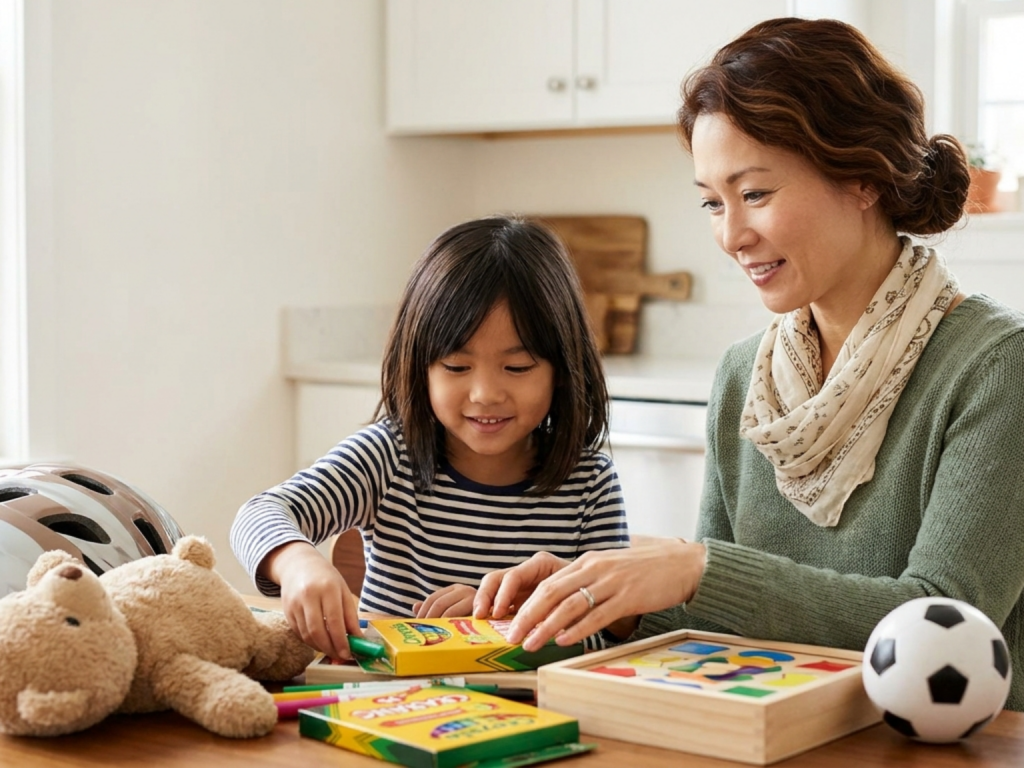
Choosing products for school-age children can feel both easier and more complicated than buying for younger kids. Children ages 6 to 12 usually have stronger preferences, more independence, and wider social exposure, but they still need adults to filter products through safety, developmental readiness, and health considerations.
A thoughtful choice does not have to be the most expensive or educational-looking option. The best products for school-age kids are safe, age-appropriate, durable, and supportive of play, learning, movement, sleep, creativity, and emotional regulation.
Highlights
Age labels are not only about skill level; they also reflect safety testing, small parts, projectiles, magnets, batteries, and supervision needs.
School-age children benefit from products that match their real developmental stage, not just their grade or peer group.
Art materials, sports equipment, electronic devices, and secondhand toys all deserve routine safety checks.
Protective gear, especially certified helmets for wheeled sports, should be treated as essential equipment rather than an optional accessory.
Start with developmental fit, not marketing promises
School-age children are often grouped together, but a 6-year-old and a 12-year-old have very different motor coordination, executive function, impulse control, literacy, and risk perception. Developmentally appropriate toys and everyday products should match the child’s current abilities while giving a safe margin for growth. A product that is too simple may be ignored; one that is too advanced may create frustration or unsafe workarounds.
Research on children’s toy use suggests that age-appropriateness influences how fully children engage with toys, including games, puzzles, instructional materials, and sports toys. In practical terms, this means a child is more likely to use a product as intended when it fits their cognitive and physical stage. This is especially relevant for games with complex rules, science kits, craft tools, and gross motor play equipment.
Age labels are a helpful starting point, not a substitute for parental judgment. Manufacturers use them to indicate developmental suitability and safety concerns such as small parts, sharp edges, projectiles, chemical exposure, or the need for close supervision. If a child has developmental delays, impulsivity, visual impairment, motor coordination difficulties, or a history of mouthing objects, choose based on functional ability rather than chronological age.
It is also reasonable to consider temperament. A cautious child may do well with a challenging construction set, while a highly impulsive child may need simpler tools, clearer rules, and adult supervision for the same product. When in doubt, ask a pediatrician, occupational therapist, physical therapist, or child development professional for individualized guidance, especially if a product is being used to support therapy goals.
Check materials, chemicals, and construction quality
For school-age kids, product safety is less about avoiding every possible risk and more about reducing foreseeable harm. Read the manufacturer’s label before purchase and again before use. Look for sturdy construction, smooth edges, secure seams, and parts that cannot detach during normal play. Painted toys should use lead-free paint, and older secondhand items deserve extra caution because safety standards and recalls change over time.
For fabric products, costumes, dress-up clothes, tents, and sleepover items, choose materials labeled flame-resistant or flame-retardant as appropriate. Stuffed toys should be washable, with tightly secured eyes, noses, and decorative pieces. Even though school-age children are less likely than toddlers to choke on small parts, detached components can still be hazardous for younger siblings, classmates, or children who mouth objects for sensory reasons.
Art products deserve specific attention. Non-toxic art supplies for children should be clearly labeled nontoxic, and children should use them in a ventilated space with handwashing afterward. Avoid assuming that ordinary household products are safe substitutes for child art materials. Solvents, aerosol sprays, resin kits, strong adhesives, and some pigments can irritate the skin, eyes, or respiratory tract and may not be appropriate without adult supervision.
Wood can be a durable, lower-plastic option, but it still needs inspection. Check for splinters, rough surfaces, cracked pieces, loose hardware, and chipped old paint. Plastic products should be intact and easy to clean; discard items that are cracked, sticky, strongly odorous, or degraded. For any product that goes to school, camp, or sports practice, label it clearly and review cleaning instructions to reduce contamination and loss.
Take batteries, magnets, projectiles, and weapons seriously
Some hazards remain high-risk even for older children. Button batteries can cause severe tissue injury if swallowed or inserted into the nose or ear. Products with battery compartments should have secure, preferably screw-closed covers. If a button battery is missing and ingestion is possible, contact emergency medical services or poison control promptly rather than waiting for symptoms.
High-powered magnets are another serious concern. If swallowed, multiple magnets can attract across loops of bowel, causing pressure necrosis, perforation, obstruction, fistula formation, or peritonitis. Magnet sets marketed as desk toys or novelty items should be kept away from children who may mouth objects, and they should be avoided in homes where younger children have access. If magnet ingestion is suspected, urgent medical evaluation is needed.
Projectile toys require careful supervision. Darts, arrows, foam launchers, and similar items should have soft tips and be used only according to instructions. Eye injuries can occur quickly, particularly when children aim at faces or modify products. Protective eyewear may be appropriate for some activities, and clear household rules should include no aiming at people or animals unless the product is specifically designed for supervised sport play with safety equipment.
Products that resemble weapons deserve a conservative approach. BB guns, pellet guns, and air rifles are not ordinary toys and can cause penetrating injuries. Safety guidance commonly advises that BB guns are not appropriate for children under 16. If an older adolescent uses such equipment, it should be under trained adult supervision with strict storage, eye protection, and local legal compliance. Families should also consider the child’s judgment, impulsivity, and mental health before allowing access.
Choose sports, wheeled, and outdoor products with injury prevention in mind
School-age children need active play for cardiometabolic health, musculoskeletal strength, motor planning, mood regulation, and sleep quality. Products that encourage movement can be excellent choices when paired with appropriate safety equipment. Bicycles, scooters, skateboards, inline skates, and hoverboards should fit the child’s size and coordination level. A product that is too large, too fast, or too technically demanding increases fall risk.
Helmets are essential for wheeled sports. Choose a helmet certified by the Consumer Product Safety Commission or Snell, and replace it after a significant impact or when it no longer fits. A helmet should sit level, cover the forehead, and remain snug with the strap fastened. Wrist guards, knee pads, and elbow pads may reduce injury risk for skating and skateboarding, especially during the learning phase.
Footwear matters too. Shoes for running, playground use, and sports should fit securely, support the activity, and be replaced when worn down. Avoid long laces or unstable soles for high-movement play. For organized sports, ask coaches about sport-specific protective gear such as mouthguards, shin guards, eye protection, or properly fitted pads.
Outdoor products also require environmental planning. Trampolines, climbing equipment, and backyard play structures should be placed on appropriate impact-absorbing surfaces and inspected for rust, loose bolts, tears, or unstable anchors. Children with asthma, epilepsy, syncope, joint hypermobility, previous concussion, or other medical conditions may need tailored activity guidance from a healthcare professional before using certain equipment.
Support learning, creativity, and independence without overloading the child
School-age products often promise cognitive acceleration, better grades, or superior focus. A more grounded goal is to support curiosity, practice, and autonomy. Good learning products invite repeated use, allow mistakes, and match the child’s attention span. Examples include age-appropriate books, puzzles, board games, building sets, musical instruments, science kits, and school-age organization tools such as planners, visual schedules, labeled folders, and simple storage systems.
Executive function is still developing throughout childhood and adolescence. Many children need external supports for planning, time awareness, and task initiation. A timer, checklist, homework caddy, or organized backpack station can be more useful than an elaborate productivity system. For children with ADHD, learning disabilities, autism, anxiety, or sensory processing differences, product choice should be individualized and ideally coordinated with school supports or clinicians when needed.
Creativity products should be safe enough for independent practice at the child’s maturity level. Scissors, craft knives, hot glue, soldering tools, sewing needles, and chemistry kits may be appropriate for some older school-age children but not others. The key question is whether the child can understand and follow safety rules consistently, not whether the product looks educational.
Resist the pressure to fill every moment with structured enrichment. Open-ended toys and materials, such as blocks, art supplies, dress-up items, sports balls, and pretend-play props, allow problem-solving and social negotiation. Boredom can also be developmentally useful when it leads to self-directed play rather than immediate digital distraction.
Evaluate digital products and connected devices thoughtfully
Tablets, smartwatches, gaming systems, headphones, and educational apps can be useful, but they introduce issues beyond physical safety. Consider privacy, advertising exposure, in-app purchases, sleep disruption, cyberbullying, and content maturity. A product with strong parental controls is not a substitute for ongoing conversation, but it can reduce preventable risks.
Headphones should allow safe listening volumes. Prolonged high-volume exposure can contribute to noise-induced hearing loss, which is often gradual and preventable. Volume-limiting headphones may help, but adults should still monitor listening habits and encourage breaks. Devices used near bedtime may interfere with sleep through stimulating content, delayed routines, and light exposure.
For school devices, check whether the product is truly needed and compatible with the child’s school expectations. A simple, durable device may be better than a feature-rich one that creates distraction. If a child has vision problems, migraines, sleep concerns, ADHD, anxiety, or compulsive gaming patterns, discuss screen-related strategies with a pediatrician, eye care professional, mental health clinician, or school support team.
Connected toys and apps should be reviewed for data collection and communication features. Disable public chat when possible, use strong passwords, and avoid sharing identifying information. Children benefit from clear family rules about where devices are used, when they are charged, what content is allowed, and how to seek help if something online feels uncomfortable or unsafe.
Build a practical buying and inspection routine
A safe toy inspection routine can prevent many problems. Before buying, read age guidance, safety warnings, material labels, and cleaning instructions. At home, inspect products periodically for broken pieces, exposed wires, loose magnets, cracked plastic, sharp edges, rust, unstable wheels, or missing protective parts. Discard damaged products that cannot be repaired according to manufacturer instructions.
Secondhand products can be economical and environmentally responsible, but they need extra scrutiny. Check for recalls, missing manuals, outdated safety features, and signs of damage. Avoid older painted toys if lead exposure is a concern, and be careful with used helmets because prior impacts may not be visible. For sports gear, musical instruments, and electronics, confirm fit, function, and hygiene before use.
Involve the child in safety checks without making the process frightening. School-age kids can learn to notice loose parts, charge devices safely, wear helmets, wash art supplies off their hands, and put small pieces away from younger siblings. This builds health literacy and shared responsibility.
Finally, remember that product choice is only one layer of safety. Supervision, family rules, school policies, and the child’s medical and developmental context all matter. If a product seems risky but potentially beneficial, such as adaptive sports equipment, sensory tools, or specialized learning technology, consult a qualified professional who understands the child’s needs.
Safety warnings to prioritize
- Seek urgent medical advice if a child may have swallowed a button battery or multiple magnets.
- Do not rely on appearance alone; read labels for age suitability, nontoxic materials, and protective gear certification.
- Avoid BB guns and similar projectile weapons for children under 16, and use strict supervision for older adolescents.
- Replace helmets after significant impact and never buy a used helmet unless its history is certain.
- Keep small parts, magnets, and damaged toys away from younger siblings and children who mouth objects.
Tools & Assistance
- Check manufacturer age labels and safety warnings before purchase.
- Review product recalls before accepting secondhand toys or equipment.
- Ask a pediatrician or occupational therapist about products for children with developmental, sensory, or motor needs.
- Create a monthly home inspection routine for toys, sports gear, art supplies, and electronics.
- Use certified helmets and activity-specific protective equipment for wheeled sports.
FAQ
Are age labels really necessary for school-age children?
Yes. Age labels reflect both developmental suitability and safety risks, including small parts, projectiles, magnets, batteries, and supervision needs.
What should I look for in art supplies?
Choose products labeled nontoxic, follow ventilation and cleaning instructions, and supervise tools such as strong adhesives, cutting tools, or chemistry materials.
Are secondhand toys safe?
They can be, but check for recalls, damage, chipped paint, missing parts, loose magnets, outdated safety standards, and cleaning feasibility.
When should I ask a healthcare professional for advice?
Seek guidance if the child has developmental delays, sensory needs, motor difficulties, chronic medical conditions, past concussion, impulsivity, or a product is being used therapeutically.
Sources
- Nemours KidsHealth — Choosing Safe Toys for School-Age Kids
- Seattle Children's Hospital — Choosing Safe Toys for Kids: Here's What Pediatricians Recommend
- National Institutes of Health via PMC — Children's Utilization of Toys is Moderated by Age-Appropriateness
Disclaimer
This article is for informational purposes only and does not replace medical, developmental, or safety advice from qualified professionals. Consult a pediatrician or appropriate specialist for guidance tailored to your child.














Please log in to leave a comment.