
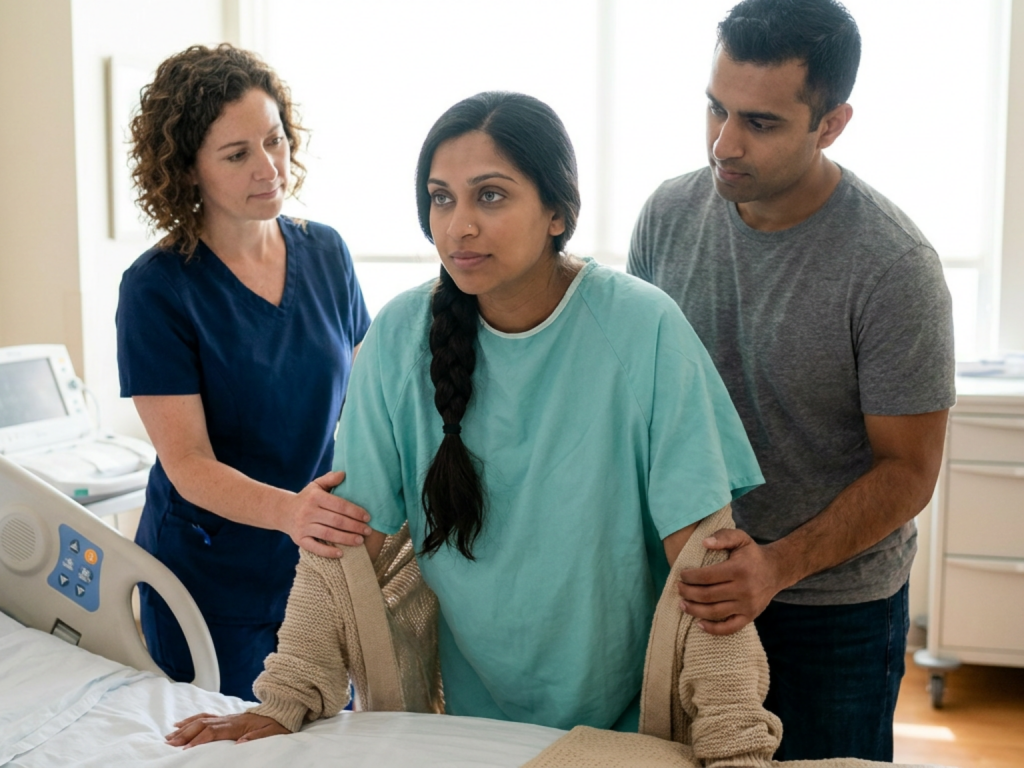
Intro
Natural childbirth usually refers to vaginal birth with limited medical intervention, often without epidural or systemic pharmacologic pain relief. For many families, it is chosen because it supports mobility, physiologic labor progress, and a highly engaged experience. At the same time, it is still childbirth: pain, fatigue, fetal or maternal complications, and the need for urgent intervention can arise even in a carefully prepared low-risk labor.
This article reviews the potential benefits and risks in a balanced way. It is intended to support informed conversations with obstetricians, midwives, anesthesiology teams, and birth settings rather than to define one “best” way to give birth.
Highlights
Natural childbirth may support mobility, active coping, immediate participation after delivery, and lower exposure to medication-related side effects.
The main trade-offs include intense pain, exhaustion, prolonged labor, perineal trauma, and possible need for unplanned medical intervention.
Good candidates are typically people with low-risk pregnancies, but suitability depends on maternal health, fetal status, obstetric history, and birth setting resources.
Preparation matters: childbirth education, continuous support, flexible birth preferences, and a clear escalation plan can make natural birth safer and less overwhelming.
What natural childbirth means
Natural childbirth is not a single medical category, but the phrase commonly describes a vaginal birth that proceeds with minimal intervention and without pharmacological pain relief such as an epidural, spinal anesthesia, or opioid analgesia. Some people use the term to mean unmedicated vaginal birth; others include selective interventions, such as fetal monitoring, intravenous access, artificial rupture of membranes, or oxytocin augmentation when clinically needed.
Because definitions vary, it is more useful to discuss specific preferences: freedom to move, intermittent rather than continuous fetal monitoring when appropriate, use of hydrotherapy or breathing techniques, delayed cord clamping, immediate skin-to-skin contact, and avoidance of routine episiotomy. A low-intervention birth plan can clarify these preferences while also stating when medical escalation is acceptable or desired.
Natural birth is not the same as refusing care. A supportive team can honor physiologic labor while still watching for warning signs such as abnormal fetal heart rate patterns, maternal fever, heavy bleeding, hypertensive complications, or labor arrest. The safest plans are flexible: they protect autonomy without making a person feel they have failed if analgesia, operative vaginal birth, or cesarean section becomes necessary.
Potential benefits for the birthing person
One commonly reported benefit of natural childbirth is a greater sense of control and active participation. Remaining able to move, change positions, use the shower or birth tub where available, and follow instinctive pushing urges may help some people feel more connected to the labor process. Mobility can also improve comfort and may support fetal descent by using gravity and pelvic movement.
Avoiding epidural or systemic opioid medication also avoids certain medication-related side effects. Epidural analgesia is generally safe, but it may be associated with maternal hypotension, fever, urinary retention, itching, reduced mobility, or the need for bladder catheterization. Without these medications, some people remain more alert immediately after birth and may find it easier to begin skin-to-skin care or breastfeeding.
For uncomplicated vaginal births, recovery is often faster than after major abdominal surgery. Many people can eat, walk, void, and care for the newborn sooner. Compared with instrumental birth or cesarean delivery, spontaneous vaginal birth is often associated with shorter hospitalization and fewer procedure-related complications, although individual outcomes vary.
There may also be emotional benefits. Some people describe natural birth as empowering, especially when they felt well supported and their preferences were respected. However, empowerment should never be tied to tolerating pain at all costs. A birth can be strong, informed, and meaningful whether or not medication or intervention is used.
Potential benefits for the newborn and early bonding
When birth is uncomplicated, natural childbirth can support immediate newborn contact. A parent who is awake, mobile, and not recovering from surgery may be able to hold the baby skin-to-skin, initiate breastfeeding, and participate in early care soon after delivery. Early skin-to-skin contact helps stabilize newborn temperature, supports glucose regulation, and encourages feeding cues.
Vaginal birth also exposes the newborn to maternal vaginal and intestinal microbiota, which may influence early colonization of the infant microbiome. Research on long-term clinical implications is evolving, and this should not be overstated, but it is one reason physiologic vaginal birth is often considered beneficial when it is safe for both parent and baby.
In many cases, avoiding sedating medications during labor may mean the newborn is less affected by transient medication-related drowsiness. This can make early latch and alertness easier for some dyads. That said, newborn behavior depends on many factors, including gestational age, labor length, fetal tolerance of labor, maternal glucose status, infection risk, and delivery complications.
The priority is not a particular birth label but a healthy transition. If fetal monitoring suggests distress, if meconium is present with concerning signs, or if delivery is not progressing safely, intervention may better protect the baby than continuing an unmedicated plan.
Risks and limitations to understand
The most immediate limitation of natural childbirth is pain. Labor pain can be severe, especially during transition, back labor, induction or augmentation with oxytocin, or a prolonged second stage. Some people cope well with preparation and continuous support, while others experience panic, exhaustion, vomiting, hyperventilation, or a sense of losing control. Requesting pharmacologic pain relief is a valid medical choice, not a failure.
Natural childbirth can also involve longer or more physically demanding labor, particularly for first births. Prolonged labor may increase fatigue, dehydration, ketosis, infection risk after membrane rupture, and the chance that oxytocin, assisted vaginal birth, or emergency C-section during labor becomes necessary. A person may begin with a natural birth plan and still need rapid changes if maternal or fetal status shifts.
Vaginal birth carries risks of perineal tears after vaginal birth, including first- and second-degree lacerations and, less commonly, obstetric anal sphincter injuries. Perineal trauma can cause pain, bleeding, dyspareunia, urinary or fecal symptoms, and longer pelvic floor recovery. Other possible complications include postpartum hemorrhage, retained placenta, shoulder dystocia, infection, and worsening of preexisting pelvic floor symptoms.
There are also psychological risks if expectations are rigid. If a person strongly identifies natural birth as the only acceptable outcome, an unplanned epidural, operative delivery, or cesarean can feel traumatic. Preparation should include reassurance that safety-based changes are part of good care.
Who may or may not be a good candidate
Natural childbirth may be reasonable for many people with low-risk, singleton pregnancies at term, especially when the baby is head-down, maternal vital signs are stable, fetal growth is reassuring, and there is access to skilled labor support. It may also be considered in some people planning vaginal birth after cesarean, but this requires individualized counseling about uterine rupture risk, continuous assessment, and immediate surgical capability when recommended by the care team.
Natural birth may be less advisable, or may require a higher-acuity setting, when there are significant maternal or fetal risk factors. Examples include placenta previa, vasa previa, severe preeclampsia, certain cardiac or neurologic conditions, active significant bleeding, nonreassuring fetal status, malpresentation, multiple gestation with added risk, suspected macrosomia with other concerns, or a need for planned cesarean section. This list is not exhaustive.
Birth location matters. A hospital labor unit, hospital-based midwifery service, freestanding birth center, and home birth setting differ in monitoring options, emergency medications, anesthesia availability, blood products, neonatal resuscitation capability, and transfer time. People considering out-of-hospital natural birth should discuss eligibility criteria, transfer protocols, emergency cesarean capability, and how complications such as postpartum hemorrhage management are handled.
The best candidate is not the person with the highest pain tolerance. It is someone whose clinical situation is appropriate, whose preferences are informed, and whose team can respond quickly if the risk profile changes.
Preparing for a safer natural birth
Preparation combines medical planning and coping skills. Prenatal visits should review obstetric history, current pregnancy risks, fetal position, group B streptococcus status, blood pressure, anemia, preferences for monitoring, and what would trigger a change in plan. A birth preferences document can be helpful if it is concise and flexible.
Nonpharmacologic pain strategies include rhythmic breathing, position changes, upright labor, counterpressure, massage, heat or cold packs, water immersion when appropriate, sterile water injections for back labor in some settings, visualization, hypnosis-based techniques, and continuous labor support from a doula, midwife, nurse, partner, or trained support person. These tools do not eliminate pain, but they can reduce fear and improve coping.
It is also wise to prepare for medical options before labor begins. Understanding nitrous oxide during labor, intravenous opioids, epidural analgesia, assisted vaginal birth, and cesarean indications helps reduce decision shock if circumstances change. Ask in advance how quickly anesthesia can be placed, whether eating and drinking policies vary by risk level, and what monitoring is recommended.
Finally, postpartum preparation matters. Plan for perineal care, pelvic floor symptoms, breastfeeding support, sleep protection, emotional monitoring, and warning signs such as heavy bleeding, fever, severe headache, chest pain, shortness of breath, calf swelling, or thoughts of self-harm. Natural birth can still require significant recovery.
Making an informed, compassionate decision
The benefits and risks of natural childbirth are deeply personal because they involve physiology, values, pain, safety, prior experiences, and the realities of a specific pregnancy. For one person, avoiding an epidural may feel freeing. For another, epidural analgesia may be the tool that makes birth feel calm and humane. Both experiences deserve respect.
A useful decision-making approach is to separate preferences from priorities. Preferences might include dim lighting, movement, minimal vaginal exams, or no routine rupture of membranes. Priorities are broader: maternal safety, fetal well-being, respectful communication, timely pain relief if requested, and rapid intervention when needed. When preferences and priorities conflict, priorities should guide care.
Shared decision-making works best when questions are direct: What are the benefits of waiting? What are the risks of waiting? What alternatives exist? How urgent is the decision? What would make you recommend changing course? These questions can help a laboring person or support partner stay engaged even under stress.
Natural childbirth can be a positive, safe option for many families, but it should never be framed as morally superior. The healthiest birth plan is informed, adaptable, and centered on respectful care for both the birthing person and the baby.
Seek urgent care during labor or postpartum
- Heavy vaginal bleeding, fainting, chest pain, or shortness of breath needs immediate medical attention.
- Severe headache, visual symptoms, right upper abdominal pain, or very high blood pressure may signal a hypertensive emergency.
- Fever, foul-smelling fluid, or severe uterine tenderness can suggest infection.
- Decreased fetal movement, persistent abnormal fetal heart rate concerns, or green fluid with distress signs requires prompt assessment.
- Severe perineal pain, inability to urinate, or loss of bowel control after birth should be discussed urgently.
Tools & Assistance
- Discuss a flexible birth preferences document with your obstetrician or midwife.
- Take an evidence-based childbirth education class that includes both nonpharmacologic and pharmacologic pain options.
- Ask your birth setting about emergency transfer, anesthesia availability, and neonatal resuscitation resources.
- Consider continuous labor support from a trained doula or experienced support person.
- Arrange postpartum follow-up for pelvic floor recovery, feeding support, and emotional health.
FAQ
Is natural childbirth always safer than an epidural or cesarean birth?
No. Natural childbirth may reduce some medication and procedure-related risks in low-risk labor, but epidural analgesia or cesarean birth can be safer or necessary in specific clinical situations.
Can I change my mind and request pain medication during labor?
Yes. Many people revise their plans during labor. Ask your care team in advance what pain relief options are available and how timing affects access.
Does natural childbirth mean no monitoring?
No. Monitoring can range from intermittent auscultation to continuous fetal heart rate assessment depending on maternal and fetal risk factors, medications, and labor progress.
What if my natural birth plan ends in a C-section?
That can happen despite excellent preparation. An emergency C-section during labor may be recommended for fetal distress, labor arrest, bleeding, or other urgent concerns.
How can I reduce the risk of tearing?
No method prevents all tears, but controlled pushing, warm compresses, perineal support, and avoiding unnecessary episiotomy may help. Discuss individualized strategies with your clinician.
Sources
- National Institutes of Health / PubMed Central — Outcomes of Spontaneous (Natural) Birth vs. Instrumental Birth: A Systematic Review and Meta-Analysis
- Mayo Clinic — Natural Childbirth: Benefits, Risks, and Preparation
- WebMD — What to Know About Natural Birth: Risks, Benefits, and How to Prepare
Disclaimer
This article is for informational purposes only and does not replace medical advice, diagnosis, or treatment. Discuss birth plans, risks, and urgent symptoms with a qualified healthcare professional.















Please log in to leave a comment.