
Intro
Natural birth rates are often used as a shorthand for how often a maternity service supports vaginal, physiologic, or low-intervention birth. Patient satisfaction adds a different but equally important lens: whether the person giving birth felt safe, respected, informed, supported, and meaningfully involved in care.
For medically literate readers, the key point is that natural birth rates and satisfaction scores are not interchangeable quality markers. A high vaginal birth rate can be encouraging, but it only becomes clinically meaningful when interpreted alongside case mix, safety outcomes, communication quality, pain management choices, and respect for informed consent.
Highlights
Natural birth rates can reflect a low-intervention culture, but they must be interpreted with safety outcomes and patient complexity.
Patient satisfaction during labor is strongly shaped by communication, support, autonomy, and expectations, not only by delivery mode.
Pain relief and satisfaction are related but not identical; some patients value control, coping, and participation more than lower pain scores alone.
A supportive maternity system avoids pressuring patients toward either natural birth or intervention and prioritizes individualized, evidence-informed care.
What natural birth rates can and cannot tell you
Natural birth rates usually refer to the proportion of births that occur vaginally with limited medical intervention, often without pharmacologic analgesia or routine augmentation. In practice, definitions vary. Some facilities count any vaginal delivery, while others reserve the term for a natural vaginal birth without epidural analgesia, operative vaginal delivery, or major intrapartum interventions. That variation matters because a reported rate can look impressive while describing a very different clinical population.
A higher natural birth rate may suggest that a service is skilled in physiologic labor support, position changes, intermittent assessment when appropriate, and patience with normal labor progress. It may also reflect a healthier or lower-risk patient population. Conversely, a lower rate may be appropriate in a referral center caring for placenta previa, severe hypertensive disease, fetal growth restriction, multiple gestation, or complex trial-of-labor cases. Rates are most useful when paired with cesarean indications, neonatal outcomes, severe maternal morbidity, transfer patterns, and patient-reported experience measures.
Patient satisfaction is not simply the absence of pain
Labor pain is intense, biologically purposeful, and highly variable. It would be simplistic, however, to assume that lower pain automatically produces a more satisfying birth. Research on women electing natural childbirth found that people who later requested epidural analgesia often had better pain relief yet reported lower satisfaction. This does not mean epidurals reduce satisfaction; rather, it suggests that a mismatch between expectations and experience can be emotionally significant.
For many patients, satisfaction is influenced by whether pain felt meaningful, manageable, and accompanied by skilled support. Nonpharmacologic pain coping strategies, such as breathing patterns, hydrotherapy, massage, sterile water injections in selected settings, upright positions, continuous labor support, and a calm environment, may improve coping even when pain remains high. Satisfaction is also affected by whether pharmacologic options were explained without judgment. A patient who chooses epidural analgesia after informed discussion may feel deeply satisfied; a patient who feels she failed at natural birth may not. The clinical goal is not a predetermined pain score, but congruence between values, informed options, and compassionate care.
Communication and support are clinical interventions
Studies of labor satisfaction repeatedly identify provider communication and support as central drivers of patient experience. This is clinically intuitive. Labor often involves uncertainty, changing cervical exams, fetal heart rate interpretation, fatigue, and time-sensitive decisions. When clinicians explain what they are seeing, why they recommend a step, what alternatives exist, and what may happen next, patients are more likely to feel oriented rather than managed.
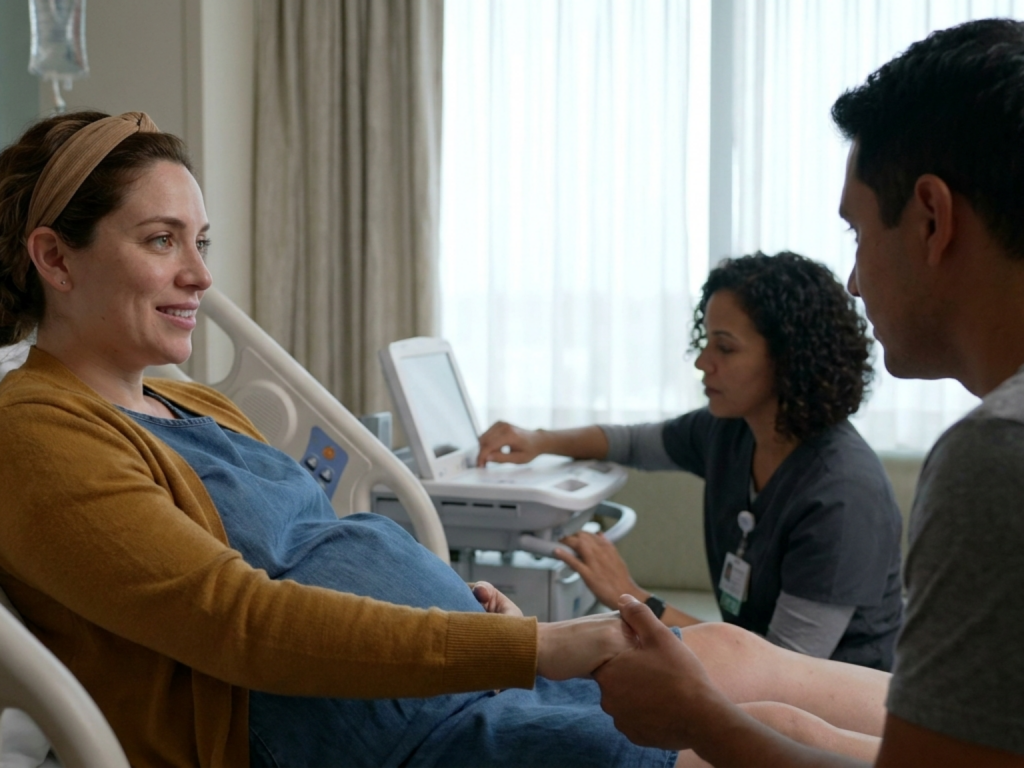
A supportive obstetric team can improve satisfaction even when labor does not unfold as planned. Key behaviors include introducing team members, asking about birth preferences, checking understanding before procedures, naming urgent situations calmly, and preserving consent wherever possible. Continuous support from a doula, midwife, nurse, partner, or chosen companion may also reduce isolation and improve coping. Importantly, support is not the same as promising a natural birth. It means staying emotionally and clinically present through spontaneous labor, induction, epidural placement, assisted delivery, cesarean birth, postpartum hemorrhage management, or neonatal assessment. Patients often remember tone, eye contact, and whether they were treated as participants in their own care.
Autonomy, control, and physiologic care
Childbirth satisfaction in physiologic and routine childbirth has been associated with self-control, involvement in decisions, nonmedical pain relief, and the birth setting. Self-control does not mean controlling every physiologic event. It means having enough information, privacy, physical freedom, and relational safety to respond to labor rather than feeling acted upon. For a patient pursuing unmedicated vaginal birth, this may include eating or drinking according to local policy, moving freely, using water, choosing positions for pushing, and avoiding unnecessary vaginal examinations.
Autonomy also includes the right to change course. A person may plan low-intervention labor and later request analgesia, augmentation, or operative assistance. Another may decline a nonurgent intervention after understanding the potential benefits and risks. Shared decision-making works best when clinicians distinguish preference-sensitive choices from urgent safety recommendations. In preference-sensitive moments, patient values should carry substantial weight. In emergencies, the team should still explain the situation as clearly as time allows, obtain consent when feasible, and debrief afterward. This approach supports dignity without romanticizing physiologic birth or minimizing medical risk.
Safety context: case mix, transfers, and cesarean readiness
Natural birth rates should never be used to shame patients or clinicians when intervention is medically appropriate. For natural birth in high-risk situations, the relevant question is not whether intervention can be avoided at all costs, but whether the plan preserves physiologic opportunities while maintaining an adequate safety margin. Conditions such as prior uterine surgery, insulin-treated diabetes, preeclampsia, suspected macrosomia, fetal malpresentation, abnormal placentation, or nonreassuring fetal heart rate patterns may change monitoring, location, staffing, and thresholds for intervention.
Birth setting also affects how natural birth rates should be interpreted. A low-risk pregnancy birth setting may safely support less continuous technology for selected patients, but it still requires protocols for hemorrhage, shoulder dystocia, neonatal resuscitation, and transfer. Hospitals must balance low-intervention care with immediate access to anesthesia, operating rooms, blood products, and neonatal support. Birth centers and home birth services need clear eligibility criteria and rapid escalation pathways. Patient satisfaction is highest when safety planning is transparent rather than frightening. Many patients feel more confident pursuing physiologic labor when they understand what would trigger a change in plan and how the team would respond.
How care teams can improve both outcomes
Improving natural birth rates and satisfaction does not require abandoning evidence-based obstetrics. It requires reducing unnecessary variation, supporting normal physiology, and measuring what patients actually experience. Practical improvements include early prenatal counseling about labor preferences, standardized admission criteria for latent versus active labor, mobility-friendly monitoring when appropriate, access to doulas or continuous support, and staff training in trauma-informed communication.
- Use birth plans as communication tools, not contracts.
- Review pain management as a menu that includes both pharmacologic and nonpharmacologic options.
- Offer position changes in labor unless contraindicated by maternal or fetal status.
- Explain induction, amniotomy, oxytocin, operative delivery, and cesarean recommendations in plain clinical language.
- Debrief after unexpected events, especially emergency cesarean, hemorrhage, neonatal transfer, or severe pain.
Teams should also audit outcomes beyond the delivery route: obstetric anal sphincter injury, postpartum hemorrhage, infection, neonatal acidemia, NICU admission, breastfeeding support, respectful care complaints, and mental health follow-up. A service that raises its natural birth rate while worsening safety or autonomy has not improved quality. A service that helps more suitable patients achieve their goals while intervening promptly when needed is moving in the right direction.
Using satisfaction data without pressuring patients
Patient satisfaction surveys can be powerful, but they are vulnerable to bias. A person may rate care highly because the baby is well, even if consent was poor. Another may rate care poorly after an unavoidable complication despite excellent clinical management. Surveys should ask specific questions about respect, communication, pain support, decision involvement, cultural safety, and postpartum debriefing, rather than relying only on a global satisfaction score.
Natural birth messaging also needs care. Celebrating physiologic birth can empower some patients, but it can make others feel responsible for outcomes outside their control. The most ethical framing is values-based and flexible: patients deserve accurate information, skilled labor support, and timely intervention when benefits outweigh risks. Satisfaction improves when people are not treated as failures for needing analgesia, induction, assisted vaginal birth, or cesarean delivery. Birth is both a physiologic process and a medical event with emotional meaning. Good care protects all three dimensions: physiology, safety, and personhood.
When to seek urgent clinical help
- Heavy vaginal bleeding, severe abdominal pain, seizure, fainting, or chest pain needs urgent medical evaluation.
- Reduced fetal movement, persistent abnormal fetal heart rate concerns, or ruptured membranes with fever should be assessed promptly.
- Severe headache, visual symptoms, right upper quadrant pain, or marked swelling may signal hypertensive disease and should not be ignored.
- A desire for natural birth should not delay recommended emergency care for maternal or fetal compromise.
- Discuss any plan to decline monitoring, induction, analgesia, or cesarean delivery with a qualified maternity clinician.
Tools & Assistance
- Bring a concise birth preferences document to a prenatal visit and ask the team to review feasibility.
- Ask the maternity unit how it defines and reports natural birth rates, vaginal birth rates, and cesarean indications.
- Request counseling on pharmacologic and nonpharmacologic labor pain options before labor begins.
- Consider continuous labor support from a trained doula, midwife, nurse, partner, or chosen support person.
- Ask for a postpartum debrief if labor involved emergency decisions, major deviation from the plan, or distress.
FAQ
Does a higher natural birth rate mean a hospital is better?
Not by itself. A higher rate may reflect strong physiologic labor support, but it must be interpreted with patient risk profile, safety outcomes, cesarean indications, neonatal outcomes, and patient-reported experience.
Can someone be satisfied with birth after an epidural or cesarean?
Yes. Satisfaction often depends more on respect, communication, informed consent, and emotional support than on achieving a specific delivery mode.
Why might pain relief not guarantee higher satisfaction?
Pain relief helps many patients, but satisfaction also reflects expectations, sense of control, support, involvement in decisions, and whether the person felt heard during labor.
Should natural birth be attempted in high-risk pregnancy?
Sometimes elements of physiologic labor can be supported, but suitability depends on the specific condition, fetal status, prior obstetric history, available monitoring, and emergency resources. This should be planned with the maternity care team.
What should patients ask when comparing birth settings?
Ask about eligibility criteria, transfer protocols, fetal monitoring options, emergency cesarean access, hemorrhage response, neonatal resuscitation capability, and how patient experience is measured.
Sources
- Obstetrics & Gynecology — Factors Associated with Patient Satisfaction during Labor: A Cross-Sectional Study
- PubMed — Maternal satisfaction and pain control in women electing natural childbirth
- PubMed Central — Factors Related to Women's Childbirth Satisfaction in Physiologic and Routine Childbirth
Disclaimer
This article is for informational purposes only and does not replace individualized medical advice. Consult a qualified obstetric, midwifery, or maternity care professional about personal birth planning and safety decisions.















Please log in to leave a comment.