
Intro
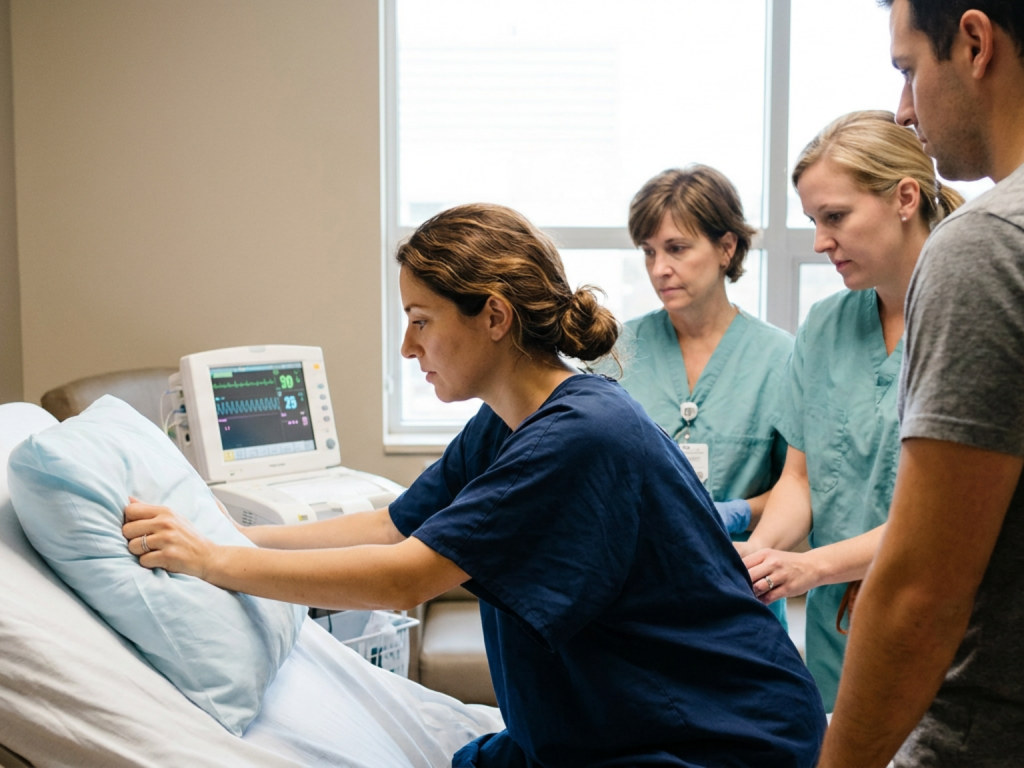
Natural birth in a hospital with doctors is often chosen by people who want an unmedicated labor while still having immediate access to clinical monitoring, obstetric judgment, and emergency care if it becomes necessary. In practice, it usually means a vaginal birth without pain medication, supported by clinicians who can watch the labor closely and respond if mother or baby needs help.
For many families, the appeal is balance: preserving a physiologic labor experience while reducing the risk of being far from medical support. That balance depends on clear communication, a flexible plan, and a team that respects birth preferences without losing sight of safety.
Highlights
A natural birth in hospital usually means an unmedicated vaginal birth, not a refusal of medical care. The goal is to keep labor as physiologic as possible while preserving access to obstetric support.
Doctors and midwives can monitor fetal wellbeing and maternal safety during labor, which matters because labor can change quickly even when it begins normally.
Comfort measures such as breathing, massage, movement, and hydrotherapy can reduce distress without medication, and many people combine several approaches.
A strong birth plan works best when it is discussed early, written clearly, and left flexible enough to adapt if labor or monitoring changes.
Choosing a supportive provider matters as much as choosing a hospital, because respectful communication can reduce conflict and help you feel more secure.
What natural birth means in a hospital
In most clinical settings, natural birth usually means labor and vaginal birth without pharmacologic pain relief. Some people use the term more broadly to mean a physiologic labor with minimal intervention, but the core idea is the same: let labor unfold as naturally as possible while still being in a place where doctors and midwives can step in if needed.
That hospital context matters. A natural birth in a hospital is not the same as an unassisted birth, and it is not a test of endurance. It is a planned birth with professional attendance during childbirth, routine surveillance, and access to interventions if safety requires them. Many people find that reassuring rather than restrictive, because it means they can aim for an unmedicated vaginal birth without giving up backup options.
The most useful mindset is not “all or nothing,” but “support the body first, intervene when clinically indicated.” That framing helps many families prepare for the emotional and physical reality of labor while remaining grounded in medical safety.
Planning ahead with your obstetric team
Preparation usually starts well before the due date. The NHS and Mayo Clinic both emphasize early conversations with your doctor or midwife, because preferences are easier to honor when the team understands them before labor becomes intense. A low-intervention birth plan can identify what matters most to you: movement in labor, fewer interruptions when possible, non-medical comfort measures, and a clear explanation before any procedure is recommended.
It helps to be specific rather than vague. For example, you might say that you want to try position changes before medication, or that you would like updates on fetal heart rate monitoring in plain language. If a hospital has different ways of supporting labor, ask which options are available and how often policies change in response to maternal or fetal status. The goal is not to control every variable; it is to create a shared plan that respects your preferences and remains medically sound.
Families often benefit from asking in advance who will be present, how decisions are escalated, and how quickly the team can explain alternatives if labor becomes more complex. That kind of preparation reduces surprises and can make a natural birth feel more manageable.
What doctors watch during labor
During labor, the medical team is watching more than contraction strength. They assess maternal vital signs, pain patterns, hydration, progress in cervical dilation and effacement, and the baby’s tolerance of labor through fetal heart rate monitoring. That monitoring can be intermittent or continuous depending on the situation, the hospital protocol, and whether any concerns arise.
For someone pursuing a natural birth, the key point is that monitoring is not automatically a sign of failure. It is a safety tool. Labor can progress normally for hours and then change quickly, so clinicians use observation to decide whether reassurance is enough or whether labor needs closer follow-up. This is one reason people choose a hospital: it offers physiologic birth with emergency safeguards already in place.
Doctors also help interpret what is normal versus what deserves attention. A contraction pattern that feels overwhelming may still be within the expected range, while a concerning fetal tracing may need faster action even if the laboring person feels relatively well. That difference can be hard emotionally, which is why clear explanations matter so much.
Comfort measures without medication
Non-medical comfort measures are the practical heart of many natural births. Mayo Clinic, WebMD, and the NHS all describe approaches such as massage, breathing techniques, relaxation, mobility, and other hands-on support that can help a laboring person cope without drugs. These methods do not eliminate pain, but they can improve tolerance, reduce tension, and help labor feel more organized.
Position changes are especially useful because they can alter pelvic mechanics and sometimes make contractions feel more manageable. Walking, leaning forward, kneeling, side-lying, or using a birthing ball may each offer a different kind of relief. Hydrotherapy, such as a warm shower or immersion in water when available, can also be soothing and may help with muscle relaxation and perceived pain. Many people combine several strategies rather than depending on just one.
Support from a partner, doula, nurse, or midwife can be just as important as the technique itself. Calm cueing, pressure on the lower back, a quiet room, and permission to move freely can all make a real difference. If you are preparing for unmedicated birth, it is worth practicing these methods before labor so they feel familiar when contractions become intense.
When a natural birth plan needs to change
A flexible plan is not a weak plan. Labor sometimes slows, the cervix does not dilate as expected, maternal exhaustion becomes significant, or the fetal heart pattern suggests that the baby is not tolerating labor well. When that happens, clinicians may discuss options such as artificial rupture of membranes, oxytocin augmentation in labor, epidural analgesia in labor, operative vaginal birth, or cesarean birth indications, depending on the clinical picture.
These conversations can feel disappointing, especially if you hoped for a completely unmedicated experience. It can help to remember that an intervention is not automatically a setback; often it is a response to new information. Good obstetric care is not about forcing one ideology. It is about choosing the safest next step with the best available evidence and the least unnecessary disruption.
Ask the team what is being corrected, what the likely benefits are, what the risks are, and what alternatives exist. That kind of discussion preserves agency even when the birth plan is changing. Many people who intended a natural birth still value the experience deeply, even when labor required a medical pivot.
After the birth: recovery, bonding, and reflection
The first hour after birth can be physically intense and emotionally overwhelming, whether the labor was straightforward or required extra support. Hospital teams will usually continue to check bleeding, uterine tone, vital signs, and the newborn’s transition to extrauterine life. If the birth was unmedicated, some people are surprised by how powerful the emotional release feels once contractions stop.
This is also a time to preserve calm, skin-to-skin contact when possible, and feeding support if breastfeeding is planned. If labor did not unfold exactly as expected, that does not erase the meaning of the birth. Many parents need time to process what happened, especially if they had a strong preference for a natural birth and ended up needing a medical intervention. A brief debrief with the doctor or midwife can help make sense of the sequence of events and reduce confusion later.
Recovery continues after discharge. Adequate rest, hydration, pain control if needed, and follow-up for postpartum concerns are all part of safe care. If you had a natural birth in hospital, the weeks afterward may feel more peaceful if you also make space to reflect on what worked, what surprised you, and what you would want to repeat or change in a future birth.
When to seek urgent care
- Seek immediate medical help for heavy bleeding, severe abdominal pain, or fainting.
- Contact your team right away for reduced fetal movement, fever, or fluid that seems concerning.
- Do not wait if you have severe headache, vision changes, or symptoms that worry you during labor or after birth.
- Any abnormal fetal monitoring result or sudden change in maternal condition needs prompt assessment by clinicians.
Tools & Assistance
- A written birth plan reviewed in advance with your obstetrician or midwife
- A hospital tour or labor ward orientation before the due date
- A childbirth education class that covers coping strategies and hospital procedures
- A support person who can advocate calmly and help you stay focused
- Breathing, relaxation, and position-change practice during late pregnancy
FAQ
What does natural birth mean in a hospital?
It usually means vaginal birth without pain medication, supported by clinicians who can monitor labor and intervene if safety requires it.
Can doctors support a low-intervention birth?
Yes. Many obstetric teams can support movement, comfort measures, and a low-intervention birth plan while still monitoring mother and baby.
What if I decide I want pain relief during labor?
That can be discussed with your team in real time. Preferences can change, and asking for medication does not mean you failed.
Is a natural birth always the safer option?
Not necessarily. Safety depends on the pregnancy, the labor, and the clinical findings, so individualized medical guidance matters.
Sources
- Mayo Clinic — What is a natural birth?
- WebMD — Natural childbirth: What to expect
- National Health Service (NHS) — Natural childbirth
Disclaimer
This article is for general information only and does not replace individualized medical advice. Please discuss your pregnancy, birth plan, and any concerns with your obstetric clinician or midwife.


















Please log in to leave a comment.