
Intro
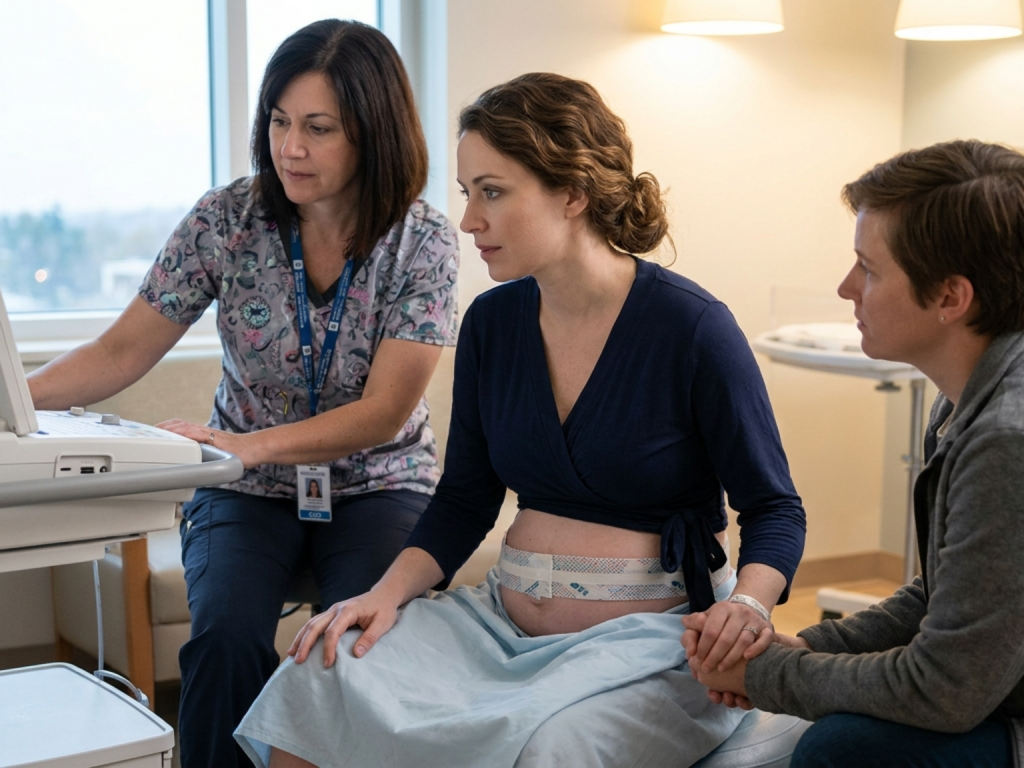
Childbirth care is moving toward a more balanced model: protecting physiologic labor when it is progressing safely, while using medical interventions promptly when they are likely to improve maternal or neonatal outcomes. For many people, this balance can feel emotionally complicated. Wanting a low-intervention birth and needing clinical help are not opposites; both can be part of respectful, evidence-based care.
This article reviews current trends in childbirth interventions through a medically literate lens. It focuses on practices supported by evidence, practices that are increasingly questioned when used routinely, and ways families can discuss preferences with their maternity team without delaying care when urgent problems arise.
Highlights
Evidence-based childbirth care increasingly emphasizes respectful communication, consent, mobility, companionship, and individualized clinical assessment.
Continuous labor support, upright positioning when safe, delayed cord clamping, immediate skin-to-skin contact, and early breastfeeding are widely supported practices.
Interventions such as oxytocin, artificial rupture of membranes, continuous electronic fetal monitoring, operative birth, and cesarean delivery can be valuable when medically indicated, but routine use is not always beneficial.
The safest birth plan is flexible: it names preferences, anticipates escalation, and preserves rapid access to emergency obstetric and neonatal care.
From routine intervention to individualized care
A major trend in childbirth care is the reframing of intervention. Evidence-based care does not mean avoiding all technology, medication, or procedures. It means matching the intervention to the clinical situation, the pregnant person’s values, fetal wellbeing, local resources, and the expected balance of benefit and harm. This is why modern guidance places respectful maternity care, effective communication, privacy, and informed consent at the same level of importance as technical obstetric skill.
Historically, many facilities used standardized routines for most labors: bed rest, restricted oral intake, frequent examinations, continuous monitoring, early amniotomy, coached pushing in a supine position, immediate cord clamping, and liberal episiotomy. Current evidence has moved away from several of these as default practices, especially for healthy people in spontaneous labor. Medical interventions in labor remain essential, but the trend is toward selective, documented use rather than automatic use.
This shift is also psychological. A positive childbirth experience is not defined only by the mode of birth. It includes being heard, being informed before procedures, having pain taken seriously, receiving culturally safe care, and being supported if the plan changes. For a medically literate reader, the practical takeaway is that evidence-based birth care is both physiologic and clinical: it protects normal labor while preserving readiness to intervene.
Supportive care with measurable effects
Some of the most effective childbirth interventions are not invasive. Continuous one-to-one intrapartum support is repeatedly associated with better birth experience and may increase spontaneous vaginal birth while reducing some forms of intervention. Support can come from a trained doula, midwife, nurse, partner, or another chosen companion, depending on setting and availability. The mechanism is plausible: reassurance, advocacy, physical comfort, translation of clinical information, and reduction of fear all affect labor coping and decision-making.
Evidence-based supportive care also includes allowing a companion of choice, maintaining privacy, using respectful language, and providing regular updates about labor progress and fetal status. These are not soft extras. Stress, fear, and loss of control can amplify pain and make consent less meaningful. Trauma-informed birth care is increasingly recognized as an essential part of safe maternity care, especially for people with prior obstetric trauma, sexual trauma, medical racism, pregnancy loss, or emergency birth experiences.
Clinically, good support should not interfere with escalation. A companion or doula does not replace obstetric assessment, anesthesia care, fetal surveillance, neonatal care, or surgical capability. The strongest model is collaborative: the support person helps the patient stay oriented and heard, while the clinical team explains findings, options, urgency, and tradeoffs in clear language.
Mobility, positioning, and pain relief choices
Mobility in labor is a clear example of a low-risk, preference-sensitive intervention. For people without contraindications, walking, standing, swaying, using a birthing ball, kneeling, side-lying, or hands-and-knees positioning may improve comfort and help labor feel more manageable. Upright or mobile positions in the first stage can support fetal descent and may shorten labor for some people. In the second stage, position choice should account for maternal comfort, fetal status, neuraxial anesthesia, clinician access, and any need for urgent assistance.
Nonpharmacologic pain strategies include breathing techniques, massage, heat or cold, water immersion where available, sterile water injections for back pain in some settings, relaxation, counterpressure, and continuous emotional support. These approaches can be used alone or alongside pharmacologic methods. They are not a test of endurance. Pain relief needs can change quickly, and requesting medication is compatible with a thoughtful birth plan.
Epidural analgesia in labor remains one of the most effective options for labor pain. Evidence-based counseling should discuss benefits, limitations, monitoring needs, possible effects on mobility, hypotension management, urinary catheter use in many settings, and rare complications. Systemic opioids or nitrous oxide may be options in some facilities, with different maternal and neonatal considerations. The central trend is choice: pain relief should be available, explained, and revisited without coercion or judgment.
Monitoring, augmentation, and cesarean prevention
Fetal monitoring is another area where risk stratification matters. For low-risk labor, intermittent auscultation is often appropriate when staffing and protocols allow. Continuous fetal heart rate assessment may be recommended when risk factors are present, such as oxytocin use, epidural-related concerns, abnormal fetal heart rate patterns, meconium with concern, maternal fever, hypertension, growth restriction, or trial of labor after cesarean in many settings. The goal is not simply more monitoring; it is timely recognition of fetal compromise while minimizing false alarms and unnecessary operative birth.
Oxytocin augmentation, artificial rupture of membranes, and cervical ripening before induction can be useful when there is a clear indication, but routine acceleration of normally progressing labor is increasingly questioned. Labor progress varies, and older expectations such as a fixed rate of cervical dilation may not apply to every person. Before augmentation, clinicians typically consider contraction pattern, cervical change, fetal position, hydration, analgesia, maternal exhaustion, and fetal status.
Cesarean prevention is not the same as cesarean avoidance at all costs. Evidence-based strategies include continuous support, careful diagnosis of labor arrest, patience in latent labor when maternal and fetal status are reassuring, external cephalic version for some breech presentations, appropriate induction methods, and access to vaginal birth after cesarean for suitable candidates. At the same time, cesarean birth indications must remain clear and actionable when maternal hemorrhage, obstructed labor, uterine rupture concern, placental complications, or nonreassuring fetal status makes surgery the safer option.
Birth, cord, and immediate newborn practices
The moments after birth have become a central focus of evidence-based care. For vigorous term and preterm newborns when maternal and neonatal conditions allow, delayed umbilical cord clamping is widely recommended, often for at least one minute. This supports placental transfusion and neonatal transition. It should be coordinated with active management of the third stage of labor, including uterotonic medication when indicated to reduce postpartum hemorrhage risk.
Immediate skin-to-skin contact is another high-value intervention. Placing the newborn directly on the birthing parent’s chest helps thermoregulation, bonding, early feeding cues, and physiologic stabilization when the baby is well enough. The clinical nuance is important: skin-to-skin should not delay newborn resuscitation after birth when the baby is not breathing effectively, has poor tone, or needs urgent assessment. In those cases, the priority is skilled neonatal support, followed by reunion as soon as medically appropriate.
Early breastfeeding or chestfeeding support is also part of the evidence-based package, especially within the first hour when feasible. Support should be practical and nonjudgmental: positioning, latch assessment, hand expression, supplementation when medically necessary, and respect for informed feeding choices. For the birthing parent, immediate postpartum care also includes assessment of uterine tone, bleeding, vital signs, pain, perineal trauma, and emotional state. The trend is integrated care, not a handoff from birth to baby care as separate events.
Using evidence in a flexible birth plan
A birth preferences document is most useful when it is concise, clinically realistic, and organized around decisions that may actually arise. It can state preferences for support people, mobility, monitoring, pain relief, vaginal examinations, pushing positions, cord clamping, skin-to-skin, feeding, and communication style. It should also include preferences for unplanned cesarean birth, operative vaginal birth, postpartum hemorrhage management, and neonatal assessment, because flexibility is part of safety.
Good planning starts before labor. Ask the care team which practices are routine in the facility, what options depend on staffing or room availability, when intermittent monitoring is allowed, how epidural placement affects mobility, how emergencies are explained, and whether the unit has immediate emergency cesarean capability. People considering a freestanding birth center or home birth transfer plan should discuss eligibility, distance to hospital care, transport process, fetal monitoring approach, hemorrhage protocols, and newborn resuscitation capacity.
Evidence should support shared decision-making, not become another source of pressure. A low-intervention birth plan can coexist with induction, antibiotics, epidural analgesia, assisted vaginal birth, or cesarean delivery if circumstances change. The most protective question is often not, Can I avoid this intervention? but, What is the indication, what are the alternatives, how urgent is the decision, and what happens if we wait? That conversation preserves autonomy while keeping clinical risk visible.
When to seek urgent help
- Heavy vaginal bleeding, severe abdominal pain, fainting, seizure, or symptoms of shock require emergency care.
- Decreased or absent fetal movement should be assessed promptly according to local maternity guidance.
- Fever, severe headache, visual changes, chest pain, shortness of breath, or high blood pressure symptoms need urgent clinical review.
- During labor, abnormal fetal heart rate patterns, cord prolapse concern, shoulder dystocia, or severe hemorrhage require immediate professional intervention.
- Do not delay recommended emergency care in order to preserve a birth preference.
Tools & Assistance
- Discuss your birth preferences document with your obstetrician, midwife, or family physician before labor.
- Ask your birth facility about monitoring options, induction protocols, pain relief availability, and emergency response capacity.
- Consider childbirth education that explains both physiologic labor and common escalation pathways.
- Identify a support person or doula who can help with communication, comfort measures, and advocacy.
- Review postpartum and newborn care plans, including feeding support, hemorrhage precautions, and follow-up.
FAQ
Does evidence-based birth care mean avoiding induction or epidural analgesia?
No. Evidence-based care means using induction, epidural analgesia, surgery, or other interventions when the benefits, risks, and alternatives have been discussed and the clinical indication or patient preference supports their use.
Is continuous fetal monitoring always safer?
Not always. Continuous monitoring is important for many higher-risk situations, but low-risk labor may be safely monitored with intermittent auscultation in appropriate settings. The best choice depends on risk factors, staffing, protocols, and fetal status.
Can a person still have a positive birth experience after an emergency cesarean?
Yes. A positive experience can include feeling informed, respected, supported, and reunited with the baby as soon as safely possible, even when urgent surgery is needed.
What is the most useful way to write a birth plan?
Keep it short, specific, and flexible. Include preferences for routine labor, pain relief, newborn care, and unexpected escalation so the team understands what matters most if decisions need to change quickly.
Sources
- World Health Organization — WHO recommendations: intrapartum care for a positive childbirth experience
- PubMed Central / NIH — Evidence-based intrapartum care during vaginal births
- PubMed Central / NIH — Antenatal and intrapartum interventions for reducing caesarean birth: an overview of systematic reviews
Disclaimer
This article is for general medical education only and does not replace individualized care from a qualified healthcare professional. Always consult your obstetric, midwifery, or emergency care team about labor and birth decisions.

















Please log in to leave a comment.