
Intro
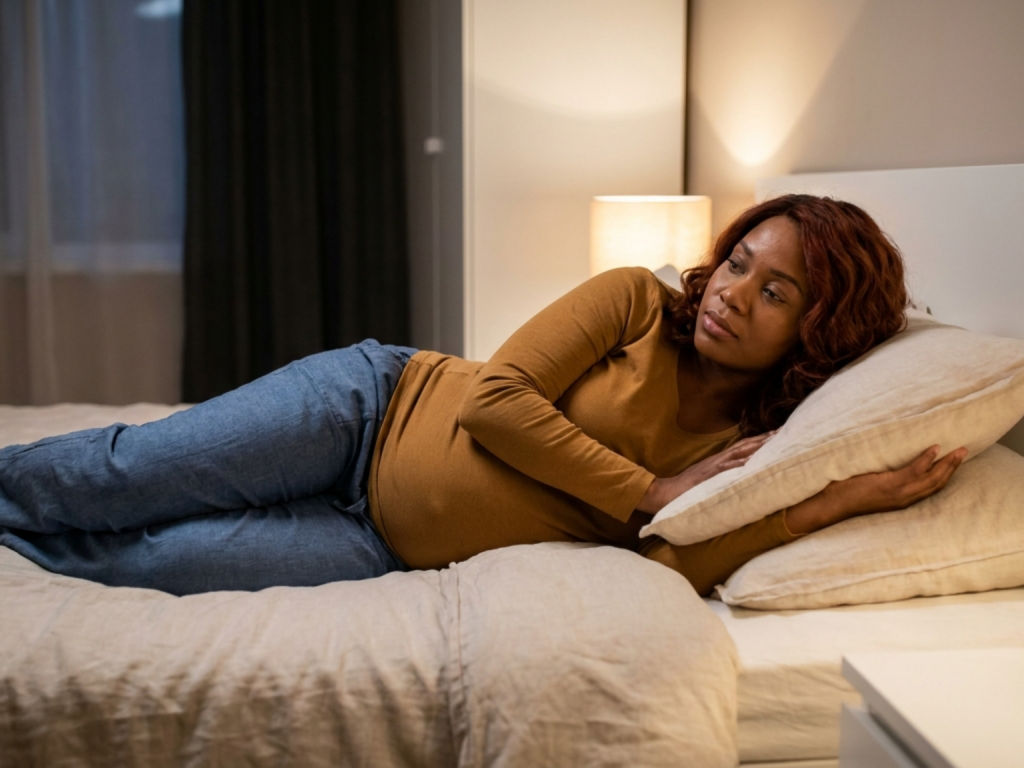
If you have heard that sleeping on your back is “dangerous,” it is understandable to feel anxious—especially in pregnancy, when sleep advice can sound absolute. The medically accurate answer is more nuanced: back sleeping is not universally dangerous. In pregnancy, though, the supine position can become uncomfortable or trigger symptoms in some people as the uterus enlarges and changes circulation, breathing, or reflux.
It also matters who the advice is for. Back sleeping is recommended for infants to reduce the risk of sudden infant death syndrome (SIDS), but that guidance does not apply to pregnant adults. For pregnancy, the most important question is not whether back sleeping is “forbidden,” but whether it causes symptoms, which trimester you are in, and whether your clinician has given you individual advice.
Highlights
Sleeping on your back is not automatically dangerous for every pregnant person, but it can become less comfortable or more symptomatic as pregnancy progresses.
The main concern is reduced venous return and related blood-pressure changes in some people, which may cause dizziness, nausea, or shortness of breath.
Back sleeping can also worsen reflux, snoring, or sleep apnea, especially if those issues were already present.
Briefly waking up on your back does not usually mean something bad has happened; the bigger issue is persistent symptoms or prolonged time in that position.
If you have individualized obstetric advice, follow that guidance and ask before changing it on your own.
Back sleeping in pregnancy: the short answer
No, sleeping on your back is not always dangerous. In pregnancy, the concern is context-dependent. Many people can lie on their back for short periods without any obvious problem, especially earlier in pregnancy. What changes over time is that the growing uterus can press on major vessels and alter how you feel, particularly when you are flat and still for a long stretch.
That is why many clinicians discuss side-lying in later pregnancy, rather than because back sleeping is inherently harmful in every case. The goal is symptom prevention and physiologic comfort, not fear. If you feel well on your back, do not panic; if you develop dizziness, shortness of breath, palpitations, nausea, or a sense that you need to move, your body may be telling you that the position is no longer comfortable for you.
It is also important not to confuse adult pregnancy advice with infant sleep guidance. For babies, back sleeping is recommended to reduce SIDS risk. For pregnant adults, sleep position is individualized and should be discussed with a healthcare professional if you have concerns.
Why the supine position can cause symptoms
When a pregnant person lies flat on the back, the uterus may compress the inferior vena cava, the large vein that returns blood from the lower body to the heart. This is part of what clinicians refer to as supine hypotensive syndrome or related inferior vena cava compression. The effect is not the same in everyone, but it can reduce venous return, lower blood pressure, and make you feel lightheaded, sweaty, or faint.
Some people notice more shortness of breath or a sensation of pressure when lying flat. Others feel worse because reflux becomes easier when the torso is completely horizontal. Johns Hopkins notes that sleep position can affect reflux, snoring, sleep apnea, and musculoskeletal comfort, while Harvard Health emphasizes that back sleeping may intensify breathing problems in people who snore or have obstructive sleep apnea.
Those mechanisms help explain why a position that felt fine before pregnancy may become less tolerable later on. The issue is usually not that a brief back-lying episode is inherently harmful; it is that prolonged compression and symptom burden can make it a poor fit for some bodies, especially as gestation advances.
Who may notice trouble sooner
Not everyone notices symptoms at the same time. Some pregnant people feel fine on their back well into pregnancy, while others become uncomfortable much earlier. Variation can reflect uterine size, individual vascular anatomy, baseline blood pressure, sleep quality, reflux tendency, and whether there is a history of snoring or sleep-disordered breathing.
People with sleep apnea symptoms in pregnancy may be especially vulnerable to poor sleep quality when lying flat. Harvard Health specifically notes that back sleeping is among the worst positions for people who snore or have sleep apnea because it can worsen airway collapse and breathing instability. Reflux-prone sleepers may also notice more heartburn when supine. And if you already live with musculoskeletal pain, a flat back position can make the lower back feel more strained.
Pregnancy is also not static. A position that is acceptable in the second trimester may feel different in the third trimester, which is why some resources discuss third trimester sleep position as a separate practical issue. The safest approach is to pay attention to symptoms rather than treating one posture as universally right or wrong.
When back sleeping is less concerning
There is an important difference between sleeping on your back for a long stretch and briefly rolling there during sleep. Many people do move in and out of positions overnight, and that is normal. If you wake up on your back once in a while, it does not automatically mean you have harmed yourself or the pregnancy. The more meaningful signal is whether the position repeatedly causes symptoms or whether your clinician has advised you to avoid it for a specific reason.
There is also no need to turn sleep into a moral test. The practical goal is stable rest. For many pregnant patients, the question becomes left versus right side sleeping, not perfection. Some people tolerate the left side better; others prefer the right side or a slight angle. A small amount of variation is usually reasonable, especially if it helps you sleep without reflux, hip pain, or anxiety.
In some cases, a semi-reclined sleep position may feel safer or easier than lying completely flat, particularly if reflux or breathing discomfort is part of the picture. Any position changes should be discussed with your healthcare professional if you have heart disease, high-risk pregnancy concerns, or symptoms that are becoming frequent.
Practical ways to make sleep safer and more comfortable
If back sleeping is making you feel unwell, the aim is not to force a dramatic change overnight. Small adjustments often help more than a hard rule. Many people do better when they gently bias toward side-lying and reduce the amount of time spent fully supine.
- Use a pillow behind your back or under one hip so you are slightly angled rather than flat.
- Place a pillow between the knees to reduce pelvic and hip strain.
- Ask your clinician whether a pregnancy pillow would suit your situation.
- Consider a semi-reclined sleep position if reflux or shortness of breath is prominent.
- If you snore, gasp, or feel excessively sleepy, ask about evaluation for sleep-disordered breathing.
Because sleep position can affect comfort, reflux, and breathing, it is sensible to think of the problem as a whole-sleep issue rather than a single posture issue. For some patients, the best result is not “only one side forever,” but a setup that lets them fall asleep, stay asleep, and wake up without significant symptoms. If you are unsure which approach is appropriate, your obstetric clinician or midwife can tailor advice to your trimester and medical history.
When to call your clinician
Seek medical advice if back-lying repeatedly causes dizziness, faintness, palpitations, marked nausea, chest discomfort, or shortness of breath. Those symptoms can reflect positional blood-pressure changes or an underlying sleep or cardiopulmonary issue that deserves assessment. If you are snoring loudly, gasping, or waking unrefreshed, ask whether you should be screened for sleep apnea, since pregnancy can unmask or worsen breathing problems during sleep.
It is also wise to call promptly if you notice decreased fetal movement, severe abdominal pain, vaginal bleeding, or any other obstetric warning sign, even if you think sleep position may be involved. Sleep position advice is supportive care, not a substitute for evaluation when something feels wrong.
In short, back sleeping is not always dangerous, but it is not universally comfortable either. Your own symptoms, trimester, and medical background should guide the plan—and your clinician should be part of that conversation.
Call a healthcare professional promptly if you notice:
- Dizziness, faintness, or a feeling that you may pass out when lying flat
- Shortness of breath, chest pain, or sustained palpitations
- Loud snoring, gasping, or repeated awakenings that suggest sleep apnea
- Decreased fetal movement or any obstetric warning symptom
- A clinician has already told you to avoid back-lying for a specific medical reason
Tools & Assistance
- Discuss your sleep position with your obstetric clinician, midwife, or family doctor.
- Ask whether you need screening for reflux, anemia, or sleep apnea if you snore or feel unwell at night.
- Try a pregnancy pillow or wedge positioning setup if your clinician says it is appropriate.
- Keep a brief sleep and symptom log to notice patterns by position and trimester.
FAQ
Does waking up on my back mean I harmed the baby?
Usually no. Many pregnant people roll onto their back briefly during sleep. The bigger concern is repeated symptoms or advice from your clinician to avoid that position.
Is the left side always better than the right side?
Not always. Both side-lying positions are used in pregnancy, and the best option is often the one you tolerate well without dizziness, reflux, or pain. Ask your clinician if you have a high-risk condition.
Why do I feel dizzy when I lie flat?
Lying flat can, in some pregnant people, reduce venous return and lower blood pressure because of uterine pressure on major vessels. That is one reason back sleeping can become less comfortable later in pregnancy.
Can back sleeping worsen snoring or sleep apnea?
Yes. Sleep position can affect airway stability. Harvard Health notes that back sleeping can intensify breathing problems and is a poor position for many people who snore or have sleep apnea.
Sources
- Johns Hopkins Medicine — Choosing the Best Sleep Position
- Harvard Health Publishing — Is your sleep position helping or hurting you?
- National Institute of Child Health and Human Development — About Back Sleeping | Safe to Sleep®
Disclaimer
This article is for informational purposes only and does not replace individualized medical advice. If you are pregnant and have symptoms, concerns, or a high-risk condition, please speak with a qualified healthcare professional.
















Please log in to leave a comment.