
Intro
It is completely understandable to worry about air travel when you are pregnant. A long flight can feel physically demanding even on a good day, and turbulence can make every bump in the cabin feel much more dramatic when you are thinking about your baby.
The reassuring short answer is that, for most healthy pregnancies, routine commercial flying is tolerated well and ordinary turbulence does not directly harm the fetus. The more relevant concerns are usually maternal comfort, dehydration, immobility, and whether you have a pregnancy or medical condition that makes flying less suitable. If anything about your pregnancy is complicated, individualized advice from your obstetric clinician matters more than general rules.
Highlights
For most uncomplicated pregnancies, the cabin environment of a commercial flight is not known to cause direct fetal harm.
Turbulence is usually a comfort and safety issue for the pregnant passenger, not a direct threat to the baby.
Long flights can matter because prolonged sitting, fatigue, dehydration, and jet lag can worsen maternal symptoms or raise clot risk in susceptible travelers.
If you have bleeding, contractions, placenta-related concerns, preeclampsia, or another high-risk condition, air travel may need individualized review.
Simple precautions such as movement, hydration, and correct seatbelt use can make flying safer and more tolerable.
What happens to the baby at cabin altitude?
Commercial aircraft cabins are pressurized, but not to sea level. That means the oxygen partial pressure is somewhat lower than on the ground, a state sometimes described as mild hypobaric hypoxia. In healthy adults, that change is usually well tolerated; the CDC notes that most healthy travelers do not notice meaningful effects from cabin oxygen levels. The WHO similarly reports that research has not shown significant health effects from cruising altitude for passengers or crew.
For pregnancy, the key point is that the fetus does not breathe cabin air directly. Oxygen transfer depends on maternal oxygenation, placental function, and fetal circulation. In an uncomplicated pregnancy, that system generally buffers routine flight conditions well. This is why normal commercial flying is not usually considered a direct fetal hazard.
That said, the word uncomplicated matters. If you have anemia, significant cardiopulmonary disease, severe asthma, placental insufficiency, or another condition that already affects oxygen delivery, even modest physiologic stress can be more relevant. In those situations, individualized medical advice is important because the issue is not the plane itself, but how your body is likely to respond to it.
Why long flights can feel harder in pregnancy
A long flight is more than just time in the air. It is prolonged sitting, variable hydration, disrupted sleep, cabin noise, and often a shifted meal schedule. Those factors can intensify nausea, swelling, fatigue, reflux, and headache. The medical literature on commercial flights describes immobility, mild fluid shifts, jet lag, and general fatigue as common stressors that can aggravate symptoms or chronic conditions.
Prolonged immobility deserves special attention in pregnancy because pregnancy already increases venous stasis and baseline thromboembolic risk. Long periods without moving can add to that risk, especially if you have a personal history of venous thromboembolism, thrombophilia, recent surgery, or other clotting risk factors. This does not mean every long flight is dangerous, but it does mean that movement and prevention strategies matter.
Long flights can also expose you to pressure changes that affect the ears and sinuses. The CDC describes barotrauma as a potential travel issue, especially if you have congestion or middle-ear problems. These effects are usually about discomfort rather than baby harm, but they can make an already tiring trip feel much harder.
Turbulence: uncomfortable, but usually not harmful to the fetus
Turbulence can be frightening because it feels abrupt and uncontrollable. From a fetal-safety perspective, though, routine bumps in the air are not the same as trauma. The uterus, abdominal wall, amniotic fluid, and maternal tissues provide substantial cushioning. The WHO notes that motion sickness is uncommon except in severe turbulence, which underscores that the main issue is usually passenger discomfort rather than direct fetal injury.
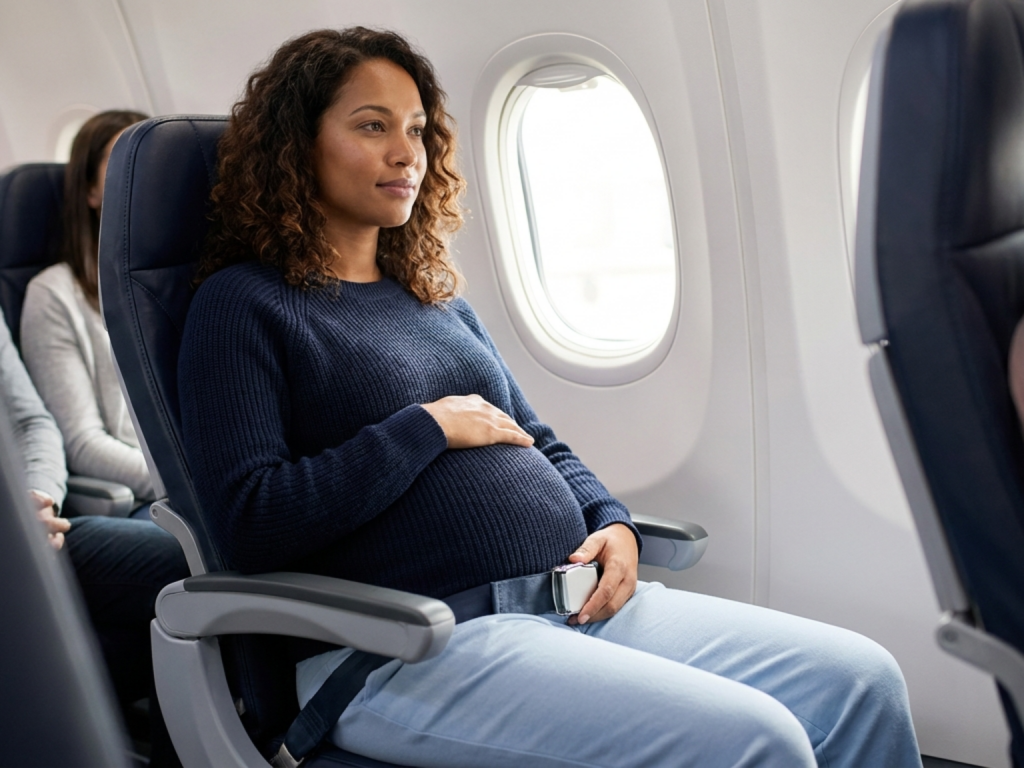
What turbulence can do is jolt the pregnant body. If you are standing, walking, or not properly restrained, you are more vulnerable to falls or impact injuries. That is why seatbelt placement matters: the belt should sit low across the hips and under the abdomen, not across the bump. Severe turbulence can also trigger nausea, anxiety, or muscle tension, all of which may make the experience feel more intense.
In rare cases, a major jolt or collision in the cabin could injure the mother, and maternal injury is always relevant to fetal well-being. But ordinary turbulence itself is not known to shake, compress, or otherwise directly damage a healthy fetus. If you feel abdominal pain, bleeding, leakage of fluid, or regular contractions after a significant event, that is not something to watch passively; it deserves prompt medical review.
When long flights deserve extra caution
Some pregnancies need more careful planning than others. This is where high-risk pregnancy travel advice becomes more important than general reassurance. Examples include placenta previa or other placental bleeding concerns, active vaginal bleeding, preterm labor risk, ruptured membranes, cervical insufficiency, severe preeclampsia or hypertension, significant anemia, multiple gestation, and a history of clotting disorders or prior thrombosis. None of these automatically mean travel is impossible, but they do mean the decision should be individualized.
Timing also matters. Many airlines have a third trimester flight cutoff or other paperwork requirements as the due date approaches, and policies vary by carrier. That is a practical issue, not just a bureaucratic one: late pregnancy comes with a higher chance of labor starting away from home, and some complications are easier to manage on the ground than in the air.
If you are unsure whether your situation fits standard air travel in uncomplicated pregnancy, ask your maternity care team before booking. They can help weigh gestational age, your obstetric history, the flight duration, connections, destination medical resources, and your own risk factors. For some travelers, the safest answer is simply a shorter trip, a different mode of transport, or postponing travel until after delivery.
Practical ways to make a long flight safer and more comfortable
Small choices can make a meaningful difference on long-haul flights in pregnancy. Aim to hydrate regularly, since dry cabin air and long periods of sitting can leave you feeling more depleted. Try to stand, stretch, or walk periodically if your clinician has not advised otherwise. An aisle seat is often easier for getting up to use the restroom and reduce stiffness.
For many pregnant travelers, compression stockings for pregnant travelers are discussed as a way to support circulation during prolonged sitting, especially when clot risk is a concern. Whether they are appropriate for you is a question to raise with your clinician, particularly if you have circulation problems or a history of thrombosis. Choose the approach that matches your medical background, not just what is convenient.
It also helps to plan for the practical side of travel: carry prenatal records if your trip is significant, know where the nearest maternity-capable hospital is at your destination, and keep your phone charged in case you need to contact your care team. If you are prone to nausea, reflux, or motion sensitivity, ask your clinician what nonprescription measures are acceptable in pregnancy before departure. The goal is not to eliminate every inconvenience, but to reduce avoidable strain.
When to seek medical help after flying
Most flights end without any problem at all, even when they are long or bumpy. Still, pregnancy is a time to take certain warning signs seriously. If you develop vaginal bleeding, leaking fluid, painful regular contractions, chest pain, shortness of breath, severe headache, or sudden swelling, you should not assume it is just travel fatigue.
Also pay attention to the baby’s usual movement pattern. A noticeable reduction in fetal movement after travel should be reported to your obstetric team promptly, especially if it does not improve after rest, hydration, and a meal. Leg pain, one-sided swelling, or calf tenderness can be concerning for a clot and should be assessed quickly.
In other words, the flight itself is usually not the problem. The important question is whether your body is signaling something that needs attention. If you are ever uncertain, it is safer to call your maternity provider or local urgent care team than to wait and hope the symptom passes on its own.
Get urgent medical help if you have:
- Heavy vaginal bleeding or leaking fluid
- Regular contractions or worsening abdominal pain
- Chest pain, shortness of breath, or fainting
- One-sided leg swelling, calf pain, or warmth
- A clear decrease in fetal movement after travel
- A major abdominal impact during severe turbulence
Tools & Assistance
- Your obstetrician, midwife, or maternity care team
- Airline medical or special assistance desk
- Compression stockings if your clinician recommends them
- Aisle-seat planning and a travel hydration plan
- Local hospital or emergency department information at your destination
FAQ
Can cabin pressure hurt the baby?
For most healthy pregnancies, pressurized cabin conditions are well tolerated and have not been shown to directly harm the fetus.
Is turbulence dangerous in pregnancy?
Ordinary turbulence is usually a discomfort and safety issue for the mother, not a direct cause of fetal harm.
Are long flights riskier than short flights?
Long flights matter more because of prolonged sitting, dehydration, fatigue, and immobility, which can worsen symptoms or clot risk in some pregnancies.
Should I avoid flying if my pregnancy is high-risk?
Possibly, but the decision should be individualized. Your obstetric clinician can help weigh the benefits and risks based on your specific condition.
When should I call a doctor after flying?
Call promptly for bleeding, fluid leakage, contractions, chest pain, shortness of breath, leg swelling, or reduced fetal movement.
Sources
- World Health Organization — Travel by air: health
- Centers for Disease Control and Prevention — Air Travel - CDC Yellow Book, 2026 edition
- National Institutes of Health / PMC — Medical issues associated with commercial flights
Disclaimer
This article is for general information only and does not replace personalized medical advice. If you are pregnant and have symptoms, complications, or questions about flying, please consult your obstetric clinician or maternity care team.


















Please log in to leave a comment.