

Intro
Choosing a baby bottle can feel surprisingly complex. Bottles differ in shape, opening width, material, capacity, nipple design, and how easily their parts can be cleaned. The most suitable option is usually the one that supports safe, comfortable feeding and fits the caregiver's routine, rather than the bottle with the most features.
This guide explains the practical differences among standard, wide-neck, and angle-neck bottles, along with common material choices and design features. Every baby has individual feeding patterns, and families should seek advice from a pediatrician, lactation consultant, feeding therapist, or other qualified healthcare professional when feeding is painful, unusually prolonged, or associated with coughing, choking, poor intake, or inadequate growth.
Highlights
Bottle shape affects how the bottle is filled, held, cleaned, and aligned during feeding.
Standard, wide-neck, and angle-neck bottles can all be appropriate; comfort and function matter more than marketing claims.
Glass, plastic, and other materials differ in weight, durability, transparency, and handling requirements.
Nipple flow and fit are separate decisions from bottle shape and should support the infant's suck-swallow-breathe coordination.
Simple, thoroughly cleanable designs may be easier to use consistently than bottles with many small components.
Why bottle design matters
A baby bottle is a feeding system rather than an isolated container. Its body, collar, nipple, valve, cap, and sometimes venting components work together to deliver milk. Small differences in geometry can affect preparation, grip, visibility of the milk, cleaning time, and the ease with which a caregiver maintains a consistent feeding routine.
Infant feeding also involves coordinated oral-motor and respiratory activity. A baby must generate suction, manage milk flow, swallow, and breathe in a repeating pattern. Bottle design cannot replace attentive feeding technique, but a well-matched bottle and nipple can make it easier to maintain a calm, responsive feed. The caregiver should watch the infant rather than relying only on the bottle’s advertised age range or a printed flow label.
Practical factors are important because bottles are used repeatedly, often when caregivers are tired or managing several tasks. A design that is easy to identify, assemble, fill, wash, and inspect is more likely to be used correctly. Material thickness and structural design also influence durability and handling. In general, a thicker container may feel more robust but can be heavier, while a lighter container may be easier for an older infant or caregiver to hold but may require closer inspection for wear.
Standard, wide-neck, and angle-neck bottles
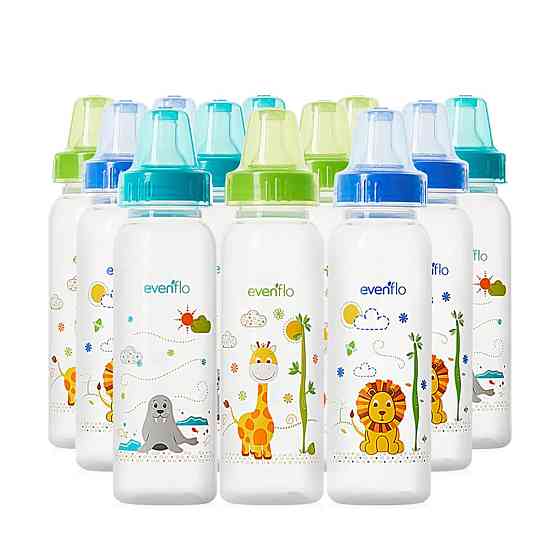
Standard bottles typically have a narrower body and opening. Their slim profile may be comfortable to hold and can work well with compatible standard nipples and collars. The narrower opening, however, may make it less convenient to add powdered formula or clean the interior, particularly when a brush does not reach all surfaces easily. The bottle should be filled on a stable surface and assembled according to the manufacturer’s instructions.
Wide-neck bottles have a broader opening and usually pair with a wider nipple base. The opening can make measuring, pouring, and cleaning more straightforward. A wider body may also be easier to stabilize during preparation, although some caregivers find it less comfortable to grip. Wide-neck and standard components are generally not interchangeable unless the manufacturer specifically states that they are compatible.
Angle-neck bottles have a curved or angled body intended to help keep the nipple filled with milk when the bottle is held in a feeding position. Some caregivers find this shape useful for maintaining the bottle angle while limiting air intake, but it can require more attention during filling and washing. The angled construction may also make it less convenient to store or use with certain bottle warmers, drying racks, or bags.
These categories describe physical design, not a guarantee of improved feeding. MedlinePlus identifies standard, angle-neck, and wide baby bottles as common options and notes that differences can affect cleaning, filling, and feeding comfort. If an infant consistently coughs, pulls away, fatigues, or appears distressed during feeds, the issue may involve nipple flow, positioning, oral function, or another clinical factor rather than bottle shape alone. A healthcare professional can help assess the broader feeding pattern.
Glass, plastic, and other materials
Glass bottles are transparent, do not retain odors as readily as some plastics, and can be cleaned repeatedly without the same concerns about plastic surface wear. Their principal practical disadvantages are weight and breakage. A dropped glass bottle can shatter or develop damage that is difficult to see, so caregivers should inspect it before use and follow the manufacturer’s handling guidance. A protective silicone sleeve may reduce slipping but does not make damaged glass safe.
Plastic bottles are usually lighter and less likely to shatter, which can be useful for travel, childcare, or an infant learning to hold a bottle. Plastic composition varies, and bottles may become scratched, cloudy, warped, or discolored over time. Scratches can make inspection more difficult and may signal that the item should be replaced according to manufacturer guidance. Plastic should be used only as intended, especially when heating or sterilizing, because temperature limits differ among products.
Some bottles use silicone or other flexible materials for the body or components. Flexible bottles may be lightweight and collapsible, but they can be harder to keep upright, measure accurately, or clean if the shape creates folds or inaccessible areas. A soft bottle may also require more careful inspection for tears, changes in texture, or retained milk.
Material is only one part of safety and convenience. Research on single-use plastic water bottles illustrates that plastics vary in thickness, structure, and packaging-related properties; those differences help explain why products made from broadly similar materials can handle pressure, heat, and repeated use differently. For baby bottles, the relevant decision is the complete product: material, intended use, temperature instructions, component compatibility, and condition over time.
Opening size, capacity, and bottle geometry
The diameter of the bottle opening affects more than appearance. A wide opening generally makes it easier to pour liquid, add ingredients when appropriate, and reach interior surfaces with a brush or hand. A narrow opening may be easier to grip and may reduce the external footprint, but it can make cleaning and filling more demanding. The key question is whether every surface that contacts milk can be reached, washed, rinsed, and inspected.
Capacity should match the infant’s usual feed volume without encouraging a caregiver to prepare or offer more milk than needed. Smaller bottles can reduce leftover milk and may be easier to hold during early infancy. Larger bottles can be practical as intake changes, but they may be heavier and more cumbersome when partially filled. Markings should be clear and durable, and caregivers should use accurate measurements when preparing formula or handling expressed milk.
Shape also influences pouring and storage. Laboratory bottle-selection guidance describes how opening size and bottle design affect pouring, transfer, access, and storage. Although laboratory containers are not baby bottles, the same basic physical principles apply: a narrow neck can control pouring, a wide mouth improves access, and irregular shapes can create cleaning or storage challenges. In a baby-feeding context, these considerations should be balanced with nipple compatibility and the ability to hold the bottle comfortably.
Before purchasing a complete set, examine whether the bottle fits the equipment already used at home. Drying racks, insulated carriers, warmers, and refrigerator shelves may accommodate some shapes better than others. A bottle that is technically suitable but difficult to store, assemble, or transport can create avoidable stress during daily care.
Nipples, vents, and compatibility
The nipple is the part that most directly determines milk flow. Nipples vary in flow rate, shape, length, firmness, and base width. A newborn, a breastfed infant taking occasional expressed milk, and an infant with a medically supervised feeding plan may have different practical needs. Flow labels such as slow, medium, or fast are not standardized across brands, so the same label does not guarantee the same rate.
Signs of a flow that is too rapid can include gulping, coughing, choking, milk leaking from the mouth, or difficulty coordinating breathing. A flow that is too slow may contribute to prolonged feeds, frustration, or fatigue. These signs are not diagnostic on their own, and caregivers should avoid enlarging nipple holes or modifying nipples because this can create unpredictable flow and increase risk. A feeding specialist assessment may be appropriate when concerns persist, particularly for premature infants or babies with known medical or developmental conditions.
Some bottles include vents or valves intended to reduce air swallowing or pressure changes. These systems may be helpful for some infants, but they also add parts that must be correctly assembled and thoroughly cleaned. A missing, inverted, cracked, or poorly seated valve can alter the bottle’s performance. More components do not automatically mean better feeding; the system must be understandable and maintainable for every caregiver who uses it.
Compatibility should be confirmed across the bottle body, collar, nipple, vent, and cap. Even products from one brand may use different neck sizes or attachment systems. Do not assume that a nipple from one line will fit another bottle safely. Follow the manufacturer’s instructions, and replace components when they become torn, sticky, cracked, misshapen, or otherwise difficult to clean.
Cleaning, inspection, and daily use
Milk residue can remain in collars, valve channels, nipple openings, and seams even when the bottle looks clean. Disassemble the bottle completely before washing, and use a clean brush that reaches the interior and small components. Rinse and dry items according to local public-health guidance and the manufacturer’s instructions. A bottle should be reassembled only after all parts are clean and appropriately dry.
Cleaning requirements may differ by design. Wide-neck bottles often provide easier access to the interior, while angle-neck bottles and vented systems may require attention to curved areas and narrow channels. Glass and some plastic bottles may tolerate different cleaning or sterilization methods, so temperature limits and dishwasher instructions should be checked rather than assumed. A sterilizer does not remove milk residue; washing remains essential.
Inspect the bottle and accessories at regular intervals. Look for cracks, chips, deep scratches, cloudiness, stretched nipple openings, discoloration, sticky surfaces, and damaged seals. Replace worn parts promptly and discard any item that cannot be cleaned effectively. Keep components together when possible so that an apparently complete bottle does not end up with a mismatched nipple or valve.
For families sharing feeding responsibilities, consistent labeling and assembly can reduce errors. Store clean parts in a protected, dry location and prepare feeds using the relevant instructions for the milk being offered. Do not leave a baby unattended with a bottle or prop a bottle in the infant’s mouth. Responsive feeding allows the caregiver to observe satiety cues, breathing, and comfort throughout the feed.
Choosing a bottle for your situation
Start with the feeding context. Consider whether the bottle will be used for expressed breast milk, infant formula, combination feeding, occasional feeds, or most feeds. Think about who will use it, where feeds occur, how often parts can be washed, and whether the infant can hold the bottle. A lightweight plastic bottle may suit travel, while glass may appeal to caregivers who value visibility and a rigid, odor-resistant container. Neither material is universally best.
Next, prioritize a small number of practical features: a secure seal, readable volume markings, a nipple flow that appears compatible with the infant’s behavior, and parts that can be disassembled and cleaned. Buying a large collection before observing how the infant responds can be inefficient because bottle acceptance and nipple preference vary. A limited trial of one or two compatible designs may provide more useful information than comparing many marketing claims.
Feeding observations should guide discussion with a professional. Note whether feeds are consistently much longer than expected, whether the infant coughs or has color changes, whether milk frequently leaks, and whether the infant seems unusually fatigued or dissatisfied. Bring the actual bottle and nipple to an appointment when possible. A clinician, lactation consultant, or speech-language pathologist with infant-feeding expertise can evaluate the infant’s suck-swallow-breathe coordination and recommend individualized support without assuming that changing the bottle will resolve every problem.
There is no requirement to use a fashionable or specialized design when a simpler bottle functions well. The best choice is a clean, intact, compatible system that the infant can use comfortably and that caregivers can prepare and maintain reliably.
Safety reminders
- Never prop a bottle or leave an infant unattended while feeding.
- Do not enlarge, cut, or otherwise modify a nipple opening.
- Discard cracked glass, deeply scratched plastic, damaged valves, and worn nipples.
- Follow product instructions for heating, dishwashing, sterilization, and component compatibility.
- Seek professional advice for repeated coughing, choking, breathing difficulty, marked fatigue, or poor intake during feeds.
Tools & Assistance
- A bottle-and-nipple compatibility checklist
- A clean bottle brush that reaches the full interior
- A parts inspection routine for nipples, valves, seals, and bottle bodies
- A written feeding log for discussing persistent feeding concerns with a clinician
- A pediatrician, lactation consultant, or infant-feeding specialist
FAQ
Are wide-neck bottles better than standard bottles?
Neither type is universally better. Wide-neck bottles may be easier to fill and clean, while standard bottles may be slimmer and easier for some caregivers to hold. The infant's feeding response, nipple compatibility, and the caregiver's ability to clean the system are more important than the shape alone.
Is glass safer than plastic for baby bottles?
Glass is rigid and does not scratch in the same way as plastic, but it is heavier and can break. Plastic is lighter and shatter-resistant but may scratch, cloud, or warp. Use an intact product as directed by its manufacturer and replace it when damaged.
Do anti-colic bottles prevent infant discomfort?
Vented or valve-based bottles may change air movement and pressure, but they cannot guarantee that an infant will have less discomfort. They also require correct assembly and careful cleaning. Persistent distress should be discussed with a healthcare professional.
Can nipples from different brands be used on the same bottle?
Usually, compatibility should not be assumed. Neck dimensions, collar threads, nipple bases, and valves vary. Use only combinations that the manufacturer identifies as compatible and check for leaks before feeding.
When should a bottle nipple be replaced?
Replace a nipple when it is torn, sticky, cracked, misshapen, discolored, stretched, or difficult to clean. Also follow the manufacturer's replacement guidance, since wear can alter flow even when damage is not obvious.
Sources
- MedlinePlus — Buying and caring for baby bottles and nipples
- NIH / PubMed Central — Insights from Single-Use Plastic Water Bottles
- Cole-Parmer — Lab Bottle Selection Guide
Disclaimer
This article is for general educational information and does not diagnose, treat, or replace advice from a qualified healthcare professional. Contact your pediatrician or infant-feeding specialist for individualized guidance, especially when feeding difficulties or safety concerns occur.















Please log in to leave a comment.