
Intro
Social interaction skills help a child join play, start and keep a conversation, notice other people's feelings, and respond in a flexible way. These abilities develop over time, and children do not all learn them at the same pace. Some children are naturally cautious, some are very talkative, and some need extra support to read social cues or manage frustration.
A supportive approach works best. When adults give children real opportunities to practice, model kind communication, and reduce pressure, social confidence can grow. For some children, especially those with developmental differences or anxiety, this may also involve professional guidance from a pediatrician, speech-language pathologist, psychologist, or school team.
Highlights
Social interaction skills are learnable. Repeated, low-pressure practice is usually more helpful than criticism or one-time advice.
Structured programs can improve social communication, reciprocity, and joint attention when they are active and practical.
Shy or anxious children often do better with small steps, predictability, and gradual exposure rather than being pushed suddenly.
Everyday routines, games, and peer play can create safe chances to practice conversation, turn-taking, and repair after conflict.
What social interaction skills are
Social interaction skills are the behaviors that help a child connect with other people. They include noticing another person’s face or body language, waiting for a turn, asking a follow-up question, and adjusting words or tone to fit the moment. In medical and educational language, this area may be described with terms such as pragmatic language, reciprocity, joint attention, and emotional regulation.
These skills are part of social communication in children, but they are not the same as being extroverted. A child can be quiet and still have good connection skills. Another child may speak a lot but struggle to notice when a peer is bored, confused, or ready to switch activities. Understanding the exact pattern matters, because it helps adults choose the right kind of support instead of assuming a single cause.
Temperament, age, language ability, neurodevelopment, stress level, and past experiences all shape how a child interacts. That is why progress is usually best measured over time. Small gains, such as joining a game for five minutes or answering a classmate more smoothly, can be meaningful steps toward fuller participation.
What the evidence suggests helps most
Research on social connection shows that interventions are more effective when they increase access to other people and reduce avoidance-related barriers. In other words, children need safe chances to be with peers, not only advice about what to do. Repeated practice in natural settings helps turn a skill into a habit.
A systematic review on children with autism spectrum disorder found that structured social skills training can improve social communication, reciprocity, and joint attention. These programs usually work best when they are active rather than lecture-based. Helpful elements often include modeling, role play, feedback, and guided practice during real interactions. The child is not simply told what to do; the child practices the skill and then reviews what happened.
These principles can help many children, not only those with a formal diagnosis. A shy child may need coaching to enter play. A child with language delays may need simpler scripts. A child who becomes overwhelmed easily may need shorter sessions and a calmer environment. The common theme is structured, supportive repetition.
Practice in everyday routines and play
Children usually learn social skills best when practice is built into ordinary life. Short, frequent opportunities tend to work better than long lessons. The goal is to make the skill feel usable in the real world, not only in a clinic or classroom discussion.
- Practice greetings and opening lines before school, at playdates, or before a club starts.
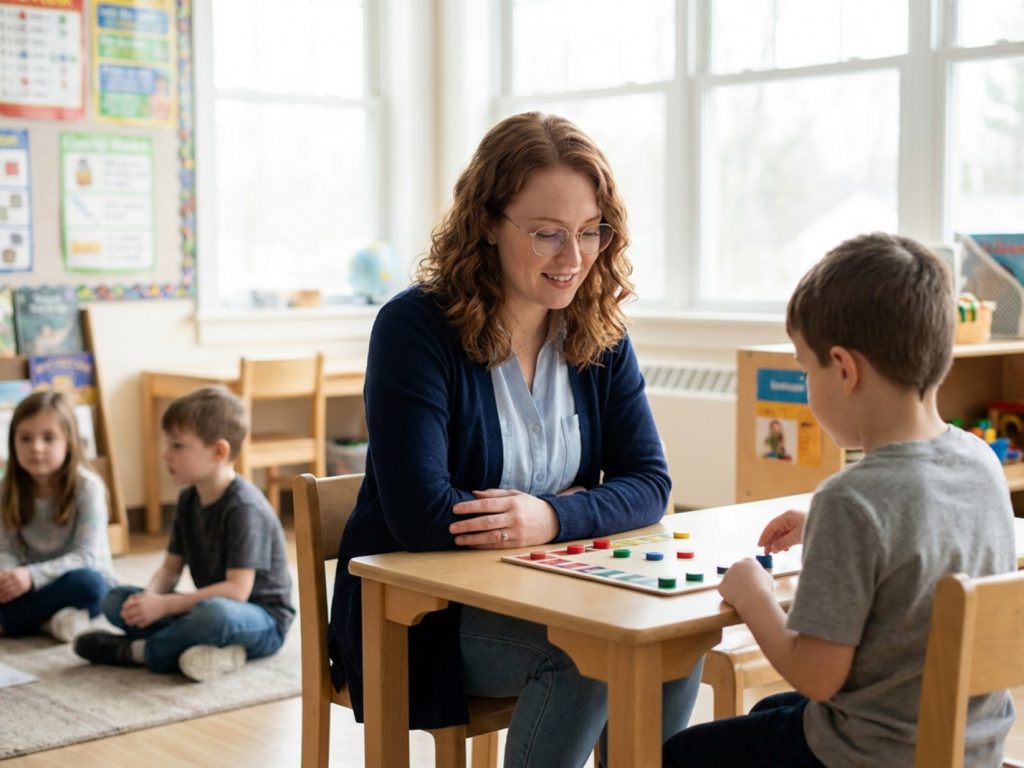
- Use board games, shared chores, or pretend play for play-based social communication practice and cooperative games for children.
- Model listening by pausing, summarizing what the child said, and asking one follow-up question.
- Teach children to notice cues such as a friend stepping back, changing topic, smiling, or looking frustrated.
- Rehearse repair phrases like I am sorry, let us try again, or Do you want a different turn?
For younger children, peer play in preschoolers is especially valuable because it naturally combines language, imitation, shared attention, and turn-taking. Adults can stay nearby, scaffold the interaction, and step in only as much as needed. Praise should be specific, such as You waited for your turn, rather than general, because clear feedback helps children know which behavior to repeat.
Supporting shy, anxious, or overwhelmed children
Some children hesitate because they are shy. Others avoid peers because they feel anxious, overstimulated, or unsure of what to say. In these situations, pressure usually backfires. A better strategy is gradual exposure for shy children, which means moving in small, predictable steps that the child can tolerate. One child may start by watching a group, then greeting one peer, then joining for a few minutes, and later staying longer.
Adults can also use emotion coaching for preschoolers and older children. That means naming the feeling, validating it, and helping the child choose a next step. For example: You look nervous because the group is new. We can stay for five minutes and then check in. This approach supports self-regulation without treating caution as a flaw.
Predictability matters. Children often cope better when they know who will be there, what activity is planned, and how long it will last. Some children also need recovery time after busy social events, especially if noise, crowds, or rapid conversation are draining. If avoidance is increasing, or if the child shows persistent social withdrawal in children, professional guidance can help determine what is getting in the way.
Friendships, school, and repair after conflict
As children grow, social success becomes less about one perfect interaction and more about patterns of trust, flexibility, and repair. This is where friendship skills in elementary school become important. A child may need help entering a group, handling not being chosen first, or keeping a conversation going beyond one favorite topic.
Mayo Clinic-style advice remains useful here: listen well, show kindness, open up in age-appropriate ways, and make an effort to stay connected. For children, that may mean greeting a classmate consistently, inviting someone to join a game, or sending a short message through a parent-supervised channel. Small, repeated gestures build social momentum.
Conflict is also part of learning. Children benefit from coaching in how to apologize briefly, explain their view without blame, and suggest a new plan. These conflict repair skills for children can protect friendships from ending over a misunderstanding. The aim is not to force every child to be socially bold; it is to help each child learn how to connect, recover, and return to play.
When to seek professional support
Professional support is worth considering when social difficulty is persistent, painful, or affecting school participation, family life, or self-esteem. A pediatrician, family doctor, speech-language pathologist, child psychologist, or school team can help clarify whether the issue is related to language, hearing, anxiety, neurodevelopment, or another factor. In some cases, a multidisciplinary assessment for social difficulties is the most useful next step.
Seek an evaluation sooner if you notice speech or language delays, loss of previously learned skills, repeated peer conflict, extreme distress around groups, or a child who tries hard but still cannot keep up socially. These signs do not automatically mean one specific diagnosis. They do mean the child may need a more detailed look at communication, behavior, and development.
Early support is not about labeling a child. It is about giving the child and family a clearer map. With the right structure, practice, and encouragement, many children can make meaningful progress in confidence and connection.
When to seek help quickly
- Sudden loss of language, eye contact, play skills, or other previously learned abilities needs prompt medical review.
- School refusal, panic, or severe withdrawal should not be ignored, especially if it is getting worse.
- Repeated bullying or exclusion can damage confidence and may need school involvement.
- Hearing or speech problems can look like social difficulty, so they should be checked when concerns arise.
- If a child seems unsafe, hopeless, or talks about self-harm, seek urgent help right away.
Tools & Assistance
- Primary care pediatrician or family doctor
- Speech-language pathologist
- Child psychologist or child psychiatrist
- School counselor or special education team
- Parent-supported social skills group
FAQ
Is social skills training only for children with autism?
No. Structured practice can help many children, including shy children, children with language delays, and children who struggle with peer entry or conversation.
How can I help without making my child feel pressured?
Use small steps, predictable routines, and specific praise. Let the child practice in calm settings before expecting success in larger groups.
Should I make my child look people in the eye?
Not forcefully. Focus first on comfort, listening, and shared attention. Some children connect well without strong eye contact.
When should I ask for professional advice?
Ask sooner if social difficulties are persistent, distressing, linked to speech or language concerns, or affecting school and friendships.
Sources
- PubMed — Interventions to improve social connections: a systematic review and meta-analysis
- PubMed — Effectiveness of social skills training interventions for children with autism spectrum disorder: a systematic review and meta-analysis
- Mayo Clinic — Friendships: Enrich your life and improve your health
Disclaimer
This article is for educational purposes only and is not a substitute for medical advice, diagnosis, or treatment. If you are concerned about a child's social development, please consult a qualified healthcare professional.

















Please log in to leave a comment.