
Intro
Sleep position can feel like a small detail, but in pregnancy it often becomes clinically relevant. Many people notice that lying flat, especially later in pregnancy, can worsen reflux, snoring, breathlessness, or discomfort, while side lying feels more sustainable.
This article explains why side sleeping is commonly recommended, what the physiology is, and how to make it more comfortable without turning bedtime into another source of stress. The goal is not perfection; it is to understand why side sleeping matters and when to ask for individualized medical advice.
Highlights
Side sleeping can help keep the airway more open, which may reduce snoring and sleep-disordered breathing.
In pregnancy, side lying can reduce pressure on major blood vessels and may support healthier blood flow.
Left-side sleeping is often suggested for reflux and circulation, but the best side is not always the same for every person.
Comfort matters: pillows, mattress support, and a semi-reclined sleep position can make side sleeping easier to sustain.
If you have significant snoring, pauses in breathing, pain, or reduced fetal movements, discuss it with a healthcare professional.
Why sleep position changes breathing and comfort
Sleep posture affects the mechanics of the upper airway, chest wall, and abdomen. When you lie on your side, the airway is often more stable than in a fully supine position, which is one reason side sleeping may reduce snoring and make breathing feel easier. For people with mild obstructive sleep apnea, a side-lying posture can sometimes lessen airway collapse during sleep, though it is not a treatment by itself.
Side sleeping can also influence musculoskeletal comfort. The spine and pelvis tend to tolerate a neutral side-lying posture better than a twisted or partially rotated position, which may reduce back and neck strain. Some people also notice less pressure on the stomach, which can matter when reflux or early satiety makes lying flat uncomfortable. These effects are common enough that sleep specialists often discuss position as part of a broader sleep plan, especially when there is pain, snoring, or daytime fatigue.
Why side sleeping matters in pregnancy
Pregnancy changes sleep anatomy in a very literal way: the growing uterus alters abdominal pressure, shifts the center of gravity, and can compress internal structures when lying flat. In later pregnancy, clinicians often discuss the third trimester sleep position because the supine posture may increase pressure on the inferior vena cava compression, the large vein that returns blood from the lower body to the heart. Side lying reduces that pressure and may support more stable circulation.
That circulation issue is one reason side sleeping is linked with uteroplacental blood flow. The placenta depends on adequate maternal perfusion, and while sleep position is only one piece of that picture, avoiding prolonged flat-back sleeping may be helpful for some pregnant people. Side sleeping may also reduce dependent swelling in the legs and feet, and for many it lessens reflux because the stomach contents are less likely to move upward when the torso is angled to one side. None of this means back sleeping is automatically dangerous in every circumstance, but it does explain why side lying is usually the preferred default.
Left versus right side sleeping: what really matters
The question of left versus right side sleeping comes up often, and the answer is more nuanced than a simple rule. Left-side lying is commonly favored because it may further reduce pressure on the vena cava and sometimes feels better for reflux. Many obstetric clinicians mention left-side rest as a practical default, especially when a person is in late pregnancy or notices swelling, heartburn, or lightheadedness when supine.
At the same time, right-side sleeping in pregnancy is not a failure and is not usually treated as forbidden. The body positions of the fetus, uterus, and maternal vessels vary, and comfort matters because people rarely stay in one position all night. A posture that is mildly less ideal for circulation but can be maintained for hours may be more useful than a theoretically perfect position that keeps waking you up. The practical goal is to avoid prolonged flat-back sleep when possible and to use whichever side you can tolerate best, often alternating sides through the night.
How to make side sleeping more comfortable
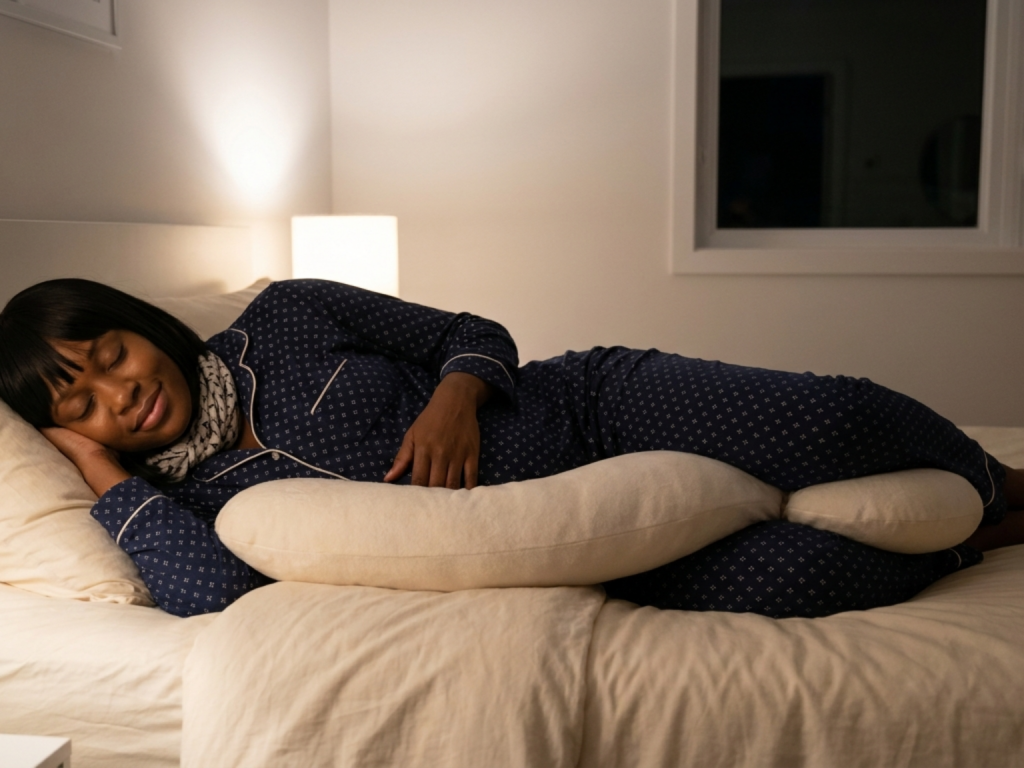
For many pregnant people, the biggest obstacle is not the theory of side sleeping but the reality of hip pain, shoulder pressure, or frequent turning. A pregnancy pillow for side sleeping can help by supporting the abdomen, keeping the knees from collapsing together, and reducing twisting through the pelvis. Some people do well with a long body pillow, while others prefer a wedge under the belly or behind the back.
If reflux is prominent, a semi-reclined sleep position can sometimes be easier than a fully flat setup, especially when combined with side lying and head-of-bed elevation. Small adjustments often matter: placing a pillow between the knees, keeping the top shoulder from rolling forward, and using a mattress surface that is firm enough to support alignment without creating pressure points. The goal is to build a position you can actually maintain, not to force a rigid posture. If side sleeping worsens pain instead of relieving it, it is worth discussing whether physical therapy, a different pillow configuration, or another sleep strategy would be more appropriate.
When side sleeping is not enough on its own
Sleep position is important, but it is not the whole story. If you have loud snoring, witnessed pauses in breathing, morning headaches, severe daytime sleepiness, or gasping at night, consider the possibility of sleep apnea symptoms in pregnancy and raise it with your clinician. Pregnancy can unmask or worsen sleep-disordered breathing, and positional changes alone may not be sufficient. Likewise, persistent reflux, significant back or pelvic pain, or numbness from prolonged side lying deserves attention rather than simple endurance.
It is also important not to use position as a substitute for evaluation when something feels off. If you notice reduced fetal movements, new shortness of breath at rest, chest pain, or swelling that is sudden or marked, contact your obstetric team promptly. Sleep discomfort is common in pregnancy, but severe or changing symptoms warrant medical review. The right response is usually individualized care, not self-blame. Many people need a combination of sleep hygiene, positioning, pain management, and sometimes formal sleep or obstetric assessment to feel safe and rested.
A realistic take-home message
Sleeping on your side matters because it often supports airway stability, reduces reflux, and, in pregnancy, may improve comfort and circulation compared with lying flat on the back. For many people, the most useful approach is not a strict rule about one perfect position but a flexible plan: start on the side, support the body with pillows, and switch sides as needed through the night. If the left side feels best, use it; if the right side is the only position that lets you rest, that is still a meaningful step toward safer positioning than prolonged supine sleep.
What matters most is balancing physiology with sustainability. A side-lying posture that reduces snoring, back strain, and heartburn is often a win. A sleep setup that leaves you awake, tense, or miserable is not. If you are pregnant and unsure what is appropriate for your stage, your symptoms, or your medical history, a brief conversation with your obstetric clinician can turn vague advice into a personalized plan. Better sleep is a legitimate health goal, and it is okay to ask for help getting there.
When to seek medical advice
- Persistent loud snoring, gasping, or pauses in breathing during sleep.
- New or worsening shortness of breath, chest pain, or dizziness when lying down.
- Significant reflux, back pain, hip pain, or numbness that prevents sleep.
- Reduced fetal movements or any sudden change that worries you.
- Swelling, headaches, or high blood pressure concerns in pregnancy.
Tools & Assistance
- Ask your obstetric clinician or midwife about the best sleep position for your trimester and symptoms.
- Consider a pregnancy pillow or body pillow to reduce pelvic and shoulder strain.
- If snoring or breathing pauses are present, ask whether a sleep medicine referral is appropriate.
- Use head-of-bed elevation or a wedge if reflux is a major problem, if your clinician agrees.
FAQ
Is side sleeping always better than back sleeping in pregnancy?
Side sleeping is commonly preferred, especially later in pregnancy, because it may reduce vessel compression and improve comfort. Individual medical advice still matters.
Do I have to sleep on my left side only?
Not usually. Left-side sleep is often suggested, but right-side sleeping can still be reasonable if it is more comfortable and you are not lying flat for long periods.
Can a pillow really help?
Yes. A pregnancy pillow or supportive wedge can reduce twisting, hip pressure, and the urge to roll onto your back.
What if side sleeping makes my hips hurt?
That can happen. Try adjusting pillow placement, mattress support, or a semi-reclined sleep position, and ask a clinician if pain persists.
Sources
- Harvard Health Publishing — Is your sleep position helping or hurting you?
- Sleep Foundation — Side Sleeping: Which Side Should You Sleep On?
- Mayo Clinic News Network — Mayo Clinic Minute: What is the best sleeping position?
Disclaimer
This article is for educational purposes only and does not replace individualized medical advice. If you are pregnant or have concerning symptoms, please consult your obstetric clinician or another qualified health professional.
















Please log in to leave a comment.