
Intro
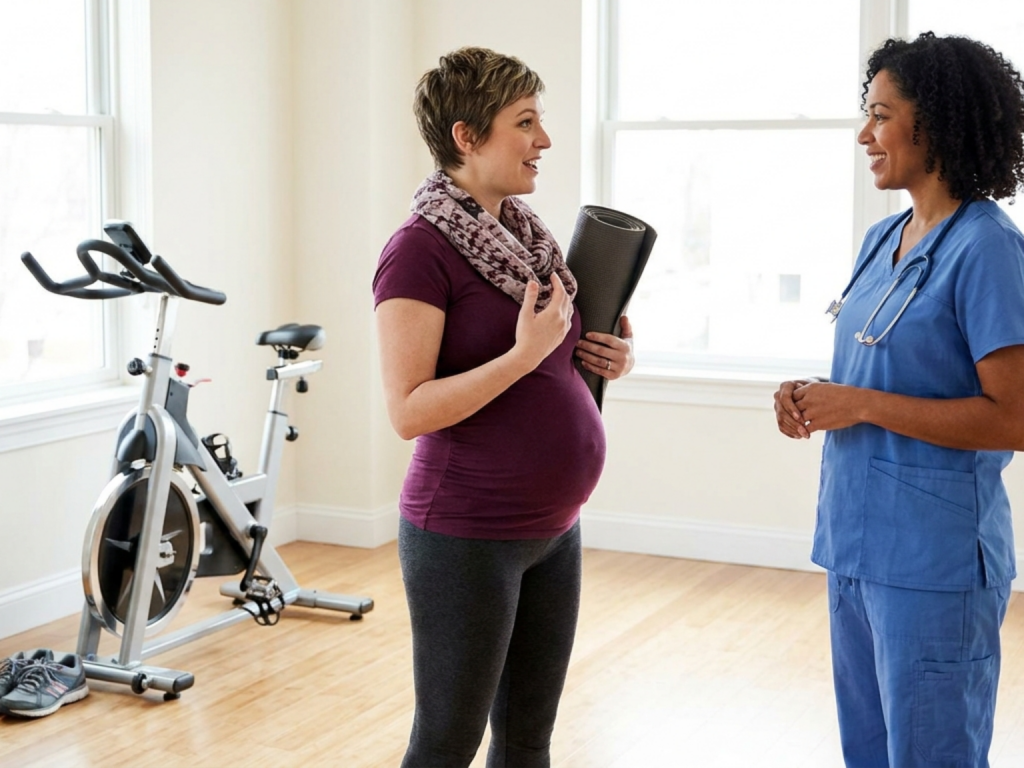
Exercise is usually one of the healthiest habits to keep during pregnancy, but not every workout keeps the same risk profile. As pregnancy progresses, balance shifts, ligaments become more lax, the cardiovascular system works harder, and some positions can reduce comfort or blood flow.
That is why the conversation is not simply whether you should exercise, but which exercises should be avoided, modified, or reviewed with your clinician. The goal is to stay active where it is safe, while steering away from movements, environments, and positions that add avoidable risk.
Highlights
Most exercise is still possible in pregnancy, but some movements carry a higher risk of falls, trauma, or reduced placental blood flow.
The clearest red flags are contact sports, scuba diving, prolonged flat-on-your-back exercise after the first trimester, and high-altitude exertion.
Pregnancy often requires modifications rather than complete rest, especially for strength, balance, and core work.
What is unsafe for one person may be acceptable for another with obstetric guidance, so personal history matters.
Why some workouts become less suitable in pregnancy
Pregnancy changes several systems that matter for exercise safety. The center of gravity shifts forward, joints may feel less stable because of hormonal effects on connective tissue, and many people fatigue sooner than they did before conception. None of that means exercise should stop; it means the margin for error becomes smaller for certain activities.
Many clinicians therefore think in terms of activities to avoid while pregnant rather than banning exercise outright. A good example is prolonged exercise lying flat on the back after the first trimester. In that position, the gravid uterus can compress major veins, which may reduce venous return and lower uterine blood flow. Some people feel light-headed or nauseated; others may not notice symptoms, but the physiology still matters.
Heat stress, dehydration, and abrupt changes in direction also deserve attention. A workout that once felt routine can become less predictable when balance, blood flow, and temperature regulation are all changing at once.
Exercises and sports that are usually discouraged
Clinical guidance from major health organizations consistently highlights a few categories of exercise that are generally avoided or treated with great caution during pregnancy. The exact recommendation can vary by trimester and by medical history, but the following are the most commonly discouraged:
- Contact sports while pregnant, including activities with collision or direct body impact, because abdominal trauma and falls are difficult to control.
- Fall risk activities while pregnant, especially horseback riding and similar sports where balance loss can have immediate consequences.
- Scuba diving in pregnancy, because pressure changes and decompression risk create hazards that exercise alone cannot offset.
- Exercise above about 2,500 meters unless a clinician has explicitly cleared it, particularly if you are not acclimatized to altitude.
- Prolonged exercises lying flat on the back after 16 weeks, including some floor-based core routines and certain yoga or Pilates sequences.
It is also wise to be cautious with any class that combines jumping, sudden pivoting, aggressive balance challenges, or crowded space where a bump or stumble is more likely. Even if the workout is popular and low intensity on paper, the mechanical risk may still be too high for pregnancy.
Why these restrictions exist
The reason a workout is discouraged usually comes down to one of four mechanisms: trauma, blood-flow changes, pressure changes, or temperature stress. A fall from horseback, a collision in a contact sport, or a hard landing in a high-impact class can injure the pregnant person and, secondarily, the pregnancy. Because the abdomen changes shape and the body’s balance center moves, those accidents can happen more easily than they did before.
Supine work is a different issue. After mid-pregnancy, lying on the back can compress the inferior vena cava and sometimes the aorta, which may reduce cardiac preload and uteroplacental perfusion. Some people get dizzy, sweaty, or short of breath; others simply feel unwell. Either way, it is a position worth limiting.
Scuba diving in pregnancy is avoided for a separate reason: decompression and gas exchange hazards are uniquely difficult to make safe for the fetus. At altitude, oxygen availability drops and physiologic strain rises, which is why exercise above 2,500 meters is treated conservatively. Finally, overheating can add unnecessary stress, especially if the workout is long, intense, or poorly ventilated.
Safer substitutes and modifications
Avoiding a specific activity does not mean becoming sedentary. In many cases, the safer move is to change the loading pattern, reduce impact, or choose a more stable environment. Walking, swimming, water exercise, and stationary cycling are common low-risk options because they reduce fall risk while still supporting cardiovascular fitness.
Strength work can often continue in a modified form. Pregnancy-safe strength training usually means controlled breathing, stable footing, moderate loads, and no breath-holding or maximal lifts. Side-lying, seated, or incline positions are often more comfortable than flat supine positions. Slow transitions from lying to standing can also reduce dizziness.
Modified yoga and mobility work may be appropriate if they avoid deep twists, prolonged back-lying, and overheating. The same principle applies to core training: keep the emphasis on control, posture, and function rather than on intense abdominal strain. The best substitution is the one that keeps you active without creating a new hazard, and that decision is often easiest to make with professional guidance.
When exercise choices need extra caution
General advice is a starting point, not a substitute for individualized obstetric care. If you have been told to limit activity because of bleeding, placenta-related concerns, preterm labor risk, hypertension, recent surgery, or another pregnancy complication, that plan should take priority over generic fitness advice. The same is true if you have significant pelvic pain, musculoskeletal injury, or a medical condition that changes tolerance for exertion.
It can help to ask a few focused questions at a prenatal visit: Are there positions I should avoid? Is there a heart-rate or effort target you prefer? Do travel plans, altitude exposure, or water sports change my recommendations? Should I see a prenatal physical therapist for movement options?
For many people, the answer is not to stop moving but to narrow the menu. A tailored plan lets you keep the benefits of exercise while reducing the chance that an otherwise healthy routine turns into a preventable problem. That balance is especially important if your normal training style includes intensity, impact, or complex balance demands.
A practical way to decide before you start a workout
Before any session, run through a quick safety screen. First, ask whether the activity has a meaningful fall, collision, or abdominal impact risk. Second, check whether it requires prolonged lying flat on your back after 16 weeks. Third, consider the environment: is it unusually hot, at high altitude, or underwater? Fourth, think about intensity and breathing. If you cannot speak in short sentences, hold your breath, or keep form stable, the workout may be too demanding for that day.
Knowing the warning signs during prenatal exercise is equally important. Stop and contact your maternity team if you develop vaginal bleeding, fluid leakage, painful regular contractions, chest pain, fainting, severe dizziness, or a noticeable decrease in fetal movement. These are not symptoms to train through.
If you are unsure, the safest response is usually to switch to a lower-impact option and bring the question to your obstetric clinician. Pregnancy does not require fear of movement, but it does reward caution, flexibility, and a willingness to revise the plan when the body asks for it.
Seek medical advice promptly if
- You have vaginal bleeding, fluid leakage, or painful regular contractions during or after exercise.
- You feel chest pain, fainting, severe dizziness, or shortness of breath that seems out of proportion.
- You notice a clear decrease in fetal movement after activity.
- You have been given individualized exercise restrictions and are unsure whether a workout fits them.
Tools & Assistance
- Your obstetrician, midwife, or family physician for personalized exercise guidance
- A maternal-fetal medicine specialist if your pregnancy is higher risk or has activity restrictions
- A prenatal physical therapist for movement substitutions and pelvic support
- Clinic or hospital pregnancy exercise handouts reviewed with your care team
FAQ
Is running automatically unsafe in pregnancy?
Not automatically. Some people continue running with modifications if they have an uncomplicated pregnancy and their clinician has no concerns, but impact, balance, symptoms, and comfort should guide the decision.
Can I do yoga while pregnant?
Often yes, if it is modified and comfortable. Avoid prolonged flat-on-your-back positions, overheating, and deep twisting unless your clinician or instructor specifically advises otherwise.
Why is lying on my back discouraged after mid-pregnancy?
After about 16 weeks, the uterus can compress major blood vessels in the back-lying position and reduce venous return, which may cause dizziness and can lower uterine blood flow.
Are swimming and stationary cycling usually okay?
They are often considered lower-risk choices because they minimize falls and impact. Still, they should fit your symptoms, fitness level, and any guidance from your obstetric team.
Sources
- Johns Hopkins Medicine — Exercise During Pregnancy
- NHS — Exercise in pregnancy
- NCBI Bookshelf / StatPearls — Pregnancy And Exercise
Disclaimer
This article is for educational purposes only and does not replace individualized medical advice. Please consult your obstetric clinician or midwife before changing exercise habits, especially if you have symptoms or a pregnancy complication.
















Please log in to leave a comment.