
Intro
Thinking about weight before pregnancy can feel surprisingly personal. For many people, the goal is not an "ideal" body but a safer physiologic starting point for conception, early placental development, and the months ahead. That may mean losing a modest amount of weight, gaining weight gradually, or simply stabilizing weight while improving nutrition and fitness.
The safest approach is individualized. Body mass index (BMI) is an imperfect screening tool, but it is still commonly used to frame preconception counseling and gestational weight-gain recommendations. The key question is not whether the scale moves quickly; it is whether the plan supports ovulation, metabolic health, and a pregnancy that can meet nutritional demands.
Highlights
Pre-pregnancy weight goals should be based on current health, BMI, menstrual history, medications, and fertility goals, not on aesthetics or pressure.
Intentional weight loss before pregnancy is not automatically helpful; one randomized trial found it did not improve later adherence to pregnancy weight-gain guidance.
If weight gain is needed, gradual gain with medical supervision is safer than trying to "bulk up" quickly.
Nutrition quality, sleep, and activity patterns matter as much as the number on the scale, especially for people with insulin resistance or irregular cycles.
Why weight before pregnancy matters
Preconception weight is relevant because it can influence ovulation, insulin sensitivity, blood pressure, medication dosing, and how much weight a pregnancy naturally tends to add later. A person entering pregnancy at a very low or very high weight may need more individualized support to reduce avoidable risks and to meet the nutritional demands of pregnancy.
That said, weight is only one marker of health. BMI can be useful for population-level guidance, but it does not capture body composition, distribution of adiposity, recent weight change, eating patterns, or the presence of conditions such as polycystic ovary syndrome, thyroid disease, or a history of eating disorders. Safe planning starts with the broader clinical picture, not a single number. In practical terms, the goal is usually to move toward a weight range that is sustainable and compatible with healthy ovulation and pregnancy, rather than to chase rapid change.
For many people, the most helpful mindset is: optimize what you can control, then let the body settle into pregnancy from a more stable baseline. That often means small, consistent changes in food quality, movement, and medical management rather than dramatic short-term dieting.
When losing weight before pregnancy may help
If someone has a higher BMI, modest weight loss before conception can sometimes improve blood pressure, glucose control, sleep, joint comfort, and menstrual regularity. In some individuals, that may also support fertility. However, the evidence does not support the idea that pre-pregnancy weight loss automatically improves later pregnancy weight management.
A randomized clinical trial found that intentional weight loss before pregnancy did not improve adherence to gestational weight-gain guidelines and was associated with increased gestational weight gain. That finding matters because it suggests that weight loss advice, when delivered without structure, can have unintended effects. It also reinforces that the outcome is not just “lose weight first”; the quality, pace, and support around the plan matter.
The safest version of weight loss before pregnancy is usually gradual, nutritionally adequate, and monitored by a clinician or dietitian. Very low-calorie diets, cleanse plans, unregulated supplements, and fasting approaches can reduce lean mass, worsen nutrient intake, and disrupt cycles. If weight loss is being considered, it is worth asking whether the aim is to improve fertility, reduce a specific medical risk, or simply lower the scale. The first two can be legitimate medical goals; the last one is not a good reason to push the body aggressively.
When gaining weight before pregnancy is appropriate
Some people enter pregnancy underweight, have recently lost weight unintentionally, or have difficulty maintaining intake because of nausea, gastrointestinal disease, high training loads, food insecurity, or a restrictive eating pattern. In those settings, gaining weight before pregnancy may be appropriate and protective. The Office on Women’s Health advises that women who need to gain weight before getting pregnant should do so gradually and with medical advice.
Weight gain is not a permission slip to eat anything in any amount. The goal is usually to restore energy availability and nutrient stores while supporting stable hormones and ovulation. That may require more calorie-dense meals and snacks, but those calories still need to carry protein, iron, folate, calcium, vitamin D, and other nutrients relevant to fertility and fetal development. If appetite is limited, smaller frequent meals, liquid nutrition, and food fortification can be more practical than forcing large portions.
People with an eating disorder history, low energy availability, or prior bariatric surgery deserve especially careful planning. In those settings, gaining weight safely is often less about a target number and more about restoring metabolic stability, preventing deficiencies, and building a plan that can be sustained through the first trimester when nausea may worsen intake.
How to change weight safely without extreme diets
Safe preconception weight change is usually built on three pillars: energy balance, nutrient density, and repeatable habits. For weight loss, that often means a moderate calorie deficit paired with protein-rich meals, fiber, and regular movement. For weight gain, it may mean adding one or two snacks per day, increasing portions of calorie-dense foods such as nut butters, dairy, avocado, legumes, or olive oil, and making sure protein is present at most meals.
Exercise can support both goals. Strength training before pregnancy helps preserve lean mass during weight loss and can improve insulin sensitivity; moderate-intensity exercise before conception also supports cardiometabolic fitness and may make weight changes easier to maintain. Exercise should be adapted to current fitness, injury history, and any fertility treatment or medical issues, rather than copied from a generic plan.
Try to avoid approaches that produce fast swings in intake or body mass: detox products, “fat burner” supplements, dehydration methods, and highly restrictive eating patterns. They may temporarily move the scale but often undermine sleep, mood, bowel regularity, and menstrual function. A safer question is, “Can I repeat this plan on an average week for months, not days?” If the answer is no, it is probably too aggressive.
What to review with a clinician before trying to change weight
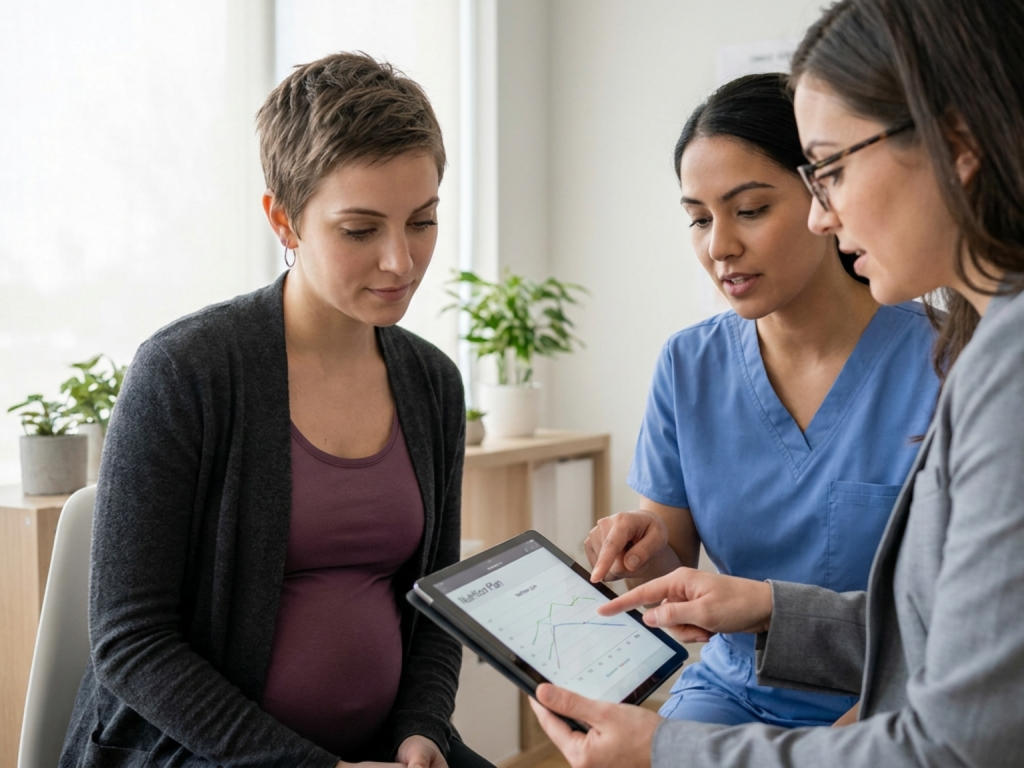
Weight optimization before pregnancy works best as a medical plan, not a willpower test. A preconception visit with an obstetric clinician, primary care clinician, or registered dietitian can help translate broad advice into something realistic. This is especially important if you have irregular cycles, suspected PCOS, diabetes, hypertension, thyroid disease, a history of bariatric surgery, or prior eating-disorder treatment.
During that review, clinicians may consider current BMI, recent weight trajectory, medications, blood pressure, laboratory testing, and pregnancy timing. If weight loss is the goal, they may want to make sure nutrition remains adequate. If weight gain is the goal, they may screen for causes of unintentional weight loss or nutrient deficiency. A dietitian can also help with nutrition before trying to conceive, especially if you follow a vegetarian or vegan pattern, have food intolerances, or need help building a more calorie-dense but still balanced meal plan.
This is also a good time to discuss what pregnancy weight gain is likely to be recommended once conception occurs. Many clinicians use BMI-based ranges to guide gestational weight-gain recommendations, and planning ahead can reduce anxiety later. The aim is not to micromanage every pound; it is to enter pregnancy with a plan that matches your physiology and your medical history.
How to think about the scale once pregnancy begins
Once pregnancy starts, the scale stops being a simple fat-mass indicator. Early changes can reflect fluid shifts, constipation, nausea, reduced intake, or normal expansion of blood volume and body tissues. That is why day-to-day weighing can be misleading and emotionally exhausting. It is usually more useful to think in trends over weeks, then compare those trends with your clinician’s guidance.
If you were trying to lose weight before conception, pregnancy is generally not the time to continue intentional weight loss unless a specialist gives a specific medical plan. If you were trying to gain weight, the strategy may need to shift if nausea or vomiting becomes significant. Either way, the preconception phase is where you can create the most stable baseline.
Understanding the singleton pregnancy weight-gain range that applies to your BMI category can make the transition smoother, because it links preconception goals with what happens next. The best plan is usually the one that is medically appropriate, emotionally sustainable, and flexible enough to respond to real life. Pregnancy is a physiologic transition, not a test of discipline.
When to pause and get medical advice
- Rapid weight loss, skipped periods, dizziness, or fainting can signal that the plan is too aggressive.
- Unintentional weight loss, ongoing vomiting, or trouble eating normally should be evaluated before trying to conceive.
- A history of eating disorders, bariatric surgery, diabetes, thyroid disease, or hypertension calls for individualized guidance.
- Do not start crash diets, fasting plans, or unregulated supplements while preparing for pregnancy.
Tools & Assistance
- Preconception visit with an obstetric clinician, midwife, or primary care clinician
- Registered dietitian preconception counseling
- Medication review and laboratory testing if your clinician recommends it
- A simple food-and-weight trend log to review patterns, not daily fluctuations
FAQ
Is it safe to try to lose weight before pregnancy?
It can be, if the loss is gradual, nutritionally adequate, and medically appropriate. Crash diets and very low-calorie plans are not a safe default.
What if I am underweight and want to get pregnant?
Gradual weight gain before conception may be helpful, but it should be supervised so that nutrition and underlying causes of low weight are addressed.
Does losing weight before pregnancy guarantee better pregnancy weight gain later?
No. A randomized trial found that intentional pre-pregnancy weight loss did not improve later adherence to pregnancy weight-gain guidance.
Should I change my weight on my own if I have PCOS or a history of disordered eating?
No. Those situations warrant individualized medical and dietitian support because weight changes can affect hormones, fertility, and mental health.
Sources
- PubMed Central / NIH — Weight loss prior to pregnancy and subsequent gestational weight gain: a randomized clinical trial
- PubMed Central / NIH — Weight loss before conception: a systematic literature review
- Office on Women's Health, U.S. Department of Health and Human Services — Weight, fertility, and pregnancy
Disclaimer
This article is for educational purposes only and does not replace individualized medical advice, diagnosis, or treatment. Please consult an obstetric clinician or other qualified professional before making major weight changes while planning pregnancy.














Please log in to leave a comment.