
Intro
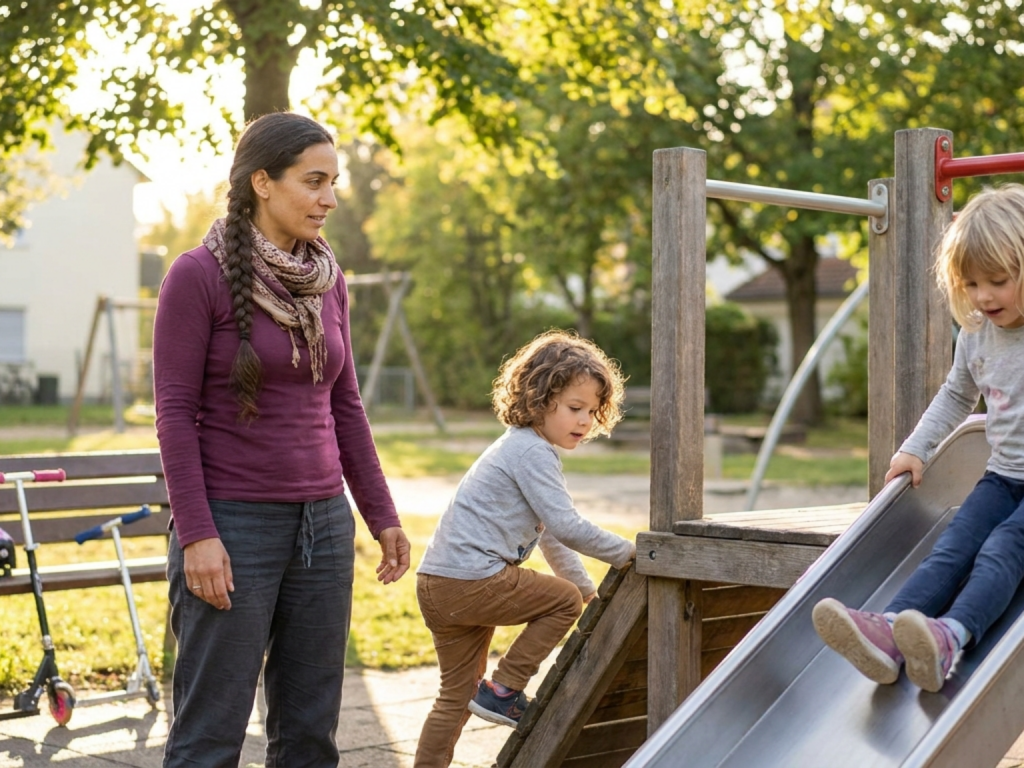
Outdoor play gives children room to move, explore, negotiate, test limits, and recover from the structured pace of daily life. It can also make caregivers understandably alert: falls, traffic, water, heat, insects, and unfamiliar environments all require planning. The goal is not to remove every challenge, but to create conditions where children can take developmentally appropriate risks with thoughtful adult supervision.
This article explains outdoor safety for children in a practical, medically cautious way. It focuses on prevention, supervision, injury reduction, and knowing when professional care is needed, while preserving the physical, cognitive, and emotional benefits of outdoor play.
Highlights
Outdoor play supports motor development, social learning, emotional regulation, and resilience when it is frequent and well supervised.
Safety planning should match the child’s age, developmental stage, medical needs, environment, and the activity’s specific hazards.
Risky play is not the same as unsafe play; children benefit from manageable challenge while adults control serious hazards.
Water, traffic, heat, head injury, poisoning, and breathing difficulty deserve especially careful prevention and rapid response.
Why outdoor safety is about more than preventing injuries
Outdoor safety for children is sometimes framed as a checklist of hazards, but it is broader than that. Children need outdoor environments because movement, sensory input, peer interaction, and contact with natural spaces contribute to physical and psychosocial functioning. Running, climbing, jumping, balancing, digging, and throwing build gross motor coordination, vestibular processing, proprioception, muscle strength, and cardiorespiratory fitness. Outdoor settings also offer opportunities for social play for children, including turn-taking, rule negotiation, conflict repair, and imaginative collaboration.
Evidence increasingly supports outdoor time as a mental health protective factor. A large study of preschool-aged children reported that frequent outdoor activity, especially sessions lasting more than two hours and occurring at least seven times per week, was associated with a lower risk of anxiety. This does not mean outdoor play treats anxiety or replaces clinical care, but it reinforces what many caregivers observe: children often regulate better when they have enough space, movement, and unstructured time.
A helpful framework is to separate hazards from risks. A hazard is a danger a child cannot reasonably recognize or manage, such as an unfenced pool, broken playground equipment, a moving vehicle, or an unsecured chemical. A risk is a manageable challenge, such as climbing a low structure, balancing on logs, or moving fast on a scooter while wearing a helmet. Good outdoor safety removes hazards while allowing supervised, age-appropriate risks.
Match supervision to age, development, and environment
Supervision is not a single behavior; it is a changing level of proximity, attention, and coaching. Infants and toddlers need close physical supervision because they have limited impulse control, immature gait, oral exploration, and little understanding of danger. Preschoolers can follow simple rules but may forget them during excitement. School-aged children can learn safety routines, yet still underestimate speed, height, water currents, and traffic. Adolescents may need explicit discussion about peer pressure, risk perception, and protective equipment.
Developmental variation matters. A child with impulsivity, autism spectrum-related elopement risk, motor coordination differences, visual impairment, seizure history, food allergy, asthma, or a mobility device may need individualized planning. Caregivers should not assume that chronological age equals safety readiness. If a child has recurrent injuries, unsafe climbing patterns, poor danger awareness, or developmental delays and play concerns, discuss this with a pediatric clinician, occupational therapist, physical therapist, or other relevant professional.
Effective supervision includes:
- Scanning: repeatedly checking the child, the equipment, other children, animals, traffic, water, and weather.
- Positioning: standing close enough to intervene quickly near water, heights, streets, or unfamiliar play structures.
- Anticipation: noticing fatigue, hunger, overheating, escalating peer conflict, or riskier behavior after excitement.
- Clear rules: using short, positive instructions such as “feet first on the slide” or “stop at the curb.”
- Reduced distraction: avoiding phone use, long conversations, earbuds, or tasks that pull attention away during high-risk activities.
Supervision should become more active when the setting is new, crowded, poorly maintained, near water, near vehicles, or when children are using wheels, climbing, or playing with mixed-age groups.
Playgrounds, climbing, and healthy risky play
Playgrounds are valuable outdoor learning spaces, but safety depends on equipment design, maintenance, surfacing, and behavior. Choose age-appropriate structures: toddlers need lower platforms, smaller steps, and enclosed areas, while older children may safely use taller and more complex equipment. Check for broken parts, sharp edges, hot metal or plastic surfaces, loose bolts, strangulation hazards, and inadequate protective surfacing. Impact-absorbing surfaces such as engineered wood fiber, rubber, sand, or pea gravel are safer than concrete, asphalt, or packed dirt under climbing equipment.
Risky play can include height, speed, rough-and-tumble interaction, tool use, exploration, and temporary independence. Pediatric guidance increasingly recognizes that healthy risky play can strengthen risk assessment, confidence, self-esteem, and resilience. Independent play in children can also grow from these experiences when adults stay nearby but avoid overdirecting every movement.
The caregiver’s role is to keep the boundary between challenging and dangerous. Instead of saying “be careful” repeatedly, which may not teach a specific skill, try prompts such as:
- “What is your next handhold?”
- “Does that branch feel strong enough?”
- “How will you get down before you climb higher?”
- “Look around before you swing the stick.”
- “Do you need more space from other children?”
These questions support executive function during play: planning, inhibition, working memory, and flexible problem solving. They also preserve the child’s sense of agency. Intervene immediately for hazards such as pushing from heights, climbing outside guardrails, cords around the neck, unsafe surfaces, or equipment not intended for the child’s size or ability.
Wheels, roads, and transportation safety
Bicycles, scooters, skates, skateboards, and ride-on toys are common sources of outdoor injury, particularly head and limb trauma. A correctly fitted helmet is essential for wheeled activities. It should sit level on the head, cover the forehead, have snug side straps forming a “V” around the ears, and allow only one or two fingers under the chin strap. Replace helmets after a significant impact or according to manufacturer guidance, even if damage is not obvious.
Children should ride in safe spaces away from traffic until they have the cognitive maturity and motor control to manage roads. Young children have difficulty judging vehicle speed and distance, and they may assume drivers see them. Teach curb routines early: stop, look left-right-left, listen, make eye contact when possible, and cross only with an adult until ready. Driveways and parking lots require special caution because reversing vehicles and low visibility create high-risk zones.
For family walks, use reflective or bright clothing in low light, choose sidewalks or paths, and keep toddlers physically close. In strollers, use safety straps and avoid hanging heavy bags on handles because tipping can occur. If children are playing outdoors near home, define boundaries clearly and reassess them as the child matures.
Traffic safety also includes modeling. Children learn from adults who put phones away at crossings, use helmets, follow signals, and pause before entering streets. For adolescents, discuss e-bikes, scooters, distracted riding, alcohol or drug exposure, and local helmet and road regulations.
Water safety: supervision must be direct and undistracted
Water can become dangerous quickly and quietly. Drowning may occur without dramatic splashing, and young children can drown in small amounts of water. Pools, ponds, lakes, rivers, buckets, bathtubs, fountains, and drainage areas all deserve attention. The safest approach combines barriers, active supervision, swimming skills when developmentally appropriate, and emergency preparedness.
Pool fences should fully enclose the pool, have self-closing and self-latching gates, and be maintained so children cannot climb through, under, or over them. Remove toys from the pool area after use so they do not attract a child back to the water. During water play, an adult should be assigned as the active watcher, avoiding phones, reading, alcohol, or side conversations. In group settings, do not assume “someone else is watching.”
Life jackets should be properly fitted and approved for the activity, especially around open water or boating. Inflatable toys, arm bands, and puddle jumpers are not substitutes for supervision. Teach children never to swim alone, never to push others underwater, and never to dive into unfamiliar water.
Caregivers may consider learning cardiopulmonary resuscitation and basic first aid. If a child has a submersion event, persistent cough, breathing difficulty, altered mental status, unusual sleepiness, vomiting, or concerning behavior afterward, seek urgent medical evaluation. For shortness of breath in children after water exposure, err on the side of prompt professional assessment.
Heat, sun, cold, insects, and outdoor environmental exposures
Environmental safety starts before leaving home. Check weather, air quality, pollen levels when relevant, and the activity’s distance from shade, toilets, water, and help. Children can overheat faster than adults because thermoregulation is still developing, they may not recognize thirst, and they often continue playing despite fatigue. Encourage regular water breaks and rest in shade. A healthy diet for children supports energy for play, but outdoor activity also requires practical hydration and snacks, especially during long sessions.
Heat illness ranges from heat cramps and heat exhaustion to heat stroke, a medical emergency. Concerning signs include confusion, collapse, persistent vomiting, severe headache, hot skin, lethargy, or abnormal behavior in heat. Move the child to a cooler area, begin cooling measures, and seek urgent care when symptoms are significant or not rapidly improving.
Sun protection includes shade, protective clothing, hats, sunglasses when tolerated, and age-appropriate sunscreen. For infants, ask a pediatric clinician about best sun-protection strategies, especially for very young babies. Cold weather requires layers, dry clothing, hand and foot protection, and attention to wind chill. Children may not report numbness or pain early, so caregivers should check exposed skin and behavior.
In wooded or grassy areas, check for ticks after outdoor play, including scalp, behind ears, neck, armpits, groin, waistline, and behind knees. Use insect precautions appropriate for the child’s age and local disease risk. Teach children not to touch unknown plants, mushrooms, animal feces, or dead animals. If there is suspected poisoning in a child from plants, chemicals, or mushrooms, contact poison control or emergency services promptly rather than waiting for symptoms.
Injuries, warning signs, and when to seek care
Minor scrapes, bruises, and bumps are common in outdoor play. Basic preparation helps: carry clean water, adhesive bandages, gauze, tweezers, any prescribed rescue medications, and emergency contact information. Clean minor wounds with running water, remove visible debris if easily accessible, and cover with a clean dressing. Consult a healthcare professional for deep wounds, animal bites, human bites, contaminated punctures, wounds that may need closure, or concerns about tetanus immunization.
Head injuries require careful observation. Seek urgent medical advice after loss of consciousness, repeated vomiting, worsening headache, confusion, seizure, abnormal behavior, unequal pupils, weakness, neck pain, or a significant fall. A first seizure, whether after injury, heat exposure, or without an obvious cause, warrants emergency assessment.
Caregivers should know pediatric emergency warning signs that justify immediate action: severe breathing difficulty, blue or gray color, unresponsiveness, severe allergic reaction, non-blanching rash with fever, persistent altered mental status, major bleeding, suspected poisoning, or severe dehydration. If emergency warning signs child resources are available locally, review them before outings so adults share the same thresholds for calling emergency services.
For children with chronic medical conditions, outdoor plans should include individualized instructions from their clinician. Examples include an asthma action plan, allergy and anaphylaxis plan, seizure safety plan, diabetes supplies, mobility supports, or guidance about heat sensitivity. Outdoor safety is strongest when it is proactive, written down when needed, and shared with schools, camps, relatives, and childcare providers.
Seek urgent help for these situations
- Any submersion event followed by cough, breathing difficulty, unusual sleepiness, vomiting, or abnormal behavior.
- Head injury with loss of consciousness, repeated vomiting, seizure, confusion, worsening headache, or abnormal neurologic signs.
- Heat exposure with confusion, collapse, persistent vomiting, severe lethargy, or hot skin.
- Suspected poisoning in a child from plants, mushrooms, chemicals, medications, or unknown substances.
- Severe allergic reaction, severe breathing difficulty, or blue-gray discoloration.
Tools & Assistance
- Create a small outdoor first-aid kit with wound supplies, emergency contacts, and prescribed rescue medications.
- Use a pre-playground scan: surface, equipment, exits, water, traffic, animals, and weather.
- Assign one undistracted adult watcher during water play or swimming.
- Teach children short safety scripts: stop at the curb, feet first, helmet on, ask before touching.
- Review local emergency numbers, poison control access, and the nearest urgent care location before trips.
FAQ
Should children be allowed to climb trees or play in challenging natural spaces?
Often yes, if the challenge is age-appropriate and serious hazards are controlled. Adults should assess height, surface, branch stability, supervision, and the child’s motor skills before allowing climbing.
How much outdoor play is beneficial?
There is no single prescription for every child, but frequent outdoor activity is associated with physical and mental health benefits. Build up gradually, considering weather, safety, medical needs, and family routines.
Are helmets necessary for scooters and balance bikes?
Yes. Falls can happen even at low speeds, and helmets reduce the risk of serious head injury when properly fitted and consistently used.
What should I do after a tick bite?
Remove the tick carefully with fine-tipped tweezers, clean the area, and monitor for rash, fever, or illness. Contact a healthcare professional for guidance based on local tick-borne disease risk and the bite details.
When should outdoor play be limited because of heat?
Limit intense play during extreme heat, high humidity, poor air quality, or when the child is ill. Use shade, hydration, rest breaks, and seek medical advice for concerning symptoms.
Sources
- Psychiatrist.com — The Kids Aren't All Right. Study Says They Need to Get Outside.
- Centers for Disease Control and Prevention — Outdoor Play and Safety for Children in ECE
- Canadian Paediatric Society — Healthy childhood development through outdoor risky play
Disclaimer
This article is for general educational purposes and is not a substitute for medical evaluation, diagnosis, or treatment. Consult a qualified healthcare professional or emergency services for urgent symptoms, injuries, poisoning, or individualized medical advice.















Please log in to leave a comment.