
Intro
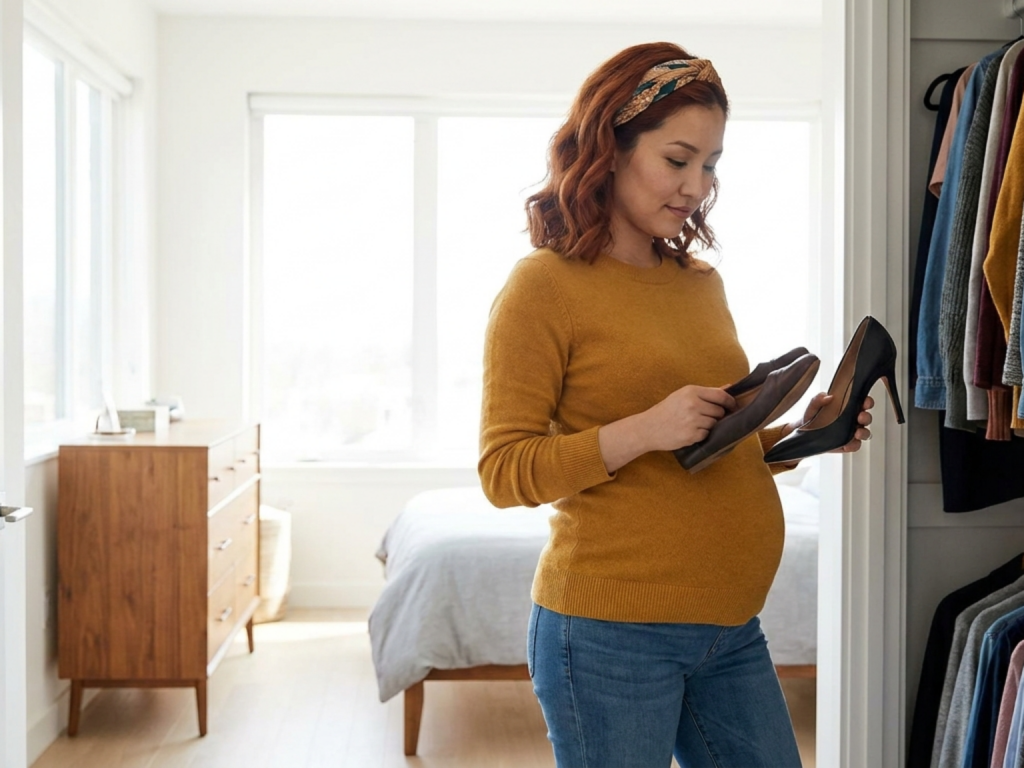
Pregnancy can change how clothing and footwear feel in surprisingly practical ways. Shifts in balance, joint loading, swelling, and day-to-day comfort may make familiar outfits or heels suddenly feel less stable or more irritating than before.
This article looks at clothing and high heels through a safety lens. It is not about perfection or rigid rules; it is about reducing avoidable strain, supporting mobility, and recognizing when a style choice may no longer be worth the trade-off.
Highlights
Pregnancy often changes balance, foot mechanics, and swelling, so the same shoes and clothes may fit and function differently than they used to.
High heels are linked with gait destabilization, forefoot overload, pain, and a higher risk of musculoskeletal injury.
Comfortable, well-fitting clothing can support circulation, reduce pressure points, and make movement easier as pregnancy progresses.
If footwear or clothing causes pain, numbness, skin injury, or a fall, it should be treated as a safety issue rather than something to ignore.
Why fit matters more when you are pregnant
Pregnancy changes more than belly size. The center of gravity shifts as the uterus enlarges, ligaments become more lax under hormonal influence, and many people notice edema, especially in the feet and ankles. Those changes can alter how clothing sits and how shoes interact with the ground. A waistband that once felt merely snug can become irritating or restrictive, while a shoe with a narrow toe box may feel suddenly intolerable by afternoon.
Good fit is not just about comfort. Clothing that pinches, rides up, or limits movement can make it harder to walk confidently, reach the floor, climb stairs, or get up from a chair. In pregnancy, that matters because small losses in stability can become meaningful. The goal is not to “dress medically,” but to choose garments that move with your body rather than against it.
For many people, the safest clothing is simply the clothing that allows normal breathing, walking, and circulation without unnecessary compression. If a garment leaves deep marks, worsens reflux, increases shortness of breath, or makes you more aware of your balance, it may be worth reassessing.
Choosing clothing that supports circulation and comfort
Clothing choices in pregnancy are often safest when they are adaptable. Fabrics with a little stretch, soft seams, and adjustable closures can accommodate daily variation in bloating and edema. Many people also find that layering is helpful, because body temperature and comfort can fluctuate during the day.
A practical approach is to prioritize:
- Waistbands that can expand or sit lower without pressing into the abdomen.
- Fabrics that breathe well and reduce heat buildup.
- Footwear with enough toe room to prevent crowding, rubbing, or nail pressure.
- Bras and support garments that are secure but not constrictive.
If you already have varicose veins, leg swelling, or pelvic girdle pain, a clinician may suggest individualized measures such as compression garments or physical therapy strategies. The important point is that clothing should support function. It should not make standing, turning, or walking feel more effortful than it needs to be.
For workwear or formal wear, a useful test is simple: can you sit, stand, walk, and bend without adjusting the outfit every few minutes? If not, the garment may be contributing to fatigue and instability.
What the evidence says about high heels
High heels are not only a fashion choice; they change biomechanics. Research summarized in a narrative systematic review in BMJ Open, as well as broader public health and footwear reviews, links high heels with hallux valgus, pain, gait changes, and musculoskeletal injury. Mechanically, elevated heels shift weight forward, reduce stride length, and can destabilize walking by narrowing the effective base of support.
In practical terms, this means the foot and calf work differently in heels. Forefoot pressure increases, the ankle is less able to adapt quickly, and the spine and knees may compensate for the altered posture. That is one reason heel use is associated with foot pain, ankle sprains, and other injuries. Pregnancy adds another layer: balance is often less predictable, the load on joints is higher, and swelling can make a previously familiar shoe fit very differently.
For that reason, a shoe that feels “manageable” in ordinary life may become a poor choice during pregnancy, especially if you are already tired, carrying something, going up stairs, or walking on uneven or slippery surfaces. Lower, wider-heeled shoes are generally more stable, but even those are not ideal if they still cause pain or instability.
How to think about special occasions and dress codes
Many people do not wear heels because they think it is healthy; they wear them for events, work expectations, or a sense of style. That is understandable. The question in pregnancy is less about whether a heel is fashionable and more about whether it is worth the added biomechanical cost. A shorter, broader heel is usually less destabilizing than a narrow stiletto, but the real issue is whether you can walk safely and comfortably for the full time you need to be upright.
If you decide to wear heels for a brief occasion, risk tends to rise when you add stairs, wet floors, long standing periods, carrying bags, or fatigue. In those settings, even a moderate heel can be problematic. Many people do better by planning a realistic backup: bringing flats, changing shoes after photos, or choosing a dressy shoe with a lower heel and firm heel counter.
A helpful mindset is to reserve the most stable footwear for the parts of the day that involve walking, commuting, or standing in lines. If the shoe changes your gait or makes you less sure of your footing, it is no longer a neutral accessory; it is a safety variable.
When swelling, pain, or posture changes alter your footwear needs
Pregnancy-related swelling can change shoe size over the course of a day, and that can matter more than people expect. Shoes that fit in the morning may become tight by evening, especially if you have been sitting or standing for long periods. Some people also notice plantar heel pain, arch strain, or back discomfort that makes a previously tolerable shoe feel impossible.
If you already have pelvic girdle pain, low back pain, flat feet, bunions, or a history of ankle instability, it is reasonable to ask for more individualized advice. A podiatrist, physiotherapist, or obstetric clinician can help you think through support, orthotics, activity modification, and whether a footwear change would be beneficial. This is especially important if you spend long hours on your feet at work.
Clothing can also affect symptoms. Very tight waistbands may worsen pressure and discomfort, while shoes with inadequate cushioning can make swelling and foot tenderness feel more pronounced. The best choice is often the one that lets you stay mobile without compensating in awkward ways. In other words, do not judge comfort only by whether the shoe looks acceptable; judge it by whether it lets you move naturally.
When clothing or heels become a safety problem
There are times when discomfort crosses the line into risk. A shoe that causes tripping, toe numbness, blisters, ankle rolling, or persistent foot pain is not just “a bit uncomfortable.” In pregnancy, that matters because falls can affect both the pregnant person and the pregnancy. Clothing is less likely than footwear to cause a direct injury, but very restrictive garments can still worsen shortness of breath, reflux, or pressure symptoms and make mobility feel harder.
Be especially cautious after any fall or near-fall. If you have a fall and then develop vaginal bleeding, abdominal pain, contractions, fluid leakage, or reduced fetal movement, those are urgent warning signs in pregnancy and need prompt medical assessment. Severe swelling, one-sided calf pain, chest pain, or shortness of breath also warrants urgent evaluation for reasons that go beyond footwear.
If you are wondering how all of this fits together, a complete pregnancy safety and restrictions plan is not only about food or medicines. It also includes everyday decisions like what you wear on your body and on your feet. That broader perspective can make it easier to choose stability over appearance when the two are in conflict.
Seek prompt help if any of these occur
- A fall followed by bleeding, abdominal pain, contractions, fluid leakage, or decreased fetal movement.
- Footwear that causes repeated tripping, ankle rolling, numbness, or skin breakdown.
- Sudden one-sided leg swelling, calf pain, chest pain, or shortness of breath.
- Clothing so tight that it worsens breathing, reflux, or circulation symptoms.
Tools & Assistance
- Ask your obstetric clinician or midwife for individualized advice if you have pain, swelling, or a history of falls.
- Consider a podiatry consultation if shoes are no longer fitting comfortably or if bunions, arch pain, or heel pain are worsening.
- Ask a physiotherapist about gait, balance, pelvic girdle pain, and practical movement strategies.
- Use a reputable shoe-fitting store to check length, toe-box width, and heel stability later in the day when swelling is more apparent.
FAQ
Are high heels completely forbidden during pregnancy?
Not necessarily, but they do carry more risk as balance, swelling, and joint stress change. Many people are safer and more comfortable in lower, wider, more stable shoes, especially for walking or standing.
What clothing is usually easiest to tolerate in pregnancy?
Breathable fabrics, soft seams, adjustable waistbands, and garments that do not constrict the abdomen or thighs are often easier to wear. The best option is the one that supports movement and does not leave you feeling compressed.
Should I buy shoes in a larger size?
Sometimes, but fit should be assessed carefully because foot width and swelling can change during the day. Choose based on comfort, toe room, and stability rather than size alone.
When is a shoe problem serious enough to call a clinician?
Call for advice if shoes are causing repeated falls, severe pain, numbness, skin injury, or if a fall is followed by bleeding, abdominal pain, contractions, fluid leakage, or decreased fetal movement.
Sources
- BMJ Open — High-heeled shoes and musculoskeletal injuries: a narrative systematic review
- National Center for Biotechnology Information (NCBI) / PMC — Harmful female footwear: A public health perspective
- National Center for Biotechnology Information (NCBI) / PMC — Footwear Choice and Locomotor Health Throughout the Life Course
Disclaimer
This article is for general information only and does not replace personalized medical advice. If you have pain, a fall, significant swelling, or any pregnancy warning signs, contact your obstetric or other healthcare professional promptly.









Please log in to leave a comment.