
Intro
Home is where children learn, explore, sleep, eat, and recover from illness. It is also the setting where many unintentional injuries occur, especially in infants, toddlers, and preschool children whose curiosity develops faster than their judgment and motor control.
A safer home is not a perfect home. It is a home where predictable hazards are reduced, caregivers have simple routines, and emergency plans are realistic. The goal is to support children’s independence while lowering the risk of preventable burns, falls, choking, poisoning, drowning, suffocation, firearm injury, and smoke or carbon monoxide exposure.
Highlights
Childproofing works best when it matches the child’s developmental stage, height, mobility, and problem-solving ability.
Smoke alarms, carbon monoxide detectors, stair gates, safe storage, and choking prevention are core safety measures, not optional extras.
The safest plan combines environmental changes with supervision, emergency preparation, and regular reassessment as children grow.
Families should seek professional guidance after significant injuries, possible poisoning, smoke exposure, submersion events, or concerning symptoms.
Why home safety changes as children grow
Children’s injury risk is closely linked to neurodevelopment. An infant may be vulnerable to suffocation, unsafe sleep surfaces, falls from furniture, and burns from hot liquids held by an adult. A crawling baby begins to reach electrical cords, small objects, pet bowls, and low cabinets. A toddler can climb, open drawers, pull furniture, and imitate adults without understanding danger. Preschool and school-age children may access higher shelves, operate taps or appliances, and test rules when supervision is inconsistent.
This is why a single childproofing session is rarely enough. A useful approach is to reassess the home every few months and after major milestones: rolling, crawling, pulling to stand, walking, climbing, and independent toileting. Caregivers can also view each room from the child’s level. Kneeling on the floor often reveals loose coins, button batteries, dangling cords, unstable furniture, accessible medications, and choking-size objects that are easy to miss from adult height.
Research on home hazards has found that safety gaps are common. In one study, some homes with infants still had baby walkers, and a proportion lacked functioning smoke alarms. These examples matter because environmental hazards can transform ordinary exploration into injury. The most protective strategy is layered: remove hazards when possible, block access when removal is impossible, supervise actively during high-risk activities, and have a clear response plan for emergencies.
Falls, furniture, stairs, and windows
Falls are among the most frequent childhood injuries. Many are minor, but falls from height, down stairs, or onto hard surfaces can cause fractures, dental trauma, concussion, or intracranial injury. Prevention begins with matching the environment to the child’s mobility. Infants should never be left unattended on beds, sofas, changing tables, or countertops, even before they seem able to roll reliably.
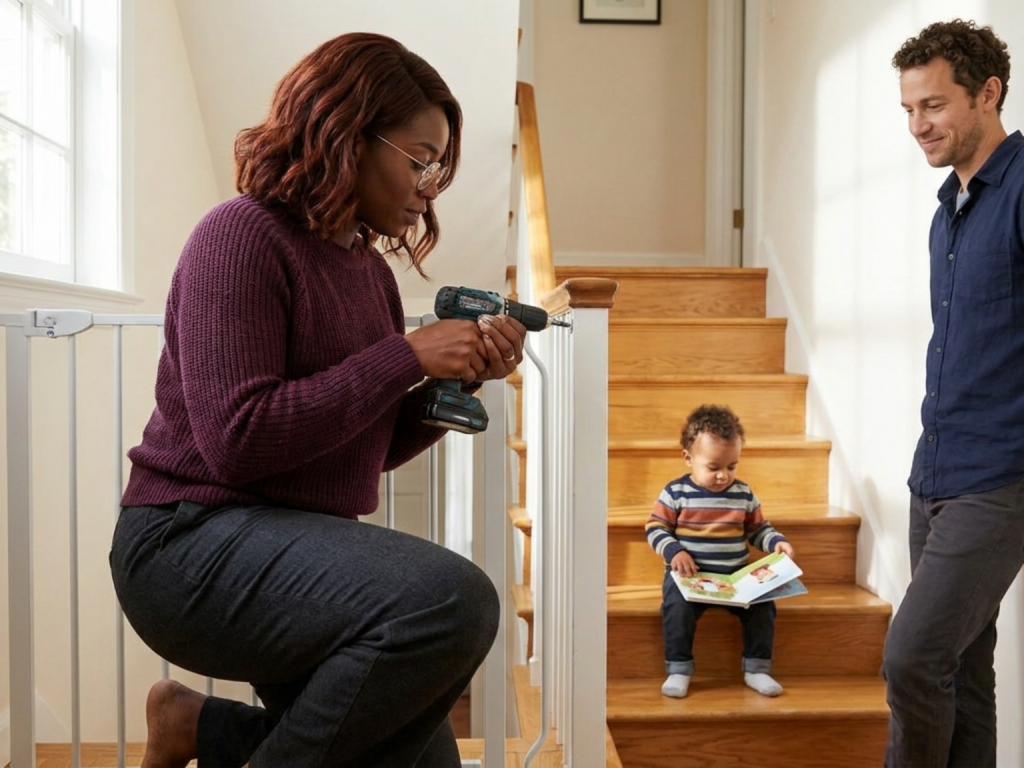
Stairs require particular attention. Use safety gates at the top and bottom of stairways for young children. Hardware-mounted gates are preferred at the top of stairs because pressure-mounted gates may dislodge. Avoid older accordion-style gates, which can trap a child’s head, neck, or limbs. Gates are not a substitute for supervision, and they should be removed once a child can climb over them because the gate itself may become a fall hazard.
Furniture and televisions should be anchored to the wall. Dressers, bookshelves, and entertainment units can tip when children climb drawers or shelves. Store heavier items low, avoid placing tempting objects on top of furniture, and secure cords that may be pulled. Windows should have guards or stops that prevent wide opening; insect screens are not designed to prevent falls. Keep beds, chairs, and toy boxes away from windows, especially in upper-story rooms.
After any significant fall, caregivers should seek urgent medical advice if the child has loss of consciousness, repeated vomiting, worsening headache, seizure, abnormal sleepiness, confusion, neck pain, difficulty walking, or behavior that feels markedly unusual for that child.
Choking, suffocation, and safe sleep
Choking risk is highest when airway diameter is small and chewing skills are still developing. Round, firm, slippery, or compressible foods can lodge in the airway. Children under five should not be given hard candy, whole grapes, popcorn, nuts, large chunks of raw carrot, or hot dogs cut into coin shapes. Safer preparation includes cutting foods lengthwise and into tiny pieces, cooking firm vegetables until soft, and ensuring children sit upright while eating. Running, laughing, or playing with food in the mouth increases aspiration risk.
Small non-food items are also dangerous. Button batteries, magnets, coins, beads, small toy parts, pen caps, and deflated balloons should be kept out of reach. Button batteries and multiple high-powered magnets are especially urgent because ingestion can cause tissue injury, perforation, or other serious complications. If ingestion is suspected, contact emergency services or poison control promptly rather than waiting for symptoms.
Safe sleep is a suffocation prevention measure. Infants should sleep on their backs on a firm, flat surface designed for sleep, without pillows, loose blankets, bumpers, or soft toys in the sleep space. Avoid couches, armchairs, and adult beds for unsupervised infant sleep. Caregivers who are exhausted should plan feeding locations carefully, because falling asleep with an infant on a sofa or chair can be particularly hazardous.
Choking prevention also depends on readiness. Developmental feeding advice, including a healthy diet for children, should be individualized for chewing ability, allergy considerations, and neurodevelopmental differences. Families with children who have dysphagia, neuromuscular disorders, prematurity-related feeding issues, or recurrent coughing with meals should ask a pediatric clinician or feeding specialist for guidance.
Burns, scalds, fire, and carbon monoxide
Burns and scalds can occur within seconds. Hot drinks, soup, bathwater, irons, hair tools, fireplaces, and cooking surfaces are common sources. Keep hot beverages away from table edges and avoid holding a baby while drinking or cooking with hot liquids. Turn pot handles toward the back of the stove, use back burners when possible, and create a child-free zone around the oven and cooking area.
Set the water heater to a safer temperature according to local guidance, and always test bathwater with a wrist or elbow before placing a child in the tub. Children should not be left to adjust taps independently until they reliably understand hot-water danger. Store matches, lighters, candles, and vaping devices out of sight and locked away.
Every home should have functioning smoke alarms and carbon monoxide detectors. Pediatric safety guidance recommends alarms on every level of the home and outside sleeping areas; interconnected or networked alarms are safer because activation in one area alerts the whole household. Test alarms regularly, replace batteries as recommended, and follow device replacement dates. Carbon monoxide is odorless and can cause headache, dizziness, nausea, confusion, collapse, or death, so alarms are essential rather than optional.
A fire escape plan should include two exits from every room when feasible, a safe outdoor meeting place, and instructions children can practice. Families are encouraged to practice the plan at least twice a year, including both daytime and nighttime drills. The plan should be simple enough for babysitters, visiting relatives, and older children to understand. If there is a fire, evacuation comes first; do not delay escape to collect belongings.
Poisoning, medications, cleaners, and plants
Poisoning prevention requires more than high shelves. Many toddlers can climb, and many containers look like drinks, candy, or toys. Medications, vitamins, cannabis products, nicotine products, alcohol, cleaning agents, pesticides, laundry packets, cosmetics, and essential oils should be stored locked, ideally in original containers with child-resistant closures. Child-resistant does not mean childproof; it only slows access.
Medication safety is particularly important when multiple caregivers are involved. Use one dosing tool, avoid calling medicine candy, and keep a written schedule for short-term medications so doses are not duplicated. Visitors’ handbags, grandparents’ pill organizers, and bedside tables are common overlooked sources of exposure. After any medication change, disposal of unused medicines should follow pharmacy or community recommendations.
Cleaners should never be mixed, especially bleach with ammonia or acids, because toxic gases can form. Use products in ventilated areas and return them to locked storage immediately after use. Keep houseplants, garden chemicals, and pest-control products away from children, and learn which plants in the home may be toxic if chewed or swallowed.
If there is suspected poisoning in a child, do not induce vomiting unless specifically instructed by a poison specialist or clinician. Call poison control or emergency services immediately, and have the product container, estimated amount, time of exposure, and the child’s age and weight available if possible. If the child is unconscious, seizing, struggling to breathe, or has severe symptoms, call emergency services first.
Water, bathrooms, firearms, and daily routines
Drowning can happen quickly and silently, including in bathtubs, buckets, toilets, and small backyard water features. Infants and toddlers should remain within arm’s reach during bathing, with undivided adult attention. Empty buckets, bathtubs, and paddling pools immediately after use. Toilet locks may be appropriate for very young children, and bathroom doors can be kept closed when not in use.
Bathrooms also contain several non-water hazards: razors, medications, mouthwash, cosmetics, electrical appliances, and hot water. Use non-slip mats, keep appliances unplugged and away from water, and lock away sharp or toxic items. Nighttime bathroom trips may be safer with a low-level light, especially for recently toilet-trained children.
Firearm safety is a high-consequence part of home safety. If firearms are present, they should be stored unloaded in a locked case or safe, with ammunition locked separately. Keys or combinations must be inaccessible to children and adolescents. Caregivers should also ask about firearm storage in homes their child visits. This conversation can feel uncomfortable, but it is a practical safety question, similar to asking about pools, pets, or car seats.
Routines make safety sustainable. A bedtime routine can include closing stair gates, checking that exterior doors are secured, confirming alarms are functioning, and making sure small objects are off the floor. Daytime routines can include putting medications away immediately, returning cleaners to locked storage, and scanning play areas before a younger sibling enters. When a child has developmental delay, impulsivity, autism, seizures, visual impairment, or mobility differences, an occupational therapist, pediatrician, or child safety specialist can help adapt the home without unnecessarily restricting participation.
Seek urgent help for these situations
- Call emergency services for severe breathing difficulty, loss of consciousness, seizure, major bleeding, or a serious burn.
- Treat suspected poisoning, button battery ingestion, or magnet ingestion as urgent and contact poison control or emergency services.
- After a fall, seek urgent care for repeated vomiting, confusion, seizure, abnormal drowsiness, or worsening headache.
- After any submersion or near-drowning event, a child should be assessed promptly, even if they initially appear well.
- If carbon monoxide exposure is suspected, leave the area immediately and seek emergency help.
Tools & Assistance
- Create a room-by-room home safety checklist and repeat it after each developmental milestone.
- Install and regularly test smoke alarms and carbon monoxide detectors on every level and outside sleeping areas.
- Save poison control and local emergency numbers in every caregiver’s phone.
- Ask your pediatrician, health visitor, or occupational therapist about safety adaptations for a child with medical or developmental needs.
- Practice a family fire escape plan twice yearly, including at night.
FAQ
At what age can I stop childproofing?
There is no single age. Childproofing should evolve as children gain height, strength, coordination, and judgment. Some hazards, such as firearms, medications, carbon monoxide, and smoke exposure, remain relevant for adolescents.
Are baby walkers safe if I supervise closely?
Baby walkers are associated with injury risk, particularly falls and access to hazards. Many pediatric safety experts recommend avoiding them and using safer alternatives such as floor play and stationary activity centers.
What is the most important room to childproof first?
Start where the child spends the most unsupervised or semi-supervised time, then address kitchens, bathrooms, stairs, sleep spaces, and any room with medications, cleaners, cords, or climbable furniture.
Should I teach my child emergency numbers?
Yes, when developmentally appropriate. Children can learn how to call for help, state their address, and leave the home during a fire drill, but this should complement adult supervision and environmental safety.
Sources
- National Center for Biotechnology Information (NCBI) / PubMed Central — Home safety measures and the risk of unintentional injury among children
- American Academy of Pediatrics — Home Safety: Tips for Families With Young Children
- Children's Hospital of Richmond at VCU — Home safety tips
Disclaimer
This article is for general educational purposes and is not a substitute for medical advice, diagnosis, emergency care, or individualized safety assessment. Consult a qualified healthcare professional or emergency service for concerns about a child’s injury, exposure, or symptoms.
















Please log in to leave a comment.