
Intro
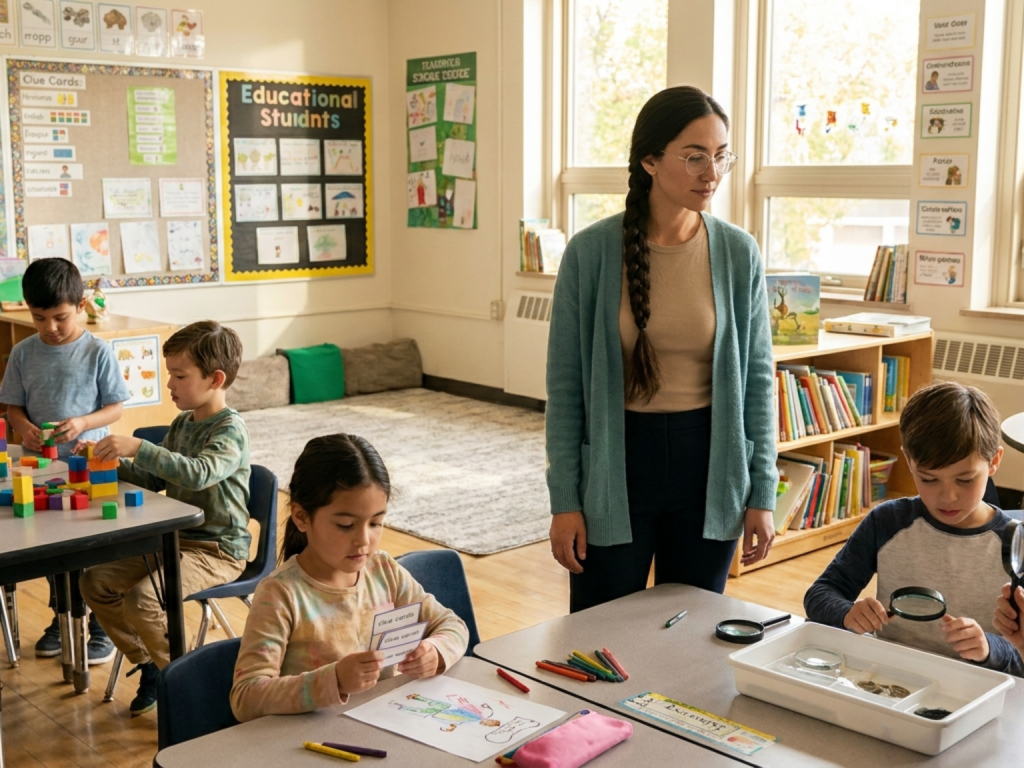
Between 6 and 9 years, children are in a remarkably active phase of middle childhood. They are consolidating reading, writing, numeracy, motor coordination, emotional regulation, and peer skills while still needing play, movement, rest, and warm adult scaffolding.
Highlights
Activities for 6- to 9-year-olds work best when they feel playful, concrete, and achievable while gently stretching attention, coordination, and problem-solving.
A balanced week includes physical play, creative expression, literacy and numeracy practice, social opportunities, and quiet recovery time.
Children develop at different rates; persistent avoidance, pain, fatigue, regression, or distress should be discussed with a pediatrician, teacher, or appropriate child health professional.
Hands-on activities such as scavenger hunts, building projects, storytelling, science experiments, and obstacle courses can support both learning and confidence.
Why activities matter in middle childhood
From 6 to 9 years, activities are not simply entertainment. They are one of the main ways children integrate developing brain networks with real-world experience. Executive functions such as inhibitory control, cognitive flexibility, planning, and working memory in school-age children mature gradually through repeated practice. A child who plans a treasure hunt, follows an obstacle-course sequence, or builds a model is rehearsing attention, sequencing, error correction, and persistence.
At this age, children are also moving from primarily adult-directed play toward more rule-based games, collaborative projects, and independent interests. This can be exciting and frustrating. A 6-year-old may still need frequent reminders and concrete instructions, while a 9-year-old may be ready to design rules, negotiate roles, and evaluate outcomes. Activities should therefore offer structure without becoming overly controlled.
The goal is not to fill every hour or accelerate achievement. Over-scheduling can contribute to irritability, somatic complaints, sleep disruption, and reduced intrinsic motivation. The healthiest activity plan usually has a rhythm: active movement, focused learning, creative exploration, social play, household contribution, and unstructured downtime. When adults respond with curiosity rather than pressure, children are more likely to experience activities as opportunities for mastery rather than performance tests.
Literacy and language activities that feel like play
Children between 6 and 9 are building decoding, fluency, comprehension, spelling, vocabulary, and narrative organization. Playful literacy activities can support reading fluency and comprehension without making home feel like an extension of school. For younger children in this range, phonics games, sound sorting, rhyming challenges, and word-building with magnetic letters can reinforce letter-sound correspondence. For older children, word ladders, story mapping, joke writing, and short book reviews encourage more flexible language use.
Treasure hunts are especially useful because they combine reading, movement, and problem-solving. An adult can write simple clues such as “Look under something you use to eat breakfast,” then gradually increase complexity. A child can also write clues for someone else, which strengthens perspective-taking and written expression. Memory games such as “Kim’s game,” where objects are briefly shown and then hidden, build observation, recall, and descriptive language.
Helpful literacy ideas include:
- Word-building races using letter tiles or magnetic letters, with emphasis on fun rather than speed.
- Yes-or-no question games that strengthen logic, categorization, and expressive language.
- Family “Boggle-style” word searches using a grid of letters and a timer adjusted to the child’s tolerance.
- Storytelling prompts such as “a door appeared in the playground” or “the class pet could talk for one day.”
- Rainbow poems, acrostics, or comic strips for children who prefer visual structure.
If a child consistently resists reading, guesses wildly, loses place on the page, or becomes distressed despite supportive practice, avoid labeling the child as lazy. Academic avoidance in children can reflect anxiety, fatigue, visual strain, language disorder, dyslexia, attention difficulties, or repeated experiences of failure. Discuss concerns with the teacher, pediatrician, or an educational specialist.
STEM, building, and hands-on problem solving
Hands-on science learning is well suited to this age group because children are increasingly able to predict, test, compare, and revise. They do not need expensive kits to benefit. Building a bridge from paper, testing which objects float, making a shadow chart, measuring plant growth, or designing a marble run can teach observation, cause and effect, and early scientific reasoning.
STEM activities should be concrete and safe. A 6-year-old may enjoy sorting materials by texture, weight, or magnetism, while an 8- or 9-year-old may be ready to record results, modify variables, or explain why a design failed. Robotics toys, simple animation apps, stop-motion scenes, and age-appropriate coding puzzles can also foster sequencing and debugging. The educational value comes from the child asking, “What happened, and what should I try next?”
Try projects such as:
- A paper-tower challenge: build the tallest freestanding tower using limited paper and tape.
- A kitchen science experiment with adult supervision, such as observing how ice melts faster in different conditions.
- A Lego or block color-matching challenge that adds sorting, symmetry, or pattern copying.
- A homemade weather station with daily temperature, cloud, or rainfall observations.
- A stop-motion animation using toys or drawings to practice sequencing and storytelling.
Adults can support learning by narrating process rather than judging results: “You changed the base and it stood longer,” or “Your first plan did not work, and you tested a new one.” This type of feedback supports resilience and metacognition. It is also inclusive for children who struggle with worksheets but thrive when concepts are visible and tactile.
Movement, coordination, and outdoor play
Physical activity supports cardiovascular fitness, bone strength, vestibular processing, proprioception, mood regulation, and attention. School-age children often sit for longer periods than their bodies comfortably tolerate, so after-school movement is not a luxury. It can reduce restlessness and help some children transition into homework or evening routines.
Activities for this age group should include gross motor, fine motor, balance, and coordination practice. Outdoor play such as cycling, climbing, ball games, skipping, running games, and nature walks builds endurance and motor planning. Indoor obstacle courses are helpful when weather or safety limits outdoor time. Cushions, tape lines, chairs, and soft objects can create stations for crawling, balancing, jumping, tossing, and sequencing.
Movement ideas include:
- Obstacle courses with “start,” “middle,” and “finish” steps to practice motor planning and impulse control.
- Scavenger hunts using pirate-style maps, symbols, or written clues.
- Animal walks, dance challenges, or follow-the-leader games for short bursts of activity.
- Throwing and catching games using soft balls, balloons, or beanbags.
- Nature collection walks where children classify leaves, stones, or seeds by size, shape, or color.
Safety matters. Use helmets for cycling, scooters, and skating; match equipment to size and ability; supervise water play closely; and avoid high-risk climbing without appropriate surfaces. If a child has exercise-induced cough, chest pain, fainting, marked breathlessness, recurrent injuries, persistent toe walking, or significant coordination difficulties, seek medical or therapy guidance rather than pushing through.
Creative activities for identity, emotion, and confidence
Creative play gives children a language for feelings that may not yet be easy to verbalize. Drawing, music, drama, construction, collage, and pretend scenarios allow symbolic expression and can support emotional regulation. A child who is anxious about school may create a puppet story about a nervous explorer. A child who struggles with transitions may benefit from drawing a visual schedule or making a “calm-down kit.”
Vision boards can be adapted for this age group as “things I want to try,” “places I want to learn about,” or “skills I am practicing.” The purpose should be exploration, not pressure to become exceptional. Storytelling prompts, comic strips, puppet shows, and homemade board games help children organize sequences, understand motives, and experiment with humor and problem-solving.
Process-focused art is often better than product-focused crafts. Instead of “make it look like this,” try “show me three ways to use these materials.” This supports flexible thinking and lowers perfectionistic distress. For children who dislike messy textures, offer alternatives such as scissors, stickers, digital drawing, stamps, or building materials. For children who seek sensory input, clay, water painting, large paper drawing, or music and movement may be regulating.
Creative activities can also help families notice emotional patterns. Frequent dark themes, aggressive play, or worries are not automatically pathological; children often process normal experiences through play. However, persistent themes of self-harm, extreme fear, trauma reenactment, withdrawal, or functional decline warrant consultation with a pediatrician or child mental health professional.
Social games, cooperation, and family participation
Between 6 and 9 years, children become more interested in rules, fairness, friendship, and group identity. Games with turn-taking, negotiation, and shared goals can strengthen perspective-taking in school-age children. Board games, card games, team building challenges, cooking together, and cooperative scavenger hunts teach waiting, flexible thinking, frustration tolerance, and conflict repair in childhood friendships.
Adults can make social learning explicit without lecturing. Before a game, ask, “What should we do if someone feels upset?” Afterward, reflect briefly: “You were disappointed when you lost, and you took a break instead of throwing the pieces.” These small comments help children connect internal states with behavior. Structured playdates for social learning can be particularly helpful for children who find large groups overwhelming. One planned activity, a snack, and a clear end time may be more successful than an open-ended visit.
Household activities also count. Setting the table, sorting laundry, watering plants, preparing a simple snack, or helping plan a family walk build competence and belonging. These tasks should be developmentally appropriate and taught step by step. A child who contributes meaningfully often feels more capable, especially if schoolwork is challenging.
If peer conflict is frequent, listen carefully without immediately blaming the child or others. Patterns such as persistent exclusion, bullying, social communication concerns in children, or intense distress before school should be discussed with school staff and, when needed, a pediatric or mental health professional. Early support can protect self-esteem and reduce avoidance.
Adapting activities to the child in front of you
Age guidelines are useful, but individual differences are substantial. Temperament, sleep, hunger, neurodevelopmental profile, sensory processing, language level, motor skills, chronic illness, family stress, and cultural context all shape what an activity feels like to a child. A child with high persistence may enjoy long projects; another may need 10-minute activity blocks. A child with sensory sensitivity may prefer quiet drawing to noisy group games. A child with attention difficulties may do better with movement breaks and visual instructions.
Use the “just-right challenge” principle: the task should be slightly above the child’s current independent level but still achievable with support. Too easy can become boring; too hard can trigger shame or avoidance. Offer choices within boundaries, such as “Do you want to read the first clue or draw the map?” or “Should we build with blocks or paper today?” Choice supports autonomy while preserving structure.
Home routines that support learning are often simple: a predictable after-school decompression period, a snack and hydration, limited transitions, visible materials, and a calm adult presence. Sleep also matters. A child who is chronically tired may appear inattentive, oppositional, or unmotivated when the primary issue is insufficient recovery. If activities regularly end in tears, headaches, abdominal pain, or conflict, reduce intensity and look for contributing factors.
For children with disabilities or developmental differences, adaptations can preserve participation. Use larger grips, visual timers, noise reduction, simplified rules, partner roles, movement alternatives, or shorter sessions. The aim is inclusion and mastery, not forcing a child to perform exactly like peers.
Screen-based activities and balance
Digital tools can be educational when they are active, age-appropriate, and bounded. Animation creation, coding puzzles, digital drawing, and supervised research can support creativity and problem-solving. Passive scrolling or long sessions of fast-paced content are different; they may displace movement, sleep, reading, and face-to-face interaction. Evening screen exposure can also make sleep onset harder for some children because of arousal, light exposure, and delayed routines.
Families do not need a perfect rule, but they do need a predictable one. Consider separating “creative screen time” from “watching time.” A child making a stop-motion film or recording a science observation is practicing planning and production. A child watching repeated short videos may need firmer limits and transition support. Co-viewing and co-creating are protective because adults can discuss content, emotions, advertising, and online safety.
Practical boundaries include keeping devices out of bedrooms at night, using timers, previewing apps, avoiding in-app purchases without supervision, and pairing screen use with offline extension. For example, after watching a short astronomy video, the child can draw a moon journal or build a model solar system. If screen limits lead to severe meltdowns, secrecy, sleep loss, or loss of interest in other activities, consider seeking guidance from a pediatrician, psychologist, or family therapist.
When to seek professional guidance
- Persistent pain, fainting, chest pain, or marked breathlessness during activity needs medical assessment.
- Ongoing academic distress, regression, or school refusal should be discussed with the teacher and pediatrician.
- Frequent injuries, major coordination problems, or loss of motor skills warrants professional evaluation.
- Severe anxiety, withdrawal, aggression, self-harm talk, or trauma themes in play require prompt mental health support.
- Sleep deprivation, snoring with pauses, or daytime sleepiness can affect activity tolerance and learning.
Tools & Assistance
- Create a weekly activity menu with movement, reading, STEM, art, chores, and quiet time.
- Use a visual timer or picture schedule for transitions between activities.
- Ask the child’s teacher which skills need gentle practice at home.
- Consult a pediatrician, occupational therapist, speech-language therapist, or child psychologist when concerns persist.
- Keep a simple log of activities, mood, sleep, and physical symptoms if patterns are unclear.
FAQ
How many structured activities should a 6- to 9-year-old have?
There is no single ideal number. Many children do best with a few predictable activities plus daily free play, movement, and rest. Watch for fatigue, irritability, sleep disruption, or loss of joy.
What if my child only wants screens after school?
Start with decompression, food, and connection, then offer a small choice of appealing offline activities. Keep screen rules predictable and consider creative digital projects rather than only passive viewing.
Are worksheets necessary for learning at this age?
Not always. Many skills can be practiced through games, reading clues, building, measuring, storytelling, cooking, and problem-solving. If school difficulties persist, ask for educational guidance.
How can I help a child who gives up quickly?
Lower the difficulty, shorten the task, model mistakes, and praise strategy rather than outcome. If avoidance is persistent or intense, consider anxiety, learning difficulties, attention problems, or fatigue.
Should activities be different for 6-year-olds and 9-year-olds?
Yes. Six-year-olds usually need shorter instructions and more adult support. Nine-year-olds may enjoy planning, recording results, making rules, and taking more responsibility.
Sources
- Oxford Owl for Home — Fun learning activities for 6-7-year-olds
- Kubrio — Educational Activities for Ages 6-13 Beyond Worksheets
- Care.com — Educational Activities for 6-10 Year Olds
Disclaimer
This article is for general educational purposes and does not diagnose, treat, or replace individualized medical advice. Consult a qualified healthcare professional for concerns about your child’s development, behavior, learning, or physical symptoms.
















Please log in to leave a comment.