
Intro
A backpack is a practical part of school life, but excessive load can place avoidable stress on a child's developing musculoskeletal system. Children may compensate by altering their posture, gait, or the way they lift and carry the bag. Because they may not always describe discomfort clearly, adults often need to recognize physical and behavioral clues.
This article explains observable signs that a backpack may be too heavy, how to check fit and load, and when to seek advice from a healthcare professional. A single complaint does not establish an injury or medical diagnosis, but persistent or worsening symptoms deserve attention.
Highlights
Leaning forward, altered posture, or difficulty walking naturally can indicate that the backpack load is exceeding a child's comfortable capacity.
Pain, tingling, numbness, red marks, or strap indentations are warning signs rather than normal features of carrying school supplies.
Difficulty putting on, removing, lifting, or balancing the backpack suggests that the load or fit should be reassessed promptly.
A lighter load, a well-fitted backpack, and both shoulder straps may reduce unnecessary strain, but ongoing symptoms warrant professional guidance.
Why backpack weight matters
Children’s bones, joints, muscles, and connective tissues are still developing. A backpack that is too heavy can increase mechanical demand on the spine, shoulders, neck, hips, and lower limbs. The issue is not only the absolute weight of the bag. Load distribution, backpack design, strap adjustment, the child’s strength and body size, walking distance, stairs, and the amount of time the bag is carried all influence the physical burden.
When a load feels excessive, a child may unconsciously compensate by leaning forward, rounding the shoulders, elevating one shoulder, widening the stance, or changing stride length. These adaptations may help maintain balance temporarily, but they can also make carrying uncomfortable and increase fatigue. A child should not be expected to tolerate pain or neurological sensations as a routine part of transporting school materials.
Backpack weight is only one possible contributor to musculoskeletal discomfort. Sports, prolonged sitting, a recent fall, poor sleep, existing joint or spinal conditions, and other factors can produce similar complaints. The purpose of observing backpack-related signs is to identify a practical concern that can be corrected and to recognize when further assessment may be appropriate.
Changes in posture, walking, or balance
One of the clearest signs of overload is a visible change in how a child stands or walks while wearing the backpack. Watch for a forward lean, rounded upper back, shoulders pulled downward or backward, or a head and neck position that appears strained. The child may also brace the abdomen, shorten their steps, or move stiffly when walking.
Difficulty walking naturally is another important clue. A child may sway, stumble, take a wider base of support, or appear less coordinated on stairs and uneven ground. Some children repeatedly adjust the straps, hold the bag with one hand, or remove it during short journeys because the load feels unstable. These observations are especially relevant if the child’s movement looks normal before the backpack is put on and changes consistently once it is loaded.
Ask the child to walk a short, familiar distance while carrying the usual school items. Avoid treating this as a performance test. The goal is to observe comfort and movement, not to make the child continue if they are struggling. If posture or balance remains altered after the bag is removed, or if there are repeated falls, weakness, or marked coordination problems, contact a healthcare professional rather than assuming the backpack is the only explanation.
Pain, pressure, and neurological sensations
Children may describe an overloaded backpack using different words: aching, pulling, burning, pressure, heaviness, soreness, or discomfort. Common locations include the neck, shoulders, upper back, lower back, and sometimes the hips. Pain that appears during carrying, increases over the school day, or leads a child to avoid wearing the bag deserves attention.
Inspect the skin after the backpack has been carried. Red marks, deep strap indentations, or areas of tenderness over the shoulders may indicate excessive pressure or poor adjustment. Mild temporary impressions can occur with many garments and bags, but persistent marks, bruising, skin breakdown, or significant pain are not signs to dismiss.
Tingling, pins-and-needles, numbness, or unusual weakness in an arm or hand are more concerning because they may reflect pressure or irritation affecting nerves, although the cause cannot be determined from the symptom alone. Remove the backpack and observe whether the sensation resolves. Seek medical advice for persistent, recurrent, or worsening neurological symptoms, particularly if they occur without the backpack or are accompanied by loss of strength, severe pain, or changes in coordination.
Difficulty handling the backpack
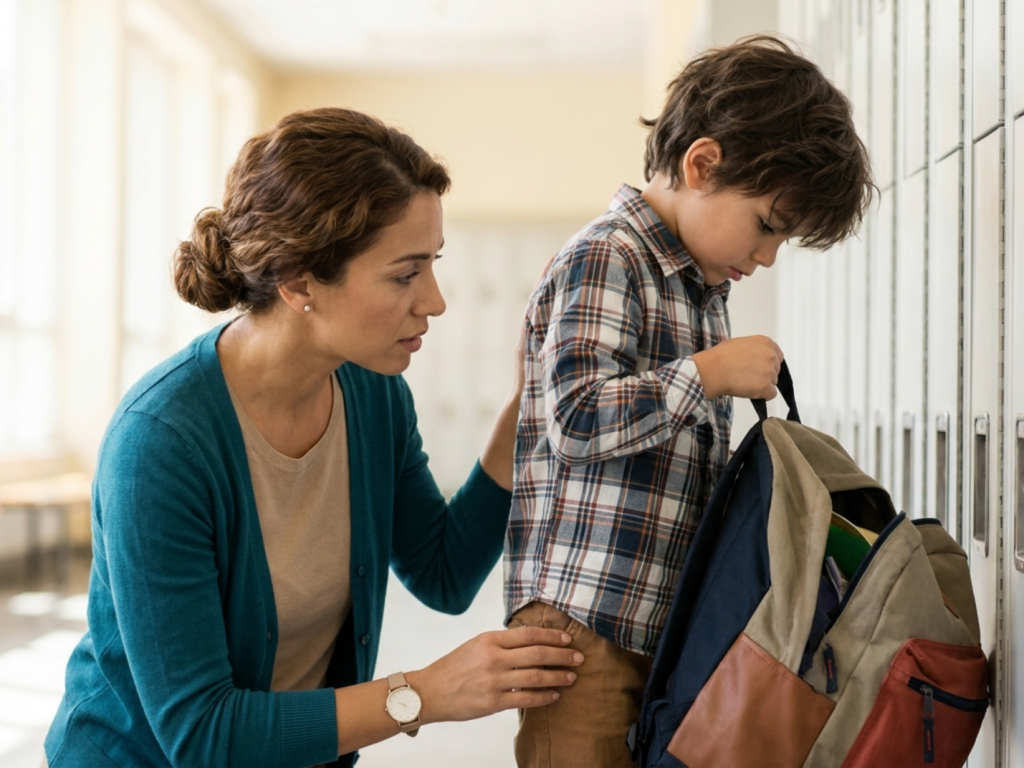
A child may be carrying too much if they struggle to put the backpack on, remove it, lift it from the floor, place it in a locker, or move it between rooms. Watch for lifting with a pronounced twist, jerking the bag onto one shoulder, dropping it because it is difficult to control, or asking an adult to handle it every time. These behaviors can reflect excessive weight, poor load distribution, or a bag that does not fit the child’s frame.
Difficulty fastening the chest or waist strap can also matter. A child should be able to put on and remove the backpack without excessive effort, although younger children may need help with buckles or adjustments. If the bag swings away from the body, pulls backward, or feels unstable when the child bends, the fit may be contributing to the problem.
Consider the entire daily routine rather than focusing only on the scale reading. A backpack may be manageable for a brief walk but problematic when carried for long periods, across a large campus, or up several flights of stairs. Ask the child when discomfort begins and which activities are hardest. Their description can help identify whether the main issue is weight, fit, duration, or a separate health concern.
How to check the load and fit
Start with a weekly backpack clean-out routine. Remove items that are not needed that day, duplicate supplies, old papers, excess books, and recreational objects. Use school-provided digital materials or locker storage where available. A water bottle, lunch container, sports equipment, and musical instrument may substantially increase the total load, so consider whether each item must be carried at the same time.
Weigh the fully packed backpack using a household scale if practical, but do not rely on a single universal percentage as a guarantee of safety. Children differ in body size, conditioning, medical history, and carrying demands. A load that is technically within a general recommendation may still be uncomfortable for a particular child. The child’s posture, symptoms, and ability to handle the bag are clinically relevant observations.
A backpack fit check should include both shoulder straps adjusted so the bag rests close to the back, with the bottom near the lower back rather than hanging below the hips. The straps should be snug without digging into the shoulders. A padded back, several compartments, and a chest or waist strap may improve stability and distribution. Encourage the child to use both shoulder straps rather than carrying the bag on one side.
Pack heavier items close to the child’s back and place lighter objects farther away. Check that sharp-edged items are protected and that contents cannot shift significantly during walking. Reassess the fit after packing because a backpack that seems appropriate when empty may pull backward or downward when full.
What parents and caregivers can do next
Begin with a calm conversation. Ask what feels uncomfortable, when the problem occurs, and whether the child notices symptoms in the classroom, on the walk to school, or during sports. Avoid blaming the child for overpacking; children may be responding to school requirements, uncertainty about what they need, or limited access to storage. Work together to identify items that can stay at school, be shared, or be carried on different days.
Speak with the teacher, school administrator, or school nurse if the timetable requires a heavy collection of books or equipment. The school may be able to provide a locker, duplicate textbooks, digital access, a storage arrangement, or an alternative way to transport materials. A child with a disability, chronic condition, pain disorder, or motor difficulty may need individualized support. Occupational therapists, physiotherapists, and clinicians can contribute to an appropriate plan when indicated.
Arrange a healthcare assessment when pain is persistent, recurrent, severe, or interfering with sleep, school attendance, physical activity, or daily function. Medical evaluation is also appropriate for numbness, tingling, weakness, repeated falls, ongoing balance problems, or symptoms that continue after the backpack is removed. A clinician can consider the full history and examination rather than attributing every complaint to backpack weight.
Do not ask a child to push through significant pain or neurological symptoms to complete a route. Until advice is obtained, reduce unnecessary load, improve fit, and use available school support. These steps are practical risk-reduction measures, not a substitute for diagnosis or treatment.
Warning signs that need prompt attention
Most backpack-related discomfort improves when the load and fit are corrected, but certain features should not be ignored. Seek prompt medical guidance if the child reports persistent numbness or tingling, new weakness, severe or rapidly worsening pain, or symptoms that remain after the backpack is removed. Contact urgent services according to local guidance if symptoms follow a significant fall or injury, or if there is sudden major weakness or inability to walk normally.
Also arrange professional advice when a child repeatedly changes posture, avoids school activities, cannot carry the backpack safely, or develops recurrent pain despite reducing the load. A clinician may need to assess the spine, joints, muscles, nerves, gait, and other potential causes. Early discussion can prevent a practical equipment problem from becoming a prolonged source of discomfort or school disruption.
When to seek medical advice
- Persistent or recurrent neck, shoulder, back, or limb pain
- Tingling, numbness, weakness, or altered sensation in an arm or hand
- Repeated stumbling, balance difficulty, or inability to walk naturally
- Severe pain, symptoms after a fall, or symptoms that continue after the backpack is removed
- Pain that disrupts sleep, school attendance, exercise, or ordinary daily activities
Tools & Assistance
- Weekly backpack clean-out and packing checklist
- Household scale for checking the fully packed bag
- Backpack fit check with both shoulder straps adjusted
- Conversation with the teacher, school nurse, or school administrator about storage
- Assessment from a pediatric clinician, physiotherapist, or occupational therapist when symptoms persist
FAQ
Is any backpack discomfort normal for children?
A child may notice pressure when carrying a bag, but recurring pain, deep strap marks, tingling, numbness, altered posture, or difficulty walking should not be treated as normal. Reassess the load and fit and seek professional advice if symptoms persist.
Should a child use only one shoulder strap?
Using both shoulder straps generally keeps the load closer to the body and distributes pressure more evenly. Carrying the bag on one shoulder can increase asymmetrical loading and may be less stable, especially when the backpack is heavy.
What is the ideal backpack weight?
There is no single weight that is appropriate for every child. General recommendations can provide a starting point, but comfort, posture, ability to handle the bag, duration of carrying, and any medical conditions must also be considered.
When should a child see a doctor about backpack-related pain?
Arrange an assessment for persistent, recurrent, severe, or activity-limiting pain, and for numbness, tingling, weakness, balance problems, repeated falls, or symptoms that continue after the backpack is removed.
Can a better backpack fix the problem?
A correctly fitted backpack with adjustable straps, stable compartments, and appropriate load distribution may reduce strain. It cannot explain or treat every cause of pain, so ongoing symptoms still require medical evaluation.
Sources
- Health Service Executive (HSE) — Choosing a school bag for your child
- American Academy of Orthopaedic Surgeons (AAOS) — Heavy backpacks can strain growing bones and joints: AAOS shares back-to-school safety tips
- Stony Brook Medicine — Heavy Backpacks and Kids: Orthopedic Risks and Prevention
Disclaimer
This article is for general educational purposes and does not diagnose, treat, or replace advice from a qualified healthcare professional. Seek medical care for persistent, severe, or concerning symptoms.














Please log in to leave a comment.