
Intro
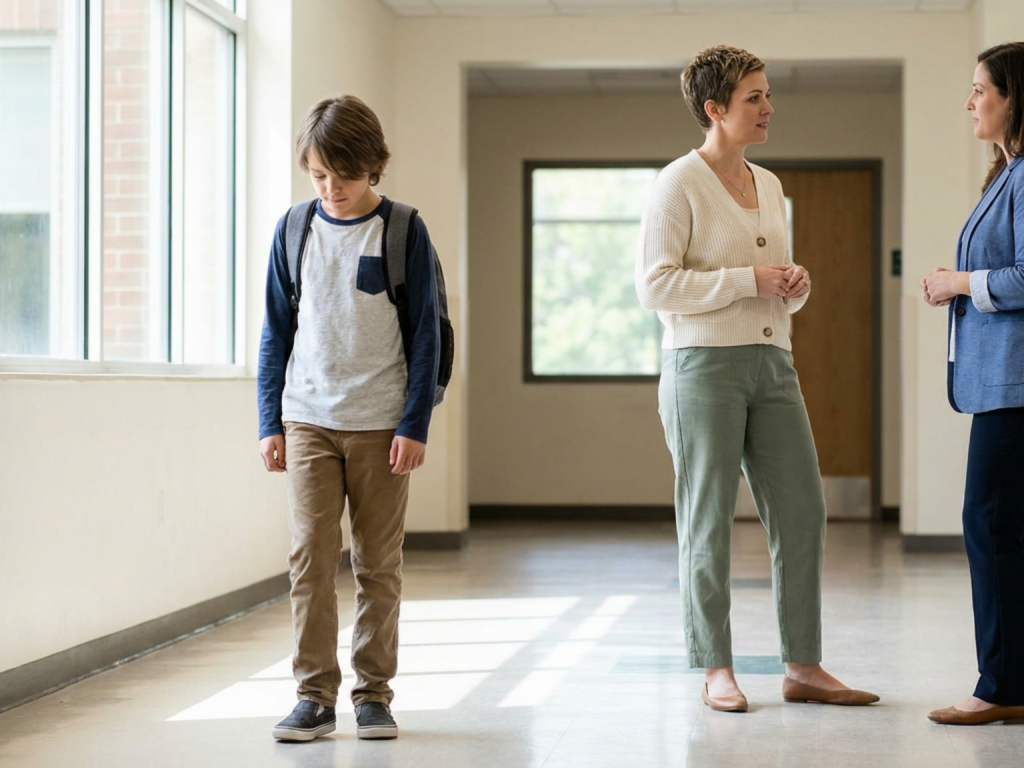
Peer pressure can feel frightening for families because it touches a child’s need to belong, their developing identity, and sometimes their safety. A supportive response starts with understanding that wanting acceptance is not a character flaw; it is a normal social and neurodevelopmental drive that becomes especially strong in late childhood and adolescence.
Children need more than warnings to “just say no.” They benefit from practiced language, predictable family boundaries, emotional regulation skills, and adults who can listen without immediately shaming, interrogating, or punishing. The goal is to help a child stay connected to peers while also staying connected to their own values and safety.
Highlights
Peer influence is normal and can be positive or harmful, depending on the behavior being encouraged and the child’s ability to evaluate risk.
Children are more likely to talk honestly when caregivers respond with curiosity, calm, and problem-solving rather than immediate criticism.
Refusal skills work best when they are rehearsed in realistic, low-pressure ways before a child faces a difficult moment.
Clear family expectations, supportive friendships, and backup plans reduce the likelihood that a child will feel trapped in unsafe situations.
Why peer pressure feels so powerful
Peer pressure is not simply “bad friends making bad choices.” Peer influence is a basic social process in which children adjust behavior, opinions, language, interests, or risk-taking to maintain group belonging. Research on peer influence describes it as pervasive in adolescence and especially relevant when young people face unfamiliar tasks or ambiguous situations. In practical terms, if a child is unsure what to do, the group’s reaction becomes a powerful cue.
Developmentally, children and adolescents are building autonomy while still depending heavily on social approval. The brain systems involved in reward sensitivity, threat detection, and social evaluation are highly active during this period, while executive functions such as impulse control, future planning, and inhibition are still maturing. This does not mean a child is incapable of good judgment; it means judgment can become harder when status, embarrassment, exclusion, or excitement is involved.
Peer influence can also serve a social function: increasing similarity within a group. Children may copy clothing, slang, online behavior, academic attitudes, substance-related curiosity, or social rules because similarity reduces the risk of rejection. For some children, exclusion feels like a real threat, not a minor inconvenience. A caregiver who understands this can respond with empathy: “I can see why that felt hard. You wanted to stay included, and you also knew something did not feel right.”
Build a home base that makes honesty safer
A child is more likely to resist harmful pressure when they have at least one adult relationship where they feel emotionally safe. This does not require permissive parenting. In fact, children often do best with warmth and structure together: clear expectations, consistent limits, and a strong sense that mistakes can be discussed without humiliation.
When your child mentions a questionable peer situation, try to pause before reacting. A visibly alarmed response may teach the child that honesty leads to panic or punishment. Instead, start with open questions: “What happened next?” “How did you feel in your body when they asked?” “What did you wish you could say?” These questions help develop metacognition, the ability to notice and think about one’s own thoughts and feelings.
It also helps to stay involved in everyday life before problems arise. Know your child’s friends, online spaces, extracurricular routines, and typical mood patterns. This is not surveillance for its own sake; it is relational context. A child who experiences respectful communication with preteens and teens at home is often better prepared to recognize disrespect elsewhere.
Family rules should be explicit and revisited calmly: no riding with an impaired driver, no sharing private images, no leaving a location without telling a trusted adult, no substance use, and no secrecy that involves threats or coercion. Explain the health and safety reasons behind the rules. Children are more likely to internalize boundaries when they understand that rules are protective, not arbitrary.
Teach refusal skills as a practiced behavior
Many children know the concept of saying no but freeze when the moment arrives. Stress activates physiological arousal: faster heart rate, muscle tension, narrowed attention, and a stronger urge to appease or escape. Practicing refusal skills in advance makes the response more automatic.
Use short, realistic scripts. Long moral explanations can invite debate, while brief statements are easier to deliver under pressure. Examples include: “No, I’m not doing that,” “I have to go,” “My parents check my phone,” “That’s not for me,” or “I’m not risking it.” Some children prefer a firm tone; others need an exit line that protects social dignity. The best script is one the child can actually imagine using.
Role-play should be collaborative, not theatrical punishment. Ask your child which situations feel most likely: vaping in a bathroom, cheating on a test, excluding a classmate, sending a risky photo, sneaking out, shoplifting, or joining online harassment. Then practice several options:
- Direct refusal: “No. I’m not doing it.”
- Delay: “Maybe later,” followed by leaving or changing the subject.
- Redirect: “Let’s go get food instead.”
- Use a boundary: “I don’t send pictures like that.”
- Exit: “I forgot something. I have to go now.”
Rehearse body language too: standing up, moving toward a door, putting the phone away, or walking toward a trusted adult. For younger children, practice through stories or toys. For older children, discuss digital pressure, screenshots, group chats, and the permanence of online content.
Strengthen identity, values, and emotional regulation
Children resist pressure more effectively when they have a developing sense of who they are outside the group. This includes values, interests, cultural or spiritual anchors, personal goals, and confidence built through competence. Praise should be specific: “You were brave when you told your friend you didn’t want to tease that classmate,” or “You showed good judgment by calling me.” Specific praise strengthens the neural and behavioral link between action and identity.
Self-esteem is not built only by compliments. It grows when children experience mastery, contribution, and repair after mistakes. Encourage activities where your child can feel skilled or useful: sports, music, coding, art, volunteering, caring for animals, mentoring younger children, or family responsibilities. A child with multiple sources of belonging is less dependent on one peer group’s approval.
Preteen emotional regulation is also central. A child who can notice anxiety, shame, excitement, or anger has more opportunity to choose a response. Teach simple physiological skills: slow breathing, unclenching hands, naming the emotion, taking a bathroom break, texting a parent, or stepping outside. These are not magic solutions, but they create a pause between impulse and action.
It is equally important to normalize ambivalence. A child may enjoy a friend and still dislike some of that friend’s choices. Avoid forcing all-or-nothing judgments such as “They are bad kids.” Instead, say: “You can care about someone and still not follow them into unsafe behavior.” This distinction supports social nuance and reduces defensiveness.
Create backup plans before the crisis
Children often comply with peer pressure because they do not know how to leave without social cost or logistical difficulty. A backup plan reduces that trapped feeling. Agree on a code word or emoji your child can send when they need pickup without explanation. The adult response should be immediate and non-shaming: “I’m on my way.” Discussion can happen later, once the child is safe and physiologically calmer.
For parties, sleepovers, malls, sports events, and online gaming sessions, plan ahead. Ask: Who will be there? Which adult is responsible? How will you get home? What will you do if someone brings substances, pressures you sexually, starts a fight, or tries to film someone? These questions are not accusations; they are safety planning.
Model healthy boundary setting in your own life. Children notice whether adults can say no respectfully, leave uncomfortable conversations, limit alcohol use, manage phones, and apologize after conflict. Modeling is a powerful form of teaching because it shows that boundaries are normal adult behavior, not just rules imposed on children.
Digital backup plans deserve special attention. A child should know they can show you a threatening message, coercive request, or humiliating group chat without losing all access to technology by default. Sometimes limits are necessary, but if every disclosure leads to total removal of the phone, children may hide the most serious problems. Focus first on safety, evidence preservation when needed, blocking/reporting tools, and adult support.
Encourage positive peer groups without controlling every friendship
One of the strongest protective strategies is helping a child find peers who make healthy choices feel normal. Encourage friendships in settings with shared constructive goals: clubs, teams, faith or community groups, arts programs, academic groups, outdoor activities, or service projects. Positive peer influence can support studying, kindness, physical activity, creativity, and help-seeking.
At the same time, overly controlling every friendship can backfire, especially with adolescents who are striving for autonomy. Instead of banning a friend immediately in every concerning situation, describe the specific behavior that worries you: “I am concerned that this friend pressures you to lie about where you are,” or “I noticed you seem anxious after those group chats.” This keeps the focus on observable patterns rather than global character attacks.
Invite your child to evaluate friendships using reflective questions: Do you feel more like yourself or less like yourself with them? Can you say no without being mocked? Do they respect your privacy? Do they apologize? Do they pressure you to keep secrets from safe adults? These questions help children identify coercion, manipulation, and relational aggression.
For some children, peer pressure intersects with academic stress, social anxiety, neurodevelopmental differences, trauma history, or a strong fear of abandonment. These factors can make refusal harder. If your child repeatedly feels unable to resist harmful influence, approach it as a skills and support issue, not a moral failure.
Know when peer pressure needs adult or professional intervention
Some peer pressure is developmentally typical: trying new clothing styles, copying music preferences, or wanting the same apps as friends. Other situations require prompt adult involvement. Pressure involving substances, weapons, sexual coercion, self-harm content, threats, humiliation, exploitation, harassment, or illegal activity should not be handled by the child alone.
Watch for changes that suggest distress: sleep disruption, appetite changes, school avoidance, sudden grade decline, unexplained injuries, secrecy that feels fear-based, loss of interest in usual activities, panic symptoms, persistent irritability, or withdrawal from supportive relationships. These signs do not prove a specific diagnosis, but they indicate that the child may need more support.
School collaboration can be essential when peer pressure overlaps with bullying, exclusion, hazing, cheating, or safety concerns on campus. Document incidents with dates, screenshots when appropriate, names of involved adults, and the child’s report in their own words. Ask the school about supervision, reporting pathways, counseling support, and anti-bullying procedures.
Consult a pediatrician, licensed mental health professional, or school counselor if peer pressure is causing functional impairment, significant anxiety, depressive symptoms, unsafe behavior, substance exposure, or family conflict that feels unmanageable. Professional support may include assessment, coping-skills training, family guidance, or treatment for underlying anxiety, depression, trauma-related symptoms, or attention and impulse-control difficulties. The aim is not to label a child for struggling, but to provide the right level of care.
Seek urgent help if safety is at risk
- A child is being threatened, blackmailed, sexually coerced, or pressured to share intimate images.
- Peer pressure involves weapons, serious violence, impaired driving, or illegal activity.
- Your child mentions self-harm, suicidal thoughts, or being encouraged online to harm themselves.
- There are signs of intoxication, overdose risk, or substance use with medical symptoms.
- Bullying or coercion is causing school refusal, panic, severe withdrawal, or major functional decline.
Tools & Assistance
- Create a family code word for immediate pickup with no questions asked until the child is safe.
- Practice refusal scripts and exit plans during calm moments, not only after a crisis.
- Keep a written record of concerning peer incidents, including dates and screenshots when appropriate.
- Contact a school counselor, pediatrician, or licensed mental health professional if distress or unsafe behavior persists.
- Encourage structured activities where positive peer influence and adult supervision are available.
FAQ
Should I punish my child for giving in to peer pressure?
Use consequences when needed, but start with safety and learning. Shame-based punishment can reduce honesty; calm accountability plus problem-solving is usually more effective.
What if my child says everyone else is allowed to do it?
Acknowledge the frustration, then restate your family’s boundary and the reason behind it. Children can tolerate limits better when they feel heard.
How can I help a shy child refuse peers?
Give them low-verbal options such as texting a code word, leaving with a rehearsed excuse, standing near a trusted friend, or using brief scripts that do not invite debate.
When should I involve the school?
Involve school staff when pressure, bullying, threats, hazing, cheating, exclusion, or online harassment affects safety, attendance, learning, or emotional well-being.
Can peer pressure ever be positive?
Yes. Peers can encourage studying, kindness, sports participation, creativity, and help-seeking. The goal is not isolation from peers, but healthier peer influence.
Sources
- National Institutes of Health / PubMed Central — Toward understanding the functions of peer influence
- WellSpring Prevention — 14 Ways to Help Kids Combat Peer Pressure
- Children's Health — Teens and Peer Pressure
Disclaimer
This article is for informational purposes only and does not replace medical, mental health, or safety advice from qualified professionals. Seek urgent help if a child may be in immediate danger or at risk of self-harm.

















Please log in to leave a comment.