
Intro
Labor pain is not one single sensation in one predictable place. It can feel like intense menstrual cramping, deep pelvic pressure, backache, hip pain, rectal pressure, or waves that spread into the thighs and legs. For many people, the location changes as the cervix opens, the uterus contracts more strongly, and the baby descends through the pelvis.
Understanding where labor pain is felt and why it happens can make the experience less mysterious, even if it remains intense. This article explains the anatomy and physiology behind labor pain while emphasizing that new, severe, unusual, or worrying symptoms should always be discussed with a maternity care professional.
Highlights
Labor pain commonly involves the lower abdomen, pelvis, lower back, hips, buttocks, thighs, and sometimes the legs.
The main drivers are uterine contractions, cervical effacement and dilation, pelvic tissue stretching, fetal descent, and pressure on nerves and surrounding structures.
Pain patterns can shift from cramping in early labor to stronger pressure, back pain, or rectal pressure as labor progresses.
Pain location alone cannot reliably confirm whether labor is normal, early, active, or complicated; timing, cervical change, fetal movement, bleeding, fluid leakage, and clinical assessment matter.
Supportive coping tools, position changes, hydrotherapy, breathing, continuous support, and medical pain relief can all be appropriate depending on the person and clinical situation.
Common places labor pain is felt
Labor pain is often described as a wave that builds, peaks, and releases. The most familiar location is the lower abdomen, where many people feel strong cramping or tightening across the uterus. Abdominal contractions in labor may start mildly, like menstrual cramps or gastrointestinal cramping, then become longer, stronger, and closer together as labor becomes more established.
Pain can also be felt in the lower back, especially over the sacrum. Some people have back discomfort between contractions, while others feel sharp or grinding pressure during each contraction. The hips, buttocks, groin, upper thighs, and inner thighs may ache because the pelvis, pelvic floor, and surrounding ligaments are under increasing mechanical load. As the baby moves lower, pressure may become more concentrated in the vagina, perineum, rectum, or tailbone area.
The pattern is not fixed. Labor pain may begin in the back and move forward, start in the abdomen and radiate backward, or shift from one side to another. Some contractions are felt mostly as tightening; others feel like pressure, stretching, burning, or an urge to bear down. A change in location can be part of normal labor progression, but it should be interpreted in context with contraction timing, fetal movement, ruptured membranes, bleeding, and the care team’s assessment.
Why uterine contractions cause pain
The uterus is a powerful smooth muscle organ. During labor contractions, muscle fibers shorten and generate coordinated force from the upper uterus toward the cervix. This force helps thin and open the cervix and move the fetus downward. The pain is partly ischemic: when the uterine muscle contracts strongly, blood flow through the muscle temporarily decreases, which activates pain-sensitive pathways. The sensation eases as the contraction releases and blood flow improves.
Contractions also stretch the lower uterine segment and cervix. The cervix contains nerve endings that respond to stretching, pressure, and tissue remodeling. Early in labor, these signals can feel like dull cramping low in the abdomen or back. As dilation advances, the cervix is pulled open more intensely, and the pain can become sharper, deeper, or more overwhelming.
Labor contractions are not random spasms. They are functional: they help cervical dilation, support fetal descent, and prepare the body for birth. The same mechanical work that makes labor effective also explains why it can hurt. The intensity a person feels depends on many factors, including contraction strength, cervical change, fatigue, anxiety, prior pain experiences, fetal position, pelvic anatomy, support, and whether analgesia is used.
Cervical change and pelvic pressure
Cervical effacement and dilation are central reasons labor pain is felt low in the pelvis. Effacement means the cervix becomes thinner and shorter; dilation means it opens. These changes occur under pressure from the contracting uterus and from the presenting part of the fetus, usually the head. As the cervix stretches, pain may feel low, deep, and centered near the pubic bone, vagina, or sacrum.
Pelvic pressure during contractions often increases as the baby descends. The fetal head presses on the cervix, bladder, rectum, pelvic floor muscles, connective tissue, and nerves. This can create an intense heavy sensation, a need to urinate, rectal pressure, or the feeling that a bowel movement is imminent. During transition, when the cervix approaches full dilation, pressure may feel sudden and involuntary even before pushing is recommended.
Pressure is not always the same as readiness to push. Some people feel rectal pressure before the cervix is fully dilated; others with an epidural may feel only vague pressure even when birth is close. Because pushing against an incompletely dilated cervix can sometimes increase swelling or discomfort, it is important to follow guidance from the birth team if there is uncertainty about the stage of labor.
Back, hip, and leg pain in labor
Lower back pain in labor can have several contributors. Uterine pain may be referred to the back through shared nerve pathways. The sacroiliac joints, pelvic ligaments, and lumbar spine also absorb changing forces as the uterus contracts and the pelvis accommodates fetal descent. If the baby’s head applies pressure toward the sacrum, back pain can be especially prominent.
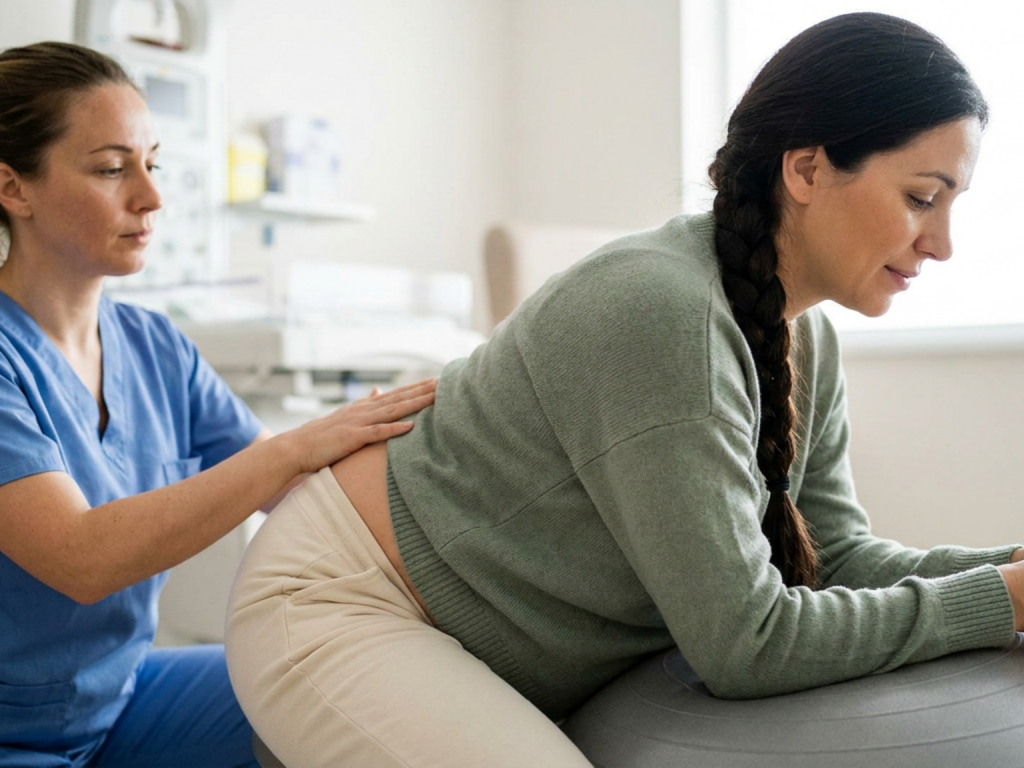
Fetal position may influence how pain is perceived. When the back of the baby’s head is toward the pregnant person’s spine, sometimes called an occiput posterior position, contractions may be associated with more persistent back pain or tailbone pressure. This does not automatically mean anything is wrong; many babies rotate during labor. Position changes, upright posture, hands-and-knees, side-lying, counterpressure, and movement may help some people feel more comfortable, but choices should fit the clinical situation and monitoring needs.
Pain radiating into the hips, buttocks, or thighs can occur when pelvic tissues stretch or when pressure irritates nerves that travel through the pelvis. Contractions felt in the thighs may be surprising, but they can be part of the normal range of labor sensations. However, severe one-sided pain, neurologic symptoms, sudden weakness, or pain that does not rise and fall with contractions should be reported promptly.
How pain changes through the stages of labor
In early labor, contractions may be irregular or mild enough to talk through. Pain often feels like menstrual cramps, low backache, or intermittent tightening. Some people notice mucus discharge, light bloody show, or a gradual increase in contraction timing pattern. Early labor contractions may stop, restart, or change with rest, hydration, or movement, which can make this phase emotionally tiring.
Active labor contractions usually become more regular, longer, and stronger. Pain may spread across the abdomen, into the back, and down into the pelvis. At this stage, contractions often require focused breathing, movement, vocalization, or hands-on support. The cervix is typically changing more rapidly, and the baby’s head applies more pressure to the cervix and pelvic floor.
Transition, the last part of the first stage, can feel especially intense. Contractions may come close together with less rest between them, and nausea, shaking, sweating, irritability, or a strong desire for reassurance can occur. In the second stage, after full dilation, pain may shift toward pressure, stretching, burning at the vaginal opening, and the powerful urge to push. With epidural analgesia during labor, these sensations may be reduced or altered, but many people still feel pressure as descent progresses.
Distinguishing labor pain from other discomforts
Late pregnancy includes many pains that are not necessarily labor. Braxton Hicks contractions may feel like uterine tightening without a consistent pattern, and they often ease with rest, hydration, or a change in activity. Round ligament pain is usually sharper and more positional, often on one side of the lower abdomen or groin. Pelvic girdle pain may be provoked by walking, rolling in bed, climbing stairs, or standing on one leg.
True labor is suggested by contractions that become progressively stronger, longer, and closer together and are associated with cervical change. Still, symptoms alone are imperfect. Some people have intense prodromal contractions without active cervical dilation, while others have subtle early labor signs before contractions become painful. Rupture of membranes, vaginal bleeding, decreased fetal movement, fever, severe headache, right upper abdominal pain, or symptoms before 37 weeks change the level of concern and should prompt medical advice.
It is reasonable to call a clinician, midwife, labor unit, or triage service when the pattern is unclear. Healthcare teams expect these questions. A cautious call is especially important for preterm symptoms, high-risk pregnancies, Group B strep considerations, planned cesarean birth, prior rapid labor, prior uterine surgery, or any symptom that feels different from expected labor pain.
Why pain intensity varies so much
Two people can have similar cervical dilation and contraction patterns yet describe very different pain. Pain perception is shaped by physiology and context. Contraction strength, fetal size and position, pelvic anatomy, tissue sensitivity, inflammation, sleep deprivation, hydration, anxiety, trauma history, cultural expectations, and the support environment can all influence how labor is experienced.
The nervous system also changes during labor. Stress hormones may heighten vigilance and muscle tension, while safety, privacy, continuous support, and confidence can help the body release oxytocin and endogenous endorphins. This does not mean pain is “all in the mind.” Labor pain is real nociceptive input from powerful uterine and pelvic work. Emotional state and environment simply affect how the brain processes those signals.
Pain relief is not a moral choice. Some people prefer nonpharmacologic coping, such as breathing, movement, water, massage, heat, cold, sterile water injections for back pain where available, or doula support. Others choose nitrous oxide, systemic medication, or neuraxial techniques such as epidural or spinal analgesia. The right approach is individualized, balancing preferences, medical history, fetal status, labor progress, and local options.
When to seek urgent advice
Because labor pain overlaps with some warning symptoms, it is important not to rely on pain location alone. Contact a healthcare professional urgently for heavy bleeding, severe constant abdominal pain between contractions, fever, fainting, chest pain, severe shortness of breath, persistent severe headache, visual changes, seizures, or a major decrease in fetal movement. Watery fluid leakage may indicate ruptured membranes and should be discussed with the care team, especially if the fluid is green, brown, foul-smelling, or accompanied by fever.
Contractions before 37 weeks deserve prompt assessment, particularly if they are regular, painful, or associated with pelvic pressure, backache, bleeding, or fluid leakage. People with prior cesarean birth or uterine surgery should also seek guidance for unusual severe pain, continuous scar-area pain, or concerning fetal movement changes.
Supportive care and education can reduce fear, but they cannot replace individualized assessment. If pain feels frightening, different from what you were told to expect, or accompanied by symptoms that concern you, it is appropriate to call. Being checked does not mean overreacting; it is part of safe maternity care.
Get medical advice promptly
- Regular painful contractions before 37 weeks need urgent professional guidance.
- Heavy bleeding, severe constant pain, fever, fainting, or visual changes should be assessed immediately.
- Decreased fetal movement during labor or before labor should be reported right away.
- Rupture of membranes with green, brown, foul-smelling fluid, or fever needs prompt evaluation.
- Severe one-sided pain, weakness, numbness, or symptoms that feel unusual for you should not be ignored.
Tools & Assistance
- Contraction timer or written log of contraction length, spacing, and intensity
- Direct phone number for the birth unit, midwife, obstetric clinician, or triage service
- Birth plan notes that include preferred comfort measures and pain relief options
- Support person or doula for positioning, counterpressure, hydration reminders, and advocacy
- Hospital bag with medical documents, medications list, and pregnancy record if used locally
FAQ
Can labor pain be felt only in the back?
Yes, some people feel contractions mainly in the lower back or sacrum, especially with referred uterine pain or certain fetal positions. Persistent or severe back pain should still be discussed with the care team.
Does pain location show how dilated I am?
Not reliably. Increasing pelvic or rectal pressure can suggest descent or later labor, but only a clinical assessment can confirm cervical dilation and readiness to push.
Is thigh pain during labor normal?
Pain or aching in the thighs can occur because uterine and pelvic pain may radiate through shared nerve pathways. Sudden weakness, numbness, or severe one-sided symptoms should be reported.
Why do contractions hurt if they are normal?
Contractions are strong uterine muscle work. They temporarily reduce blood flow in the muscle, stretch the cervix, and create pressure as the baby descends, all of which can activate pain pathways.
When should I call instead of waiting at home?
Call for preterm contractions, ruptured membranes, heavy bleeding, decreased fetal movement, fever, severe constant pain, or whenever your maternity team’s instructions say to call.
Sources
- National Partnership for Women & Families — Labor Pain Basics
- Nemours KidsHealth — Dealing With Pain During Childbirth
- Cleveland Clinic — Contractions: Pregnancy, How They Feel & How Long They Last
Disclaimer
This article is for general medical education and does not diagnose, treat, or replace care from a qualified healthcare professional. Contact your maternity care team for personal guidance, urgent symptoms, or concerns about labor.


















Please log in to leave a comment.