
Intro
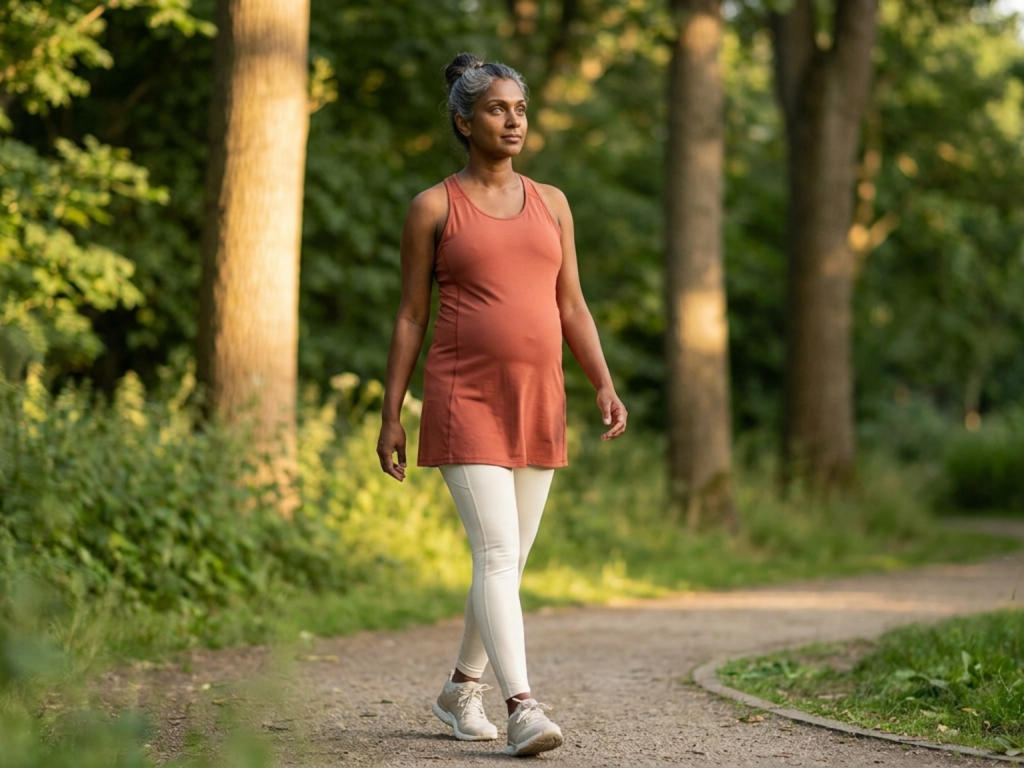
Walking is one of the simplest ways to stay active in pregnancy, and for many people it is the easiest form of exercise to sustain consistently. It is low impact, flexible, and usually easy to adapt as the body changes across trimesters. In an uncomplicated pregnancy, regular walking can fit into everyday life without special equipment, which is one reason it is so often recommended as a practical option for pregnancy fitness.
Research and public-health guidance suggest that staying active during pregnancy can support maternal wellbeing, and walking may be especially useful because it is approachable for a wide range of fitness levels. That said, every pregnancy is individual. The right pace, duration, and safety plan should be discussed with a qualified maternity professional, particularly if there are medical complications or any symptoms of concern.
Highlights
Walking is a low-impact pregnancy exercise that can support fitness, energy, and day-to-day function without requiring special equipment.
Evidence suggests walking may help reduce the risk of gestational diabetes, preeclampsia, and excessive gestational weight gain.
Benefits for the baby are possible, including healthier birthweight and a potentially lower risk of preterm birth, although the evidence is less certain than for maternal outcomes.
A safe walking plan should be individualized, especially if there is pain, bleeding, reduced fetal movement, or a pregnancy-related medical condition.
Why walking is such a good fit in pregnancy
Walking stands out because it is accessible. For many pregnant people, it is easier to start, easier to continue, and easier to scale up or down than more structured workouts. In the broader context of exercise in pregnancy, walking is often appealing because it is familiar, inexpensive, and usually available without a gym, equipment, or specialist supervision.
It is also a genuinely adaptable form of movement. A short loop around the neighborhood, a few extra minutes after meals, or a commute that includes part of the journey on foot can all count. The goal is not athletic performance; it is regular, moderate movement that supports circulation, musculoskeletal comfort, and overall conditioning. For someone who feels fatigued, nauseated, or self-conscious about changing body mechanics, walking may be the most sustainable entry point into physical activity.
Pregnancy naturally changes balance, joint laxity, posture, and breathing mechanics. Walking usually accommodates these changes better than higher-impact exercise because both feet are not repeatedly leaving the ground, which reduces jarring forces. That lower mechanical stress is one reason walking is often discussed as a practical baseline activity for pregnant people who are medically cleared to exercise.
Maternal benefits supported by the evidence
The strongest evidence for walking in pregnancy relates to maternal outcomes. Reviews of the literature suggest that regular walking may help reduce the risk of gestational diabetes, preeclampsia, and excessive gestational weight gain. These outcomes matter because they are linked to maternal morbidity and can influence the rest of pregnancy and delivery planning.
The mechanisms are biologically plausible. Walking can improve insulin sensitivity, which may help the body manage glucose more effectively. It also supports cardiovascular conditioning and may contribute to more stable blood pressure regulation. For weight gain, walking can help balance energy expenditure in a way that is realistic and less intimidating than intense exercise prescriptions. None of these effects are guaranteed, but they are consistent with the broader benefits of staying active.
Many people also notice improvements that are not always captured neatly in clinical endpoints: a better sense of energy, less stiffness after sitting, improved sleep timing, and a calmer mood. Gentle movement can be a meaningful coping strategy when pregnancy brings physical discomfort and emotional variability. For some, the benefit is not just in measurable metabolic outcomes, but in feeling more capable and more connected to their changing body.
Possible benefits for the baby and the pregnancy course
Compared with maternal benefits, the fetal evidence is less robust, but it is still encouraging. Walking during pregnancy has been associated with healthier birthweight patterns in some studies and may be linked to a lower risk of preterm birth. These findings should be interpreted carefully: they suggest potential benefit, not a guarantee of a particular outcome for any individual pregnancy.
One reason the evidence may be more consistent for the mother than for the baby is that pregnancy outcomes are shaped by many interacting factors, including placental function, maternal health conditions, genetics, nutrition, stress, and obstetric history. Walking can positively influence the maternal side of that equation by supporting glucose control, circulation, and weight management, which may indirectly create a healthier intrauterine environment.
It is also important not to overstate what walking can do. A healthy baby outcome depends on far more than exercise alone, and walking is not a treatment for placental disease, fetal growth restriction, or preterm labor risk. Still, as part of a broader prenatal care plan, regular walking may be one of the gentlest ways to support a pregnancy that is proceeding normally.
How to walk safely across trimesters
Safe walking in pregnancy begins with pacing and comfort rather than speed. A conversational pace is often a sensible benchmark: if speech becomes strained, the intensity may be too high for a routine walk. Many pregnant people find it helpful to think in terms of duration and consistency rather than distance, especially as fatigue, pelvic pressure, or shortness of breath change over time.
In early pregnancy, walking may need to be broken into shorter bouts if nausea or tiredness is prominent. In the second trimester, when energy often improves, longer walks may feel easier, though balance and ligament laxity may already be changing joint stability. In the third trimester, shorter and more frequent walks are often more comfortable than one long session, particularly if there is back pain, reflux, or heaviness in the pelvis.
Practical precautions matter:
- Choose supportive shoes with good grip and enough room for swelling.
- Stay hydrated, especially in warm weather or if the walk is longer than usual.
- Avoid overheating and take breaks in shade or indoors when needed.
- Use flatter, even surfaces when balance feels less reliable.
- Modify or stop if pelvic pain, round ligament discomfort, or joint symptoms increase significantly.
For many people with an uncomplicated pregnancy, walking can often be continued until birth. The key is that the plan should remain flexible and responsive to changing symptoms, obstetric advice, and day-to-day energy.
When walking should be paused or reviewed
Even though walking is generally well tolerated, it is not appropriate to push through every symptom. Any warning signs during prenatal exercise deserve attention. That includes vaginal bleeding, fluid leakage, painful contractions that do not settle with rest, marked dizziness, chest pain, or shortness of breath that feels out of proportion to exertion. New or worsening pelvic pain, calf swelling, or faintness also warrant medical review.
Pregnancy-specific context matters. If there is a history of preterm labor, placenta-related bleeding, cervical shortening, hypertensive disease, or other obstetric complications, the walking plan may need modification. Similarly, if a clinician has advised activity restriction for a specific reason, that advice should take priority over general exercise guidance. Walking should feel beneficial, not like an endurance test against symptoms.
Some people also worry about fetal wellbeing after exercise. While ordinary movement is not usually harmful in uncomplicated pregnancies, reduced fetal movement after exercise should never be ignored if it is unusual for that pregnancy. The safest approach is to know your clinician’s thresholds for contacting maternity services and to seek advice early rather than trying to self-assess whether a symptom is significant enough.
Making a walking routine sustainable
The most effective walking routine is usually the one that fits real life. Instead of waiting for a perfect workout window, many people do better by attaching walking to existing habits: a short walk after breakfast, a lap around the block after lunch, or a 10- to 15-minute evening stroll. These small repetitions can add up without feeling overwhelming.
Motivation can fluctuate across pregnancy, and that is normal. On days when energy is low, even a brief walk may be enough to keep the habit alive. On stronger days, the walk can be extended if it still feels comfortable. This flexible mindset is often more realistic than setting rigid targets that become discouraging when symptoms change. Walking is meant to support wellbeing, not create guilt.
It can also help to make the routine easier to start: keep shoes near the door, check the weather before leaving, walk with a phone for safety if needed, and choose routes with access to restrooms or benches. Some people prefer to walk after meals for glucose management, while others prefer mornings before the day becomes busy. There is no single correct schedule. What matters is regularity, comfort, and a plan that remains in step with antenatal care.
When to seek medical advice promptly
- Stop walking and contact a maternity clinician if you have vaginal bleeding or fluid leakage.
- Get urgent advice for chest pain, fainting, severe shortness of breath, or persistent dizziness.
- Do not ignore painful contractions, regular uterine tightening, or worsening pelvic pain.
- Seek assessment if fetal movements are reduced compared with your baby’s usual pattern.
- Review your exercise plan if you have a high-risk pregnancy or were told to limit activity.
Tools & Assistance
- Ask your midwife, obstetrician, or family doctor whether walking is appropriate for your pregnancy.
- Use a simple talk test to keep the intensity at a comfortable, moderate level.
- Choose supportive walking shoes and a route with shade, restrooms, and stable ground when possible.
- Track symptoms, energy, and walking duration in a notes app or paper log.
- Refer to maternity exercise guidance if you are unsure how to adapt activity by trimester.
FAQ
Is walking safe in most pregnancies?
For many people with an uncomplicated pregnancy, walking is considered a safe and practical form of exercise. Individual guidance still matters, especially if there are medical complications or symptoms.
How much walking should I do?
There is no single correct amount for everyone. Many people aim for regular moderate activity and adjust duration to comfort, energy, and obstetric advice.
Can walking help with gestational diabetes risk?
Evidence suggests it may help lower risk by supporting glucose control and overall activity levels, but it cannot replace screening, nutrition advice, or medical care when needed.
Can I keep walking until birth?
Often yes, if the pregnancy is uncomplicated and your clinician has not advised otherwise. As the body changes, shorter and gentler walks may feel better than long sessions.
What should make me stop walking and call for help?
Bleeding, fluid leakage, painful contractions, chest pain, dizziness, fainting, or decreased fetal movement should be taken seriously and discussed with a maternity professional.
Sources
- National Center for Biotechnology Information — Walking for health during pregnancy: A literature review and considerations for public health and policy
- NHS — Exercise in pregnancy
- Tommy's — Walking in Pregnancy: Advice For Each Trimester
Disclaimer
This article is for educational purposes only and is not a substitute for individualized medical advice. If you are pregnant and have symptoms, complications, or concerns about exercise, please consult your maternity clinician promptly.

















Please log in to leave a comment.