
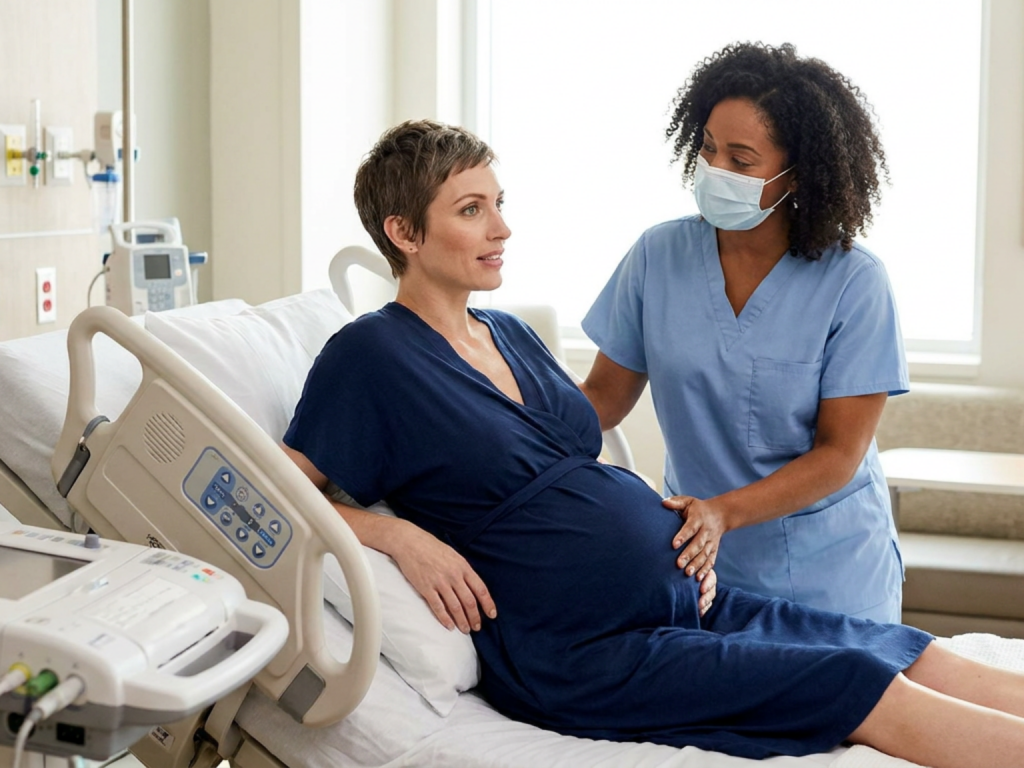
Intro
Vaginal delivery is the birth of a baby through the vagina after labor has moved the cervix from closed and firm to fully dilated and effaced. For many pregnancies, it is the expected route of birth, but every labor is individual, and the safest plan depends on maternal health, fetal wellbeing, gestational age, fetal position, prior uterine surgery, and events that arise during labor.
This article explains the physiology of vaginal birth, what clinicians monitor, how the stages of labor unfold, and what may happen immediately after birth. It is intended to support informed conversations with your maternity care team, not to replace individualized medical guidance.
Highlights
Vaginal birth usually progresses through three stages: cervical effacement and dilation, birth of the baby, and delivery of the placenta.
Labor care includes frequent assessment of maternal vital signs, contraction patterns, cervical change, fetal position, and fetal heart rate.
Pain relief, mobility, hydration, emotional support, and clear communication can all influence the experience of birth.
Assisted vaginal birth, induction, episiotomy, or cesarean birth may be recommended when specific maternal or fetal concerns arise.
The minutes after birth focus on newborn transition, uterine tone, bleeding control, placental delivery, and early bonding when medically appropriate.
What vaginal delivery means medically
Vaginal delivery is the completion of pregnancy by birth of the fetus through the birth canal, followed by expulsion of the placenta and membranes. In an uncomplicated term pregnancy, it is often the preferred route because it generally avoids major abdominal surgery and is associated with a shorter maternal recovery than cesarean birth. It may also support newborn respiratory transition through compression of the fetal chest during passage through the pelvis, although individual outcomes vary.
Vaginal birth may be spontaneous, induced, or assisted. A spontaneous vaginal delivery occurs when labor begins and progresses without instruments. An induced vaginal birth begins after medical methods are used to stimulate labor, such as cervical ripening or uterotonic medication, when the benefits of delivery are judged to outweigh continuing pregnancy. Assisted vaginal birth involves forceps or vacuum extraction to help deliver the baby during the second stage, usually when specific criteria are met and a clinician trained in the procedure is present.
Not every pregnancy is appropriate for planned vaginal birth. Contraindications can include placenta previa covering the cervical opening, certain fetal presentations, some prior uterine incisions, active genital herpes lesions at labor, or situations in which fetal or maternal condition requires urgent operative delivery. The decision is individualized; a person’s preferences matter, but safety depends on the clinical picture at the time.
How the body prepares for birth
Labor begins when coordinated uterine contractions cause progressive cervical change. The cervix must soften, move forward, thin, and open. Cervical effacement and dilation describe this transformation: effacement is thinning and shortening, often expressed as a percentage, while dilation is opening, measured in centimeters from 0 to 10. Full cervical dilation means the cervix is open enough for the baby’s head or presenting part to descend into the vagina.
The uterus is not simply squeezing downward. The upper uterine segment contracts and retracts, becoming thicker and more forceful, while the lower segment and cervix stretch. The fetus also participates through positional changes known as cardinal movements. In a typical head-first birth, the baby flexes the head, descends, rotates to fit the maternal pelvis, extends as the head crowns, then rotates again as the shoulders deliver.
Hormones influence this process. Oxytocin supports contractions, prostaglandins help cervical ripening, and endogenous endorphins may affect pain perception. The pelvic floor and soft tissues stretch gradually, and fetal station in labor describes how low the presenting part is relative to the ischial spines of the pelvis. These measurements help clinicians understand whether labor is progressing and whether the baby is tolerating descent.
The first stage: from early labor to full dilation
The first stage of labor begins with regular contractions that cause cervical change and ends at full dilation. It is often divided into latent and active phases. In latent labor, contractions may be mild to moderate, irregular or gradually strengthening, and cervical dilation is usually slower. Many people can rest, hydrate, eat lightly if advised, use warm showers, practice breathing techniques, or labor at home if their care team has said it is safe.
Active first stage labor is usually more intense. Contractions become stronger, longer, and closer together, and cervical dilation generally proceeds more rapidly. Clinical teams may assess blood pressure, pulse, temperature, contraction frequency, pain coping, fluid status, vaginal bleeding, rupture of membranes, and fetal heart rate. Cervical checks during labor can estimate dilation, effacement, fetal position, and station, but they are only one part of the overall assessment.
If the amniotic sac ruptures, fluid may appear as a gush or a slow leak. Clear fluid is common, while green or brown fluid can suggest meconium and may prompt closer fetal monitoring. If membranes rupture before active labor, recommendations depend on gestational age, infection risk, Group B streptococcus status, and local protocols.
Support during this stage can be practical and emotional. Position changes, walking if appropriate, pelvic rocking, massage, breathing, water immersion where available, sterile water injections, nitrous oxide, systemic opioids, or epidural analgesia may be options. Pain relief choices should be discussed with clinicians because benefits, side effects, timing, and monitoring requirements differ.
The second stage: pushing and birth of the baby
The second stage of labor begins at full cervical dilation and ends with birth of the baby. Some people feel an overwhelming urge to bear down; others, especially with epidural analgesia, may feel pressure without a strong urge. In some settings, if mother and baby are stable, clinicians may allow passive descent during labor, sometimes called laboring down, before active pushing begins.
Active pushing in labor may be guided by instinctive urges or coached efforts during contractions. Positions can include semi-reclined, side-lying, hands-and-knees, kneeling, squatting with support, or using a birth bar, depending on maternal comfort, fetal monitoring needs, epidural effects, and clinical circumstances. The goal is effective descent while preserving oxygenation, managing fatigue, and responding to fetal heart rate patterns.
As the baby descends, the perineum stretches and the head may become visible at the vaginal opening. Crowning refers to the head remaining visible between contractions. Perineal support during birth, warm compresses, and controlled delivery of the head may be used to reduce sudden stretching, although tearing can still occur. Tears are graded by depth, from superficial perineal or vaginal lacerations to more severe injuries involving the anal sphincter or rectal mucosa.
After the head is born, the clinician checks for a cord around the neck if indicated and supports delivery of the shoulders and body. If the shoulders do not deliver with usual maneuvers, shoulder dystocia is an emergency requiring a coordinated sequence of positional and obstetric techniques. Most births do not involve this complication, but maternity teams prepare for it because quick action matters.
The third stage: delivery of the placenta
The third stage begins after the baby is born and ends with delivery of the placenta. The uterus continues to contract, causing the placenta to separate from the uterine wall. Signs of placental separation may include a small gush of blood, lengthening of the umbilical cord, and a rising, firmer uterus. Delivery of the placenta is usually much shorter than the earlier stages, often occurring within minutes, but timing varies.
Many hospitals use active management of the third stage to reduce postpartum hemorrhage risk. This may include giving oxytocin soon after birth, controlled cord traction by a trained clinician, and uterine massage after the placenta is delivered. In some settings and low-risk situations, physiological management of placenta delivery may be considered, meaning the placenta is delivered without routine uterotonic medication or traction unless needed. The safest approach depends on the person’s risk factors and clinical setting.
After placental delivery, the clinician examines the placenta and membranes to see whether they appear complete. Retained placenta after birth or retained placental tissue can prevent the uterus from contracting effectively and increase bleeding risk. The birth canal is also inspected for lacerations, and repairs are performed with anesthesia when needed. Even after the baby is in your arms, the team remains focused on bleeding, uterine tone, blood pressure, pain control, and overall stability.
Monitoring, support, and common interventions
Monitoring during labor is designed to identify reassuring progress and detect complications early. Fetal heart rate may be assessed intermittently or continuously, depending on risk factors, medications such as oxytocin, epidural use, meconium-stained fluid, prior concerns, or institutional practice. Contractions may be monitored by palpation, external tocodynamometer, or, less commonly, an internal pressure catheter after membrane rupture when clinically indicated.
Interventions are not inherently good or bad; they are tools used when benefits are expected to outweigh risks. Induction or augmentation with oxytocin may be recommended for post-term pregnancy, ruptured membranes without labor, hypertension, diabetes-related concerns, fetal growth issues, or slow progress with inadequate contractions. Artificial rupture of membranes may help assess fluid or intensify labor in selected cases, but it is not appropriate for everyone.
Assisted vaginal birth may be considered when the cervix is fully dilated, the fetal head is low enough, position is known, membranes are ruptured, and there is a reason to shorten the second stage, such as concerning fetal heart rate or maternal exhaustion. It carries risks, including scalp injury, maternal laceration, and failed attempt requiring cesarean birth, so informed consent and clinical judgment are essential.
Episiotomy, a surgical incision in the perineum, is no longer routine in many settings but may be used for specific indications. Cesarean birth may become necessary during labor for fetal intolerance, arrest of dilation or descent, malpresentation, placental problems, cord prolapse, or other urgent concerns. A change in birth plan can feel disappointing or frightening; compassionate communication from the team can help preserve agency even when rapid decisions are needed.
Immediately after birth and early recovery
If the newborn is vigorous and the birthing parent is stable, immediate skin-to-skin contact is often encouraged. This can support temperature regulation, early feeding cues, bonding, and physiologic transition. Newborn assessment occurs at the same time or shortly afterward, including breathing, tone, color, heart rate, and reflex response. Some babies need suctioning, stimulation, oxygen, or more advanced resuscitation, particularly after complicated labor or preterm birth.
The umbilical cord may be clamped immediately or after a brief delay, depending on clinical circumstances. Delayed cord clamping can benefit many newborns, but immediate clamping may be needed if urgent neonatal or maternal care is required. Vitamin K, eye prophylaxis where standard, newborn identification, weight, and routine screening are typically discussed or performed according to local practice.
For the birthing parent, the first hours involve close observation. Nurses or midwives check uterine firmness, bleeding, blood pressure, pulse, bladder emptying, pain, perineal swelling, and ability to move safely. Postpartum uterine tone is especially important because a soft, poorly contracted uterus can lead to heavy bleeding. Cramping, shaking, sweating, perineal soreness, and intense emotions can be normal, but severe pain, heavy bleeding, faintness, fever, chest pain, shortness of breath, or severe headache need urgent evaluation.
Recovery after vaginal delivery is usually measured in weeks, not hours. Pelvic floor tissues, lacerations, hemorrhoids, bladder function, sleep, feeding, and mood all need time and support. Follow-up care is an opportunity to review bleeding, wound healing, contraception, mental health, breastfeeding or formula feeding concerns, blood pressure if relevant, and signs of infection or thromboembolism.
Seek urgent medical advice
- Go to labor and delivery immediately for heavy vaginal bleeding, severe abdominal pain, or concern that the baby is not moving normally.
- Call your care team promptly if your waters break, especially if fluid is green, brown, foul-smelling, or you are preterm.
- During or after birth, chest pain, shortness of breath, fainting, seizure, or severe headache requires emergency care.
- After delivery, soaking pads rapidly, passing large clots, fever, worsening pelvic pain, or foul-smelling discharge needs urgent assessment.
- If you feel unsafe, unheard, or unable to cope, ask for immediate support from a clinician, birth partner, or emergency service.
Tools & Assistance
- Discuss a birth preferences document with your obstetrician or midwife before labor.
- Ask your maternity unit about fetal monitoring, pain relief options, and policies for mobility and eating in labor.
- Use a contraction timer only as a guide; follow your care team’s instructions about when to come in.
- Prepare contacts for labor triage, emergency transport, postpartum support, and infant feeding help.
- Consider childbirth education classes that explain stages of labor, assisted birth, cesarean birth, and newborn care.
FAQ
How long does a vaginal delivery take?
Timing varies widely. First labors often take longer than later labors, and the latent phase can last many hours. Your team assesses progress by contractions, cervical change, fetal position, and maternal and fetal wellbeing.
Is tearing inevitable during vaginal birth?
No. Some people have no tear or only a minor tear, while others need repair. Risk depends on factors such as fetal size and position, speed of birth, tissue stretch, prior births, and whether instruments are used.
Can I have an epidural and still deliver vaginally?
Yes. Many people have vaginal births with epidural analgesia. An epidural may change sensation and pushing style, so nurses, midwives, or physicians can help with positioning and timing.
What if labor stops progressing?
Clinicians review contraction strength, cervical change, fetal position, station, hydration, pain control, and maternal fatigue. Options may include rest, position changes, oxytocin, amniotomy, assisted vaginal birth, or cesarean birth depending on the situation.
When is vaginal birth not recommended?
It may not be recommended with certain placental locations, some fetal positions, specific prior uterine surgeries, active genital herpes lesions, or urgent maternal or fetal problems. Your clinician can explain the reason if cesarean birth is advised.
Sources
- NCBI Bookshelf (StatPearls) — Vaginal Delivery
- Cleveland Clinic — Vaginal Delivery: What To Expect, Benefits & Complications
- Mayo Clinic — Stages of labor and birth: Baby, it's time!
Disclaimer
This article is for general medical education only and does not diagnose, treat, or replace care from your obstetrician, midwife, or emergency team. Always follow individualized advice from qualified healthcare professionals.

















Please log in to leave a comment.