
Intro
Sports can help children build strength, coordination, confidence, friendships, and a lifelong relationship with movement. They also involve falls, collisions, environmental hazards, and repetitive physical stress. The aim of sports safety is not to eliminate every risk, but to reduce preventable injuries while helping children participate in an age-appropriate, positive way.
Parents, caregivers, coaches, schools, and children all share responsibility. Clear rules, competent supervision, appropriate equipment, gradual training, hydration, and prompt attention to warning signs create layers of protection. A child who feels safe reporting pain, dizziness, fear, or an injury is more likely to receive timely care and recover appropriately.
Highlights
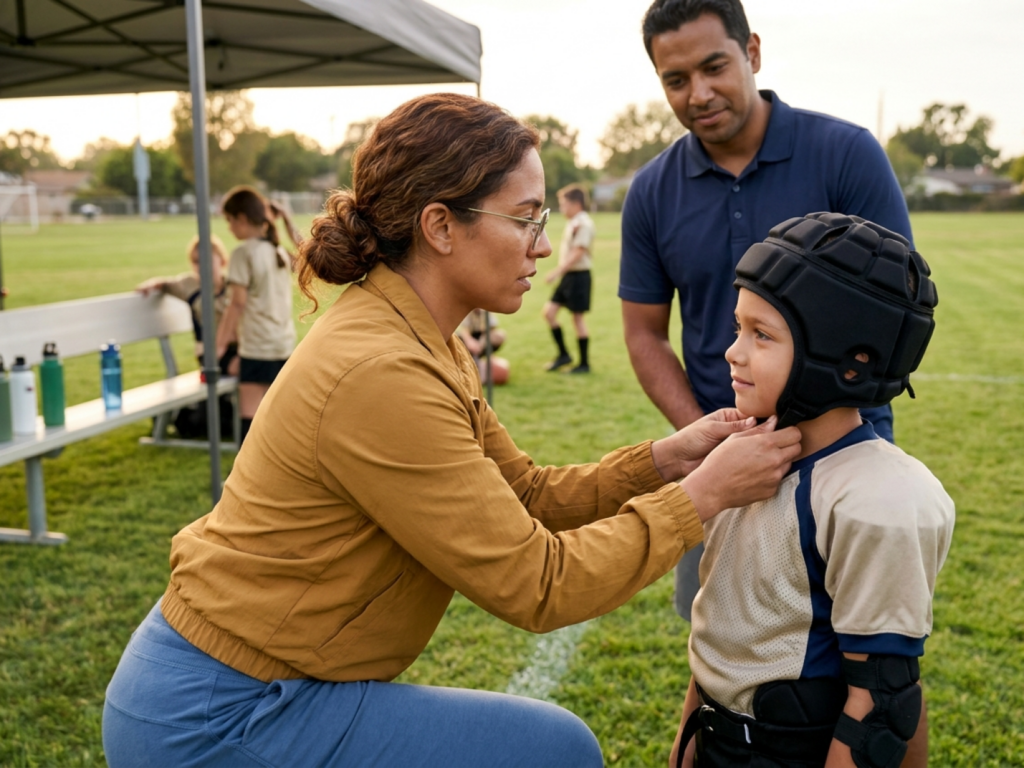
Protective equipment should fit correctly, be maintained, and match the sport and the child’s size.
Warm-ups, skill instruction, hydration, weather precautions, and field checks reduce avoidable risks.
Rest and varied, age-appropriate training help prevent overuse injuries and burnout.
Pain, concussion concerns, breathing difficulty, heat illness, or a significant injury should be taken seriously.
Start with age-appropriate preparation
Before a child begins a new sport or season, discuss participation with the child’s healthcare professional when appropriate. A preparticipation physical evaluation can help identify relevant medical history, previous injuries, exercise-related symptoms, medication needs, and conditions that may require an individualized safety plan. The goal is not to exclude children unnecessarily; it is to support safe participation and clarify when further assessment is needed.
Training should match the child’s developmental stage, physical maturity, skill level, and ability to understand instructions. Children are not simply smaller adults. Their coordination, judgment, heat tolerance, and musculoskeletal development change over time. Coaches should teach fundamental movement and sport-specific skills progressively rather than emphasizing competition before technique and control.
Families should provide accurate emergency contacts and relevant medical information to the coach or organization. Ask whether the program has trained adult supervisors, first-aid supplies, an emergency action plan, communication access, and procedures for contacting emergency services. Children should know whom to approach if they feel unwell, are injured, or see another player in danger.
Use the right protective equipment
Protective equipment works best when it is designed for the activity, appropriate for the child’s size, and worn as instructed. Properly fitted protective gear should not be loose enough to shift during play or so tight that it causes pain, impaired movement, or difficulty breathing. Equipment should be checked before each practice and game for cracks, worn straps, missing fasteners, poor fit, or other damage.
Depending on the sport, equipment may include a certified helmet, mouthguard, eye protection, shin guards, padding, wrist or knee protection, appropriate footwear, or a properly fitted life jacket for water activities. A helmet is designed for a particular activity; a bicycle helmet, for example, should not automatically be treated as suitable for every contact or collision sport. Follow the manufacturer’s instructions and the sport’s governing rules.
Do not modify equipment in ways that could reduce its protective function. Replace items after a significant impact when the manufacturer or sport authority recommends replacement, or when the equipment is damaged or no longer fits. Coaches should inspect equipment without assuming that a child will notice a problem independently. Teaching children why equipment matters can improve consistent use without creating fear.
Make the playing environment safer
Before activity begins, adults should inspect the field, court, pool area, track, gym, or playground. Look for holes, uneven surfaces, wet areas, exposed objects, damaged goals, unstable structures, inadequate lighting, unsafe boundaries, and equipment positioned too close to playing areas. Goals and other heavy structures should be secured according to safety standards. Weather, air quality, water conditions, and visibility may require modifying, postponing, or stopping an activity.
Children need clear instruction in the rules of the sport, including prohibited contact, safe tackling or landing techniques when relevant, boundaries, equipment use, and what to do when play stops. Rules are safety tools, not merely administrative requirements. Coaches should model respectful behavior and avoid encouraging dangerous play, retaliation, or continuing through significant pain.
Supervision should be active rather than purely observational. Adults need to be able to see and hear the children, recognize developing hazards, and respond quickly. A designated person should know the location of first-aid supplies, the fastest route for emergency services, and the procedures for contacting caregivers. In water-based sports, continuous, attentive supervision and appropriate flotation or rescue resources are essential.
Warm up, hydrate, and prepare for weather
A gradual warm-up prepares the cardiovascular system, muscles, joints, and nervous system for activity. It may include easy movement followed by dynamic mobility and sport-specific drills. Children should learn controlled technique, balance, and safe landing or stopping skills rather than being rushed into maximal intensity. A cool-down with easy movement may help the transition out of strenuous activity, although it does not replace rest or medical evaluation when symptoms occur.
Hydration during youth sports should be planned rather than left to chance. Children should have access to suitable fluids before, during, and after activity, with opportunities to drink at regular breaks. Coaches should avoid treating thirst, dizziness, headache, unusual fatigue, nausea, confusion, or faintness as normal signs of hard work. These symptoms can indicate a developing medical problem and warrant stopping activity and obtaining appropriate help.
Heat and humidity increase physiologic stress, especially when children are not acclimatized. Schedule breaks, provide shade or a cooler area, encourage suitable clothing, and adjust intensity during hot conditions. Children should never be left alone in a hot vehicle or enclosed area. If a child becomes confused, collapses, has a seizure, or has markedly altered behavior in the heat, treat it as an emergency and activate local emergency services while following the organization’s emergency protocol.
Prevent overuse and burnout
Overuse injuries in young athletes can develop when repetitive physical stress exceeds the body’s capacity to recover. Risk may increase with rapid increases in training volume or intensity, year-round participation in one activity, inadequate rest, poor technique, unsuitable equipment, or pressure to continue despite pain. Growth-related changes in bones, tendons, muscles, and coordination also make individualized monitoring important.
Training plans should be age-appropriate and include recovery days, variation in activities, and gradual progression. Avoid overscheduling a child across multiple teams without coordinating the total workload. Rest is not a sign of weakness; it is part of adaptation, learning, and injury prevention. Adequate sleep, regular meals, and emotional support also contribute to safe participation.
Teach children to report persistent pain, swelling, limping, weakness, reduced performance, altered technique, or pain that changes their usual activity. Adults should listen without minimizing or blaming the child. A healthcare professional can assess concerning symptoms and advise on activity modification or return to participation. Families should not rely on pain-masking strategies to keep a child in competition without professional guidance.
Respond promptly to injury and illness
When an injury occurs, stop play and move the child away from further danger. A responsible adult should assess the situation within the limits of their training, provide basic first aid according to established protocols, and seek medical advice when indicated. Do not encourage a child to “shake it off” if there is significant pain, impaired function, deformity, bleeding that does not stop with appropriate pressure, or an injury involving the head, neck, chest, or abdomen.
For suspected concussion in children, remove the child from play and arrange medical evaluation. Concerning features can include confusion, unusual behavior, worsening headache, repeated vomiting, seizure, loss of consciousness, weakness, difficulty walking, slurred speech, unequal pupils, or increasing difficulty staying awake. Emergency symptoms require immediate emergency care. A child should not return to sport on the same day after a suspected concussion unless specifically cleared under appropriate medical guidance.
Breathing difficulty, chest pain, fainting, severe allergic symptoms, heat-related confusion, or a serious wound also require urgent attention. Follow the sport program’s emergency action plan and contact local emergency services when the situation may be life-threatening. Return to play after injury should be gradual and guided by the child’s healthcare professional when an injury is significant, symptoms persist, or a concussion is suspected.
Build a child-centered safety culture
Children participate more safely when adults make reporting symptoms acceptable. Tell children that pain, dizziness, breathing difficulty, fear, and feeling overheated are reasons to pause and tell a trusted adult, not evidence that they have failed. Coaches can normalize water breaks, equipment checks, skill practice, and rest for every player rather than singling out a child.
Caregivers should observe the organization as well as the sport. Ask how coaches are trained, how injuries are documented, who supervises practices, how weather decisions are made, and how caregivers are notified. Confirm that the program accommodates relevant medical needs and communicates clearly about medications, allergies, asthma action plans, and emergency contacts when applicable.
Finally, safety includes psychological well-being. Bullying, humiliation, coercion, discriminatory treatment, and pressure to hide injuries can increase risk. Children deserve respectful coaching and the ability to raise concerns. A supportive program balances challenge with enjoyment, recognizes individual differences, and defines success through learning, teamwork, healthy effort, and continued participation—not only winning.
Warning signs requiring prompt action
- Stop play for confusion, loss of consciousness, seizure, worsening headache, repeated vomiting, or unusual difficulty staying awake.
- Seek emergency help for severe breathing difficulty, chest pain, collapse, major bleeding, or a suspected serious neck or spinal injury.
- Treat confusion, collapse, seizure, or markedly altered behavior during heat exposure as a medical emergency.
- Do not allow a child to continue through significant pain, limping, weakness, deformity, or impaired function.
- A suspected concussion requires removal from play and appropriate medical assessment before return.
Tools & Assistance
- Preparticipation physical evaluation and updated medical history
- Sport-specific equipment fitting and inspection checklist
- Written emergency contacts and emergency action plan
- Water, shade, weather monitoring, and scheduled rest breaks
- First-aid supplies and staff trained in basic emergency response
FAQ
How often should a child’s sports equipment be checked?
Check fit and condition before every practice or game, and recheck after a significant impact, rapid growth, or visible damage. Replace equipment according to manufacturer and sport-specific guidance.
Should children play through mild pain?
Children should report pain rather than automatically playing through it. Persistent, worsening, or activity-limiting pain deserves a pause and discussion with a healthcare professional.
What is the safest approach after a suspected concussion?
Remove the child from play, arrange appropriate medical evaluation, and do not return the child to sport the same day without qualified medical guidance. Return should be gradual when medically appropriate.
How can families reduce overuse injuries?
Coordinate total training across teams, include rest and recovery, vary activities when appropriate, increase workload gradually, and respond to persistent pain or declining function.
What should a sports program have in place for emergencies?
It should have trained supervisors, accessible first-aid resources, emergency contacts, a communication method, clear procedures for activating emergency services, and an emergency action plan known by responsible adults.
Sources
- Centers for Disease Control and Prevention — Protect the Ones You Love From Sports and Recreation-Related Injuries
- American Academy of Pediatrics — Preventing Overuse Injuries in Young Athletes: AAP Policy Explained
- Children's Hospital of Philadelphia — Sports safety
Disclaimer
This article provides general educational information and is not a diagnosis, treatment plan, or substitute for advice from a qualified healthcare professional. Seek urgent medical care for emergency symptoms or serious injury.


















Please log in to leave a comment.