
Intro
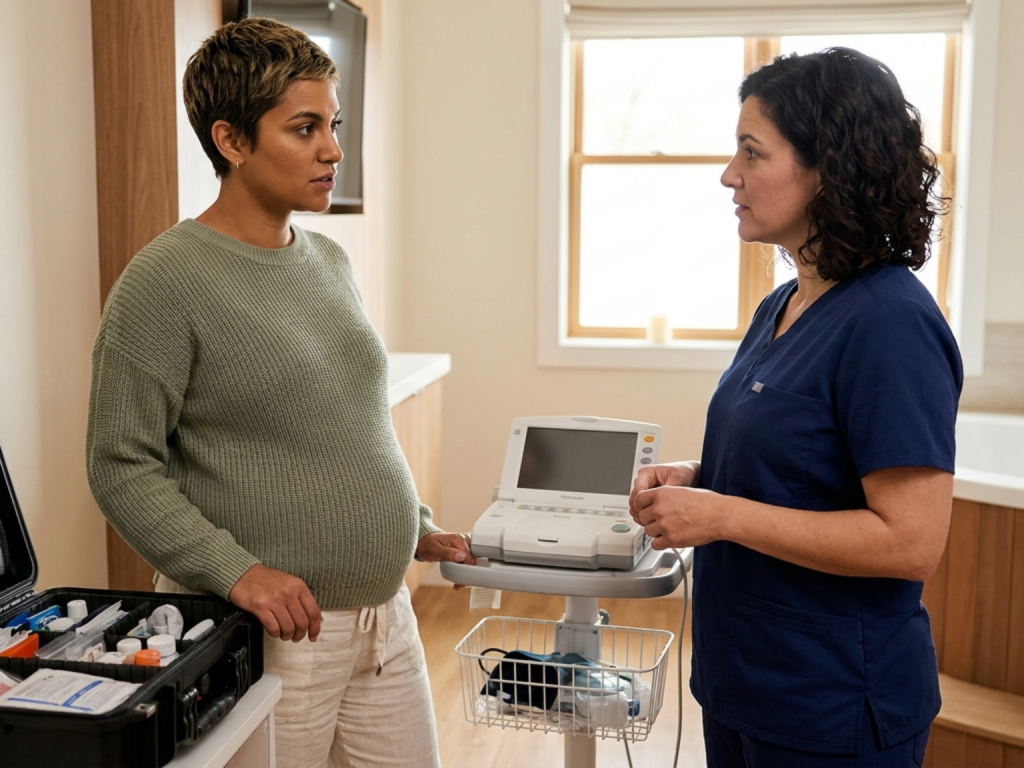
Choosing where to give birth is both a medical decision and a deeply personal one. For some families, a birth center offers the calm, relationship-based care they want, while still providing clinical monitoring and a plan for escalation if labor stops being low risk.
The safest way to think about birth center delivery is not as hospital versus non-hospital, but as a model of care: careful risk screening, skilled midwifery-led care, evidence-based monitoring, emergency readiness, and timely transfer when higher-level obstetric or neonatal care is needed.
Highlights
Birth center delivery can be a safe option for carefully selected people with low-risk pregnancies when care is integrated with hospital backup.
Safety depends on ongoing risk assessment, not a one-time decision made early in pregnancy.
Transfer to a hospital is an expected part of safe birth center systems and should be planned before labor begins.
The strongest safety questions focus on eligibility criteria, staff credentials, emergency equipment, transfer agreements, and neonatal readiness.
What safety means in a birth center
Birth center safety is built around matching the setting to the clinical situation. A birth center is designed for physiologic labor in people who are expected to have a low likelihood of needing surgery, continuous electronic fetal monitoring, blood transfusion, intensive anesthesia, or advanced neonatal resuscitation. That does not mean complications cannot happen. It means the system should be structured to recognize complications early and move care to the right level quickly.
In practical terms, safe birth center care includes trained clinicians, clear protocols, fetal and maternal assessment during labor, medications and equipment for common emergencies, and a birth center transfer plan that is known before labor begins. The World Health Organization frames safe intrapartum care as high-quality, evidence-based, woman-centered care, including respectful communication, monitoring of labor progress, support for normal physiology, and readiness to respond when problems arise.
For medically literate parents, the key concept is risk stratification. A birth center is not trying to replicate an operating room. Its safety profile depends on selecting pregnancies where the probability of needing immediate operative or high-acuity care is low, while maintaining an efficient pathway to that care if the risk profile changes.
Who is most likely to be an appropriate candidate
Most birth centers use birth center eligibility criteria to identify people whose pregnancies remain low risk. Criteria vary by jurisdiction and facility, but they commonly include a singleton pregnancy, cephalic fetal presentation near term, absence of major placenta problems, no need for planned cesarean birth, and no serious maternal condition requiring hospital-level surveillance. Conditions such as significant hypertensive disease, insulin-requiring diabetes, placenta previa, severe anemia, fetal growth restriction, preterm labor, or a non-vertex presentation often require hospital-based care.
Eligibility is dynamic. Someone may begin prenatal care planning for a birth center and later be advised to transfer care because of rising blood pressure, abnormal fetal growth, post-term concerns, bleeding, rupture of membranes with infection concerns, or other evolving factors. Continuous risk screening in pregnancy is therefore a safety mechanism, not a barrier.
Parity also matters in counseling. In the classic National Birth Center Study, nulliparous people were more likely to transfer than those who had given birth before. This does not make a first birth automatically unsafe in a birth center, but it does make realistic counseling important. First labors are more likely to be prolonged, and prolonged labor is one common reason for nonemergent transfer.
What outcome studies show
Large observational studies have found reassuring outcomes for selected low-risk people receiving birth center care, while also showing that transfer is common enough to plan for seriously. In the 2013 study Outcomes of care in birth centers: demonstration of a durable model, 15,574 people who were eligible for birth center birth at the onset of labor were followed. Eighty-four percent gave birth at the birth center, 12 percent transferred in labor after admission, and 4 percent transferred before admission. Across the whole intention-to-treat group, 93 percent had spontaneous vaginal births, 6 percent had cesarean births, and there were no maternal deaths.
The same study reported that 2.4 percent of people who gave birth in the birth center required postpartum transfer and 2.6 percent of newborns were transferred after birth. Most transfers were not emergencies, but 1.9 percent of mothers or newborns required emergent transfer during labor or after birth. Reported intrapartum fetal mortality among those admitted in labor was 0.47 per 1000, and neonatal mortality excluding anomalies was 0.40 per 1000.
The earlier National Birth Center Study followed 11,814 people admitted for labor in 84 freestanding birth centers. It reported a 15.8 percent overall transfer rate, 2.4 percent emergency transfer rate, 4.4 percent cesarean rate, no maternal deaths, and an overall intrapartum and neonatal mortality rate of 1.3 per 1000 births. These data support birth centers as a reasonable option for selected low-risk pregnancies, but they should not be generalized to high-risk pregnancies or poorly integrated systems.
How labor is monitored
Birth centers usually emphasize physiologic labor support rather than routine high-intervention management. Monitoring is still clinical and intentional. Typical care includes maternal vital signs, assessment of contractions, cervical exams when useful, observation of coping and hydration, and intermittent fetal heart rate monitoring. Intermittent auscultation is generally used when the pregnancy remains low risk and the fetal heart rate pattern is reassuring.
Safety depends on how clinicians interpret trends. A single normal blood pressure, temperature, or fetal heart rate check is less informative than the pattern over time. Concerning findings may include persistent fetal tachycardia or bradycardia, recurrent decelerations, maternal fever, heavy bleeding, abnormal pain, signs of preeclampsia, prolonged rupture of membranes with infection concerns, arrest of labor, thick meconium with additional concerns, or clinical suspicion of shoulder dystocia risk.
A well-run birth center should also have protocols for postpartum hemorrhage readiness. This includes active recognition of excessive bleeding, uterine massage, uterotonic medications allowed under the center policy, intravenous access when indicated, rapid transfer pathways, and clear documentation of blood loss and maternal status. Newborn safety includes thermal support, airway assessment, Apgar scoring, oxygen or ventilation equipment when appropriate, and newborn assessment after birth to determine whether routine care or transfer is needed.
Transfer is a safety feature
Hospital transfer during labor can feel emotionally disappointing, especially for families who strongly hoped to remain in the birth center. Medically, however, transfer is one of the central safeguards of birth center care. A transfer may occur because labor is prolonged and the person wants or needs epidural analgesia, because augmentation is recommended, because fetal monitoring becomes concerning, because blood pressure rises, or because operative birth may become necessary.
The safest transfers are anticipated, respectful, and logistically rehearsed. Families should know which hospital receives transfers, how long transport usually takes, who calls the hospital, whether the midwife accompanies the patient, which records are sent, and how care is handed over. The clinical threshold for transfer should be clear enough that decisions are not delayed by uncertainty, fear of judgment, or a desire to preserve the original plan.
Emergent transfer is uncommon in well-selected birth center populations, but it must be planned for. Time-sensitive problems such as severe hemorrhage, persistent nonreassuring fetal status, cord prolapse, severe hypertension, seizure, or newborn respiratory compromise require immediate escalation. A birth center emergency transfer process should prioritize maternal and newborn outcomes over preserving the intended birth setting.
How to evaluate a specific birth center
Safety varies by facility, staffing, regulation, and local hospital relationships. Before choosing freestanding birth center delivery, ask for concrete information rather than general reassurance. A transparent team should be comfortable discussing outcomes, transfer rates, emergency protocols, and limitations of the setting.
- Ask who attends births, what licenses or certifications they hold, and whether a second trained clinician is present for birth.
- Ask how the center handles risk screening during pregnancy, at labor admission, during labor, and after birth.
- Ask which medications and equipment are available for hemorrhage, hypertension, neonatal resuscitation, oxygen support, and intravenous access.
- Ask about the nearest receiving hospital, average transport time, transfer documentation, and whether there is a formal relationship with obstetric and neonatal teams.
- Ask whether the center tracks cesarean rate, intrapartum transfer rate, postpartum transfer rate, neonatal transfer rate, and serious adverse outcomes.
Shared decision-making for birth setting should include your values, your medical history, your distance from hospital care, and the center’s actual safety infrastructure. A supportive clinician will help you weigh these factors without minimizing either the benefits of low-intervention care or the realities of obstetric risk.
Balancing comfort and caution
For many low-risk families, midwifery-led birth center care offers meaningful benefits: continuity, privacy, mobility, food and hydration in labor when appropriate, nonpharmacologic comfort measures, water immersion during labor if allowed, and a care culture that treats birth as physiologic unless clinical findings suggest otherwise. These features can reduce unnecessary intervention and may improve satisfaction.
At the same time, safety requires humility. Rare emergencies can occur in people who looked low risk minutes earlier. A good birth center plan therefore holds two truths at once: the birth center may be an appropriate and evidence-supported setting for a low-risk pregnancy, and rapid access to hospital-level care remains essential if the situation changes.
If you are considering a birth center, bring your full medical and obstetric history to a qualified midwife, obstetrician, or maternal-fetal medicine clinician when needed. Ask how your individual risks affect eligibility, what would trigger transfer, and how you would feel if transfer became the safest choice. A strong plan protects both your preferences and your clinical safety.
When to seek urgent care
- Heavy vaginal bleeding, fainting, chest pain, seizure, or severe shortness of breath needs emergency care.
- Severe headache, vision changes, right upper abdominal pain, or sudden swelling can signal dangerous hypertension.
- Fever, foul-smelling fluid, or feeling very unwell after membrane rupture should be assessed promptly.
- Decreased or absent fetal movement should be discussed urgently with your maternity care team.
- Any concern about the newborn's breathing, color, tone, feeding, or temperature needs immediate clinical evaluation.
Tools & Assistance
- Ask the birth center for its written eligibility and transfer criteria.
- Review your individual pregnancy risks with a licensed midwife or obstetric clinician.
- Identify the receiving hospital and typical transfer route before labor.
- Prepare a birth preference plan that includes hospital transfer preferences.
- Discuss newborn emergency equipment and post-birth observation policies.
FAQ
Is birth center delivery as safe as hospital delivery?
For carefully selected low-risk pregnancies in well-integrated systems, large observational studies report reassuring outcomes. It is not the safest setting for pregnancies needing hospital-level monitoring, surgery, or specialist care.
What is the most common reason for transfer?
Many transfers are nonemergent, such as prolonged labor, need for pain relief beyond what the center offers, or need for labor augmentation. Emergency transfers are less common but must be planned for.
Can I use a birth center for my first baby?
Often yes, if you otherwise meet low-risk criteria. First labors have higher transfer rates, so counseling should include realistic expectations and a clear transfer plan.
What emergencies should a birth center be prepared for?
Common priorities include postpartum hemorrhage, hypertensive emergencies, nonreassuring fetal status, shoulder dystocia, maternal collapse, and newborn respiratory compromise.
When should I choose a hospital instead?
Hospital birth is usually recommended when there are significant maternal conditions, fetal concerns, placenta problems, preterm labor, non-vertex presentation, planned cesarean need, or any complication requiring continuous specialist backup.
Sources
- PubMed — Outcomes of care in birth centers: demonstration of a durable model
- PubMed — Outcomes of care in birth centers. The National Birth Center Study
- World Health Organization — WHO recommendations: intrapartum care for a positive childbirth experience
Disclaimer
This article is for informational purposes only and is not a substitute for individualized medical advice. Discuss birth setting, eligibility, and emergency planning with your midwife, obstetrician, or qualified healthcare professional.

















Please log in to leave a comment.