
Intro
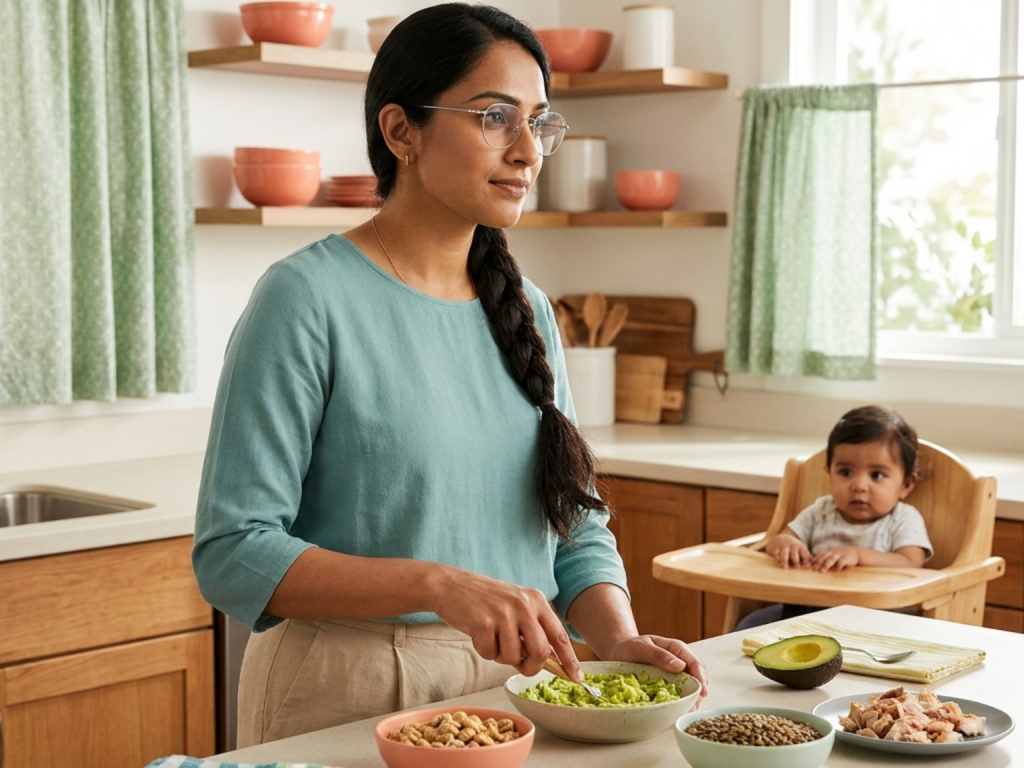
Starting complementary foods is an important developmental milestone, but there is no single perfect menu or required order. Most babies are ready at about 6 months, when breast milk or infant formula continues to provide the majority of nutrition while solid foods gradually add iron, zinc, protein, energy, and opportunities to learn new tastes and textures.
The best first foods are nutrient-dense, developmentally appropriate, and prepared in a form that reduces choking risk. Your baby’s readiness, medical history, growth pattern, and feeding skills matter more than following a rigid schedule. Discuss timing and food choices with your pediatrician or another qualified healthcare professional, particularly if your baby was born prematurely or has a medical condition.
Highlights
Begin complementary foods at about 6 months when your baby shows developmental readiness, while continuing breast milk or infant formula.
Prioritize iron-rich foods, including meat, fish, eggs, beans, lentils, tofu, and iron-fortified infant cereal.
Offer a varied diet of vegetables, fruits, grains, pulses, nuts, seeds, and animal-source foods in safe textures.
Introduce finger foods as skills develop, commonly around 8 months, and always supervise eating closely.
Avoid honey before 12 months and never offer foods that are hard, round, sticky, or otherwise likely to cause choking.
When babies are ready for first foods
Most infants begin complementary foods at approximately 6 months. Age alone is not enough: readiness reflects neuromuscular control and oral-motor skills. A baby who is ready can usually sit upright with support and maintain stable head and neck control. The infant should also show interest in food, open the mouth when food approaches, and bring objects to the mouth. A reduced tongue-thrust reflex helps the baby move food backward rather than repeatedly pushing it out.
These signs should occur together. Reaching for a spoon or waking more often at night does not, by itself, prove that an infant needs solids. Starting substantially earlier than about 4 months is generally not recommended, and delaying complementary foods well beyond 6 months can make it harder to meet increasing iron and energy needs. Breastfeeding can continue for as long as mutually desired, and breast milk or iron-fortified infant formula remains an essential source of nutrition during the transition.
Premature infants may need an individualized assessment based on corrected age and developmental skills. Babies with poor weight gain, swallowing difficulty, significant reflux, neuromuscular impairment, or a history of food allergy may benefit from guidance from a pediatric clinician, dietitian, or feeding therapist before new textures are introduced.
Start with iron-rich complementary foods
Iron deserves particular attention because fetal iron stores decline during the first months of life, while iron is needed for erythropoiesis and neurodevelopment. An effective first-food pattern includes an iron-rich option every day, rather than relying mainly on low-calorie fruit or vegetable purees.
Animal-source foods provide highly bioavailable heme iron and other nutrients. Suitable examples include finely pureed or minced beef, lamb, poultry, fish, and fully cooked egg. Fish can also provide omega-3 fatty acids, although families should choose options that are low in mercury and follow local public-health advice. Meat can be blended with breast milk, formula, water, or a soft vegetable to create a moist texture that is easier to swallow.
Plant-based sources can also contribute meaningful iron and protein. Consider smooth lentil or bean puree, mashed chickpeas, tofu, well-cooked peas, or iron-fortified infant cereal. Non-heme iron from plants is absorbed less efficiently, so pairing these foods with vitamin C sources such as broccoli, tomato, strawberries, melon, or citrus can support absorption. Iron-fortified cereal is practical, but it does not need to be the only first food, and rice cereal should not be the sole grain offered over time because dietary variety is valuable.
- Offer one or more iron-rich foods routinely as solids become established.
- Use moist, smooth, mashed, minced, or finely flaked preparations at first.
- Continue breast milk or infant formula according to your healthcare professional’s advice.
Vegetables, fruits, grains, and pulses
Vegetables and fruits are excellent foods for introducing flavor diversity, fiber, potassium, folate, and vitamin C. Begin with soft cooked vegetables such as sweet potato, squash, carrot, cauliflower, broccoli, or zucchini, mashed or pureed to a smooth consistency. Ripe banana, avocado, pear, peach, mango, and melon can be mashed when soft. There is no medical requirement to start with vegetables before fruit, and offering fruit does not inherently create a preference for sweetness. A broad range of flavors is more useful than trying to control the sequence of individual foods.
Grains can be offered as smooth porridge, soft cooked oats, barley, quinoa, or other appropriately prepared grains. Pulses, including lentils, beans, and chickpeas, provide protein, iron, and fiber; cook them until very soft and puree or mash them thoroughly. As chewing and handling improve, thick mashed foods can gradually become lumpier. Avoid adding salt, sugar, stock cubes, or sweeteners. Babies’ kidneys and taste preferences are still developing, and these additions are unnecessary.
Fat is also a normal part of infant nutrition. Mashed avocado, plain full-fat yogurt, a small amount of smooth nut or seed butter diluted into a familiar food, and vegetable oils used in cooking can increase energy density. Cow’s milk should not replace breast milk or infant formula as the main drink before 12 months, although plain pasteurized yogurt and small amounts of milk used in cooking may be appropriate depending on local guidance and the child’s tolerance.
Textures and progression beyond purees
Texture progression supports oral-motor learning and helps babies practice moving food, managing boluses, and coordinating chewing and swallowing. Pureed foods are reasonable at the beginning, but many infants can progress fairly quickly to mashed and semi-solid foods. The World Health Organization describes pureed, mashed, and semi-solid foods around 6 months, with finger foods commonly developing around 8 months as skills permit.
When a baby can sit steadily, grasp objects, and bring them accurately to the mouth, offer soft finger foods that are large enough to hold. Examples include strips of soft-cooked sweet potato, ripe avocado, steamed broccoli florets, soft pear, toast fingers, or tender shredded meat. Foods should be soft enough to mash between the thumb and forefinger. As the pincer grasp develops, smaller pieces can be introduced. Keep the baby seated upright in a stable high chair and remain within arm’s reach throughout the meal.
Gagging can occur as babies learn and is typically noisy, with coughing or retching. Choking is different: it may be silent and involves ineffective breathing. Caregivers should learn age-appropriate infant choking first aid and maintain close supervision. Do not place food into a baby’s mouth, rush the meal, or allow eating while crawling, reclining, walking, or riding in a vehicle.
Introducing allergens thoughtfully
Common allergenic foods include well-cooked egg, peanut, tree nuts, dairy, wheat, soy, sesame, fish, and shellfish. Current guidance generally supports introducing developmentally appropriate forms of these foods during infancy rather than avoiding them without a specific medical reason. Early introduction is not the same as giving an unsafe whole food: peanut should be offered as smooth peanut butter thinned with water or mixed into puree, and nuts should never be given whole.
Introduce one new potentially allergenic food at a time when the baby is well and a caregiver can observe the infant. Start with a small amount of a safe texture, then continue to offer the food regularly if tolerated, following advice from your healthcare professional. This approach makes it easier to identify a suspected trigger, although reactions can still require urgent evaluation.
Possible allergic reaction signs include hives, facial or lip swelling, repeated vomiting, coughing, wheezing, hoarse crying, pallor, or unusual sleepiness. Breathing difficulty, swelling of the tongue or throat, collapse, or symptoms affecting more than one body system may indicate anaphylaxis and require emergency services immediately. Babies with severe eczema, an existing food allergy, or a strong family history of allergy may need a supervised introduction plan.
Foods and drinks to avoid or limit
Some foods are unsuitable because of infection risk, excessive sodium or sugar, or choking hazards. Honey should be avoided before 12 months because it can contain spores that cause infant botulism. Do not give unpasteurized milk, juice, or dairy products, raw or undercooked eggs or meat, or fish with high mercury levels. Follow food-safety recommendations for refrigeration, hand hygiene, cooking, and preventing cross-contamination.
Choking hazards require special attention. Avoid whole grapes, whole nuts, popcorn, hard raw vegetables, chunks of raw apple, hard candy, gummy sweets, marshmallows, sausage rounds, large pieces of meat or cheese, and spoonfuls of thick nut butter. Cut cylindrical foods lengthwise into thin strips, soften firm produce, remove pits and seeds, and flake fish carefully to check for bones.
Water can be offered in small amounts from an open cup or suitable cup once complementary foods begin, but it should not displace breast milk or formula. Fruit juice is not necessary and can contribute free sugars and dental caries risk. Avoid putting cereal in a bottle unless specifically directed by a clinician, because it does not reliably improve sleep and may increase feeding or aspiration risks.
Responsive feeding and a practical routine
Responsive feeding means observing hunger and satiety cues, offering appropriate foods, and allowing the baby to decide whether and how much to eat. Early hunger cues may include leaning toward food, opening the mouth, or becoming alert when food appears. Turning away, closing the mouth, slowing down, or pushing food away can indicate fullness. Babies often eat variable amounts from meal to meal, so intake should be considered across days rather than judged from a single sitting.
Start with a small amount once daily when the baby is calm and not excessively hungry or tired. Gradually increase frequency toward family meals as interest and tolerance grow. Meals are opportunities for learning, so expect mess, pauses, and repeated exposures. A baby may reject a food several times before accepting it. Offer it again without pressure, and model relaxed eating. Never force a spoonful, use food as a reward, or distract the infant with screens during meals.
A simple meal may combine an iron-rich food with a vegetable or fruit and an energy source. For example, mashed lentils with soft squash, finely minced chicken with avocado, or iron-fortified oat cereal with mashed pear can provide complementary nutrients. Keep notes if your clinician recommends monitoring intake, reactions, or symptoms, but avoid turning feeding into a performance measure. Growth, hydration, development, and the overall diet are more informative than the number of spoonfuls consumed.
Safety reminders
- Never leave a baby alone while eating or offer food in a reclined position.
- Avoid honey before 12 months because of the risk of infant botulism.
- Do not offer whole nuts, hard raw produce, popcorn, round sausage pieces, or thick spoonfuls of nut butter.
- Seek emergency help for breathing difficulty, collapse, or swelling of the tongue or throat after eating.
- Ask a healthcare professional for individualized guidance if your baby was premature, has eczema, or has swallowing or growth concerns.
Tools & Assistance
- A pediatric appointment to review readiness, growth, iron intake, and allergy risk
- An infant choking first-aid and CPR course from a recognized provider
- A food and reaction log when advised by a clinician
- A local public-health guide for low-mercury fish and infant food safety
- A stable, upright high chair and appropriately sized soft-food preparation tools
FAQ
What is the best first food for a baby?
There is no single best food. An iron-rich option such as iron-fortified infant cereal, pureed meat, lentils, beans, tofu, or fully cooked egg is a strong starting point, followed by varied vegetables, fruits, grains, and other appropriate foods.
Should I start with vegetables or fruit?
Either is acceptable. Offer a variety of flavors and textures, including vegetables and fruit, without adding sugar or salt. Including iron-rich foods regularly is more important than the order of produce.
When can babies eat finger foods?
Many babies begin finger foods around 8 months, but readiness varies. The baby should sit upright, grasp food, bring it to the mouth, and manage soft pieces. Always supervise closely and avoid choking hazards.
Can babies eat peanut and egg?
Developmentally appropriate forms of peanut and fully cooked egg can usually be introduced during infancy. Use safe textures, introduce one new allergenic food at a time, and seek individualized advice for severe eczema or an existing allergy.
Does starting solids mean stopping breast milk or formula?
No. Breast milk or iron-fortified infant formula remains an important source of nutrition during the first year. Solids gradually complement milk feeds as intake and skills develop.
Sources
- National Center for Biotechnology Information, National Institutes of Health — Recommendations - NCBI Bookshelf - NCBI - NIH
- World Health Organization — Child health: Recommended food for the very early years
- MedlinePlus, U.S. National Library of Medicine — Infant and Newborn Nutrition
Disclaimer
This article provides general educational information and is not a diagnosis or substitute for individualized medical advice. Consult your pediatrician or another qualified healthcare professional about your baby’s feeding plan, allergies, growth, and developmental needs.















Please log in to leave a comment.