
Intro
Solo sexual activity, including masturbation, can be a private way to explore comfort, arousal, and bodily responses. It does not carry a pregnancy risk when practiced alone, and the risk of sexually transmitted infection is very low when no one else’s sexual fluids or skin are involved. Even so, safety, privacy, consent, hygiene, and emotional wellbeing remain important.
This article is intended for adults and older adolescents who are seeking general sexual-health information. It is not about sexual activity involving babies or children. Any sexual contact with a child is never appropriate; concerns about a child’s behavior or safety should be discussed promptly with a pediatrician or another qualified safeguarding professional.
Highlights
Choose a private, comfortable setting where you will not be interrupted or observed.
Wash your hands and clean reusable toys before and after use according to the manufacturer’s instructions.
Avoid household objects that can cut, burn, break, become lodged, or expose delicate tissue to harmful chemicals.
Stop if there is pain, bleeding, numbness, skin injury, or another concerning change, and seek medical advice when needed.
Protect digital privacy: do not share intimate photographs or videos without informed consent and a clear understanding of where they may go.
Start with privacy, comfort, and control
A safer solo experience begins with an environment in which you can relax and remain in control. Choose a private room or another setting where you will not be interrupted, observed, or exposed to other people. Public spaces are not appropriate because they can violate other people’s boundaries and may create legal or personal safety consequences. Locking a door, silencing notifications, and choosing a time when you have adequate privacy can reduce stress.
Comfort matters medically as well as emotionally. Use a stable surface and a position that does not place prolonged pressure on the neck, back, joints, or genitals. Avoid activities when you are significantly impaired by alcohol or other substances, because impairment can make it harder to notice pain, judge risk, or stop promptly. Keep water, tissues, and any necessary cleaning supplies nearby so that you do not need to rush or improvise.
Solo activity should remain voluntary. You may pause or stop at any point, including if your body feels tired, the sensation becomes unpleasant, or your emotional response changes. There is no medically required frequency, duration, or technique. The relevant questions are whether the activity is comfortable, private, and consistent with your values and daily responsibilities.
Simple solo play ideas without equipment
Solo play does not require a toy or a complicated routine. Some people prefer external touch with clean hands, while others focus on non-genital areas, breathing, imagination, or gradual sensory exploration. Starting slowly can help you recognize what feels comfortable before increasing pressure or intensity. Keeping the activity external may be a reasonable choice if you are uncertain about inserting an object or if your tissues are irritated.
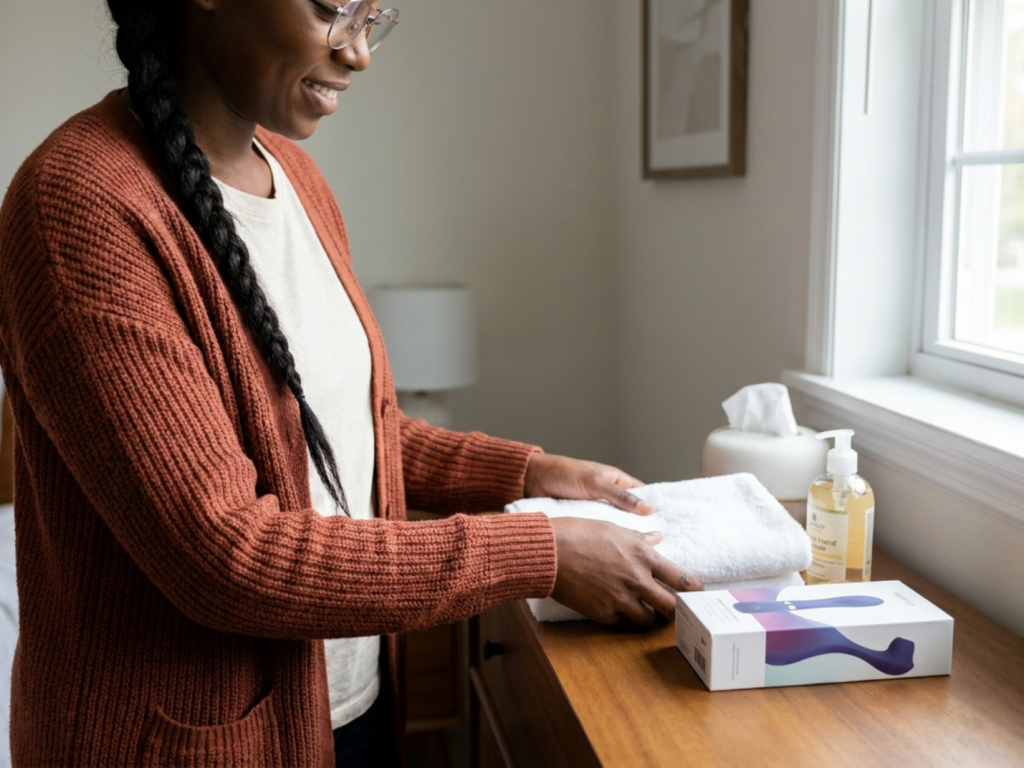
Other options include a warm shower, gentle self-massage of non-sensitive areas, or changing position to find a posture that reduces muscle strain. These are comfort-oriented approaches rather than prescriptions. A clean towel can help protect bedding, but avoid using very hot water or direct high-pressure water on delicate tissue because excessive heat or force may cause irritation.
Pay attention to body signals. Mild temporary sensitivity can occur, but pain is a reason to stop rather than push through. Numbness, burning, persistent soreness, swelling, skin breakdown, or bleeding should not be treated as a normal goal of solo play. If a symptom continues or worries you, consult a healthcare professional. A clinician can assess the concern confidentially and help distinguish simple irritation from a condition requiring care.
Using sexual toys and household objects safely
If you use a sexual device, choose one designed for the intended body area and follow its instructions. Look for products made from materials that can be cleaned as directed, without sharp edges, cracks, peeling surfaces, or loose components. Do not use objects that could cut, burn, splinter, shatter, leak chemicals, or become difficult to remove. Household items are not automatically safe because they may contain contaminants, have rough seams, or lack a secure shape and base.
Insertion requires particular caution. Never insert an object that could move entirely inside the body or become lodged. Avoid improvised objects with detachable parts, porous surfaces that cannot be adequately cleaned, or materials that may react with bodily fluids or cleaning products. A barrier such as a condom may reduce contamination on an object that cannot be sanitized, but it does not make an unsafe object safe to insert.
Use only adequate lubrication when needed and select a product compatible with the toy’s material and any barrier being used. Because product compatibility varies, consult the manufacturer’s guidance or a pharmacist or sexual-health clinician when uncertain. Stop immediately if the device causes pain, loss of sensation, bleeding, or unexpected difficulty with removal. Do not attempt forceful removal; seek urgent medical care if an object is retained or if significant injury occurs.
Cleaning, hygiene, and infection prevention
Wash your hands before and after solo sexual activity, particularly if you have cuts, irritated skin, or recently handled chemicals or other potentially contaminated materials. Keep fingernails short and smooth if your hands will contact delicate tissue. Avoid transferring substances from the anus to the vagina, urethra, or other sensitive areas without washing the hands or changing the barrier first, because this can move bacteria between body sites.
Clean reusable toys after each use according to the manufacturer’s instructions. Some devices tolerate soap and water, while others require a different method and should not be submerged. Allow cleaned items to dry fully before storage. Do not share toys without cleaning them between users and using a new barrier where appropriate. Sharing can introduce microorganisms and may create STI exposure, even though STI risk from masturbation alone is very low.
Store toys in a clean, dry place away from children, pets, extreme heat, and chemicals. Inspect them periodically for cracks, discoloration, damaged cords, or changes in texture. Remove damaged products from use. Do not use household disinfectants, perfumes, or harsh cleaners on body-contact surfaces unless the product instructions specifically permit them, because residues can irritate mucous membranes.
Digital privacy, consent, and personal boundaries
Solo play can involve sexual images, videos, messaging, or online content, and these introduce risks that are separate from physical injury. Keep intimate material private and use strong, unique passwords and device security. Avoid recording or sending images when you are uncertain about storage, forwarding, cloud backups, or the recipient’s behavior. The safest way to protect intimate material is not to create or share it.
Never photograph, record, request, possess, or share sexual images involving a child or young person. Sexualized content involving minors is abusive and may be illegal. If you encounter such material or are worried about a child’s safety, do not forward it; contact appropriate emergency, safeguarding, or law-enforcement services in your area.
Consent remains relevant even when the activity is solitary. Do not involve another person without their informed agreement, including through exposure in a public place, unwanted messages, hidden recording, or using someone else’s image or personal material. Online sexual content should be approached with attention to age, legality, privacy, and the possibility that material may not reflect realistic bodies or experiences.
Recognizing when to seek professional support
Masturbation is generally considered a normal behavior, but an individual experience can still become distressing or unsafe. Consider speaking with a healthcare professional if you have recurring pain, genital bleeding, persistent skin irritation, urinary symptoms, an injury, or difficulty removing an object. Seek urgent care for severe pain, heavy bleeding, fainting, serious tissue injury, or a retained object. A clinician can provide assessment without assuming that solo activity is the cause.
Emotional concerns also deserve attention. Seek support if solo sexual activity feels compulsive, interferes with sleep, work, education, relationships, or personal responsibilities, or is being used in a way that leaves you distressed. Repeatedly feeling unable to stop despite unwanted consequences is a reason to discuss the pattern with a doctor or qualified mental-health professional. Support can focus on stress, anxiety, trauma, compulsive behavior, medication effects, or other factors without judgment.
People vary widely in libido, sensation, cultural beliefs, disability, gender identity, and sexual preferences. A difference from friends, media, or a partner does not by itself indicate a medical problem. Confidential sexual-health clinics, primary-care clinicians, pelvic-health specialists, and mental-health professionals can help with questions about pain, medication, anatomy, privacy, or distress. If you are under the age of consent where you live, use a trusted healthcare professional or age-appropriate sexual-health service for confidential guidance about your rights and available support.
Stop and seek help when needed
- Do not use sharp, breakable, burning, chemically irritating, or electrically unsafe objects.
- Do not insert an object that could become lodged or cannot be removed safely.
- Stop for pain, bleeding, numbness, burns, swelling, or persistent irritation.
- Do not conduct sexual activity in public or expose another person without consent.
- Never create or share sexual images involving children or young people.
- Seek urgent medical care for severe injury, heavy bleeding, or a retained object.
Tools & Assistance
- A clean towel and hand-washing supplies
- Manufacturer cleaning and compatibility instructions for any device
- A primary-care clinician, sexual-health clinic, or pharmacist
- A pelvic-health or mental-health professional for persistent pain or distress
- Local safeguarding, emergency, or crisis services when a child may be at risk
FAQ
Can solo sexual activity cause pregnancy?
Masturbation alone does not cause pregnancy. Pregnancy risk requires sperm to reach the reproductive tract through sexual contact or another route involving semen.
Is there an STI risk when masturbating alone?
The risk is very low when you are alone and there is no contact with another person’s sexual fluids or skin. Risk can increase when toys are shared or hygiene and barriers are inadequate.
How should I clean a sexual toy?
Follow the manufacturer’s cleaning instructions after each use. Some products can be washed with soap and water, while others require a different method or must not be submerged.
What should I do if something hurts?
Stop the activity. Persistent pain, bleeding, numbness, swelling, skin injury, or difficulty removing an object warrants medical advice; severe symptoms require urgent care.
When might masturbation become a concern?
It may warrant support when it feels uncontrollable, causes distress, or interferes with sleep, work, education, relationships, or other responsibilities.
Sources
- FYI Norfolk NHS — Masturbation
- Cleveland Clinic — Masturbation: Facts & Benefits
- Scarleteen — Going Solo: The Basics of Masturbation
Disclaimer
This article provides general educational information and is not a diagnosis or a substitute for individualized medical advice. Consult a qualified healthcare professional for pain, injury, persistent symptoms, emotional distress, or questions about your specific circumstances.














Please log in to leave a comment.