
Intro
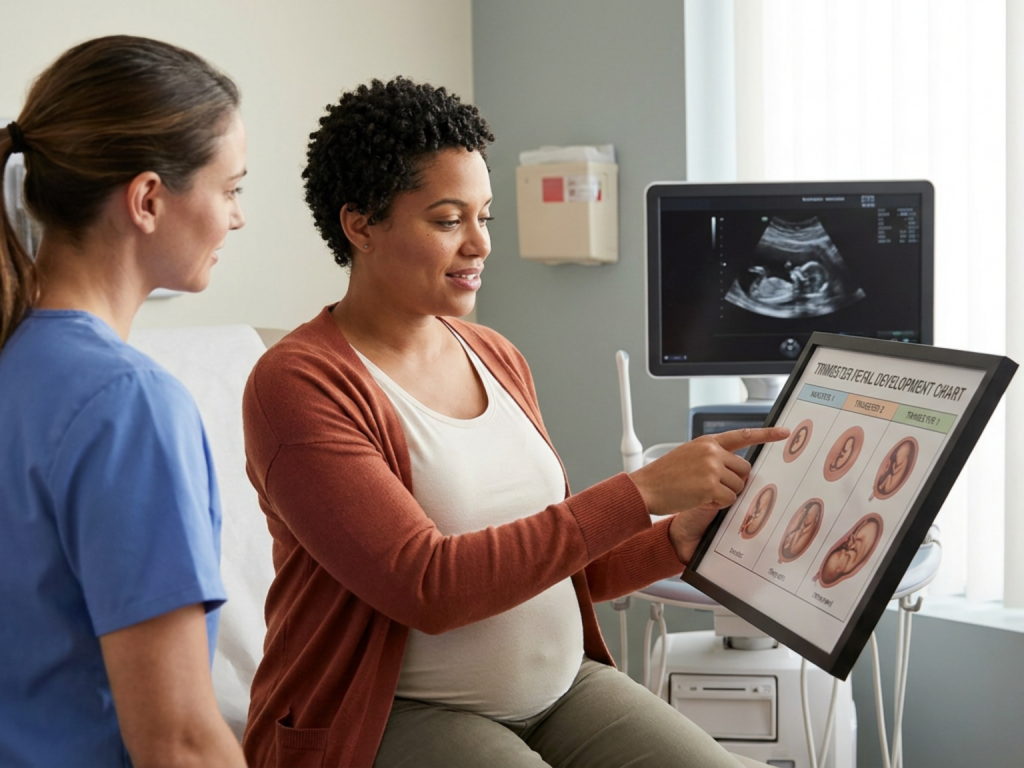
Pregnancy is often described in trimesters because fetal development follows a remarkable sequence: early formation, rapid growth and sensory maturation, then preparation for life outside the uterus. Understanding these milestones can make prenatal visits, ultrasound findings, and day-to-day body changes feel more coherent and less mysterious.
Every pregnancy and every baby develops at an individual pace. The timelines below describe typical developmental patterns, not a checklist for judging your pregnancy. If you have concerns about fetal movement, growth, screening results, symptoms, or your baby’s development after birth, your obstetric, midwifery, pediatric, or neonatal care team is the right place for individualized guidance.
Highlights
The first trimester is dominated by organ formation, early cardiac activity, limb buds, facial structures, and the foundation of the nervous system.
The second trimester brings rapid growth, clearer anatomy on ultrasound, strengthening bones, coordinated movement, and developing senses.
The third trimester focuses on weight gain, brain and lung maturation, more organized sleep-wake patterns, and readiness for birth.
After birth, the first months reveal early developmental milestones such as head control, visual tracking, hand discovery, social responsiveness, and communication through sounds and facial expression.
Why trimester milestones matter
Trimester milestones help organize a complex biological process into clinically meaningful phases. In the earliest weeks, the embryo establishes essential body plans and organs. By mid-pregnancy, fetal structures are large enough for detailed assessment, and many parents begin to feel movement. In late pregnancy, the fetus gains weight, refines neurologic function, and continues pulmonary maturation.
Healthcare professionals use these time windows to guide prenatal testing, ultrasound timing, screening conversations, and counseling about symptoms. For example, a first-trimester visit may focus on dating the pregnancy, viability, baseline health, and early screening options. A mid-pregnancy anatomy scan may evaluate fetal structures and placental location. Later visits often focus on fetal growth, maternal blood pressure, glucose screening results, fetal movement patterns, and planning for birth.
It is also important to remember that gestational age is an estimate, usually calculated from the last menstrual period and refined by early ultrasound when needed. A difference of a few days can matter when interpreting early findings, so questions about timing should be discussed with your clinician rather than interpreted in isolation.
First trimester: foundation, organ formation, and early heartbeat
The first trimester spans approximately weeks 1 through 13 of pregnancy. In the earliest weeks after fertilization, cells divide rapidly, implantation occurs, and the placenta begins forming. The embryo develops the early neural tube, which becomes the brain and spinal cord, and the first outlines of the heart, digestive tract, limbs, eyes, and ears emerge.
By the end of the first trimester, many major organ systems have begun forming, although they remain immature. Cardiac activity can often be detected by ultrasound earlier in the trimester, and the embryo transitions into what is medically termed a fetus. Limb buds become more distinct, fingers and toes separate, and early facial structures continue to develop. The fetus may make small spontaneous movements, although these are usually too subtle for the pregnant person to feel.
Common clinical milestones in this phase may include confirmation of an intrauterine pregnancy, estimation of gestational age, discussion of prenatal vitamins and folic acid, review of medications and medical conditions, and screening options for chromosomal conditions. Some people experience nausea, breast tenderness, fatigue, urinary frequency, or mood changes, while others have few symptoms; symptom intensity alone is not a reliable measure of fetal well-being.
- Key developmental themes: neural tube development, early heart formation, limb and facial development, and the beginnings of major organs.
- Common monitoring: pregnancy dating, viability assessment, blood type and routine prenatal labs, and individualized genetic screening discussions.
- Supportive step: contact your care team before starting, stopping, or changing medications or supplements during pregnancy.
Second trimester: growth, anatomy, movement, and emerging senses
The second trimester, approximately weeks 14 through 27, is often a period of rapid fetal growth and increasing visibility of fetal anatomy. The skeleton continues to ossify, muscles strengthen, and the fetus becomes more active. Many pregnant people first perceive fetal movement, often called quickening, sometime in the middle of pregnancy, although timing varies depending on placental position, prior pregnancies, and individual sensitivity.
A detailed anatomy ultrasound is commonly performed around the middle of pregnancy. This scan may evaluate the brain, spine, heart views, abdominal organs, limbs, placenta, amniotic fluid, and fetal growth. It is a screening and assessment tool, not a guarantee that every condition can be detected. If findings require clarification, a clinician may recommend repeat imaging, targeted ultrasound, fetal echocardiography, or consultation with maternal-fetal medicine.
During this trimester, the fetus begins developing more coordinated movements. Reflexes become more apparent, and sensory systems continue to mature. The skin is thin at first, and protective coverings such as vernix caseosa and fine hair called lanugo may develop. Hearing-related structures progress, and the fetus may respond to sound later in this period.
- Key developmental themes: rapid growth, skeletal strengthening, coordinated movement, skin protection, and sensory maturation.
- Common monitoring: anatomy ultrasound, maternal blood pressure, urine checks when indicated, blood tests, and screening for gestational diabetes later in the trimester depending on local practice.
- Emotional note: feeling movement can be reassuring, but inconsistent perception early on is common. Ask your clinician when and how they want you to monitor movement.
Third trimester: brain growth, lung maturation, and preparation for birth
The third trimester begins around week 28 and continues until birth. This phase is characterized by substantial weight gain, fat deposition, ongoing brain development, and maturation of the lungs and other organ systems. The fetus generally becomes more capable of temperature regulation and metabolic adaptation, although these functions continue to mature after birth.
Lung development is especially important in late pregnancy. Surfactant, a substance that helps keep the air sacs open after birth, increases as gestation advances. Brain growth is also rapid, with increasing neurologic organization that supports sleep-wake cycles, movement patterns, and early reflexes. The fetus may open and close the eyes, respond to light and sound, and demonstrate more predictable activity-rest periods.
As space becomes more limited, movements may feel different: more rolling, stretching, or pressing rather than sharp flips. However, a meaningful reduction in fetal movement should not be dismissed as simply due to the baby running out of room. Your care team can advise how to evaluate movement patterns and when to come in for assessment.
- Key developmental themes: weight gain, fat accumulation, brain maturation, lung maturation, and preparation for feeding and breathing after birth.
- Common monitoring: fetal growth when indicated, maternal blood pressure, symptoms of preeclampsia, fetal position, group B streptococcus screening in many settings, and birth planning.
- Practical step: learn your care team’s guidance for fetal movement awareness, urgent symptoms, and when to call labor and delivery triage.
Fetal movement: what changes across pregnancy
Fetal movement is one of the most personal parts of pregnancy, and it often becomes an important point of connection. Early movements may feel like fluttering, tapping, or bubbles. As the fetus grows, movements may become stronger and easier to identify. Later, the pattern may include stretches, rolls, rhythmic hiccup-like sensations, and pressure against the ribs, pelvis, or abdominal wall.
There is no single normal movement pattern that applies to every pregnancy. Placental location, maternal activity, fetal sleep cycles, gestational age, and time of day can all affect perception. What matters clinically is often a change from the baby’s usual pattern, especially after regular movement has been established.
If you are worried that movement has decreased, do not rely only on home reassurance techniques. Eating, drinking, or lying down may help you pay attention to movement, but persistent concern warrants contacting your maternity care team promptly. They may recommend assessment such as fetal heart rate monitoring, ultrasound, or other evaluation based on gestational age and your clinical situation.
From birth to 3 months: the fourth-trimester transition
Although the article focuses on pregnancy trimesters, development does not pause at birth. The first 3 months are sometimes called the fourth trimester because newborns are adapting to breathing, feeding, temperature regulation, sleep-wake rhythms, and interaction with caregivers. Pediatric development during this period includes motor, sensory, communication, and social milestones.
In the early weeks, babies often have limited head control and rely on reflexes. Over time, many begin lifting the head briefly during tummy time, turning toward sounds, looking at faces, and tracking objects with their eyes. Hands may gradually open more, and babies may start discovering their hands. Social engagement also develops: by around 2 months, many babies smile responsively, make cooing sounds, calm when spoken to or picked up, and show interest in faces.
Development is variable, especially for babies born preterm or those with medical complications. Clinicians may use corrected age for premature infants when assessing milestones. If your baby is not meeting expected milestones, loses skills, feeds poorly, seems unusually floppy or stiff, does not respond to sound, or has persistent concerns with vision or interaction, contact a pediatric professional.
- Motor milestones: improving head control, smoother arm and leg movements, and early tummy-time progress.
- Sensory milestones: visual tracking, preference for faces, and response to voices or sounds.
- Social and communication milestones: early smiles, cooing, calming to caregiver interaction, and increasing alert periods.
How parents can support development safely
Supportive care begins before birth with consistent prenatal care, nutrition guidance, avoidance of harmful exposures, and management of chronic conditions in partnership with clinicians. Attending scheduled appointments gives your team opportunities to monitor growth, address symptoms, discuss vaccines, and identify concerns early.
After birth, responsive caregiving supports neurologic and emotional development. Holding, talking, singing, reading aloud, feeding responsively, and offering supervised tummy time can all help babies practice emerging skills. Safe sleep guidance is also essential: always ask your pediatric clinician for current recommendations, particularly if your baby was premature or has medical needs.
Parents often worry about doing everything perfectly. In reality, development is supported by repeated, ordinary interactions: a calm voice, a safe place to sleep, prompt attention to hunger cues, and loving face-to-face time. If anxiety about pregnancy or parenting feels overwhelming, discussing it with a healthcare professional is a sign of care, not failure.
When to seek medical advice promptly
- Vaginal bleeding, severe abdominal pain, fainting, or shoulder pain in early pregnancy should be discussed urgently with a clinician.
- Severe headache, vision changes, chest pain, shortness of breath, sudden swelling, or right upper abdominal pain in later pregnancy needs prompt medical guidance.
- A noticeable decrease or change in fetal movement after movement patterns are established should be reported to your maternity care team.
- Fever, signs of infection, fluid leakage, regular painful contractions before term, or concern that labor has started early warrants professional assessment.
- After birth, seek pediatric advice for poor feeding, breathing difficulty, blue color, extreme sleepiness, fever in a young infant, loss of skills, or major developmental concerns.
Tools & Assistance
- A prenatal visit checklist for questions about screening, ultrasound findings, medications, and symptoms
- A pregnancy calendar or app that tracks gestational age and appointment timing
- A fetal movement awareness plan provided by your maternity care team
- A pediatric milestone tracker from a reputable public health or pediatric organization
- Contact information for labor and delivery triage, your obstetric or midwifery practice, and your baby’s pediatric clinic
FAQ
Are trimester milestones the same for every pregnancy?
No. They describe typical developmental windows, but exact timing can vary. Gestational age, fetal position, placental location, maternal health, and dating accuracy can all influence what is seen or felt.
When should I first feel the baby move?
Many people feel first movements during the second trimester, often around the middle of pregnancy. It may be later with a first pregnancy or an anterior placenta. Ask your clinician what is expected for your situation.
Does a normal anatomy scan mean the baby has no health problems?
A reassuring anatomy scan is valuable, but no ultrasound can detect every condition. Some issues develop later, are subtle, or require additional testing to evaluate.
Why include newborn milestones in an article about pregnancy trimesters?
Birth is a transition rather than an endpoint. The first 3 months show how fetal neurologic and sensory development begins to appear as head control, visual tracking, social smiling, cooing, and early interaction.
What should I do if I am worried about development?
Contact the appropriate healthcare professional: your maternity team during pregnancy or your pediatric clinician after birth. Timely assessment can provide reassurance or identify when additional support is needed.
Sources
- Mayo Clinic — Infant development: Birth to 3 months
- Centers for Disease Control and Prevention (CDC) — Milestones by 2 Months | Learn the Signs. Act Early.
- American Pregnancy Association — Baby Development: Month-by-Month Medical Milestones
Disclaimer
This article is for informational purposes only and does not replace medical advice, diagnosis, or treatment. Always consult your obstetric, midwifery, pediatric, or other qualified healthcare professional about pregnancy or infant health concerns.


















Please log in to leave a comment.