
Intro
Traveling with children can feel like managing a small mobile clinic, snack bar, sleep lab, and emotional regulation center all at once. Even well-planned trips can involve delayed flights, hunger, overstimulation, motion sickness, toileting emergencies, and big feelings in public places. If you have ever felt anxious before a family trip, you are not failing; you are responding realistically to a complex situation.
The good news is that children usually travel more easily when adults reduce unpredictability, prepare for basic physiological needs, and build in recovery time. A smoother trip is not about perfect behavior. It is about anticipating common friction points, supporting children’s nervous systems, and protecting parents from preventable overload.
Highlights
Most travel stress comes from predictable pressure points: hunger, fatigue, boredom, sensory overload, separation anxiety, and disrupted routines.
A child-friendly itinerary is slower than an adult itinerary. Fewer transitions, shorter travel legs, and flexible timing often prevent meltdowns.
Carry-on planning matters. Snacks, medications, comfort items, spare clothing, and basic hygiene supplies should stay accessible, not buried in checked luggage.
Safety preparation should be concrete and rehearsed: car seats, emergency contacts, hotel room checks, and a simple plan for what children should do if separated.
Medical preparation is especially important for children with asthma, food allergy, diabetes, epilepsy, neurodevelopmental conditions, or recent illness.
Start with realistic expectations
Children are not small adults with shorter legs. Their executive function, impulse control, interoception, and emotional regulation are still developing. A preschooler may not recognize early hunger or fatigue until distress has already escalated. A school-aged child may understand the plan but still struggle with waiting, noise, or uncertainty. A teenager may need privacy and autonomy while still requiring clear safety expectations.
Before booking, ask what your child can realistically tolerate. A nonstop flight may be worth more than a cheaper itinerary with multiple layovers. A hotel near the main activity may reduce exhaustion. One major outing per day may be more successful than a packed schedule. Families often travel more happily when they choose fewer activities and leave room for naps, quiet play, meals, and decompression.
Use predictable anchors for children whenever possible: a consistent morning routine, a familiar bedtime sequence, regular snack times, and clear transition warnings for children before leaving one place for another. Even if the destination is new, repeated rituals help the brain feel safer.
Plan the route around children’s bodies, not just the map
The shortest route on paper is not always the easiest route for a child. Consider sleep timing, feeding intervals, bathroom access, and opportunities to move. For flights, minimizing layovers can reduce cumulative stress, but if a layover is unavoidable, choose one long enough for toileting, food, stretching, and unexpected delays. For road trips, planned stops are usually better than waiting until everyone is distressed.
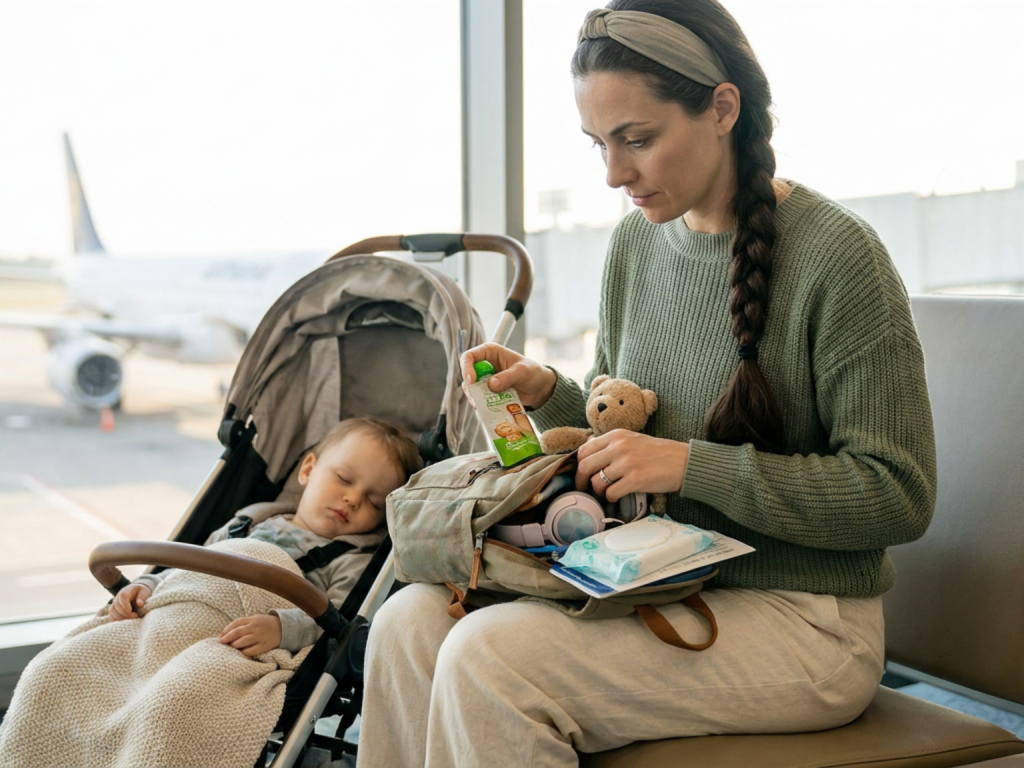
When flying with young children, use family boarding if offered. This gives caregivers time to install car seats if permitted by the airline, organize carry-on items, wipe surfaces if desired, and place essential supplies within reach. Keep comfort items, snacks, bottles, formula, diapers, wipes, and a change of clothing in carry-on bags. Checked luggage can be delayed, and children’s needs rarely wait.
During takeoff and landing, changes in cabin pressure can cause ear discomfort because the Eustachian tubes may not equalize pressure efficiently. Swallowing can help, so infants may feed, toddlers may sip water, and older children may chew or swallow if safe for their age. If your child has a current ear infection, recent ear surgery, significant upper respiratory symptoms, or severe ear pain with flying, ask a healthcare professional for individualized advice before travel.
Pack less luggage but better essentials
A common travel mistake is packing too much into suitcases and too little into the bag that stays with the parent. Think in terms of immediate access. Each child who is old enough can carry a small backpack with lightweight, appropriate items: a comfort object, a small activity, a snack, a water bottle if allowed through security or filled afterward, and perhaps headphones. Avoid overloading children; the backpack should increase independence, not become another burden for adults.
A practical family carry-on may include:
- Medications in original containers, plus dosing devices if already prescribed or recommended by your clinician.
- Any emergency action plans for allergy, asthma, seizures, diabetes, or other known conditions.
- Snacks with protein, fiber, and familiar textures; avoid relying only on airport or roadside food.
- Reusable bottle, feeding supplies, and bottle-cleaning items when needed.
- Diapers, wipes, hand sanitizer, tissues, and sealable bags for soiled clothing.
- At least one full clothing change for each young child and a shirt for the caregiver.
- Comfort items such as a small blanket, stuffed toy, pacifier, or sleep cue.
- Quiet activities: stickers, coloring materials, magnetic games, audiobooks, or downloaded shows.
Familiar foods can be particularly helpful for anxious children or children with sensory sensitivities. Travel is not the ideal moment to test a new snack if your child has a history of food allergy, gastrointestinal symptoms, or strong food selectivity. For medically necessary diets, confirm food availability in advance and carry safe backups.
Support emotional regulation before behavior escalates
Many travel meltdowns are not misbehavior in the moral sense; they are stress responses. Crowds, bright lights, announcements, security lines, hunger, sleep disruption, and uncertainty can all increase sympathetic nervous system activation. Once a child is highly dysregulated, reasoning and lecturing rarely work well. Prevention is kinder and more effective.
Describe the travel day in simple steps before leaving: “First we drive to the airport, then we wait in a line, then our bags go through a machine, then we find our gate.” Some children benefit from pictures, a visual checklist, or a social story. Offer limited choices where possible: which snack to eat, which book to pack, or whether to sit by the window or aisle if available.
When stress rises, lower stimulation. Move to a quieter corner, use family restrooms when appropriate, offer water or food if safe, reduce verbal demands, and name the feeling briefly: “This is loud and you are tired. We will sit for two minutes.” For tantrums and intense emotional reactions, prioritize safety and calm presence over public approval. Other travelers may look; your child still needs a regulated adult more than a perfect performance.
Make sleep and recovery part of the itinerary
Sleep disruption is one of the strongest contributors to difficult travel days. Children with sleep debt may show hyperactivity, irritability, tearfulness, poor appetite, or reduced frustration tolerance. Parents with chronic sleep restriction also have less patience and slower problem-solving, which can make small problems feel much larger.
Try to preserve the structure of bedtime even when the location changes: bath or wash-up, pajamas, toothbrushing, story, lights dimmed, and a familiar comfort object. If you cross time zones, daylight exposure, meal timing, and a gradual shift in bedtime can help the circadian rhythm adjust, but infants and toddlers may need extra flexibility. Avoid scheduling high-demand activities immediately after arrival if travel has been long.
Build recovery time for adults too. Protecting parental recovery time may mean ordering simple food, skipping one attraction, taking turns supervising children, or choosing accommodation with a kitchenette or separate sleeping area. Easier travel is not only about children coping; it is also about caregivers having enough bandwidth to respond well.
Keep safety simple, visible, and practiced
Safety planning works best when it is concrete and calm. For road travel, use an age- and size-appropriate car seat, booster seat, or seat belt according to current safety guidance and local laws. If renting a vehicle, confirm car seat availability and condition in advance, or bring your own if feasible. Never assume a short ride is low risk enough to skip restraints.
Before a trip, teach children what to do if they become separated. A simple script may be: stop walking, stay where you are if safe, and ask a uniformed worker or another parent with children for help. Younger children can carry caregiver contact information in a pocket, bracelet, or luggage tag that is not prominently visible to strangers. Older children should know the caregiver’s phone number and the name of the hotel or meeting point when developmentally appropriate.
When entering a hotel room or rental property, do a quick safety scan. Check window and balcony locks, sharp objects, choking hazards, medications left behind, cleaning products, accessible cords, and door locks. Identify exits and agree on a meeting place in case of fire alarm or evacuation. These checks take minutes and can prevent serious harm.
Prepare medically without overmedicalizing the trip
A basic pre-travel health review is wise, especially for international travel, remote destinations, or children with chronic medical conditions. Confirm routine immunizations are up to date and ask a pediatric clinician or travel medicine clinic about destination-specific prevention, such as malaria prophylaxis, traveler’s diarrhea guidance, altitude considerations, or required vaccines. Do this well before departure when possible, because some preventive measures require time.
Do not start new medications solely for convenience without medical guidance. This includes sedating antihistamines, sleep aids, antiemetics, or motion sickness medications. Some medicines can cause paradoxical agitation, respiratory depression risk, excessive sedation, QT interval concerns, or dosing errors in children. If your child is prone to motion sickness, migraines, asthma exacerbations, anaphylaxis, seizures, or hypoglycemia, ask your healthcare professional for a written plan before travel.
Carry medications in original labeled packaging and keep them with you, not in checked luggage. If your child needs temperature-sensitive medication, discuss proper storage with a pharmacist. Bring copies of prescriptions and relevant medical letters when traveling internationally or with injectable medications or medical devices.
Use screens strategically, not guiltily
Many parents worry about screen time during travel. It is reasonable to maintain screen boundaries for adolescents and younger children, but travel days are unusual conditions. A downloaded movie or game can be a useful tool during long waiting periods, especially when movement is restricted. The goal is intentional use rather than endless default use.
Balance screens with other regulation tools: snacks, movement breaks, audiobooks, window watching, simple games, and conversation. Use headphones at a safe volume, and consider stopping screens before sleep if they make it harder for your child to wind down. For children who become distressed when a device is removed, give a clear endpoint in advance: “When the plane lands, the tablet goes in the bag.”
Adjust plans for temperament, age, and neurodevelopment
An easy trip for one child may be overwhelming for another. Children with autism spectrum traits, ADHD, anxiety disorders, sensory processing differences, intellectual disability, or trauma histories may need more preparation, more predictability, and fewer transitions. Noise-reducing headphones, visual schedules, familiar foods, practice runs, and early boarding may be especially helpful.
Babies need feeding, diapering, sleep protection, and caregiver regulation. Toddlers need movement, snacks, repetition, and safe boundaries. School-aged children often benefit from responsibility, such as tracking a small backpack or helping read signs. Teenagers may appreciate involvement in planning, privacy, and realistic autonomy. Age-appropriate responsibilities can reduce conflict because children feel included rather than managed.
If a child has a significant history of elopement, panic attacks, severe aggression, medical instability, or unsafe behavior during emotional dysregulation, consult the child’s healthcare or mental health team before major travel. Planning may include environmental accommodations, identification tools, medication timing review, behavioral supports, or deciding that a less demanding trip is the safer choice this season.
When to seek medical advice before or during travel
- Consult a healthcare professional before travel if your child has complex chronic illness, recent surgery, significant respiratory symptoms, or a recent serious infection.
- Seek urgent care for breathing difficulty, dehydration signs, altered mental status, severe allergic reaction, uncontrolled seizure, or persistent severe pain.
- Do not give sedating medication, motion sickness medicine, or sleep aids to a child unless a clinician has confirmed safety and dosing.
- For international or remote travel, ask about vaccines, malaria prevention, food and water precautions, and access to emergency care before departure.
- If your child has anaphylaxis, asthma, diabetes, epilepsy, or another condition requiring emergency treatment, carry the action plan and medications with you at all times.
Tools & Assistance
- Create a one-page family travel plan with itinerary, emergency contacts, allergies, medications, and insurance details.
- Schedule a pediatric or travel medicine visit well before international or medically complex travel.
- Use a small backpack system for each child with snacks, comfort items, and quiet activities.
- Prepare a hotel safety checklist for locks, balconies, cords, medications, cleaning products, and exits.
- Download maps, boarding passes, entertainment, and key documents before leaving home.
FAQ
What is the best age to start traveling with children?
There is no universally best age. The right timing depends on the child’s health, temperament, sleep needs, caregiver support, destination, and trip demands. For infants, discuss long-distance or international travel with a pediatric clinician.
How can I prevent my child from melting down in airports or stations?
Reduce waiting stress with snacks, movement before boarding, simple explanations, transition warnings, comfort items, and quiet spaces when available. Try to respond early to hunger, fatigue, and sensory overload rather than waiting for full dysregulation.
Should I give medicine to help my child sleep on a plane?
Do not use medication for sedation unless your child’s healthcare professional specifically recommends it. Some medicines can cause unsafe sedation, paradoxical agitation, or dosing problems in children.
What should I do if my child gets ear pain during takeoff or landing?
Swallowing can help equalize pressure. Depending on age, feeding, sipping water, or chewing may help. If your child has severe ear pain, current ear infection symptoms, or recent ear surgery, seek medical advice before flying.
How do I make hotel rooms safer for young children?
On arrival, check balcony and window locks, door locks, cords, small objects, medications, cleaning products, sharp items, and exits. Move hazards out of reach and identify an evacuation plan.
Sources
- Child Mind Institute — 24 Tips for Traveling With Children
- Live Global — Travel Tips for Flying with Young Kids
- Florida Sheriffs Association — Safety Tips for Traveling with Kids
Disclaimer
This article is for informational purposes only and does not replace medical advice, diagnosis, or treatment. Consult a qualified healthcare professional for guidance specific to your child’s health, medications, and travel plans.

















Please log in to leave a comment.