
Intro
Drying and warming a baby after a bath is a brief but important part of the bathing routine. Babies lose heat quickly when their skin is wet, and newborns have immature thermoregulation, meaning they cannot adjust body temperature as efficiently as older children or adults. A calm, organized sequence helps reduce heat loss while keeping handling gentle and safe.
The essential approach is to prepare the room and supplies beforehand, lift the baby into a warm towel promptly, pat rather than rub the skin, dry every fold carefully, and dress or cover the baby once fully dry. Very small or medically vulnerable babies may need individualized advice about bathing from a midwife, pediatrician, or neonatal clinician.
Highlights
Have a dry towel, clean diaper, clothing, and any recommended skin-care products within reach before starting the bath.
Wrap the baby promptly in a warm, dry towel and gently pat the skin rather than rubbing it.
Pay particular attention to the neck, armpits, groin, behind the ears, and other skin folds because retained moisture can irritate delicate skin.
Dress or cover the baby as soon as the skin is dry, and keep the room comfortably warm without exposing the baby to direct heat.
Seek professional advice for a premature, low-birth-weight, unwell, or medically complex baby, especially if the baby does not warm normally after bathing.
Prepare before the bath ends
The safest post-bath routine begins before the baby leaves the water. Arrange a clean, dry towel, fresh diaper, clothing, and a safe place for dressing within arm’s reach. A hooded towel can be useful, but any soft, absorbent towel is suitable. If you plan to use a moisturizer, choose one recommended for infant skin and have it available without delaying wrapping and warming.
The room should be comfortably warm and free from drafts. The World Health Organization advises bathing babies in a very warm room and using warm water, then drying them immediately and thoroughly. Avoid trying to warm the room with unsafe methods such as portable heaters placed close to the baby, hot-water bottles, electric blankets, hairdryers, or direct heat from a radiator or fireplace. These can cause burns or overheating.
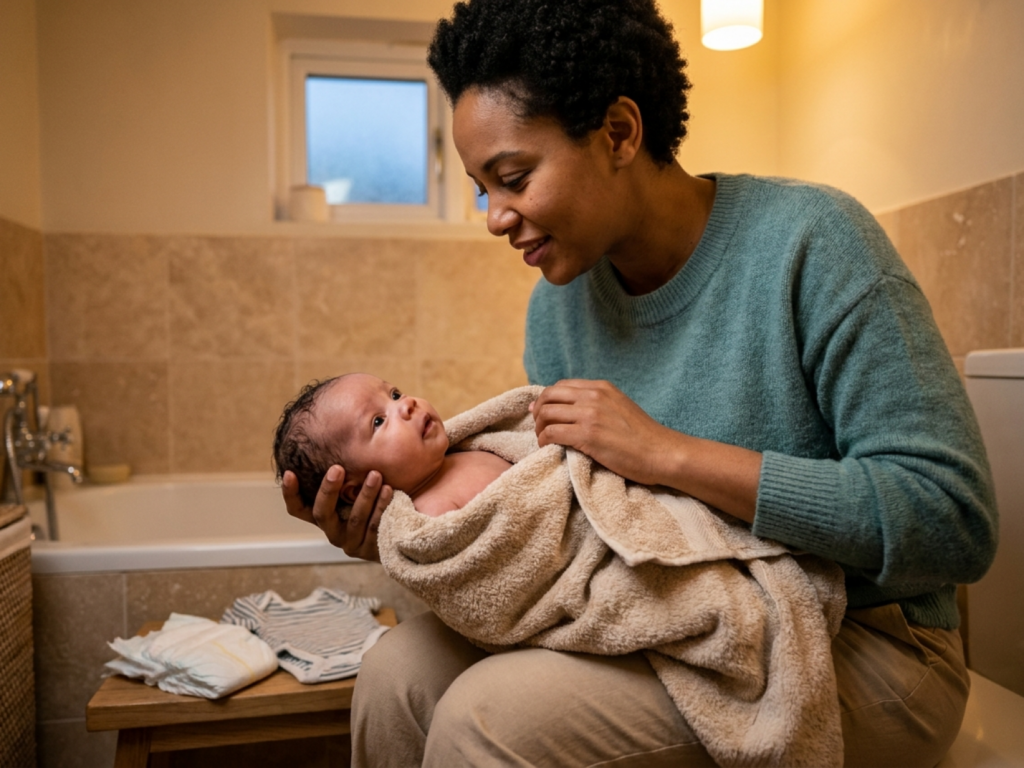
Keep one hand supporting the baby’s head and neck while lifting the baby from the bath, and maintain direct physical control throughout the transfer. Wet skin is slippery, so move deliberately rather than hurriedly. If another adult is present, ask them to receive the towel or clothing; the person holding the baby should not need to reach for supplies.
Wrap the baby promptly and pat dry
As soon as the baby is out of the water, place the baby directly into the towel and wrap the body snugly but comfortably. Cover the head if the towel has a hood, or place a dry section of the towel over the head while keeping the face uncovered. The American Academy of Pediatrics recommends promptly wrapping the baby in a towel and gently patting the baby dry, which helps reduce heat loss while the skin is still wet.
Pat the skin with the towel instead of rubbing. Vigorous rubbing can create friction, aggravate dryness, and make a baby unsettled. Use firm enough contact to absorb water, but keep movements slow and gentle. Dry the torso first, then the arms and legs. Replace any section of the towel that becomes saturated; a wet towel no longer insulates effectively.
Keep the baby wrapped while you work through the drying process. There is no need to leave the baby uncovered for a prolonged inspection or skin-care routine. If the baby becomes distressed, prioritize warmth and comfort: hold the baby securely against your body over the towel and continue drying when the baby is calmer, while keeping the airway clear and the face visible.
Dry every skin fold carefully
Moisture commonly remains in areas where skin touches skin. Once the main surfaces are dry, use a clean part of the towel to blot the neck folds, behind the ears, under the arms, around the groin, between the buttocks, and behind the knees. Separate folds gently rather than pulling or stretching the skin. Check the creases around the fingers and toes as well, particularly if water or cleanser has collected there.
The NHS specifically advises drying a baby very carefully, including between skin folds, after bathing. This is practical skin-barrier care: prolonged dampness and friction may contribute to irritation. At the same time, avoid trying to make the skin completely dry by scrubbing. Blotting and short periods of gentle air exposure while the baby is securely supported are usually sufficient.
Do not insert cotton swabs, tissues, or other objects into the ear canal. Dry only the outer ear and the skin behind it. Similarly, clean and dry the diaper area gently without forcing the foreskin back in an uncircumcised penis. If the umbilical stump is still present, follow the care instructions given by the baby’s clinician and avoid applying unapproved substances.
Dress and maintain warmth
When the baby’s skin is dry, put on a clean diaper and comfortable clothing appropriate for the room. Cover the arms, legs, and trunk, and add a light layer if needed. The NHS recommends covering the baby or putting clothes on once dry to help keep the baby warm. Clothing should allow normal movement and should not be tight around the neck, chest, wrists, ankles, or diaper area.
Use the baby’s chest or upper back as a general guide to comfort rather than relying only on hands and feet, which can feel cooler normally. The baby should feel comfortably warm, not hot, sweaty, or clammy. Avoid excessive bundling, hats indoors for prolonged periods unless advised by a clinician, and heavy blankets that can cover the face. For sleep, follow local safe-sleep guidance: place the baby on the back on a firm, flat surface with the face and head uncovered.
After dressing, hold the baby close for a few minutes if they are alert and comfortable. Skin-to-skin contact can provide warmth and reassurance when performed safely by an awake adult who can continuously observe the baby and keep the nose and mouth unobstructed. Do not fall asleep while holding the baby on a sofa, chair, or adult bed.
Protect delicate skin after drying
Bathing and drying can temporarily remove some of the skin’s surface oils, but most babies do not need a complex post-bath regimen. If the skin appears comfortable, clean, and intact, a diaper and clothing may be all that is required. Avoid adding powders, perfumes, essential oils, or fragranced products unless a healthcare professional has specifically recommended them. Powders can become airborne and may be inhaled.
If the baby has dry or rough areas, ask a healthcare professional which product is appropriate. HealthyChildren.org notes that a small amount of fragrance-free, hypoallergenic lotion may be used after the bath if needed. Apply only to intact skin, use a thin layer, and stop if redness or irritation develops. Do not use a new product over a large area without considering the possibility of sensitivity.
Keep the diaper area clean and dry, changing the diaper promptly if it becomes wet. If persistent redness, cracking, oozing, blisters, bleeding, or a spreading rash develops, contact the baby’s healthcare professional rather than relying on repeated bathing or over-the-counter treatments. A clinician can determine whether the problem is simple irritation or requires specific evaluation.
Recognize when warmth or medical advice is needed
A baby may briefly cry or have cool hands after a bath, but the baby should gradually become comfortable once wrapped and dressed. Observe the baby’s color, alertness, breathing, and response to you. Do not diagnose a temperature problem from touch alone. If you are concerned, use a reliable thermometer according to its instructions and ask a healthcare professional how to interpret the result for your baby’s age and circumstances.
Contact a clinician promptly if the baby remains unusually cold, is difficult to wake, feeds poorly, appears pale or bluish, has abnormal breathing, or does not settle despite being dried and dressed. Seek urgent medical help for severe breathing difficulty, unresponsiveness, a seizure, or a baby who appears seriously unwell. These signs should not be attributed simply to being chilled after a bath.
Newborns who were born prematurely, have a low birth weight, have difficulty maintaining body temperature, or are receiving medical care may need a different bathing schedule and warming plan. The WHO emphasizes avoiding bathing very small babies. Ask the baby’s clinician when bathing is appropriate, how often it should occur, and whether sponge bathing is preferable until the baby is more stable.
A simple post-bath sequence
- Finish the bath efficiently and lift the baby with one hand supporting the head and neck.
- Place the baby immediately into a dry towel and cover the body while keeping the face clear.
- Pat the head, trunk, arms, and legs dry; use fresh dry areas of the towel as needed.
- Blot the neck, behind the ears, armpits, groin, diaper area, and other skin folds.
- Apply only a clinician-recommended skin product, if one is needed, and use a small amount on intact skin.
- Put on a clean diaper and suitable clothing, then check that the baby is comfortably warm rather than sweaty or overheated.
- Continue observing the baby for unusual coldness, color change, breathing difficulty, poor responsiveness, or feeding difficulty.
Repeating the same sequence each time reduces the chance of forgetting supplies or leaving the baby wet. It also makes bath time easier for a tired caregiver. If you feel overwhelmed, place the baby safely on their back in an appropriate cot or bassinet for a moment while you reorganize, provided the bath water has been emptied and the baby is supervised according to local safety guidance.
Important safety warnings
- Never leave a baby unattended in or beside the bath, even briefly.
- Do not use direct heat, hot-water bottles, electric blankets, or hairdryers to warm a baby.
- Keep the towel and clothing away from the baby's face and airway.
- Do not vigorously rub the skin or apply powders, perfumes, or essential oils.
- Seek urgent medical help for unresponsiveness, severe breathing difficulty, bluish color, or a seizure.
Tools & Assistance
- A clean, absorbent towel and a spare dry towel
- A fresh diaper and seasonally appropriate baby clothing
- A reliable thermometer used according to its instructions
- A warm, draft-free dressing area arranged before the bath
- The baby's pediatrician, midwife, health visitor, or neonatal care team
FAQ
Should I rub my baby dry after a bath?
No. Gently pat the skin with a soft, absorbent towel. Rubbing can increase friction and irritate delicate skin.
How quickly should I wrap my baby after the bath?
Wrap the baby immediately after lifting them from the water, keeping the face clear. Prompt wrapping helps reduce heat loss while the skin is wet.
Do babies need lotion after every bath?
No. If the skin is comfortable and intact, lotion may not be necessary. If dryness is present, ask a healthcare professional about a fragrance-free, hypoallergenic product.
What should I do if my baby still feels cold after being dressed?
Keep the baby safely wrapped or hold them close while awake and observing them, and assess for concerning changes in alertness, color, breathing, or feeding. Contact a healthcare professional for advice, especially for a newborn or medically vulnerable baby.
Can I bathe a premature or very small baby at home?
Ask the baby's clinician first. Very small or premature babies may lose heat more readily, and the WHO advises avoiding bathing very small babies until care is individualized.
Sources
- World Health Organization — ENSURE WARMTH FOR THE BABY
- NHS — Washing and bathing your baby
- HealthyChildren.org, American Academy of Pediatrics — Bathing Your Baby
Disclaimer
This article provides general educational information and does not replace advice, examination, or treatment from a qualified healthcare professional. Seek individualized guidance for premature, low-birth-weight, unwell, or medically complex babies, and urgent help for serious symptoms.














Please log in to leave a comment.