
Intro
Preparing a baby’s wardrobe can feel surprisingly complicated. Newborns may need several changes in one day because of milk spills, reflux, urine or stool leaks, sweating, and ordinary washing. At the same time, babies grow quickly, so buying too many outfits in one size can create waste and unnecessary expense.
A practical wardrobe focuses on comfortable, washable layers rather than fashion outfits. The right quantity depends on your baby’s age, birth size, season, access to laundry, and whether your baby frequently spits up or has diaper leaks. The lists below offer a useful starting point, but your baby’s comfort and temperature are more important than reaching an exact number.
Highlights
A useful newborn starting point is about 6 all-in-one suits, 4 to 6 vests or bodysuits, and 2 cardigans or sweaters.
Plan for frequent changes, but avoid buying a large number of newborn-size clothes because babies may outgrow them quickly.
Use breathable layers that can be added or removed according to the room, weather, and your baby’s cues.
Prioritize safe sleep clothing, easy fasteners, soft fabrics, and garments that allow unrestricted movement.
A practical newborn clothing checklist
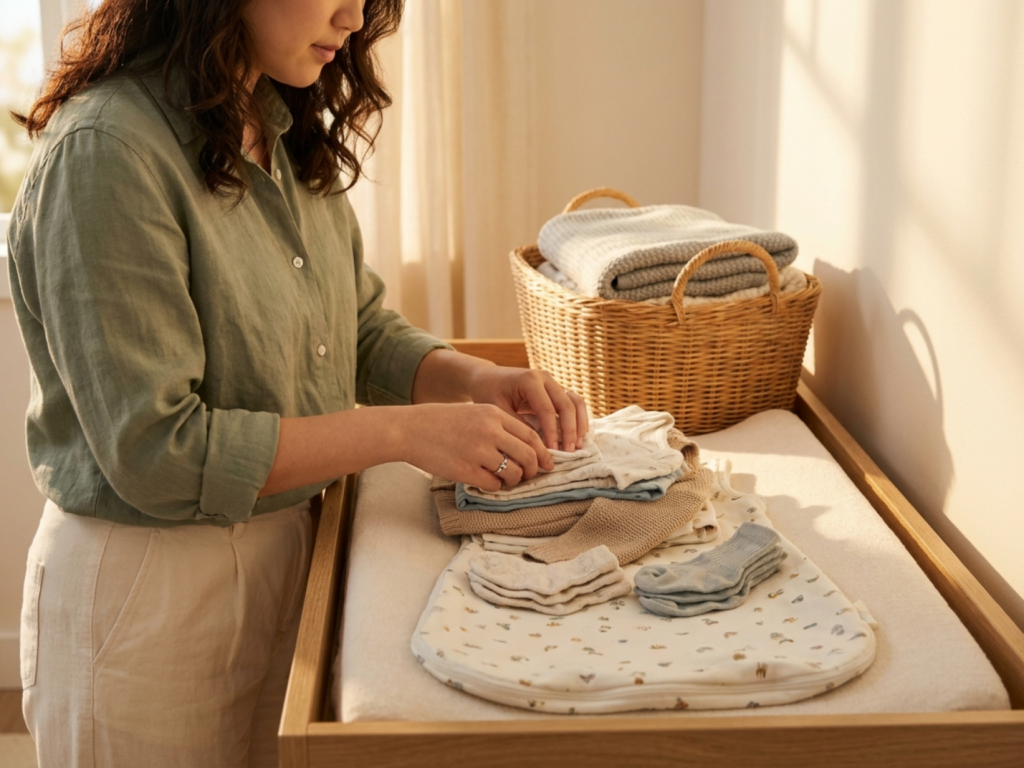
For many families, a small newborn wardrobe can work well if laundry is done every one or two days. The NHS suggests approximately 6 stretch suits, 6 vests, 2 cardigans, and weather-appropriate accessories such as a hat, mittens, and socks or bootees. Another NHS list recommends at least 6 all-in-one sleepsuits, 4 to 6 vests or bodysuits, and 2 cardigans. These figures are best understood as a starting range rather than a strict prescription.
A balanced first wardrobe might include:
- 6 to 8 short- or long-sleeved bodysuits, depending on the season
- 6 to 8 all-in-one sleepsuits or stretch suits with accessible fasteners
- 2 to 3 lightweight cardigans or sweaters
- 2 to 4 pairs of socks or soft bootees, if needed for warmth
- 1 or 2 weather-appropriate hats for outdoor use
- 2 wearable blankets or sleep sacks, if they fit correctly and are suitable for the baby’s age and sleep setting
- 1 or 2 warmer outer layers for outdoor travel, selected according to the climate
Some families need fewer clothes when they have a reliable laundry routine, while others need more when washing is difficult, the baby has frequent spit-up, or several caregivers need separate supplies. Two or three special outfits may be enjoyable, but they are not essential during the first weeks.
Why babies may need several changes each day
Newborn clothing often becomes damp or soiled for ordinary reasons. Milk dribbles can collect around the neck and chest, diapers can leak, and perspiration can occur when a baby is overdressed. A garment may also need changing if it becomes wet from bathing or if fabric rubs against a healing umbilical area or sensitive skin.
There is no universal number of daily changes. One baby may use one outfit for most of the day, while another may need three or four changes. It is reasonable to keep two complete changes within easy reach and additional clean garments in the nursery or travel bag. This reduces the need to search for clothes while holding or settling the baby.
Clothing should be changed promptly when it is wet, soiled, visibly dirty, or uncomfortable. Damp fabric can increase friction and maceration, meaning softening of the skin from prolonged moisture. Check skin folds at the neck, groin, and armpits because milk or sweat may remain there even when the outer clothing looks clean. For more detail about newborn clothing changes, consider maintaining a simple routine based on moisture, soiling, and comfort rather than a fixed timetable.
Adjust the amount for laundry and family circumstances
The number of clothes your baby needs is closely linked to how often you can wash and dry them. With daily laundry, 6 to 8 basic outfits may be sufficient. If laundry is done twice weekly, a larger supply is more practical. A useful calculation is to estimate the average number of complete changes per day, multiply by the number of days between washes, and add two emergency outfits. For example, a baby using two outfits daily between laundry days may need about 10 to 12 complete changes.
Include the time required for drying. A small wardrobe may become inadequate if clothing is washed but remains damp because of cold weather, limited indoor space, or lack of a dryer. Cotton garments can also shrink, so check care labels and avoid relying on one exact size.
Consider purchasing a limited number of newborn-size items and more garments in the next size up. Birth weight and length vary, and some babies wear newborn clothing for only a short period. Garments with adjustable fasteners, stretchy openings, and generous diaper space may remain useful for longer. Keep receipts where possible and remove tags only after confirming that the size and fit are appropriate.
Choosing clothes by season and temperature
Babies have immature thermoregulation, so they may lose or gain heat more quickly than older children. Clothing decisions should reflect the ambient temperature, wind, humidity, and activity. In warm weather, a single lightweight layer may be enough indoors. In cooler conditions, use several breathable layers so one can be removed if the baby becomes warm.
Useful breathable layers for babies include a cotton or other soft-fabric bodysuit under an all-in-one suit, with a cardigan or outer layer added for travel outdoors. Avoid assuming that cold hands or feet always mean the baby is too cold; assess the chest or back of the neck as well as the baby’s overall behavior. Sweating, flushed skin, hot skin on the trunk, damp hair, unusual irritability, or excessive sleepiness can suggest overheating. Remove a layer and reassess the environment. Seek urgent medical advice if a baby is difficult to wake, has breathing difficulty, appears seriously unwell, or has a concerning temperature.
Hats are useful outdoors in cold weather but are generally removed indoors and during sleep unless a healthcare professional specifically advises otherwise. Mittens can reduce scratching in some newborns, but they should fit securely without loose threads. Never use clothing or accessories that can cover the face or restrict breathing.
Sleepwear and safe clothing choices
Sleepwear should be simple, well-fitting, and appropriate for the room temperature. All-in-one suits, bodysuits, and correctly sized wearable blankets can be practical. The American Academy of Pediatrics includes sleepwear sets, sleep sacks, sweaters, caps, and socks or booties among useful layette items, while emphasizing practical essentials rather than extensive overbuying.
For sleep, avoid loose blankets, oversized garments, hooded clothing, scarves, necklaces, and items with cords or detachable parts. Clothing should not be tight around the neck, chest, waist, or legs, and the baby should be able to move the hips and legs freely. A sleep sack should be correctly sized so the baby cannot slip inside it, and it should not have a hood or weighted component.
Check garments for loose buttons, long threads, rough seams, and decorative features that could detach. Turn clothing inside out when examining seams and fasteners. Wash new garments before use with a fragrance-free detergent if your baby has sensitive skin or if your healthcare professional has suggested minimizing irritants. Clothing is not a substitute for safe sleep guidance; use a firm, flat, separate sleep surface and follow local infant-sleep recommendations.
What is optional and what can wait
Newborns usually spend most of their time sleeping, feeding, being held, or having diapers changed. This makes easy-care basics more useful than structured outfits. Dresses, jeans, miniature shoes, stiff trousers, collared shirts, and complicated costumes can be uncomfortable and difficult to put on, especially when a baby has limited head and trunk control.
Shoes are generally unnecessary before walking. Soft socks or bootees may provide warmth, but check them regularly because elastic can leave pressure marks and loose items can be misplaced. A small number of bibs can help protect clothing during feeds, although bibs should be removed for sleep.
Outerwear must be selected carefully for car travel. Bulky coats and snowsuits can compress during a crash and leave harness straps too loose. Follow the car-seat manufacturer’s instructions and use thin layers under the harness, adding a blanket over the secured straps if needed. Never place a thick garment between the baby and the harness without checking approved guidance.
Fitting, changing, and monitoring comfort
Fit matters more than the label. A garment is too small if it leaves persistent red marks, pulls across the diaper, restricts hip movement, or makes fastening difficult. It is too large if the neckline can move over the baby’s face, sleeves cover the hands, or the baby can slide down inside the garment. Inspect your baby during and after dressing rather than relying only on age-based sizing.
Use a safe flat changing surface and keep one hand on the baby whenever the baby is on an elevated surface. Prepare the clean outfit, diaper, and fasteners before beginning. Choose wrap-style or wide-neck garments if pulling clothing over the head is difficult. Support the head and neck according to your baby’s developmental needs, and stop if the baby becomes distressed.
Persistent rash, skin breakdown, swelling, unusual coldness, excessive warmth, or repeated discomfort should be discussed with a pediatrician, family doctor, midwife, health visitor, or other qualified healthcare professional. These signs can have many causes, and clothing changes alone may not resolve them. When evaluating possible baby overheating signs, consider the whole clinical picture and seek urgent care for severe or rapidly worsening symptoms.
Safety reminders
- Remove hats and loose accessories indoors and during sleep unless a healthcare professional advises otherwise.
- Do not use cords, drawstrings, loose decorations, or garments that can cover the baby’s face.
- Avoid bulky outerwear under car-seat harness straps.
- Change wet or soiled clothing promptly and inspect moist skin folds.
- Seek urgent medical help if the baby is difficult to wake, has breathing problems, or appears seriously unwell.
- Ask a healthcare professional for individualized advice if your baby was premature, medically complex, or has difficulty maintaining temperature.
Tools & Assistance
- Create a two-day clothing supply in a drawer or changing basket.
- Track how many complete changes your baby uses over three typical days.
- Keep a separate travel bag with two outfits, spare socks, and a weather-appropriate layer.
- Check garment fit, seams, fasteners, and care labels before first use.
- Ask a midwife, health visitor, pediatrician, or family doctor about temperature and sleepwear questions.
FAQ
How many outfits does a newborn need per day?
Many newborns use one to three outfits daily, but there is wide variation. Milk spills, diaper leaks, sweating, and skin sensitivity may increase the number.
Is six of each clothing item enough for a baby?
Six bodysuits and six all-in-one suits can be a reasonable starting point when laundry is frequent. Families who wash less often or have frequent clothing changes may need more.
Should a baby wear a hat indoors?
Usually not. Hats are commonly used outdoors in cold weather but are generally removed indoors and during sleep to reduce overheating risk, unless professional advice says otherwise.
Do babies need shoes before they walk?
No. Shoes are usually unnecessary before walking. Soft socks or bootees may be used for warmth, provided they do not leave pressure marks or create a loose-item hazard.
When should I buy larger baby clothes?
It is sensible to keep a modest newborn wardrobe and buy some items in the next size. Babies grow at different rates, so use fit and comfort rather than age labels alone.
Sources
- NHS — What you'll need for your baby
- HealthyChildren.org / American Academy of Pediatrics — Registering for Baby Clothes
- NHS — What to buy for your newborn baby - Best Start in Life
Disclaimer
This article provides general educational information and is not a diagnosis or a substitute for individualized medical advice. Consult a qualified healthcare professional for concerns about your baby’s temperature, skin, breathing, feeding, or overall condition.














Please log in to leave a comment.