
Intro
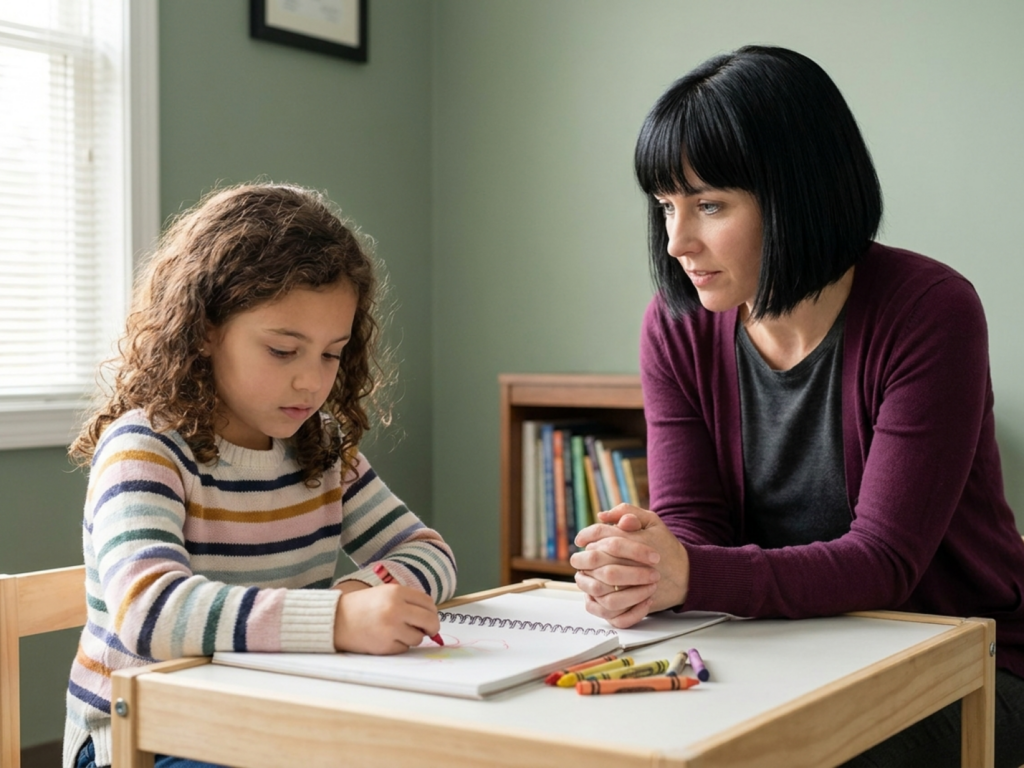
Grief is not a single emotional state, and children do not process bereavement in the same way as adults. A child’s understanding of death, language skills, attachment needs, temperament, prior experiences, and developmental stage all influence how loss is expressed. Grief may appear as sadness, but it may also emerge through play, physical complaints, irritability, regression, questions, withdrawal, or changes in behavior.
Children often move in and out of grief. They may cry intensely and then play normally minutes later, or seem unaffected before reacting weeks or months later. This fluctuation does not necessarily mean the child has forgotten the person who died. It may reflect the child’s limited capacity to sustain painful feelings while continuing ordinary developmental activities. Caregivers can provide stability by answering questions honestly, maintaining routines where possible, and seeking professional guidance when reactions are severe, persistent, or impair daily functioning.
Highlights
A child’s developmental understanding of death strongly shapes how grief is communicated.
Young children may show grief through separation distress, regression, play, sleep disruption, or physical complaints rather than sustained sadness.
School-age children often ask concrete questions and may alternate between intense emotion and ordinary play.
Adolescents may experience profound sadness, anger, guilt, isolation, risk-taking, or existential concerns while also trying to protect their independence.
Professional support is appropriate when grief causes substantial functional impairment, safety concerns, or persistent deterioration.
Why age and development matter
Children understand loss through the cognitive and emotional abilities available to them at a particular age. A very young child may recognize that a familiar person is absent without understanding that death is permanent. An older child may understand permanence but still struggle with the biological meaning of death, its causes, or the possibility that it could happen to other loved ones. Adolescents generally have more mature abstract reasoning, yet their grief can be complicated by identity formation, peer relationships, family conflict, and a growing awareness of mortality.
Development also affects communication. Infants and toddlers communicate primarily through behavior and changes in attachment. Preschool children often use repetitive questions, imaginative play, and symbolic language. School-age children may ask detailed questions and worry about practical consequences. Teenagers may discuss death directly, but they may also conceal distress from caregivers or express it through anger, withdrawal, somatic symptoms, substance use, or other risk-taking.
These patterns are general tendencies, not diagnostic rules. Children within the same age group can respond very differently depending on the closeness of the relationship, the circumstances of the death, previous losses, neurodevelopmental profile, family support, and whether the child witnessed traumatic events.
Infants and toddlers: grief through attachment and routine
Infants do not understand death as a permanent biological event, but they can detect the absence of a familiar caregiver and changes in the emotional climate around them. A bereaved infant may become more irritable, cry more, feed differently, wake frequently, or show changes in settling and physical contact. Some babies become unusually quiet or less responsive. These reactions may reflect disrupted caregiving, changes in routine, or distress in the adults who provide care.
Toddlers may search for the missing person, call for them, resist separation, or repeatedly ask when they are coming back. Because toddlers have limited concepts of time and permanence, they may expect the person to return after a short absence. They can also move rapidly between distress and play. This is a common way young children regulate overwhelming emotions rather than evidence that the loss has had no effect.
Helpful support at this stage includes predictable feeding and sleep routines, consistent caregivers, physical reassurance, and simple, accurate language. Statements such as “Grandpa died. His body stopped working, and he will not come back” are clearer than euphemisms such as “went to sleep,” which can create confusion or sleep-related fears. Repetition is often necessary. Books, photographs, and familiar rituals may support connection while adults monitor the child’s basic needs and behavior.
Preschool children: magical thinking and repeated questions
Preschool children usually recognize that death involves absence, but they may not fully understand irreversibility. They may believe the deceased person can return, particularly when adults use vague explanations. Their thinking is often concrete and may include magical or egocentric interpretations. A child may wonder whether an angry thought, misbehavior, or wish caused the death. Reassurance should directly address this possibility: the child did not cause the death, and ordinary thoughts or behavior cannot make someone die.
Grief may appear as clinginess, tantrums, aggression, disrupted toilet training, baby talk, thumb-sucking, nightmares, appetite changes, or fear of being left alone. Some children reenact illness or death in play, ask the same questions repeatedly, or seem intensely interested in bodily details. Play can be a normal form of processing, although frightening or highly repetitive play should be considered in the broader context of the child’s functioning.
Caregivers can offer short answers, invite questions, and avoid overwhelming detail. Naming emotions helps build an emotional vocabulary: “You miss your mother and feel angry that she is not here.” The child may need permission to continue playing and enjoying ordinary activities. Maintaining familiar childcare, bedtime rituals, and trusted relationships provides external regulation while the child gradually develops a more complete understanding of the loss.
School-age children: concrete understanding and practical worries
During the school years, children increasingly understand that death is permanent and happens to all living things, although their comprehension may remain uneven. They may ask whether the death was painful, what happened to the body, whether the person can still think or feel, and whether another family member will die. Children may also worry about who will pick them up, whether the family will move, or whether financial and household arrangements will change.
Emotional reactions can include sadness, anger, guilt, anxiety, shame, numbness, or relief, particularly when the relationship was difficult or the death followed prolonged illness. Behavioral signs may include declining school performance, difficulty concentrating, irritability, social withdrawal, physical complaints, sleep disturbance, or a strong need for reassurance. Some children appear highly responsible and suppress distress because they believe they must protect a grieving adult.
Adults can answer questions honestly at the child’s developmental level and acknowledge uncertainty when appropriate. Concrete explanations about what will remain the same and what will change are useful. Teachers and school counselors may help monitor concentration, attendance, peer relationships, and behavior. Children benefit from choices that restore a sense of control, such as deciding whether to attend a memorial, write a letter, create artwork, or keep a meaningful object. Persistent developmental regression, major academic decline, or inability to participate in normal activities warrants discussion with a pediatrician or qualified mental health professional.
Adolescents: complex emotions, privacy, and risk
Adolescents often understand the permanence and biological reality of death, and they may reflect on moral, spiritual, existential, or identity-related questions. They can grieve the person who died while also grieving the future they expected, changes in family roles, or a reduced sense of safety. A teenager may feel sadness, anger, guilt, helplessness, relief, resentment, or emotional numbness. Conflicting emotions do not invalidate the relationship or indicate a failure to grieve correctly.
Teenagers may seek privacy and rely heavily on peers, online communities, music, writing, or physical activity. Some communicate openly; others appear irritable, detached, sarcastic, or unusually self-sufficient. Absences from school, loss of interest, sleep and appetite changes, panic-like distress, self-criticism, substance use, unsafe driving, sexual risk-taking, self-harm, or suicidal thoughts in adolescents require prompt attention. Not every behavioral change is caused by grief, and grief can coexist with depression, anxiety, trauma-related symptoms, or substance-related problems.
Caregivers should respect increasing autonomy while remaining actively available. Direct questions about safety do not implant suicidal ideas; they can clarify risk and open a path to help. Adults should ask about thoughts of self-harm or suicide when warning signs are present, listen without arguing, and arrange urgent professional support when needed. A clinician can assess the full context, including mood, trauma exposure, sleep, substance use, functioning, and protective relationships. A discussion of school refusal and anxiety may also be relevant when grief is accompanied by persistent avoidance of school or social settings.
Grief is often intermittent and may return
Children commonly experience grief in manageable periods rather than as a continuous emotional state. They may cry during a funeral, then play, eat, or talk about an unrelated subject. This oscillation can be adaptive: attention shifts help a developing nervous system regulate intense affect. Reactions may also reappear at birthdays, holidays, school milestones, anniversaries, or developmental transitions when the child gains new insight into what the loss means.
Caregivers can acknowledge these moments without demanding a particular emotional response. An older child may understand a parent’s death differently at age 10 than at age 15. A teenager may revisit questions about the deceased person’s illness, family history, or the circumstances of the death as abstract reasoning develops. Continuing bonds, such as telling stories, observing cultural rituals, or marking important dates, can coexist with healthy adaptation.
Support should be tailored to the child rather than based solely on age. Consider language ability, autism or intellectual disability, sensory needs, cultural and religious beliefs, family structure, and the child’s relationship with the deceased. Grief after a sudden, violent, stigmatized, or traumatic death may require specialized assessment. Caregivers should also attend to their own support needs, because a child’s recovery is influenced by the availability of emotionally responsive adults.
When to seek professional help
There is no universal timetable for grieving, and intense feelings can be expected after a major loss. Professional assessment becomes especially important when a child’s distress is persistent, escalating, or substantially interferes with development, relationships, sleep, eating, school attendance, or safety. A pediatrician, child psychologist, child psychiatrist, social worker, school counselor, or grief specialist can help distinguish expected grief from depression, anxiety, post-traumatic stress, complicated bereavement, or another condition requiring targeted care.
Seek urgent help when a child says they want to die, describes a plan or intent to self-harm, attempts suicide, cannot be safely supervised, experiences severe confusion or psychotic symptoms, or is exposed to ongoing violence or abuse. Immediate local emergency services or a crisis service may be necessary. For less urgent concerns, keep a brief record of changes in mood, behavior, sleep, appetite, school functioning, and safety statements to share with a clinician.
Assessment should be compassionate and developmentally informed. It may involve speaking with the child and caregivers separately, reviewing the circumstances of the death, and coordinating with school or community supports. Treatment decisions belong with qualified professionals and depend on the child’s presentation, preferences, family context, and available services. Caregivers do not need to wait until distress becomes extreme before requesting guidance.
Warning signs requiring prompt attention
- Statements about wanting to die, self-harm, or joining the deceased person
- A suicide plan, suicide attempt, or inability to maintain immediate safety
- Persistent inability to sleep, eat, attend school, or perform usual activities
- Severe withdrawal, escalating aggression, substance use, or dangerous risk-taking
- Ongoing traumatic exposure, abuse, or frightening intrusive memories
- Loss of previously acquired skills or rapidly worsening behavior
Tools & Assistance
- Use simple, truthful language about death and invite repeated questions.
- Maintain predictable routines for sleep, meals, school, and caregiving.
- Coordinate observations with pediatricians, teachers, school counselors, and grief specialists.
- Offer age-appropriate choices about rituals, remembrance, and participation in services.
- Create a safety plan with a qualified professional when self-harm or suicide risk is present.
FAQ
Is it normal for a grieving child to play and laugh?
Yes. Children often shift between grief and ordinary play because they can tolerate painful feelings for only limited periods. Play and laughter do not mean the child is unaffected or has forgotten the person who died.
Should children attend a funeral or memorial service?
There is no single answer. Explain what will happen in concrete terms, offer the child a choice when possible, and provide a trusted adult who can leave with them. Cultural and family practices should be respected while prioritizing the child’s understanding and safety.
How can adults talk about death without frightening a child?
Use accurate, brief language and answer the question that was asked. Avoid euphemisms that may create confusion, reassure the child that they did not cause the death, and explain what routines and caregivers will remain stable.
When does grief become a mental health concern?
Grief is a mental health concern when distress is severe, worsening, persistent, or causes meaningful impairment in safety, relationships, sleep, eating, school, or daily functioning. A qualified clinician can assess the child in context.
What should I do if an adolescent mentions suicide?
Take the statement seriously, ask directly about current thoughts, intent, and access to means, remain with the adolescent, and seek urgent professional or emergency help according to local services. Do not leave the young person alone when immediate risk is suspected.
Sources
- National Cancer Institute / NCBI Bookshelf — Grief, Bereavement, and Loss (PDQ®)
- MedlinePlus — Children and grief - Medical Encyclopedia
- PubMed Central — Developmental Manifestations of Grief in Children and Adolescents: Caregivers as Key Grief Facilitators
Disclaimer
This article provides general educational information and is not a diagnosis or a substitute for individualized medical or mental health advice. Consult a qualified healthcare professional for concerns about a child’s grief, functioning, or safety.















Please log in to leave a comment.