
Intro
Sleep often becomes harder when a child is away from home. A hotel room, a relative’s house, or a rental apartment can change the signals a child uses to wind down: the light is different, sounds are unfamiliar, the bed feels strange, and caregivers may feel less settled too. None of that means anything is “wrong.” It usually means the child’s sleep system is adapting to new cues.
The goal is not to create a perfect home clone. It is to make the new space feel predictable, safe, and boring enough for sleep to happen. With a few practical steps, many families can protect sleep while still enjoying travel.
Highlights
Children often sleep better when travel preserves the same cues they associate with bedtime at home.
A familiar bedtime routine can reduce arousal and help the brain shift toward sleep.
Hotel-room adjustments like darkness, white noise, and safe placement of the sleep space can make a major difference.
Night waking is common in unfamiliar places and usually improves when caregivers respond calmly and consistently.
If travel seems to amplify anxiety, persistent sleep-onset associations may need a gentler long-term plan.
Why hotels and unfamiliar places change sleep
Children rely heavily on environmental cues to organize sleep. In a familiar bedroom, the brain learns that dim light, a certain sequence of words, a favorite blanket, and a predictable time of day all mean “sleep is coming.” In a hotel, those cues may disappear or conflict with each other. A hallway light under the door, a louder air conditioner, a new mattress, or even the smell of the room can keep the brain more alert than it would be at home.
This is one reason some children take longer to fall asleep on the first night or two of travel. They may not be overexcited in a behavioral sense; they may simply be less able to downshift arousal because the room feels novel. That matters because sleep onset depends on both sleep pressure and a relatively calm nervous system. If the child is younger, separation from the caregiver can add another layer of vigilance. Older children may seem “too big” to be affected, but they can still be sensitive to changes in routine and surroundings.
Understanding this can lower frustration. The first few nights are often about adaptation, not perfection.
Prepare before you leave home
If possible, start with the child’s usual bedtime routine and build travel around it rather than replacing it. The more familiar the sequence, the easier it is for the child to recognize the path toward sleep. That can mean bath, pajamas, brush teeth, story, short cuddle, lights out, in roughly the same order as home.
Pack a few items that carry strong sleep associations: a favorite toy, blanket, sleeping bag, or pillow. Families sometimes underestimate how much a small object can help a child orient emotionally. Familiar scent and texture can be grounding in a strange room.
For some children, travel also exposes existing sleep-onset associations, such as needing a parent present until fully asleep. That is not inherently a problem, but it can be useful to notice whether the child is relying on conditions that are hard to reproduce on the road. If your long-term goal includes more flexibility, travel can be a gentle opportunity to practice independent sleep skills in small steps rather than trying to change everything at once.
If your child has significant worry, a pattern of caregiver accommodation of anxiety can unintentionally keep the cycle going. In that case, consistency and calm reassurance are often more helpful than repeated negotiation.
Make the hotel room sleep-friendly
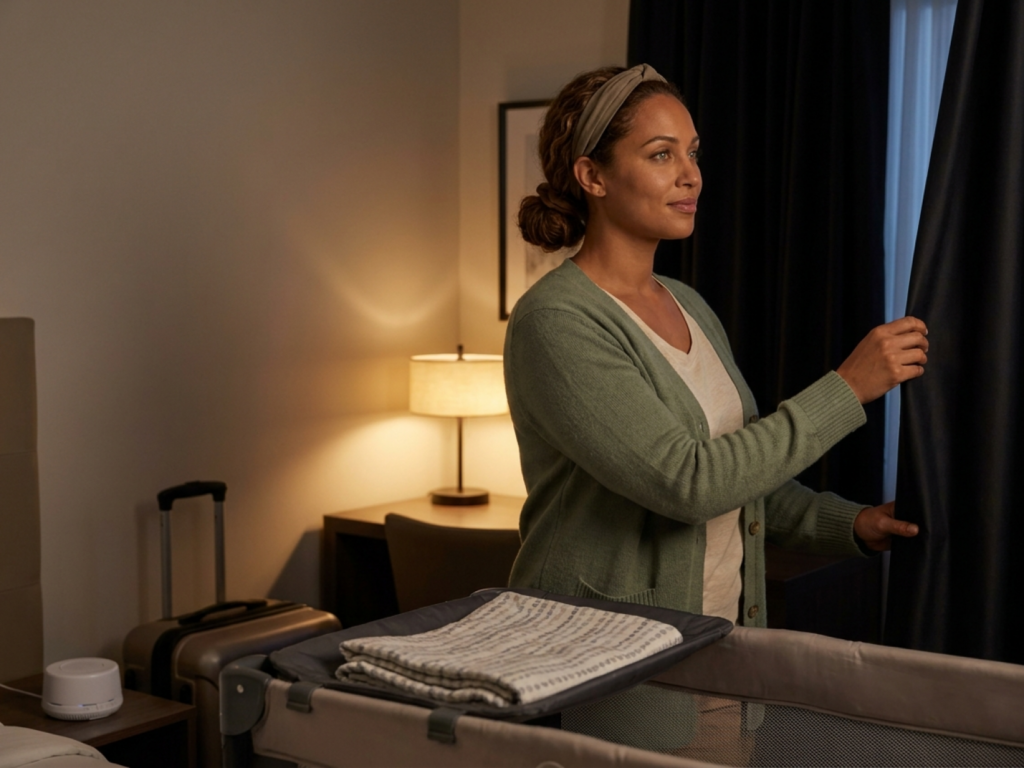
Think safety first. Keep the sleep area away from obvious hazards such as windows, heaters, dangling cords, lamps that can be pulled over, and furniture a child could climb. If a crib or portable bed is being used, make sure it is stable and appropriate for the child’s age and developmental stage. If you are unsure about safe sleeping arrangements, ask your pediatrician for guidance before traveling.
Then reduce stimulation. A darker room often helps children settle, because low light supports the body’s nighttime cues. Blackout covers, curtains, or even a carefully placed towel can help, as long as they are used safely and do not create a hazard. Some families also use white noise to mask hallway sounds, traffic, or the hum of an unfamiliar air conditioner. Keep the volume modest and the device well away from the child’s head.
Temperature matters too. A room that is too warm can fragment sleep and make settling harder. If the child uses a sleeping bag or a familiar sleep sack at home, that can sometimes recreate the same sensory environment in a temporary room. The goal is not to eliminate every new sensation, only to remove the most disruptive ones.
Protect the bedtime routine, not perfection
Travel works better when the routine stays recognizable, even if the clock time shifts. A consistent pre-sleep sequence helps the child’s brain predict what happens next. Keep the language simple and repetitive: “We will wash, put on pajamas, read one story, turn off the light, and rest.” That predictability can be soothing in a place that otherwise feels unstable.
Try to preserve the pieces that matter most. For some families, that is a story in bed. For others, it is a song, a prayer, or a few minutes of quiet talk. You do not have to preserve every detail. A smaller, stable version of the home routine is often enough.
Be mindful of stimulation in the hour before bed. Exciting late dinners, screen use, or noisy room activity can keep arousal elevated. If the child is overtired, bedtime may be harder rather than easier, because overtiredness can increase irritability and resistance. A calm, predictable evening usually works better than trying to “tire them out” right before bed.
Sleep in travel settings is often uneven. A good night followed by a difficult one is still normal. The aim is a workable pattern, not flawless behavior.
Respond to night waking and reassurance seeking calmly
Night waking is common in unfamiliar places. When children wake in a hotel room, they may briefly forget where they are. A low, steady response helps them reorient without fully waking the body. Keep lights dim, keep your voice quiet, and use the same short phrase each time: “You are safe. It is still sleep time.” That kind of response reduces the chance that the wake-up becomes a long, stimulating event.
Some children also show more nighttime reassurance seeking when away from home. They may call out repeatedly, ask where a parent is, or need extra checking. Brief reassurance is appropriate, but repeated prolonged engagement can teach the child that wakefulness is the best way to get more attention. A balanced response is usually most helpful: close enough to feel safe, not so extended that it becomes a new bedtime ritual.
For children with high anxiety, travel may magnify distress. In those cases, consistency matters more than convincing explanations. If a child is checking repeatedly because of fear, calm repetition and simple orientation are usually better than long conversations. If anxiety is severe or persistent, professional support can help families plan a more tailored approach.
Manage jet lag, naps, and the return home
If travel crosses time zones, the child’s internal clock may need time to adjust. Bright morning light, daytime activity, regular meals, and a stable bedtime routine can all help the circadian rhythm realign. Short naps may be useful for an overtired child, but very long or late naps can make bedtime harder. Think in terms of preserving a sleep window, not forcing the child to stay awake at any cost.
Even without jet lag, travel schedules often create irregular sleep pressure. A child who slept poorly one night may need a calmer day rather than a dramatic push to “make up for it.” Gentle structure is usually more effective than strictness. When possible, return to the home schedule gradually but firmly, especially in the first few nights after travel.
If the child’s sleep gets worse every time travel happens, that can be a clue to look deeper. Some children are simply reactive to novelty. Others may have underlying insomnia, anxiety, or another sleep issue that becomes more visible away from home. If sleep disruption persists beyond the travel period, or if there are concerns about snoring, pauses in breathing, restless sleep, or major daytime impairment, speak with a pediatrician or sleep professional.
When to get medical advice
- Snoring loudly, gasping, or pauses in breathing during sleep need medical review.
- Severe bedtime distress or panic that repeatedly prevents sleep deserves professional support.
- Persistent sleep problems after travel may reflect an underlying sleep disorder or anxiety issue.
- Do not ignore marked daytime sleepiness, irritability, or school-day impairment.
- Ask a clinician before changing sleep arrangements if your child has medical or developmental needs.
Tools & Assistance
- Portable blackout cover or travel curtain
- White-noise machine or safe-volume app
- Favorite blanket, toy, or sleeping bag from home
- Simple bedtime checklist for travel nights
- Pediatrician or pediatric sleep specialist if problems persist
FAQ
Should I keep my child’s bedtime exactly the same in a hotel?
Usually the routine matters more than the exact clock time. Try to keep the same sequence and sleep cues, then adjust timing gently if travel or time zones require it.
What if my child only sleeps when I lie down next to them?
That pattern may be one of the sleep-onset associations the child relies on. During travel, you can keep reassurance calm and consistent while gradually encouraging more flexibility if that is an appropriate long-term goal.
Is it normal for my child to wake more often on the first night away?
Yes. Unfamiliar places often increase night waking and reassurance seeking. Most children improve as the environment becomes familiar and the routine stays consistent.
Do white noise and blackout covers really help?
They often do. They reduce competing sensory input and make the hotel room feel more like the child’s usual sleep environment.
Sources
- Baby Sleep Science — Travel Survival Guide: Prep your baby or toddler to sleep in an unfamiliar environment
- Huckleberry Care — Traveling with kids? How to keep your sleep routine on track
- Raising Children Network — Family holidays, kids' sleep & jet lag
Disclaimer
This article is for general information only and does not replace individualized medical advice, diagnosis, or treatment. If your child has persistent sleep problems, breathing concerns, or severe distress, consult a pediatrician or qualified sleep professional.
















Please log in to leave a comment.