
Intro
Starting preschool is a meaningful developmental step for a child and a major emotional milestone for the family. Even when preschool is a positive, well-chosen environment, the transition can activate normal separation distress, uncertainty, sleep disruption, and behavioral regression.
With preparation, predictable routines, and calm adult responses, most children gradually build trust in the preschool setting. The goal is not to eliminate every tear, but to help the child experience separation as safe, temporary, and supported.
Highlights
A gradual, predictable preparation period can reduce anxiety before the first day of preschool.
Short, loving, consistent goodbyes are usually more helpful than sneaking out or prolonging separation.
Clinginess, crying, refusal to join activities, or temporary regression can be normal during early adjustment.
Sleep, meals, toileting, and sensory needs strongly influence how a child copes with preschool demands.
Persistent distress, developmental concerns, or safety worries should be discussed with the child’s pediatrician or qualified early childhood professional.
Understand the transition as a developmental adjustment
Preschool asks a young child to manage several demanding tasks at once: separating from familiar caregivers, trusting new adults, navigating peers, following group routines, tolerating noise, waiting, sharing attention, and using emerging communication skills. For many children, this is the first sustained experience of functioning in a semi-structured social environment outside the family.
From a developmental perspective, separation distress is not automatically a sign that something is wrong. It reflects attachment, immature executive function, and a still-developing capacity for emotional regulation. The prefrontal networks involved in impulse control, flexible thinking, and time perception are early in maturation. A child may understand, in words, that a parent will return, but still feel physiologic panic when the parent leaves.
Parents often feel distressed when a child cries at drop-off, and that reaction is understandable. However, children are highly sensitive to adult facial expression, tone of voice, and body tension. A calm caregiver response helps communicate safety through co-regulation: the adult nervous system supports the child’s nervous system until the child can recover independently. Helping preschoolers express emotions in simple language, such as “You feel sad because goodbye is hard,” can reduce shame and build emotional literacy.
It is also useful to remember that adjustment is not linear. A child may do well for several days and then cry again after a weekend, illness, holiday break, or classroom change. This pattern does not necessarily indicate failure. It often means the child is still integrating the new routine.
Prepare several weeks before the first day
Preparation works best when it is gentle, repeated, and concrete. Begin talking about preschool a few weeks before it starts. Use simple, confident language: “You will go to preschool, play, have snack, hear stories, and I will come back after rest time.” Avoid overexplaining or asking repeated anxious questions such as “Are you scared?” because this can unintentionally signal that preschool is dangerous.
Read picture books about school, teachers, classmates, and goodbyes. Repetition allows children to rehearse the sequence emotionally before it happens. You can also create a homemade book with photos or drawings of the route to school, the classroom, the cubby, the teacher, and the pickup routine. For medically literate families, think of this as anticipatory guidance combined with exposure to predictable cues.
If the school allows it, visit the classroom with your child before the first day. Explore the bathroom, cubby area, playground, and entry door. Meeting the teacher in a low-pressure context can help the child encode that adult as familiar. Some families arrange a play date with a future classmate, which can reduce the social novelty of the first week.
Gradually introduce classroom-like activities at home without turning them into formal lessons. Practice hanging up a backpack, opening a lunch container, washing hands, sitting for a brief story, cleaning up toys, and asking for help. Preschool learning skills development is strongest when these tasks are embedded in play and daily routine rather than pressured performance.
Build routines that protect sleep, nutrition, and regulation
A child’s capacity to separate is strongly affected by physiologic regulation. Sleep debt, hunger, constipation, illness, and sensory overload can lower the threshold for meltdowns. Begin the school bedtime and wake-up schedule about two weeks before preschool starts, rather than making an abrupt change the night before. A consistent early bedtime, predictable morning sequence, and unhurried breakfast can significantly improve the drop-off experience.
Preschool daily transitions and consistency matter because young children rely on external structure. A visual schedule with pictures can show the sequence: wake up, get dressed, eat breakfast, brush teeth, backpack, school, goodbye, play, snack, pickup. The schedule does not need to be elaborate; it simply makes time visible.
Pack the backpack together when possible. Let your child choose a familiar comfort item if the school permits it, such as a small stuffed animal, family photo, or soft fabric square. This object can act as a transitional object, helping bridge home and school. If your child eats lunch or snack at school, include familiar foods at first. Novel foods can be introduced later, once the child feels safer.
Keep mornings emotionally low-demand. Avoid rushing, bargaining, or adding extra decisions. Clothing should be comfortable and toileting should be practiced without pressure. If your child has food allergies, asthma, diabetes, seizure history, developmental delays, or other health needs, coordinate early with the preschool and healthcare team so care plans, medications, and emergency procedures are clear before attendance begins.
Plan the first morning and the goodbye
The first morning should be structured but warm. Some programs allow a parent to stay briefly, often 15 to 30 minutes, while the child explores the room, meets the teacher, and begins an activity. If this is the school’s policy, use the time to help your child orient to the space rather than to hover anxiously. Point out concrete anchors: “Here is your cubby. Here is the art table. Your teacher is right here.”
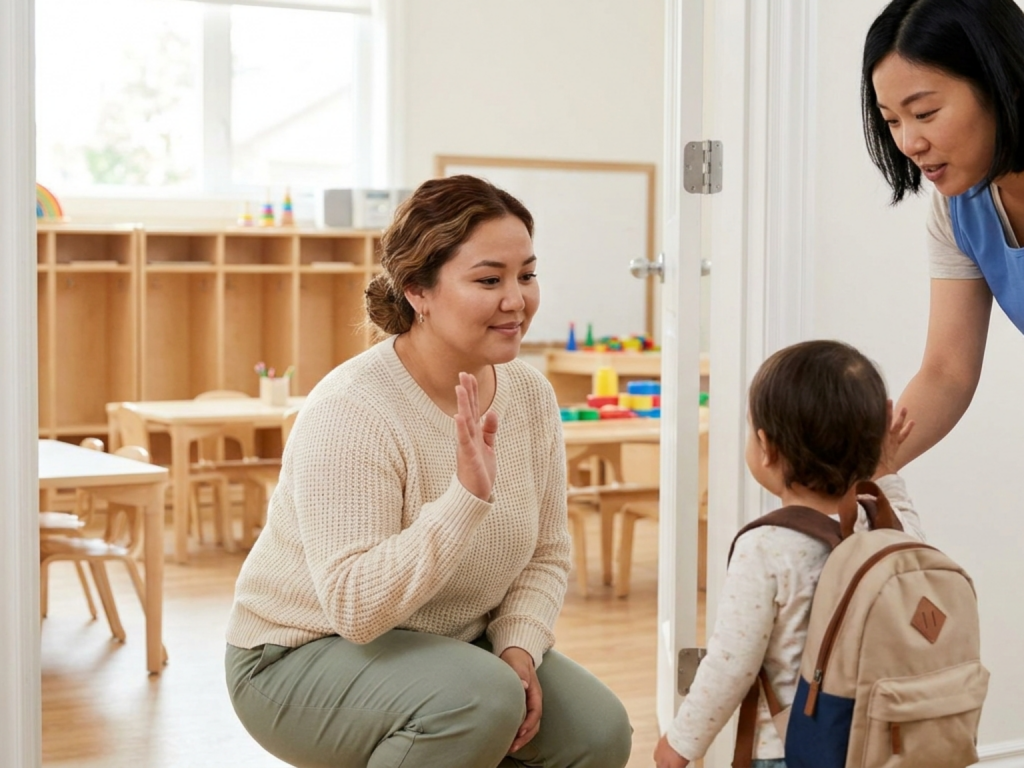
When it is time to leave, use a goodbye routine that is loving, brief, and consistent. For example: hug, kiss, a phrase such as “I love you. I will come back after snack and playground,” then leave. Sneaking out may seem easier in the moment, but it can undermine trust and intensify future separation anxiety because the child learns that a caregiver may disappear without warning.
Prolonged negotiation usually increases distress. If a child cries, the most supportive response is calm confidence: “Goodbye is hard. Your teacher will help you, and I will come back.” Then allow the teacher to take over. Experienced preschool staff are accustomed to this transition and often report that children settle within minutes once the goodbye is complete.
Preschool transition strategies should be coordinated with the teacher. Ask how the classroom handles separation, where children can keep comfort items, and how the school communicates after drop-off. Some parents benefit from a brief message later in the morning confirming that the child settled. This reassurance can help parents regulate their own emotions, which in turn supports the child over time.
Respond to tears, refusal, and regression with calm support
Crying, clinging, saying “I don’t want to go,” refusing to participate, or becoming quiet in class can be normal during the early weeks. Some children show distress at home instead: more tantrums, sleep disruption, appetite changes, toileting accidents, thumb sucking, baby talk, or increased need for physical closeness. These behaviors often represent stress responses rather than deliberate misbehavior.
Validate the feeling while holding the boundary. A helpful formula is: name the emotion, state the plan, offer connection. “You feel worried about preschool. We are still going. I will walk you to your teacher, and I will come back after lunch.” This approach avoids both dismissal and overaccommodation.
After school, avoid interrogating the child with many questions. Young children may not be able to summarize their day under pressure. Instead, offer food, rest, outdoor play, or quiet connection. Later, use specific prompts: “Did you play inside or outside?” “Did you hear a story?” “Who helped you at snack?” Play can also reveal feelings. A child may act out goodbye scenes with dolls or animals; joining that play gently can help the child process the experience.
Preschool social skills 3 to 5 years vary widely. Some children enter play quickly; others observe for weeks before participating. Shy or slow-to-warm children may need more time, not more pressure. If a child is aggressive, withdrawn, persistently inconsolable, or unable to eat, sleep, or participate after a reasonable adjustment period, discuss patterns with the teacher and consider guidance from the pediatrician, a developmental specialist, or an early childhood mental health consultant.
Partner with teachers and monitor when extra help is needed
A strong parent-teacher partnership is protective. Share practical information: what comforts your child, words used for toileting, nap habits, allergies, sensory sensitivities, preferred activities, and any relevant family changes. Teachers do not need private family details unless they affect the child’s care, but context can help them interpret behavior accurately.
Ask for observations rather than only global judgments. Useful questions include: How long does my child cry after I leave? What helps them settle? Are they eating and drinking? Are they using the bathroom? Do they interact with peers? Do they respond to teacher comfort? This information distinguishes brief separation distress from broader difficulty adapting.
Some children need individualized supports. Examples include a visual goodbye card, a predictable classroom job on arrival, a quiet sensory corner, a shorter initial schedule if feasible, or a specific teacher greeting at the door. These supports are not “giving in”; they are scaffolding for an immature regulatory system.
Seek professional input if distress is severe, escalating, or associated with concerning signs such as panic-like symptoms, persistent vomiting, marked sleep deterioration, loss of previously established skills, self-injury, frequent aggression, developmental regression, or refusal that prevents attendance over time. Also consult a healthcare professional if medical issues such as chronic abdominal pain, headaches, constipation, poor sleep, hearing problems, or neurodevelopmental differences may be contributing. The aim is not to label a child prematurely, but to identify supports that make preschool safe and developmentally appropriate.
When to be cautious
- Do not sneak away at drop-off; it can reduce trust and worsen later separations.
- Consult a pediatrician if distress is severe, persistent, or accompanied by physical symptoms.
- Tell the preschool in advance about allergies, medications, seizures, asthma, or other health needs.
- Seek help promptly for self-injury, repeated aggression, developmental regression, or unsafe behavior.
- Avoid shaming, threats, or punishment for crying during separation.
Tools & Assistance
- Create a simple photo or picture schedule of the preschool day.
- Visit the classroom and meet the teacher before the first day if possible.
- Practice opening lunch containers, using the bathroom, and asking for help.
- Pack a permitted comfort object, such as a family photo or small stuffed animal.
- Coordinate with the pediatrician, preschool director, or early childhood specialist when concerns persist.
FAQ
How long does preschool adjustment usually take?
Many children improve within days to a few weeks, but adjustment varies by temperament, prior separation experience, health, and classroom fit.
Should I stay until my child stops crying?
Usually a brief, predictable goodbye is better than a prolonged departure. Follow the school’s policy and coordinate with the teacher.
Is it normal for my child to regress after starting preschool?
Temporary toileting accidents, clinginess, sleep changes, or baby talk can occur during stress. If regression persists or is severe, consult a pediatrician.
Can my child bring a comfort object?
Many schools allow a small stuffed animal, family photo, or similar item. Ask the teacher about safety and classroom rules.
What if my child refuses to participate in class?
Observation at first can be normal. Ask the teacher how long it lasts, what helps, and whether the child is gradually engaging.
Sources
- Nemours KidsHealth — Helping Your Child Adjust to Preschool
- National Association for the Education of Young Children — 13 Tips for Starting Preschool
- Zero to Three — Preschool Prep: Helping Toddlers Prepare for Preschool
Disclaimer
This article is for informational purposes only and does not replace medical, developmental, or mental health advice. Consult a qualified healthcare professional for concerns about your child’s symptoms, behavior, or development.
















Please log in to leave a comment.