
Intro
Heartburn during pregnancy is common, and it can be frustrating when ordinary meals suddenly feel uncomfortable. A burning sensation behind the breastbone, sour regurgitation, or a feeling that food is “coming back up” is often driven by reflux, which is easier to notice when pregnancy hormones and pressure from the growing uterus make the digestive tract less forgiving.
The good news is that food choices can often make symptoms more manageable. While diet is not a cure, many pregnant people find that a calmer eating pattern, lower-fat meals, and fewer common trigger foods reduce the frequency and intensity of heartburn.
Highlights
Heartburn-friendly eating in pregnancy usually means choosing lower-acid, lower-fat, and easier-to-digest foods.
Whole grains, vegetables, lean proteins, low-fat dairy, and watery foods are commonly better tolerated.
Chocolate, peppermint, high-fat dairy, tomatoes, citrus, coffee, carbonated drinks, and alcohol often worsen reflux.
Triggers are individual, so a food and symptom diary can be more useful than a rigid one-size-fits-all list.
Persistent, severe, or atypical symptoms deserve review by a prenatal or gastroenterology clinician.
Why reflux can intensify during pregnancy
Pregnancy changes digestion in several ways, and reflux is one of the most common consequences. Progesterone can relax smooth muscle, including the lower esophageal sphincter, which normally helps keep stomach contents where they belong. As pregnancy progresses, the enlarging uterus also increases intra-abdominal pressure, making upward movement of gastric contents more likely.
That means the foods that were harmless before pregnancy may become noticeable triggers now. Fatty meals, large portions, and highly acidic foods can be more difficult to tolerate because they may slow gastric emptying or increase irritation when reflux occurs. For many people, the aim is not to eliminate every possible trigger at once, but to reduce the overall burden on the digestive system.
If you are looking for a broader discussion of acid reflux in pregnancy, it helps to remember that food is only one part of management. Meal timing, posture after eating, and individual sensitivity all influence symptoms, but the food pattern is often the most practical place to start.
Heartburn-friendly foods to choose first
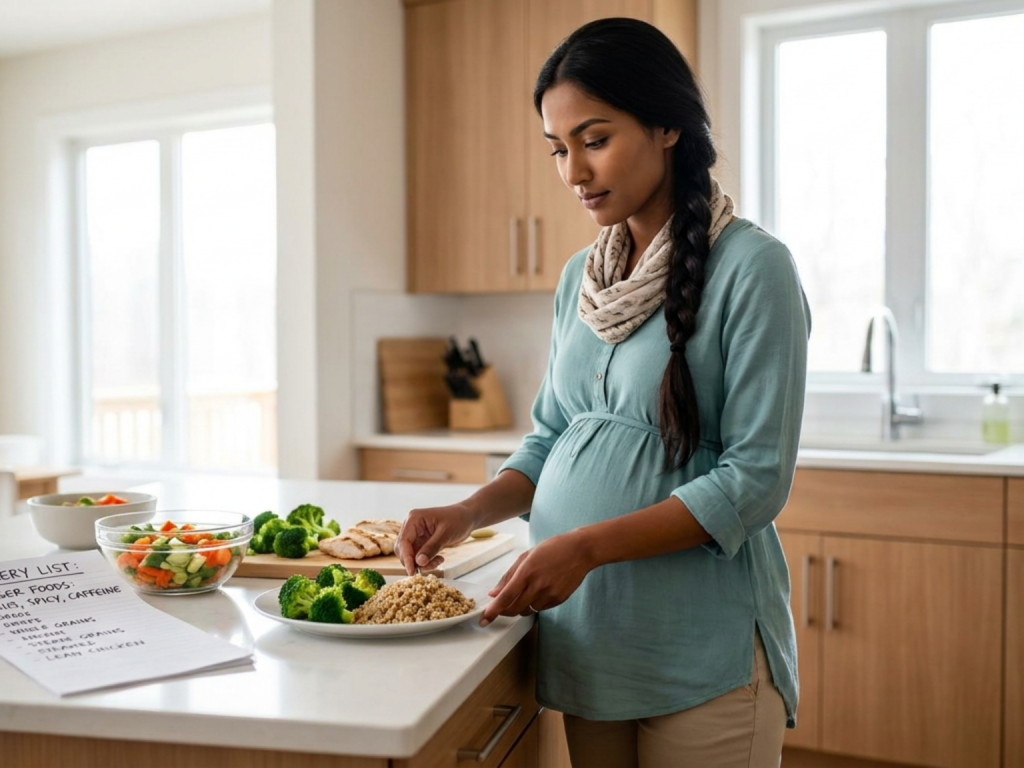
When reflux is active, it is often reasonable to favor foods that are bland, less acidic, and lower in fat. Johns Hopkins Medicine and Cleveland Clinic both emphasize whole grains, fruits, vegetables, and other gentle options as common starting points. Wake Gastroenterology also highlights low-fat dairy and lean proteins as part of a reflux-aware pattern.
In practice, this usually means building meals around:
- Whole grains, such as breads, cereals, pasta, or rice made with less added fat
- Vegetables, especially non-acidic options that are cooked or easy to digest
- Lean proteins, such as skinless poultry, fish, eggs, tofu, or beans if tolerated
- Low-fat dairy choices, when dairy is part of your usual diet and does not worsen symptoms
- Watery foods and lighter preparations that are less likely to sit heavily in the stomach
Pregnancy can also bring nausea, smell sensitivity, and inconsistent appetite, so the best choice is often the food that is both gentle and nutritionally useful. If a food is nutritious but reliably triggers symptoms, it may still be better to postpone it and revisit it later, rather than force yourself to eat through discomfort.
Foods and drinks that commonly worsen reflux
Several foods are repeatedly identified in gastroenterology guidance as common heartburn triggers. These include chocolate, peppermint or mint, high-fat dairy, tomatoes, citrus, coffee, carbonated beverages, and alcohol. The reason varies by item: some may relax the lower esophageal sphincter, others may increase gastric distension, and acidic foods can feel more irritating when reflux occurs.
It is useful to think in patterns rather than absolutes. For example, one person may tolerate a small amount of tomato in a cooked dish but not a full tomato-based meal. Another may do fine with a weak cup of coffee in the morning but notice reflux later in the day. Carbonated drinks can be especially bothersome because gas increases pressure in the stomach, which may encourage reflux.
During pregnancy, alcohol should already be avoided for fetal safety, and from a reflux perspective it is also a common aggravator. If you are trying to reduce symptoms, the most efficient approach is often to remove the most consistently implicated triggers first, then assess whether your symptoms improve before changing everything else.
How to build meals and snacks that are easier to tolerate
Food texture, portion size, and timing matter almost as much as the ingredient list. Smaller, more frequent meals usually create less gastric pressure than large meals, which can help limit reflux episodes. This is particularly relevant in pregnancy, when a full stomach can feel uncomfortable even before heartburn appears.
A practical pattern is to pair a source of protein with a starchy, whole-grain base and a vegetable or other low-acid item. For example, a meal built around lean protein and whole grains is often easier to tolerate than a high-fat, heavily spiced, or tomato-based dish. Low-fat dairy, if it suits you, can be included as part of a balanced snack or meal rather than used in rich, creamy preparations.
It also helps to eat slowly and notice whether certain preparation methods are better tolerated. Baked, steamed, boiled, or lightly cooked foods are often preferable to fried foods. If you notice that discomfort rises when you eat quickly or when you arrive at a meal overly hungry, it may help to plan snacks earlier in the day so that you do not need to “catch up” with a large plate later.
Protecting nutrition while avoiding trigger foods
Pregnancy brings increased nutritional needs, so an overly restrictive reflux diet can backfire if it leaves you undernourished or unable to eat enough. The goal is not a perfect elimination plan; it is a sustainable pattern that reduces symptoms while still supporting maternal and fetal nutrition.
If dairy causes symptoms, it may be worth discussing other sources of calcium and protein with a clinician or dietitian rather than simply cutting dairy out without a replacement plan. Likewise, if many vegetables trigger symptoms only when heavily seasoned, a gentler preparation may preserve nutrition without provoking heartburn. People with morning sickness, food aversions, or gestational diabetes may need a more individualized approach so that reflux management does not conflict with other pregnancy goals.
Keeping a brief record can be very helpful: what you ate, how much, when you ate, and what symptoms followed. Over time, this makes it easier to identify whether the problem is the food itself, the portion size, the meal timing, or the combination. That pattern is often more clinically useful than a long list of foods to avoid.
For many patients, identifying food triggers for pregnancy heartburn becomes a process of careful observation rather than strict restriction. That approach tends to be kinder, more realistic, and easier to maintain.
When to ask for medical review
Diet changes are helpful for many people, but they are not enough for everyone. If heartburn becomes severe, frequent, or disruptive to sleep or eating, it is reasonable to speak with your obstetric clinician. Persistent reflux can sometimes be managed with additional strategies that are safe in pregnancy, but those decisions belong in a conversation with a healthcare professional who knows your history.
Medical review is especially important if symptoms feel different from your usual heartburn. Chest pain, trouble swallowing, vomiting, black stools, weight loss, dehydration, or an inability to keep food down should not be assumed to be “just reflux.” New or worsening upper abdominal pain in pregnancy also deserves attention, because not all discomfort in that area is caused by acid reflux.
If you are already avoiding common food triggers and still struggling, the next step is not usually stricter food elimination. Instead, it is a broader assessment of the pattern, including whether reflux is being worsened by meal timing, constipation, or another gastrointestinal issue. A clinician can help you sort out what is expected, what is modifiable, and what needs treatment.
Seek prompt medical advice if you notice:
- Chest pain that is severe, new, or not clearly related to meals
- Trouble swallowing, food sticking, or painful swallowing
- Vomiting blood, black stools, or signs of gastrointestinal bleeding
- Weight loss, dehydration, or inability to keep fluids down
- Upper abdominal pain that is persistent, worsening, or unlike your usual heartburn
Tools & Assistance
- Keep a simple food-and-symptom diary for one to two weeks.
- Bring a list of suspected trigger foods to your prenatal visit.
- Ask whether a referral to a registered dietitian would help.
- Review meal timing and portion size with your obstetric care team.
- Use a reflux-friendly grocery list focused on whole grains, vegetables, and lean proteins.
FAQ
Can I still eat fruit if I have reflux in pregnancy?
Often yes. Many people tolerate fruit better than highly acidic foods, but the key is individual response. If a particular fruit or juice reliably worsens symptoms, pause it and choose alternatives you tolerate.
Is low-fat dairy really better than full-fat dairy for heartburn?
For many people, yes. High-fat dairy is commonly listed as a reflux trigger, while lower-fat versions are often easier to tolerate.
Do I need to avoid all spicy foods?
Not necessarily. Spices affect people differently, so it is more useful to track your own pattern than to assume every spicy dish will cause reflux.
Will smaller meals help even if I eat healthy foods?
Often yes. Large portions can increase stomach pressure, so smaller and more frequent meals may reduce reflux even when the foods themselves are reasonable choices.
Sources
- Johns Hopkins Medicine — GERD Diet: Foods That Help with Acid Reflux (Heartburn)
- Cleveland Clinic — GERD Diet: Foods To Eat and Avoid
- Wake Gastroenterology — GERD Diet Info
Disclaimer
This article is for general educational purposes and does not replace individualized medical advice. If you are pregnant and have persistent, severe, or unusual reflux symptoms, please contact your obstetric clinician or another qualified healthcare professional.















Please log in to leave a comment.