
Intro
Fruit is usually encouraged in pregnancy because it contributes fiber, vitamin C, potassium, and hydration. Still, “healthy” does not always mean “unlimited,” and a few fruit forms are worth limiting for food safety, blood glucose control, or symptom management.
For most pregnant people, the main issue is not the fruit itself but how it is handled or prepared: unwashed produce, cut fruit that has sat out, juice without pasteurization, or very large portions of concentrated fruit products. If you have gestational diabetes, reflux, or persistent nausea, the details matter even more, so individualized advice from your obstetric clinician or dietitian is valuable.
Highlights
For most pregnancies, fruit is not banned; the main concern is portion size, preparation, and refrigeration.
Fruit juice, dried fruit, and canned fruit in syrup are easier to overconsume than whole fruit and can raise glucose faster.
Pre-cut fruit, especially melon, needs extra caution because contamination risk rises after peeling and slicing.
If you have gestational diabetes or reflux, the fruit that feels best may differ from the fruit that is nutritionally ideal.
Washing produce thoroughly and keeping cut fruit cold are simple habits that lower risk.
Limiting fruit does not usually mean avoiding it
It helps to start with an important reassurance: pregnancy usually does not require cutting out fruit. In fact, many people benefit from keeping fruit in the diet because it adds fiber and micronutrients while helping replace more processed snacks. The phrase “fruits to limit” is more about practical caution than prohibition.
The most common reasons to limit certain fruit forms are not mysterious. Some products deliver a large amount of rapidly absorbed sugar in a small serving, which may matter if your glucose values are already trending high. Other products are more vulnerable to contamination once they are peeled, cut, or stored improperly. A third group is simply more likely to worsen symptoms such as reflux, nausea, or loose stools.
That means the best choice is often not to eliminate fruit, but to choose the form, portion, and storage method that fit your body and your pregnancy. If you have a specific medical condition, such as gestational diabetes, your personal threshold may be different from the general advice given here.
Fruit forms that are most often worth limiting
When people ask which fruits to limit during pregnancy, the answer is often about the product rather than the fruit itself. Whole fruit is generally preferable to fruit juice because the fiber in the intact fruit slows absorption and makes it easier to feel satisfied. Juice, even when it is pasteurized, can behave more like a sugar-sweetened drink than a serving of fruit.
Other fruit forms to watch more closely include dried fruit, fruit leather, canned fruit in heavy syrup, sweetened applesauce, and fruit cups with added sugar. These are not automatically unsafe, but they can be easy to overeat because the water has been removed or because the package makes the serving look small. A few dates, raisins, or dried mango strips can turn into a much larger carbohydrate load than the same amount of fresh fruit.
Very sweet fruits, such as ripe grapes, mango, bananas, and cherries, are not forbidden. They simply deserve portion awareness if you are managing blood glucose, eating several times a day because of nausea, or noticing that larger servings leave you uncomfortable. In other words, the goal is balance, not avoidance.
Food safety matters as much as sugar content
Pregnancy food safety routine matters because fruit can become contaminated after harvest, during packaging, or after cutting. The NHS and FDA both emphasize washing fruit thoroughly, and the risk rises when fruit has been pre-packaged or pre-cut. Pre-cut melon is a classic example: the rind may look intact on the outside, but once the flesh is exposed, bacteria can spread more easily if the fruit is stored too warm or too long.
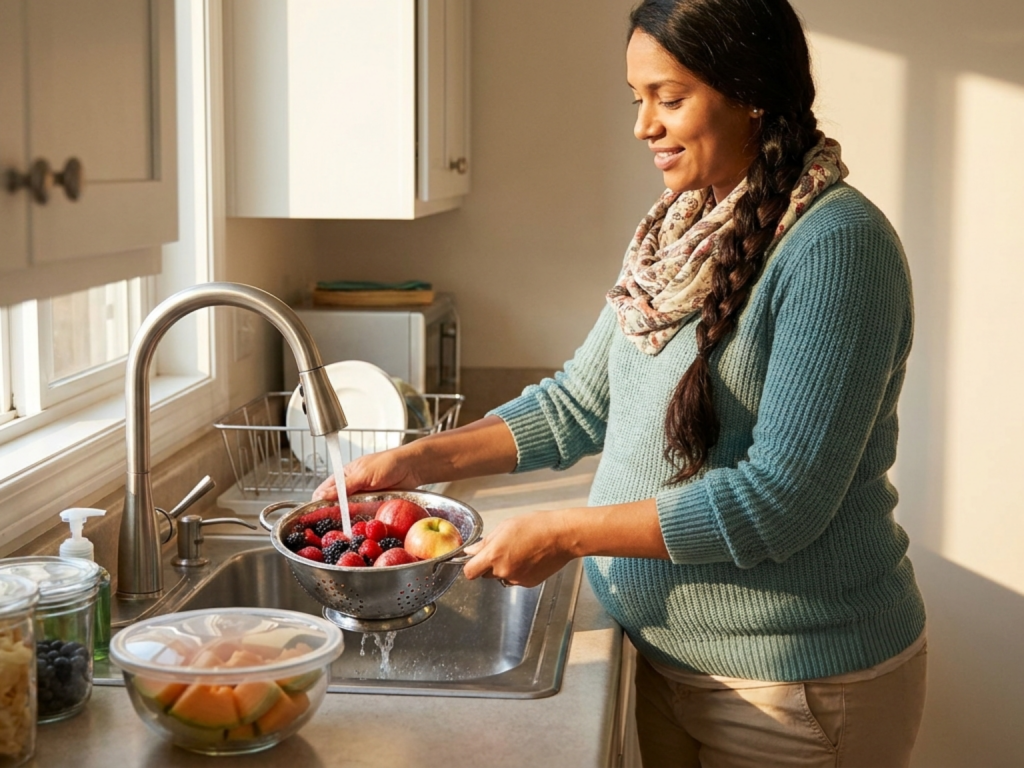
This is where safe food handling in pregnancy becomes especially relevant. Wash your hands before handling fruit, rinse produce under running water, and use clean knives and cutting boards. Refrigerate cut fruit promptly and do not leave it at room temperature for long periods. If a fruit salad, melon tray, or packaged fruit cup has been sitting out at a gathering, it is safer to be cautious than to assume it is fine.
Fruit juice also deserves attention from a food-safety perspective. Pasteurized juice is the safer choice, while unpasteurized juice can carry harmful bacteria. For many people, the simplest rule is this: the more a fruit has been processed, cut, or held cold-chain dependent, the more careful you should be about freshness and storage.
When carbohydrate load matters more than the fruit itself
If you have gestational diabetes, pre-existing diabetes, insulin resistance, or a history of elevated glucose values, the question is often not whether fruit is allowed, but how much and in what form. Whole fruit is usually easier to fit into a meal plan than juice or dried fruit because fiber reduces the speed of carbohydrate absorption. That does not make whole fruit “free,” but it does make it easier to work with.
It can help to think in terms of meal composition. Fruit eaten alone may produce a quicker glucose rise than fruit paired with protein, healthy fat, or additional fiber. For example, an apple with nut butter may feel and function differently from apple juice, even if the ingredient list sounds similar. That said, you should follow the targets set by your care team if you are monitoring capillary glucose, using continuous glucose monitoring, or adjusting meals based on symptoms.
There is also a practical reason to avoid overdoing concentrated fruit products: they can crowd out other nutrients. Pregnancy nutrition is about overall balance, so a small serving of fruit can be enough when it is paired with yogurt, nuts, cheese, or a meal that already contains complex carbohydrates and protein.
Symptoms that can make some fruit less comfortable
Pregnancy can change digestion in ways that make certain fruit choices less comfortable, even when those choices are technically safe. If reflux is an issue, acidic fruits such as citrus or pineapple may worsen burning or regurgitation in some people. If nausea is strong, cold fruit, bland fruits, or small portions may sit better than a large bowl of mixed fruit.
Loose stools are another reason some fruit forms may need to be limited temporarily. Large amounts of dried fruit, prune juice, or high-sorbitol fruit products can increase bowel motility. On the other hand, if constipation is the problem, the same foods may be helpful in moderation. The right choice depends on your current symptom pattern, hydration, and what else you are eating.
Try not to interpret these symptom-based limits as permanent rules. Pregnancy is dynamic, and the fruit that feels wrong one week may be fine the next. The goal is to stay nourished while making day-to-day adjustments that respect how your body is responding.
A practical way to decide what to keep, limit, or skip
If you are unsure where to begin, use a simple framework. First, ask whether the fruit is whole, cut, juiced, dried, canned, or sweetened. Second, ask whether it was washed well and kept cold. Third, ask whether it fits your current symptom profile and glucose goals. That approach is often more useful than trying to memorize a long forbidden-food list.
If you already have a foods to avoid in pregnancy checklist, fruit safety belongs in the same conversation because the storage and handling details matter as much as the fruit itself. Pre-packaged fruit salad is not automatically unsafe, but it should be cold, fresh, and within its use-by date. Home-prepared fruit is not automatically perfect, but it becomes safer when it is washed, cut with clean utensils, and stored promptly in the refrigerator.
When in doubt, choose the simplest version: whole fruit, washed under running water, eaten soon after preparation, and paired with a balanced meal when needed. That strategy supports nutrition without overcomplicating pregnancy eating.
When to be extra cautious
- Do not eat cut fruit that has sat unrefrigerated for too long.
- Be cautious with pre-cut melon and packaged fruit salad if you do not know how long they have been stored.
- Limit juice and dried fruit if blood glucose is a concern.
- Avoid unpasteurized fruit juice in pregnancy.
- Ask for tailored advice if you have gestational diabetes, severe reflux, or persistent vomiting.
Tools & Assistance
- Your obstetric clinic or midwife for individualized pregnancy nutrition advice
- A registered dietitian, especially if you have gestational diabetes
- A refrigerator thermometer to confirm safe storage temperatures
- A clean produce brush and running water for washing firm fruits
FAQ
Do I need to stop eating fruit completely during pregnancy?
Usually no. Most fruit is safe and beneficial when it is washed well and eaten in sensible portions; the main caution is with juice, dried fruit, and poorly handled cut fruit.
Is watermelon or melon unsafe in pregnancy?
The fruit itself is not the problem. The concern is cut melon or other pre-cut fruit that has been stored too warm or too long, so refrigeration and freshness matter.
Are fruit juices okay if they are pasteurized?
Pasteurized juice is safer than unpasteurized juice, but it still behaves like a concentrated source of sugar. Many people do better with whole fruit most of the time.
What if I have gestational diabetes?
Fruit can often still fit into the meal plan, but portion size and timing matter more. Your clinician or dietitian can help you decide which forms to limit and how to pair fruit with other foods.
Sources
- NHS — Foods to avoid in pregnancy
- Mayo Clinic — Pregnancy nutrition: Foods to avoid during pregnancy
- U.S. Food and Drug Administration — Fruits, Veggies and Juices (Food Safety for Moms-to-Be)
Disclaimer
This article is for general educational purposes only and does not replace personalized medical advice. If you are pregnant and have diabetes, vomiting, foodborne illness symptoms, or concerns about what to eat, please contact your healthcare professional.

















Please log in to leave a comment.