
Intro
Pregnancy can change how urgent symptoms look and how quickly they evolve. A complaint that might be handled routinely in other adults can require a much lower threshold for emergency evaluation in a pregnant person because clinicians must consider maternal safety, fetal well-being, and pregnancy-specific complications at the same time.
This article explains how emergency departments and obstetric teams think about triage, observation, and hospital admission. It is educational rather than diagnostic: the right decision depends on gestational age, vital signs, exam findings, test results, and the resources available at the treating facility.
Highlights
In pregnancy, emergency assessment focuses first on maternal stabilization, then on fetal considerations when relevant. A symptom’s seriousness is often judged by acuity, not by whether it seems "typical" for pregnancy.
Validated risk stratification tools and standardized admission criteria help clinicians make safer disposition decisions, but they do not replace bedside judgment.
Hospital admission is usually considered when there is hemodynamic instability, ongoing bleeding, severe hypertension, fetal compromise, infection, preterm labor, or an inability to safely manage symptoms as an outpatient.
Some patients need only observation and follow-up, while others require inpatient monitoring, procedures, specialty consultation, or repeated testing to clarify the risk.
If symptoms are severe, rapidly worsening, or accompanied by reduced fetal movement, syncope, chest pain, seizures, or self-harm concerns, urgent evaluation is warranted.
Why emergency evaluation is different in pregnancy
Pregnancy alters blood volume, heart rate, respiratory mechanics, gastrointestinal function, and pain patterns. Those physiologic changes can make it harder to tell whether a symptom is benign or the early sign of a serious event. For example, nausea may be common in early pregnancy, but persistent vomiting with dehydration, electrolyte disturbance, or inability to keep down fluids changes the urgency of evaluation.
Emergency assessment in pregnancy is therefore not just about diagnosing a single complaint. Clinicians are trying to answer three questions quickly: Is the pregnant person stable? Is there evidence of an obstetric emergency or another medical emergency? Can this be managed safely outside the hospital? The answer may change over time, which is why repeated exams and reassessment are often part of the process.
This lower threshold for evaluation is especially important because some serious conditions can present subtly at first. Severe hypertension, placental abruption, sepsis, pulmonary embolism, preterm labor, or significant bleeding may all begin with symptoms that seem nonspecific. The goal is not to alarm patients unnecessarily, but to avoid missing a time-sensitive problem.
How emergency departments assess acuity
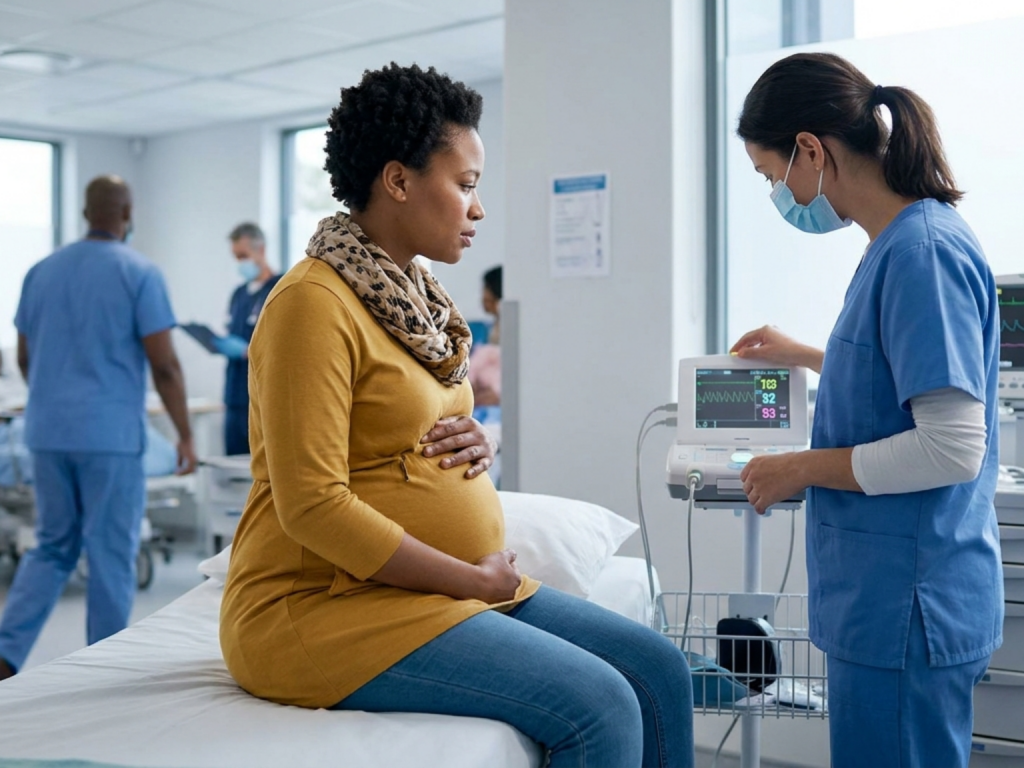
Initial emergency department assessment is driven by the chief complaint and the patient’s acuity. In practice, that means the triage nurse and clinician look at vital signs, appearance, pain level, mental status, gestational age, obstetric history, medications, recent trauma or infection, and any fetal concerns. Oxygen saturation, blood pressure, heart rate, temperature, respiratory effort, and bleeding status often guide how quickly further care is needed.
Guidance from emergency-care systems emphasizes standardized, criteria-based decision-making. Where validated risk stratification tools exist, they can inform decisions about hospital admission, observation, or discharge. In pregnancy, however, risk assessment also includes obstetric context: whether the pregnancy is previable or viable, whether fetal monitoring is indicated, and whether the symptom pattern suggests an obstetric cause.
Depending on the presentation, the workup may include CBC, electrolytes, kidney and liver tests, urine studies, blood type and screen, ECG, ultrasound, or fetal monitoring. The key point is that disposition is not based on a single test result alone. Clinicians combine the initial appearance of the patient, the response to treatment, and any evolving findings before deciding whether outpatient care is reasonable.
Pregnancy red flags that warrant urgent assessment
Some symptoms should trigger same-day emergency or obstetric evaluation because they can represent urgent warning signs in pregnancy. These include heavy vaginal bleeding, passage of clots, severe or one-sided abdominal pain, shoulder pain, leakage of fluid, painful regular contractions before term, or a clear decrease in fetal movement after the point when movements are usually felt consistently.
Other red flags are severe headache, visual changes, swelling with high blood pressure, chest pain, shortness of breath, fainting, palpitations, fever, confusion, seizures, or sudden neurologic symptoms such as weakness or trouble speaking. Persistent vomiting with dehydration, inability to tolerate oral intake, or marked dizziness can also justify urgent assessment, especially if the person cannot maintain hydration or medication schedules.
Trauma deserves special mention. Even seemingly minor falls, abdominal impact, or motor vehicle collisions can be associated with placental injury or preterm labor. Likewise, mental health crises matter: suicidal thoughts, psychosis, severe agitation, or an inability to care for oneself are medical emergencies and should be treated as such. When in doubt, prompt evaluation is safer than waiting to see whether symptoms improve.
Common criteria that support hospital admission
Hospital admission is considered when the pregnant person is not safe for discharge because the immediate risk remains high or the diagnostic picture is still unstable. One major indication is physiologic instability: persistent hypotension, tachycardia with concern for bleeding or sepsis, oxygen requirement, respiratory distress, or altered mental status. Another is ongoing or recurrent symptoms that do not settle with initial treatment, such as repeated vomiting, uncontrolled pain, or recurrent contractions.
Obstetric reasons for admission often include suspected placental abruption, preterm labor, preterm premature rupture of membranes, significant vaginal bleeding, severe hypertensive disease, or concerning fetal monitoring. If fetal status is nonreassuring, additional observation, specialist consultation, or urgent delivery planning may be needed depending on gestational age and the overall clinical picture.
Admission may also be appropriate when outpatient follow-up is not realistic or safe: inability to walk, hydrate, or take medications; need for IV fluids, antibiotics, magnesium sulfate, anticoagulation, blood transfusion, or procedures; uncertain diagnosis that requires serial exams; or social factors that make rapid return impossible. Local protocols vary, but the general principle is simple: if the risk cannot be reduced enough for safe home care, inpatient management is favored.
How risk stratification and tests guide the decision
Risk stratification works best when it is used as part of a broader clinical picture. A tool may categorize a patient as low, moderate, or high risk, but pregnancy can introduce factors that shift the threshold toward observation or admission. Clinicians therefore interpret tool output alongside pregnancy-specific findings, including gestational age, fetal heart rate pattern if assessed, uterine activity, and laboratory trends.
Common tests help define whether a patient is improving, stable, or deteriorating. A CBC can reveal anemia or infection; electrolytes and renal function can show dehydration or organ stress; liver tests may matter in hypertensive disease or cholestatic concerns; urine testing can support or argue against urinary causes; and imaging or ECG may be needed when abdominal, chest, or neurologic symptoms are present. In some situations, serial measurements are more informative than a single snapshot.
Disposition often depends on response to treatment. If symptoms settle, vital signs normalize, the exam is reassuring, and the patient can drink, ambulate, and return promptly if needed, discharge with follow-up may be reasonable. If the clinical course is unclear, admission or observation allows time for repeat assessment, specialist review, and a safer decision.
What to expect if admission is recommended
Admission does not automatically mean something catastrophic is happening; it usually means the team wants a safer environment for monitoring, treatment, or clarification. In the hospital, you may see repeated vital signs, fetal surveillance when appropriate, IV fluids, medication review, and consultations with obstetrics, maternal-fetal medicine, surgery, medicine, psychiatry, or anesthesia depending on the problem.
Patients can help the team by sharing a complete medication list, allergies, prior pregnancy complications, surgery history, and the timing of the current symptoms. If communication feels rushed, it is reasonable to ask what the leading concern is, what the team is watching for, and what would change the plan from observation to discharge or from observation to procedure. In an uncertain situation, asking for clarification is appropriate and often helpful.
If discharge is chosen, the plan should include clear return precautions, follow-up timing, and instructions tailored to pregnancy stage and diagnosis. A good discharge plan should explain exactly which symptoms require immediate reassessment. If you leave feeling unsure, that uncertainty itself is worth addressing before you go home.
Seek urgent care now if you have any of these
- Heavy vaginal bleeding, severe abdominal pain, or fluid leakage
- Chest pain, shortness of breath, fainting, or seizure
- Severe headache, visual changes, or very high blood pressure symptoms
- Reduced fetal movement, regular painful contractions, or trauma
- Suicidal thoughts, psychosis, or inability to care for yourself safely
Tools & Assistance
- Your local emergency department or obstetric triage unit
- A 24-hour maternity advice line, if your hospital provides one
- A current medication list, allergy list, and pregnancy records
- A transportation and childcare backup plan for urgent visits
- Hospital social work or patient advocacy services if admission is difficult to navigate
FAQ
Does every pregnancy emergency require hospital admission?
No. Some patients need only evaluation and short observation, then can go home with close follow-up. Admission is more likely when the risk remains high or the diagnosis is uncertain.
Who decides whether I should be admitted?
Usually the emergency clinician and obstetric team together, using your symptoms, vital signs, test results, fetal assessment when relevant, and any validated risk tools or local criteria.
Can I ask for observation instead of admission?
Yes, you can discuss it. The safest option depends on your clinical status, the likely diagnosis, and whether your symptoms are improving or still concerning.
What if I feel my symptoms were not taken seriously?
Ask for reassessment and, if available, obstetric review. If symptoms worsen, return immediately or call emergency services.
Sources
- NCBI / NIH — Guideline: Use validated risk stratification tools to inform clinical decisions about hospital admission for people with medical emergencies
- NICE — Chapter 21: Standardised criteria for hospital admission
- NHS England — Guidance for emergency departments: initial assessment
Disclaimer
This article is for educational purposes only and does not replace individualized medical advice, diagnosis, or emergency care. If you have severe, worsening, or concerning symptoms in pregnancy, seek urgent medical attention immediately.

















Please log in to leave a comment.