
Intro
Preparing for birth can make the final weeks of pregnancy feel more manageable, but it is not about predicting or controlling every event. The most useful preparation combines informed preferences, medical readiness, practical organization, emotional support, and flexibility.
Your obstetric clinician or midwife can tailor this process to your pregnancy, birth setting, medical history, and local services. Discuss questions early, especially if you have pregnancy complications, a previous cesarean birth, or plans for birth outside a hospital.
Highlights
A birth plan should communicate priorities while allowing the clinical team to respond to changing circumstances.
Learn how to contact your maternity unit and which labor or warning signs require prompt assessment.
Prepare for vaginal, assisted, and cesarean delivery possibilities without assuming that any one pathway represents success or failure.
Postpartum recovery, feeding support, and newborn care deserve as much planning as labor itself.
Start with prenatal medical readiness
Birth preparation begins with consistent prenatal care. Attend recommended appointments and discuss your estimated due date, fetal growth and presentation, placental location, blood pressure, laboratory results, and any conditions that may affect delivery. Ask whether additional monitoring, induction, specialist consultation, or delivery at a particular facility is being considered. Recommendations may change as pregnancy progresses.
Keep an updated medication and allergy list, including prescriptions, over-the-counter products, vitamins, supplements, and prior adverse reactions. Do not start, stop, or adjust medicines without guidance from a qualified clinician. Continue clinician-approved nutrition and physical activity, and avoid alcohol, tobacco, recreational drugs, and other exposures your care team identifies as unsafe.
Ask about vaccination, infectious disease screening, and group B streptococcus testing according to local practice. If you have diabetes, hypertension, a bleeding disorder, significant anemia, previous postpartum hemorrhage, or a prior uterine operation, request a clear explanation of how that history may influence labor management. A third trimester birth checklist can help consolidate unanswered questions before the final visits.
Learn what labor may look like and when to seek help
Childbirth education can explain cervical dilation, uterine contractions, membrane rupture, fetal descent, pushing, placental delivery, and immediate recovery. Labor does not always begin with a dramatic gush of fluid; contractions, back discomfort, pelvic pressure, or blood-tinged mucus may occur first. Conversely, irregular contractions can happen before established labor.
Ask your maternity unit how and when to call. Instructions depend on gestational age, parity, distance from the facility, membrane status, pregnancy risk, and contraction pattern. Save the unit’s daytime and after-hours numbers, and know which entrance to use outside normal hours.
Contact a healthcare professional promptly for suspected membrane rupture, vaginal bleeding beyond light spotting, reduced or absent fetal movement, severe or persistent pain, fever, breathing difficulty, severe headache, visual disturbance, or other symptoms your team has identified as concerning. Possible labor before 37 weeks also warrants prompt assessment. Do not delay care while trying to determine the cause yourself.
Choose the birth setting, team, and practical route
Confirm where you plan to give birth, which clinicians may attend, and what neonatal, anesthesia, operating-room, and blood-bank services are available. Tour the unit if possible or use a virtual orientation. Ask about admission procedures, visitor policies, support people, doulas, photography, mobility, eating and drinking in labor, and the usual length of stay.
Plan transportation, parking, childcare, pet care, and a backup driver. Test the route at a realistic time of day and keep fuel or charging needs in mind. If travel time is long, discuss this with your clinician rather than creating your own threshold for leaving home.
For an intended out-of-hospital birth, confirm the attendant’s credentials, emergency equipment, newborn assessment arrangements, and eligibility criteria. A written home birth transfer plan should identify the receiving hospital, transport method, records to bring, and circumstances requiring escalation. Transfer is a safety measure, not a personal failure.
Write flexible birth preferences
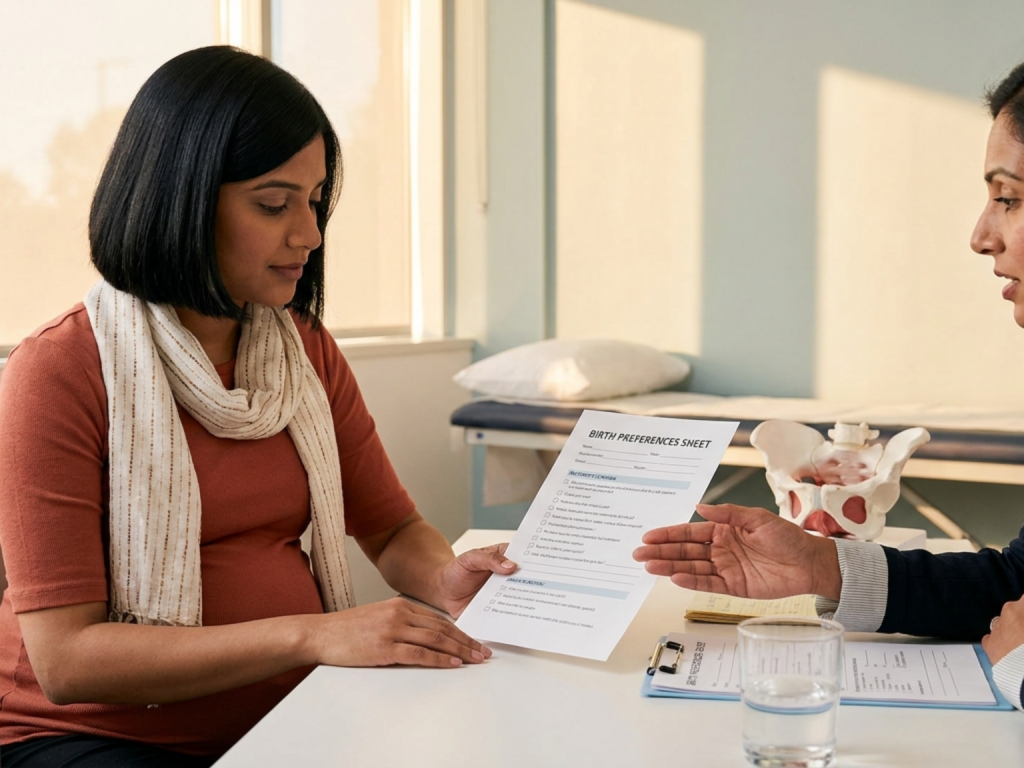
A birth plan is best treated as a concise communication document rather than a contract. Review it with your clinician before labor and bring a copy for the care team. Focus on priorities, relevant medical information, and choices that remain available within the circumstances of labor.
Topics may include:
- Who you want present and how they can support you.
- Preferences for mobility, positioning, monitoring, hydration, and comfort measures.
- Views on pharmacologic analgesia and when you would like options discussed.
- Communication needs, cultural or religious practices, trauma-informed care requests, and accessibility requirements.
- Preferences about assisted vaginal birth, cesarean delivery, immediate skin-to-skin contact, cord management, newborn medications, and feeding support.
Some interventions may become advisable because of fetal heart-rate abnormalities, maternal complications, labor progress, infection risk, or an emergency. Ask clinicians to explain benefits, material risks, alternatives, and the urgency of a decision whenever time permits. Flexible birth preferences can preserve your values even when the original plan changes. Your support person can help communicate, but consent remains yours unless an emergency or loss of decision-making capacity requires another established process.
Prepare physically and explore pain relief
Physical preparation for childbirth should support function and coping rather than promise a particular delivery outcome. With clinical approval, regular moderate activity may help maintain cardiovascular fitness, mobility, sleep, and well-being. Pregnancy exercise safety depends on your symptoms, obstetric history, and current complications, so seek individualized advice if you have pain, bleeding, dizziness, contractions, membrane rupture, or activity restrictions.
Practice nonpharmacologic coping strategies such as paced breathing, relaxation, movement, upright positions, massage, heat, water immersion where available, and focused support. These can be combined with medication. Consider asking about nitrous oxide, systemic opioids, epidural or combined spinal-epidural techniques, local anesthesia, and anesthesia used for cesarean birth. Availability, contraindications, benefits, and adverse effects vary.
If you have scoliosis, previous spinal surgery, anesthetic complications, severe obesity, a bleeding disorder, anticoagulant use, or significant cardiac disease, an antenatal anesthesia consultation may be useful. Pelvic health physical therapy may help selected patients with pelvic pain, mobility limitations, or pelvic floor concerns. Avoid unverified methods intended to induce labor or alter fetal position unless your clinician confirms they are appropriate.
Prepare for different delivery pathways
Spontaneous vaginal birth is only one possible pathway. Preparation should also cover induction, assisted vaginal delivery, unplanned cesarean birth, and planned cesarean preparation when relevant. Understanding these possibilities can reduce surprise without implying that complications are expected.
Ask how induction may involve cervical ripening, amniotomy, oxytocin, and fetal monitoring, and how the plan may change if labor does not progress or the fetus does not tolerate labor. For assisted vaginal birth, clinicians may use forceps or vacuum in selected circumstances when birth needs assistance and the required safety criteria are met.
Discuss why cesarean delivery might be recommended, the likely anesthesia, support-person policy, recovery expectations, thrombosis prevention, pain control, feeding support, and opportunities for skin-to-skin contact when clinically feasible. If you have had a previous cesarean, ask whether vaginal birth after cesarean planning is appropriate and whether the facility can provide rapid emergency operative care.
Preferences can still matter during unexpected events. You may be able to request clear narration, reassurance, involvement of your support person, and early contact with your baby when medically safe. The safest route may only become clear during labor.
Pack essentials and organize information
Pack around 36 to 37 weeks, or earlier if preterm birth risk or travel makes that sensible. A practical birth preparation checklist can include identification, insurance or registration information, prenatal records if required, your preferences document, medication details, allergy information, clinician contacts, and essential devices or chargers.
Bring comfortable clothing, nonslip footwear, toiletries, glasses or contact-lens supplies, and approved comfort items. Pack an appropriate infant car seat if traveling home by car, weather-suitable newborn clothing, and an outfit for yourself that accommodates postpartum abdominal and perineal sensitivity. The facility may provide diapers, pads, gowns, and feeding supplies, so check before overpacking.
Leave valuables at home. Support people should pack their own medicines, food where permitted, clothing, and charging equipment. Complete preregistration and gather birth certificate information if your facility offers these steps in advance. Install the car seat according to manufacturer instructions and local law; a certified inspection service can check installation but should not replace reading the manual.
Plan for recovery, feeding, and support at home
The first days after birth involve maternal monitoring, newborn assessments, feeding, sleep disruption, and physical recovery. Build a postpartum support plan that names who can provide meals, transport, household help, childcare, and protected rest. Arrange follow-up with the maternity clinician and the baby’s healthcare professional, and identify lactation or feeding support before it is urgently needed.
Create a postpartum recovery station with water, easy food, prescribed or clinician-approved supplies, feeding items, sanitary products, and phone chargers within reach. Ask what bleeding, perineal discomfort, incision pain, breast changes, bowel changes, and emotional fluctuations are expected, and what requires assessment. Confirm how to use any discharge medicines rather than relying on generic schedules.
Discuss newborn care preferences, including skin-to-skin contact, vitamin K, eye prophylaxis where used, vaccination, screening, rooming-in, circumcision if relevant, and breast, formula, or combination feeding. Preferences should be supported without judgment while ensuring adequate intake and clinical monitoring.
Finally, prepare for mental health needs. Know whom to contact for persistent anxiety, low mood, intrusive thoughts, trauma symptoms, or difficulty functioning. Immediate help is necessary for thoughts of self-harm, thoughts of harming the baby, severe confusion, hallucinations, or marked agitation. Early support can protect both parent and infant.
Seek urgent maternity or emergency care when advised
- Report reduced or absent fetal movement promptly rather than waiting for the next appointment.
- Seek assessment for heavy vaginal bleeding, severe pain, seizures, fainting, chest pain, or significant breathing difficulty.
- Contact your maternity team for suspected membrane rupture, fever, or possible labor before 37 weeks.
- Severe headache, visual disturbance, sudden swelling, or upper abdominal pain may require urgent evaluation.
- After birth, urgent warning signs include heavy bleeding, breathing difficulty, chest pain, severe headache, fever, seizures, or thoughts of harming yourself or the baby.
Tools & Assistance
- Schedule a prenatal visit specifically to review delivery questions and birth preferences.
- Save maternity triage, emergency, clinician, transport, and support-person numbers in two phones.
- Attend a childbirth, infant-feeding, newborn-care, or infant-resuscitation class offered by a qualified provider.
- Arrange a hospital orientation, anesthesia consultation, lactation consultation, or pelvic health assessment when relevant.
- Use a written checklist for documents, transport, the hospital bag, home supplies, and postpartum help.
FAQ
When should I start preparing for birth?
Education and logistical planning can begin in the second trimester, with preferences, transport, packing, and postpartum arrangements usually refined during the third trimester. Start earlier if your clinician identifies preterm birth risk or complex medical needs.
Do I need a formal birth plan?
No. A short preferences document can improve communication, but a conversation with your care team is equally important. Keep requests prioritized and flexible.
Should I prepare for cesarean birth even if I plan a vaginal birth?
It is reasonable to understand basic cesarean procedures and recovery because operative delivery can become necessary unexpectedly. This preparation does not make cesarean birth more likely.
How do I know when to go to the hospital or birth center?
Use individualized instructions from your maternity team. Timing depends on contraction patterns, membrane rupture, bleeding, fetal movement, gestational age, prior births, medical risk, and travel distance.
Can exercise or home methods start labor?
Do not rely on home induction methods, and avoid herbs, supplements, or medications without clinical guidance. Ask your clinician which activities are safe and whether induction is medically indicated.
Sources
- Mayo Clinic — Preparing for Delivery: Having a plan, but keeping it flexible
- MedlinePlus — What to include in your birth plan: MedlinePlus Medical Encyclopedia
- MedlinePlus — Pregnancy | Pregnant | Prenatal Care
Disclaimer
This article provides general educational information and is not a substitute for individualized medical advice. Consult your obstetric clinician or midwife about your pregnancy, delivery plan, symptoms, and medications.
















Please log in to leave a comment.