
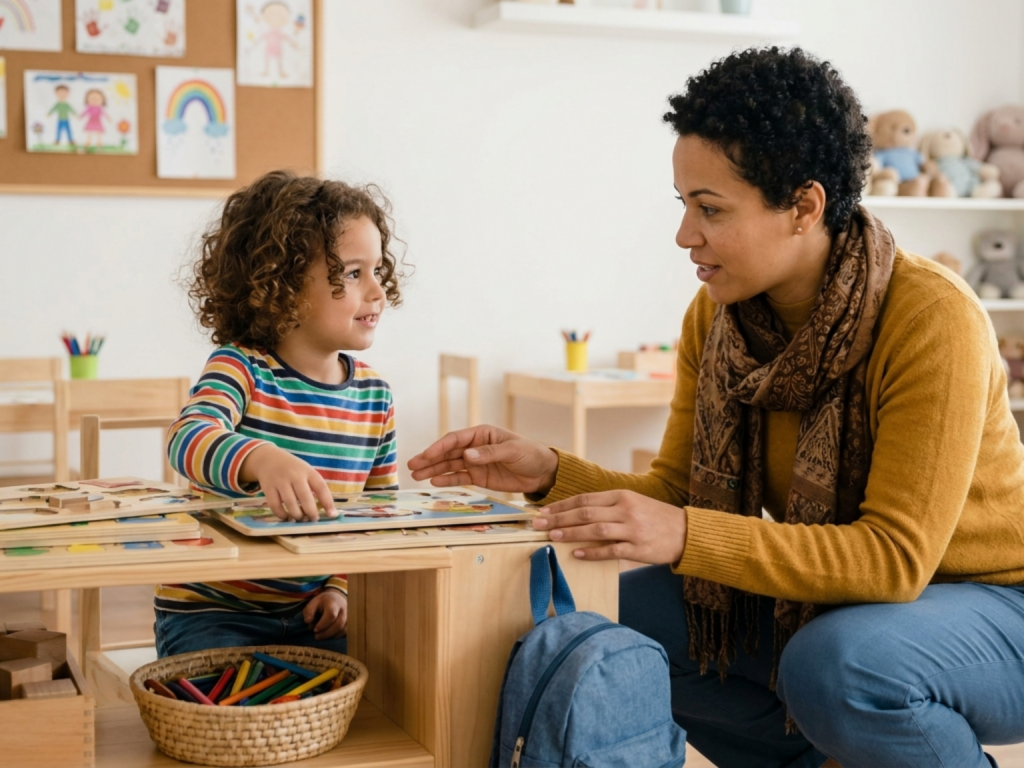
Intro
Choosing products for preschoolers can feel deceptively complex. A backpack, toy, snack container, or art set is not just an object; it can support autonomy, fine motor control, communication, sensory regulation, safety, and family routines.
This guide offers a practical, medically cautious framework for selecting products for children around ages 3 to 5. It does not replace individualized advice from a pediatrician, occupational therapist, speech-language pathologist, dietitian, educator, or other qualified professional when a child has specific developmental, medical, sensory, feeding, allergy, or mobility needs.
Highlights
The best preschool products are safe, durable, developmentally appropriate, and easy for a child to use with gradually increasing independence.
Quality matters more than quantity: a few open-ended toys and reliable daily supplies often support learning better than many single-purpose items.
Safety screening should include choking risk, toxic materials, product labeling, durability, hygiene, and supervision needs.
A child’s temperament, sensory profile, motor skills, language level, allergies, and preschool policies should guide product choices.
Start with the child, not the product
Preschoolers are in a rapid period of neurodevelopment. Between roughly 3 and 5 years, many children refine bilateral coordination, hand strength, balance, symbolic play, early numeracy, phonological awareness, emotional regulation, and peer negotiation. A product is most useful when it meets the child’s current abilities while offering a small, achievable challenge.
Before buying, ask what the item is meant to support. Is the goal independence at school drop-off, safer outdoor play, more constructive quiet time, fine motor practice, pretend play, or easier hygiene? A product that solves a real daily problem is usually more valuable than one that promises accelerated learning. Age-appropriate activities for children should feel inviting rather than pressured.
Consider the child’s individual profile. A child with tactile defensiveness may avoid sticky art materials, while another may seek heavy work such as pushing, carrying, or climbing. A child with delayed expressive language may benefit from pretend-play sets that encourage turn-taking and labeling, but frustration can rise if the set has too many fragile pieces. Children with food allergy, asthma, eczema, developmental delay, autism spectrum traits, visual impairment, hearing differences, or motor coordination challenges may need product choices reviewed with clinicians or therapists.
Safety is the non-negotiable foundation
For preschool products, safety is not a separate step at the end; it is the first filter. Toys intended for young children should have clear age-range labeling, and products for children should meet applicable safety standards. Consumer safety guidance emphasizes choosing quality over quantity and checking that toys for children under 12 are certified according to relevant U.S. Consumer Product Safety Commission expectations when applicable.
Choking prevention remains essential. Preschoolers are beyond infancy, but many still mouth objects, play impulsively, laugh while eating, or place small parts in pockets and backpacks. Avoid toys with small detachable pieces if the child is still mouthing objects or if younger siblings are present. Button batteries, high-powered magnets, water beads, small balls, deflated balloons, and broken plastic fragments deserve particular caution because ingestion can cause serious injury. Preschool choking prevention also applies to snack containers and lunch items; food shape, texture, and supervision matter.
Check materials and construction. Prefer non-toxic paints, washable surfaces, rounded edges, secure seams, and sturdy parts that do not splinter, crack, or shed fibers. For art supplies, look for child-appropriate labeling and avoid adult craft materials that may contain solvents, sharp tools, or powders that can be inhaled. For outdoor products, use helmets and protective gear when appropriate, and ensure sunscreen and insect repellent are selected according to pediatric guidance and used as directed. If a child has eczema, allergies, or chemical sensitivities, ask a healthcare professional about safer skin-contact products.
Choose toys that do more than entertain
Educational toys do not need screens, lights, or constant sound. Many of the strongest preschool choices are open-ended: blocks, play dough, simple puzzles, pretend food, dolls, vehicles, animal figures, costumes, musical instruments, and building sets with pieces large enough for safe use. These allow the child to create the rules, repeat actions, test ideas, and adapt play as skills grow.
Look for toys that support multiple developmental domains at once. Blocks can build spatial reasoning, hand-eye coordination, persistence, and cooperative problem-solving. Puzzles can support visual discrimination, frustration tolerance, and planning. Pretend-play items can encourage narrative language, social cognition, empathy, and flexible thinking. Simple STEM toys for older preschoolers can introduce cause-and-effect reasoning without turning play into a formal lesson.
Useful toy categories include:
- Problem-solving toys: chunky puzzles, sorting games, pattern blocks, nesting cups, and simple construction sets.
- Pretend-play materials: play kitchens, medical kits with safe pieces, dress-up items, animal sets, and puppets.
- Fine motor tools: crayons, safety scissors used with supervision, tongs, threading beads large enough to be safe, and play dough.
- Gross motor products: balls, balance stepping stones, ride-on toys, and outdoor play equipment used with appropriate supervision.
- Social play games: cooperative board games, matching games, and turn-taking activities with short rules.
A helpful question is whether the toy can be used in more than one way. If there is only one button to press and one outcome to watch, the child may become a spectator. If the toy invites building, narrating, sorting, pretending, and problem-solving, it can grow with the child.
Daily preschool supplies should promote independence
Backpacks, lunch boxes, water bottles, shoes, jackets, and spare clothing are developmental tools. A preschooler who can open a zipper, hang a backpack, put on a coat, or manage a snack container experiences mastery. These small routines support self-efficacy and reduce adult-child conflict during busy transitions.
Choose a backpack that is lightweight, appropriately sized, and easy to open. Oversized bags can alter posture and become frustrating in crowded cubbies. Clothing should be comfortable, washable, weather-appropriate, and manageable for toileting. Elastic waists, simple fasteners, and shoes a child can put on with minimal help may be more developmentally supportive than stylish but complicated items. If the child has hypotonia, hypermobility, motor planning difficulties, or frequent falls, an occupational therapist or physical therapist can help match clothing and footwear to function.
Art supplies should be safe, washable, and sized for preschool hands. Thick crayons, blunt-tip scissors used under supervision, glue sticks, large paper, washable markers, and play dough can strengthen intrinsic hand muscles and improve pre-writing readiness. Hygiene products should fit the setting: tissues, wipes if allowed, a child-safe hand sanitizer if recommended by the school, sunscreen for outdoor programs, and spare clothes for toileting accidents. Practical supplies can also ease Preschool problems parents face, especially when morning routines, separation, toileting, or messy play create stress.
Food, drink, and snack products require extra thought
Snack containers, water bottles, lunch bags, utensils, and food storage products should support safe eating and predictable routines. Select containers a child can open without excessive struggle but that still seal reliably. A child who cannot access food at snack time may eat less, become dysregulated, or rely heavily on adults. Conversely, containers that spill easily can create hygiene and allergy concerns in group settings.
For nutrition, product choice should complement the family’s broader feeding approach. Healthy meals for preschoolers usually depend more on repeated exposure, structure, and nutrient density than on novelty lunch gear. Still, good containers can make balanced snacks easier to pack: fruit pieces cut safely, yogurt, whole-grain foods, vegetables, cheese, beans, or other options that fit cultural preferences and medical needs. If there are concerns about growth, selective eating, dysphagia, constipation, food allergy, or avoidant/restrictive intake patterns, seek individualized guidance rather than relying on products marketed as solutions.
Safety details matter. Insulated bags and ice packs can reduce bacterial growth when perishable foods are sent to school. Water bottles should be easy to clean thoroughly; valves and straws can harbor biofilm if neglected. Avoid small hard foods for children who are not developmentally ready, and follow pediatric guidance for cutting round or firm foods into safer shapes. Communicate clearly with preschool staff about allergies, required medications, and food restrictions. A product label that says child-friendly does not guarantee that it is appropriate for a specific child’s swallowing skills or medical history.
Match products to sensory and emotional regulation
Preschoolers vary widely in sensory processing. Some children calm with deep pressure, predictable textures, or quiet spaces. Others become overwhelmed by noise, tags, bright lights, strong smells, crowded rooms, or sticky materials. Product choice can reduce unnecessary distress when it respects these differences.
Comfort items can be legitimate regulation tools, not signs of weakness. A small blanket, soft toy, family photo, or agreed-upon comfort object for preschool transition may help a child move from home to school with less distress. For children who chew, seek professional advice about safe chewable products rather than allowing chewing on random toys, clothing, or unsafe materials. For children who need movement, gross motor toys and outdoor equipment may be more regulating than another tabletop toy.
Be cautious with products marketed for sensory needs. Weighted items, compression garments, noise-reduction headphones, and fidget tools can be helpful for some children, but they are not universally appropriate. Weighted products require careful attention to size, duration, supervision, and medical conditions such as respiratory or mobility concerns. If a child has persistent distress, aggression, self-injury, sleep disruption, feeding rigidity, or functional impairment, consult a pediatric clinician and consider occupational therapy evaluation. Helping child transition to preschool often requires a combination of routines, adult co-regulation, communication with teachers, and thoughtfully chosen products.
Avoid overbuying and watch the marketing language
Caregivers are often told that the right product will make a child smarter, calmer, more advanced, or school-ready. This can create guilt and unnecessary spending. Preschool development is supported most by responsive relationships, safe exploration, sleep, nutrition, movement, language-rich interaction, and predictable routines. Products can support those foundations, but they cannot replace them.
When evaluating a claim, look for specificity. A toy that says it encourages problem-solving may be reasonable if it actually requires sorting, sequencing, building, or planning. A product that promises advanced intelligence or guaranteed academic gains deserves skepticism. Screen-based products may have a place in some families, but passive use should not displace active play, outdoor movement, conversation, sleep, or hands-on manipulation.
A simple purchasing framework can help:
- Does it meet a real need in the child’s daily life?
- Is it safe for this child’s age, behavior, siblings, and setting?
- Can the child use it with manageable support?
- Does it invite active participation rather than passive watching?
- Is it durable, washable, and acceptable to the preschool program?
- Does it fit the family budget without creating pressure or clutter?
When in doubt, choose fewer items with broader uses. Rotating toys can renew interest without constant purchasing. Donating, borrowing, or buying secondhand may be reasonable for some products, but check recalls, missing parts, cleanliness, and safety standards before use.
Safety cautions
- Seek urgent medical care if a child may have swallowed a button battery, high-powered magnet, or sharp object.
- Avoid small parts, deflated balloons, water beads, and broken toy pieces for children who mouth objects or have younger siblings nearby.
- Consult a pediatric clinician for feeding difficulty, choking episodes, poor growth, severe selectivity, or suspected food allergy.
- Use sunscreen, insect repellent, helmets, and other safety products according to pediatric guidance and product directions.
- Ask an occupational therapist or pediatric professional before using weighted or compression products for sensory regulation.
Tools & Assistance
- Preschool supply list and teacher recommendations
- Pediatrician or family physician visit for developmental or safety concerns
- Occupational therapy consultation for sensory, motor, or self-care difficulties
- Registered dietitian support for feeding, growth, allergy, or restrictive eating concerns
- Consumer product recall checks before using secondhand toys or gear
FAQ
How many toys does a preschooler need?
Usually fewer than marketing suggests. A small set of safe, open-ended toys rotated over time often supports deeper play better than many single-purpose items.
Are electronic learning toys necessary for school readiness?
No. Hands-on play, conversation, movement, shared reading, pretend play, and problem-solving activities are central. Electronic products should not replace active interaction.
What should I prioritize for preschool supplies?
Prioritize a child-sized backpack, manageable clothing and shoes, safe art supplies, a cleanable water bottle, appropriate snack containers, spare clothes, and any items required by the school.
When should I ask a professional before buying a product?
Ask for guidance if your child has swallowing concerns, allergies, developmental delays, sensory distress, mobility challenges, chronic medical conditions, or significant behavioral difficulties.
Sources
- Consumer Reports — How to choose safe, developmentally appropriate toys for kids
- Luke's Toy Factory — How to Choose an Educational Toy for Preschoolers
- Day Early Learning — Essential Supplies for Your Preschool-aged Child
Disclaimer
This article is for general educational purposes and is not medical diagnosis or treatment advice. Consult a qualified healthcare professional for concerns about your child’s safety, development, feeding, allergies, or medical needs.













Please log in to leave a comment.