
Intro
When a child takes a long time to fall asleep, it can be frustrating for the whole household and worrying for parents. In sleep medicine, the time from lights out to sleep is often called sleep-onset latency. In children, taking more than about 20 minutes to fall asleep can be clinically meaningful, especially if it happens often and is followed by short sleep duration, morning fatigue, irritability, or school difficulties.
Many cases are related to bedtime habits, developmental stage, or anxiety around separation. Sometimes, however, prolonged sleep onset can be linked to a medical or neurologic issue. The goal is not to guess the cause, but to look at the pattern carefully and decide when simple behavior changes may help and when a healthcare professional should evaluate further.
Highlights
Taking more than 20 minutes to fall asleep can be a sign of delayed sleep onset, especially if daytime functioning is affected.
Bedtime resistance, inconsistent routines, and screen exposure are common reasons a child stays awake too long.
Some children have medical or neurologic contributors, including sleep-disordered breathing, anxiety, pain, or injury-related sleep changes.
Practical approaches such as a consistent bedtime routine, bedtime fading, and gradual reassurance can help many families.
Persistent sleep-onset delay deserves a pediatric review, particularly if there is snoring, mood change, learning trouble, or recent head injury.
What delayed sleep onset looks like in children
In everyday language, parents may say a child “just cannot settle down” or “lies awake forever.” Clinically, the concern is not only how long it takes to fall asleep, but also whether the pattern is frequent and whether it reduces total sleep time. A child who consistently takes more than 20 minutes to fall asleep may be sleeping less than needed, even if bedtime starts at a reasonable hour.
That matters because insufficient sleep can affect attention, mood, learning, and behavior the next day. Younger children may become more hyperactive rather than sleepy, which can make the bedtime problem look like defiance. School-age children may complain of tiredness, but others show irritability, inattention, or morning struggles instead of saying they feel sleepy.
Sleep-onset delay is also different from simply preferring a later bedtime. A child who is genuinely not sleepy at the chosen bedtime may need a schedule review, while a child who is sleepy but resists sleep may be experiencing bedtime anxiety, habit, or another sleep barrier. The distinction helps guide next steps.
Common behavioral and environmental reasons bedtime stretches on
Many children who take a long time to fall asleep are dealing with ordinary but persistent bedtime patterns. The most common are bedtime resistance, inconsistent routines, and mixed signals from caregivers. If bedtime sometimes means lights out and quiet, but other nights includes extra conversation, television, snacks, or a long negotiation, the brain does not get a clear cue that sleep is expected.
Another frequent contributor is screen exposure close to bedtime. Light from tablets, phones, and televisions can delay melatonin release and keep the child mentally engaged. That is why reducing screen time before bedtime is a standard recommendation in many pediatric sleep plans. Evening stimulation from active play, exciting games, or intense conversations can have a similar effect.
Separation anxiety can also play a role. Some children feel unsettled when a parent leaves the room and repeatedly call out, get out of bed, or ask for one more story. In preschoolers, this may overlap with bedtime resistance in preschool children and often responds better to calm, predictable routines than to repeated negotiations.
Family routines and timing matter too. Late naps, inconsistent wake times, or bedtime that is earlier than the child’s natural sleep drive can all make falling asleep slower. In some toddlers, what looks like stubbornness is actually delayed sleep onset in toddlers, where the schedule and the child’s sleep readiness are out of sync.
Medical and developmental causes worth considering
Not every prolonged bedtime is behavioral. Pain, itching, reflux symptoms, chronic nasal obstruction, asthma symptoms at night, and other uncomfortable conditions can make it hard for a child to settle. Sleep-disordered breathing is especially important when there is loud snoring, gasping, or restless sleep, because fragmented sleep can affect the ability to fall asleep on time as well as sleep quality overall.
Emotional and developmental factors may also contribute. Anxiety disorders, stress, separation worries, neurodevelopmental differences, and changes in routine can all lengthen sleep-onset latency. A child who is overstimulated or has difficulty with self-soothing may need a more structured wind-down period than peers.
Head injury is another situation that deserves attention. Research using actigraphy, an objective movement-based sleep measurement, has found that some children who sustained traumatic brain injury take longer to fall asleep than children with orthopedic injuries. That does not mean a head injury always causes insomnia, but it does show that prolonged sleep onset can be a measurable post-injury symptom and should not be dismissed if it follows trauma.
For this reason, a child who recently had a concussion or other brain injury and is now struggling to fall asleep should be discussed with a clinician, especially if there are headaches, vomiting, confusion, or a change in behavior.
Home strategies that are often helpful
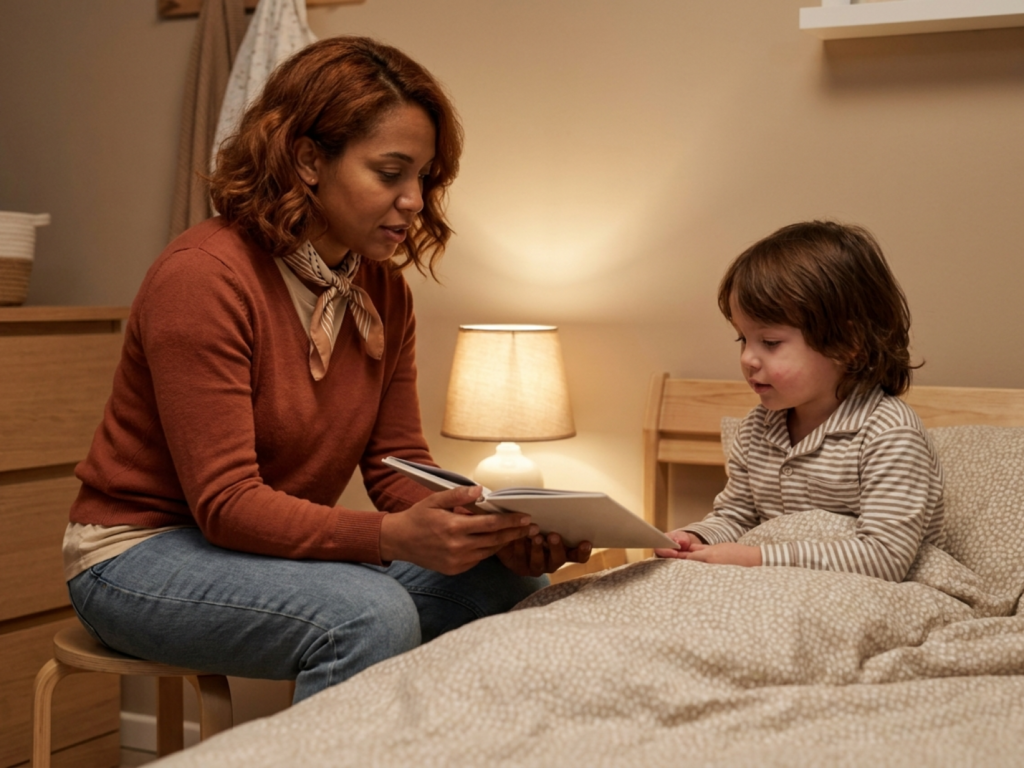
When no urgent red flags are present, many families start with behavior-based changes. The most useful approach is often a calm, predictable bedtime routine that repeats in the same order each night. This routine should be short enough to be realistic and boring enough to cue sleep, not excitement. Examples include bath or wash-up, pajamas, brushing teeth, a brief story, and lights out.
Behavioral sleep guidance often includes:
- Keeping wake time consistent, even on weekends, so the body clock stays anchored.
- Avoiding screens for a period before bed and moving charged devices out of the bedroom.
- Using bedtime fading if the child is not sleepy at the current bedtime, then gradually moving bedtime earlier once sleep comes more easily.
- Offering brief, boring reassurance rather than long negotiations when the child calls out or seeks repeated attention.
- Using a sleep-friendly environment: dim light, cool temperature, and minimal noise.
These strategies work best when adults are calm and consistent. The aim is not to force sleep, but to reduce the cues that keep the child alert. Many parents are relieved to learn that a child who takes a long time to fall asleep is not being difficult on purpose; often the child simply needs a more structured pathway into sleep.
When to seek medical evaluation
It is reasonable to seek professional advice when the problem is frequent, lasts for weeks, or causes clear daytime impairment. If a child is sleepy at school, has falling grades, emotional outbursts, headaches, or difficulty concentrating, the sleep issue is no longer only a bedtime inconvenience. The same is true if the family is losing large amounts of sleep because the child is awake for long stretches night after night.
Some signs deserve earlier evaluation. These include loud snoring, pauses in breathing, gasping, restless kicking, bedwetting with other sleep concerns, significant anxiety at bedtime, pain, frequent nightmares, or a recent injury. A child who takes a long time to fall asleep after a concussion, for example, should be assessed promptly because sleep changes can be part of the recovery picture.
If routine measures have not helped, a pediatrician may review the sleep schedule, medical history, medications, stressors, and symptoms such as snoring or leg discomfort. Depending on the story, the child may be referred to a pediatric sleep specialist, psychologist, or another relevant clinician. The goal is to identify the cause rather than simply adding more discipline to the problem.
What clinicians may ask about and check
Sleep evaluation usually starts with a careful history. Clinicians often ask what time the child goes to bed, how long it takes to fall asleep, whether the child falls asleep independently, how many times they get out of bed, and what happens when they do not sleep right away. A sleep diary for one to two weeks can be very helpful because it captures patterns that are easy to forget.
They may also ask about daytime symptoms, snoring, breathing pauses, restless sleep, headaches, anxiety, school performance, and family stress. In some cases, the child’s developmental stage matters as much as the sleep problem itself. A preschooler with bedtime resistance may need different support than an older child with racing thoughts or a teen whose circadian rhythm has shifted later.
Physical examination may look for enlarged tonsils, nasal obstruction, growth concerns, or other clues. If symptoms suggest a medical sleep disorder, additional testing may be considered. Families should know that evaluation is not about blame. It is about understanding whether the child’s prolonged sleep onset reflects habit, schedule mismatch, emotional strain, or a treatable health issue.
Seek prompt medical advice if you notice
- Loud snoring, gasping, or pauses in breathing during sleep
- A recent head injury followed by new sleep problems, headache, vomiting, or confusion
- Marked daytime sleepiness, school decline, or behavior changes that persist
- Pain, itching, reflux, or breathing discomfort that seems to interfere with sleep
- Severe bedtime anxiety or distress that is escalating rather than improving
Tools & Assistance
- Pediatrician visit for a focused sleep history and growth or breathing review
- One- to two-week sleep diary tracking bedtime, wake time, and nighttime behaviors
- Pediatric sleep clinic or behavioral sleep specialist if routines are not enough
- School feedback from teachers or counselors when daytime attention or mood is affected
- Urgent medical assessment if prolonged sleep-onset delay follows a head injury
FAQ
How long is too long for a child to fall asleep?
More than about 20 minutes can be clinically relevant, especially if it happens often and the child seems tired, irritable, or unfocused the next day.
Is it always a behavior problem?
No. Bedtime resistance and routine issues are common, but pain, anxiety, breathing problems, or injury-related sleep changes can also contribute.
Should I let my child stay up later if they are not sleepy?
Sometimes a later bedtime or bedtime fading can help, but the schedule should be reviewed carefully so the child still gets enough total sleep.
Do screens really affect sleep onset?
Yes, evening screen use can delay sleep by increasing alertness and exposing the child to light that interferes with the sleep drive.
When should I ask a doctor about this?
If the problem is persistent, causes daytime impairment, or comes with snoring, pain, anxiety, or a recent injury, medical evaluation is appropriate.
Sources
- NIH / PubMed Central — Sleep physiology and sleep disorders in childhood
- Mayo Clinic — Child sleep: Put preschool bedtime problems to rest
- PubMed — Children who sustained traumatic brain injury take longer to fall asleep compared to children who sustained orthopedic injuries: actigraphy findings
Disclaimer
This article is for general information only and does not replace individualized medical advice, diagnosis, or treatment. If you are concerned about your child’s sleep, please speak with a qualified healthcare professional.
















Please log in to leave a comment.