
Intro
A sleepless night can leave you physically depleted, cognitively slowed, and emotionally more reactive, yet your baby still needs attentive care. The goal for the day is not to perform at your usual capacity. It is to reduce preventable risks, meet essential needs, and create opportunities for recovery while recognizing that fragmented sleep is common during early parenthood.
Sleep deprivation can affect attention, reaction time, memory, and judgment. Research also suggests that sleep-deprived new mothers may place an even stronger priority on infant needs, which can make it harder to notice their own limits. A practical safety plan, direct support from others, and appropriately cautious decisions can help protect both caregiver and baby.
Highlights
After a sleepless night, simplify care to essential tasks and postpone nonurgent responsibilities.
Use a firm, flat, separate sleep surface for the baby, and avoid falling asleep with the baby on a sofa, armchair, or adult bed.
Ask another trusted adult to provide a protected sleep period or supervise care while you rest.
Avoid driving, bathing the baby alone when severely drowsy, or making complex decisions when your alertness is impaired.
Start With a Safety Check
Before beginning the day’s routine, pause for a brief functional assessment. Ask yourself whether you can stay awake, walk steadily, follow a simple sequence, and respond promptly to the baby. Severe sleep loss can produce microsleeps, slowed reaction time, impaired divided attention, and poor risk appraisal. You may feel capable of continuing while your performance is already compromised.
If you are nodding off while holding, feeding, or soothing the baby, place the baby in a safe sleep space and contact another adult. A crying baby is safer in a crib, bassinet, or other approved sleep space for a few minutes than in the arms of a caregiver who may fall asleep. Do not attempt to compensate for exhaustion with hurried multitasking.
Reduce the day’s cognitive load. Cancel optional appointments, delay household projects, prepare simple food, and keep commonly used supplies within reach. If you are responsible for medication administration, feeding measurements, or other tasks requiring precision, use written instructions, alarms, or a second adult to verify the plan. Follow the baby’s established care instructions and seek professional guidance before changing feeding or medication routines.
Arrange a Protected Recovery Period
The most useful intervention after a sleepless night is often a protected block of sleep, even if it is shorter than a full night. Ask a partner, relative, friend, or postpartum support person to take over infant care for a defined period. State the request concretely: for example, ask the person to supervise the baby for two or three hours while you sleep, rather than asking generally for help.
If the baby breastfeeds, another adult may still handle diapering, settling, household tasks, or bringing the baby to and from the feeding area. Depending on the infant’s age, feeding plan, and clinician’s advice, expressed milk or formula may be part of a shared plan. Do not alter the baby’s feeding schedule or substitute feeds without considering individualized medical guidance, particularly for newborns, premature infants, or babies with growth or medical concerns.
Protect the recovery period from avoidable interruptions. Silence nonessential notifications, use a cool and dark sleep environment, and ask the supporting adult to contact you only for predefined concerns. If no trusted person is available, contact a community postpartum service, public health program, family resource center, or healthcare office to ask what practical support is available locally.
Maintain Basic Physiologic Needs
Sleep loss is harder to tolerate when combined with dehydration, missed meals, pain, or excessive caffeine. Keep water and easy-to-eat food available. Choose nourishing, low-effort options containing protein, complex carbohydrates, and fruit or vegetables when possible. Regular intake can help prevent shakiness and irritability, although food and caffeine cannot restore the alertness lost through sleep deprivation.
Use caffeine conservatively and account for breastfeeding or other individual considerations with advice from a healthcare professional. Caffeine may temporarily increase subjective alertness without reliably correcting impaired reaction time or judgment. Avoid using alcohol, sedating medications, or nonprescription sleep products as a way to force recovery while you remain responsible for the baby. Ask a pharmacist or clinician about possible sedation and interactions before taking any medication.
Attend to postpartum recovery as well as infant care. Follow the discharge instructions provided after birth, use recommended pain-management strategies, and seek advice about symptoms that are new, worsening, or concerning. A caregiver who is recovering from cesarean birth, significant perineal injury, hemorrhage, hypertension, infection, or another complication may need more assistance than a routine sleep-deprivation plan can provide.
Make Feeding and Soothing Safer
During feeding, sit in a location where you are least likely to fall asleep accidentally. Avoid couches and armchairs, which can trap an infant in cushions or against the caregiver’s body. Keep the baby’s face and airway visible, maintain an appropriate position according to the feeding method, and return the baby to a separate sleep surface when feeding is complete or when you become drowsy.
For bottle-feeding, remain present and responsive. Do not prop a bottle, leave a bottle in the baby’s mouth, or use unattended bottle feeding as a substitute for supervision. For breastfeeding, follow the feeding plan provided by the baby’s clinician or lactation professional, especially if the baby is very young, has jaundice, is premature, or has difficulty transferring milk.
When soothing, use low-stimulation methods such as holding while fully awake, gentle voice contact, or placing the baby down safely for a short pause. Never shake, jerk, or roughly handle a baby. If crying is overwhelming your ability to cope, place the baby on the back in a safe sleep space, step away briefly, and call someone for immediate support. Persistent feeding difficulty, unusual lethargy, repeated vomiting, or concerns about hydration warrant prompt professional advice.
Protect the Baby's Sleep Environment
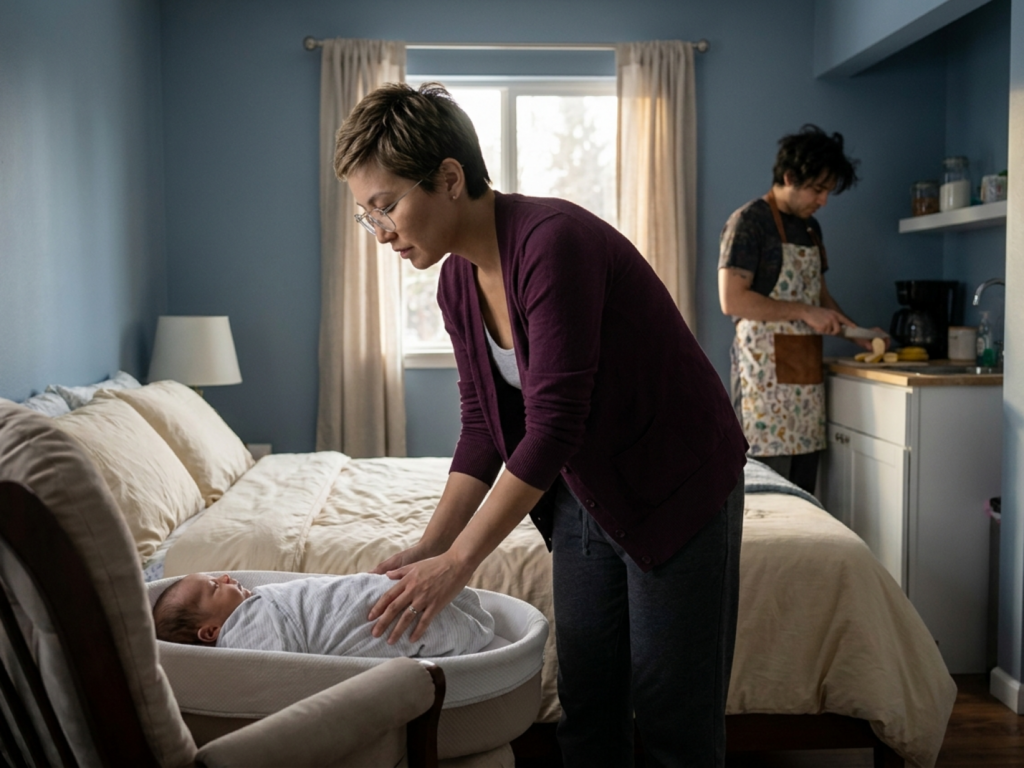
Exhaustion increases the chance that a caregiver will unintentionally fall asleep during nighttime care or a daytime contact nap. Plan in advance for where the baby will sleep. The recommended arrangement described by pediatric safe-sleep guidance is a separate, firm, flat sleep surface with the baby placed on the back for every sleep. Keep the sleep area free of pillows, loose blankets, quilts, bumper pads, and soft objects that could obstruct breathing.
Room-sharing can make it easier to respond to the baby while avoiding the hazards associated with bed-sharing. Keep the baby’s bassinet or crib close to your bed, but do not place the baby on an adult mattress, sofa, recliner, or padded chair for sleep. If you bring the baby into bed to feed or comfort, return the baby to the separate sleep surface before you fall asleep.
Check the environment before each nap, particularly if you are unusually tired. Remove cords and loose materials from the sleep area, use only equipment intended for infant sleep, and follow the manufacturer’s safety instructions. Avoid relying on wearable monitors or consumer devices as a replacement for direct safe-sleep practices. If you are uncertain whether a product or sleep arrangement is safe, ask the baby’s pediatric clinician.
Use a Low-Demand Day Plan
After a fragmented night, aim for predictable essentials rather than a full schedule. A simple sequence can be: feed the baby according to the established plan, change the diaper as needed, complete brief age-appropriate interaction, place the baby safely for sleep, and rest or accept help. Babies do not require elaborate entertainment during every wake period. Quiet holding, talking, and ordinary household interaction may be sufficient when the caregiver is depleted.
Do not drive if you feel drowsy, have difficulty keeping your eyes open, or notice lapses in attention. Arrange transportation for pediatric visits, pharmacy trips, or errands. Avoid carrying the baby on stairs when you feel unsteady, cooking while holding the baby, or using hot liquids and sharp equipment during periods of marked fatigue. A carrier does not remove the need for alertness and correct positioning.
Record only information that genuinely supports care, such as feeds, medications given according to instructions, wet diapers, or symptoms requested by the clinician. Excessive tracking can increase burden and anxiety. If another adult is sharing care, use a brief handoff that states when the baby last fed, any medication administered, current concerns, and where the baby will sleep.
Know When to Seek Help
Contact the baby’s healthcare professional promptly if the baby has breathing difficulty, bluish or gray discoloration, unusual difficulty waking, poor feeding, repeated vomiting, a marked reduction in wet diapers, a fever in an age group for which fever is urgent, or any symptom that concerns you. Emergency services are appropriate for severe breathing problems, unresponsiveness, seizure, or a rapidly deteriorating condition.
Caregiver symptoms also deserve attention. Seek urgent medical care for severe headache with visual changes, chest pain, shortness of breath, heavy bleeding, fainting, unilateral leg swelling or pain, confusion, or thoughts of harming yourself or the baby. Postpartum complications can occur even when the main complaint initially seems to be fatigue.
Persistent inability to sleep even when the baby is sleeping, severe anxiety, hopelessness, intrusive frightening thoughts, or feeling detached from reality should be discussed with a healthcare professional urgently. These experiences can be associated with postpartum mental-health conditions and are treatable, but they should not be managed alone. Tell a trusted person what is happening and ask them to remain with you and the baby while help is arranged.
Safety Warnings
- Never shake, hit, or roughly handle a crying baby.
- Do not sleep with the baby on a sofa, recliner, armchair, or adult bed.
- Do not drive or perform hazardous tasks when drowsy or experiencing microsleeps.
- Place the baby in a safe sleep space if you may fall asleep while holding or feeding.
- Seek urgent help for infant breathing difficulty, unresponsiveness, or severe caregiver symptoms.
Tools & Assistance
- A written handoff sheet for feeds, diapers, medications, and current concerns
- A phone alarm or shared calendar for protected sleep blocks and support shifts
- A prepared basket containing water, snacks, burp cloths, diapers, and feeding supplies
- A partner, relative, friend, postpartum doula, community service, pediatric office, or public health program
- Local emergency services, a poison center, or a crisis service when urgent safety concerns arise
FAQ
What should I do if I am afraid I will fall asleep while feeding my baby?
Place the baby in a separate, firm, flat sleep space and call another adult to take over if possible. Avoid feeding on a sofa or armchair. If you bring the baby into bed to feed, return the baby to the separate sleep surface before you fall asleep.
Can caffeine make it safe to drive after a sleepless night?
Caffeine may briefly increase the feeling of alertness but does not reliably restore reaction time or judgment. Do not drive if you are drowsy, having trouble keeping your eyes open, or experiencing lapses in attention.
How can another adult help if I am breastfeeding?
They can handle diapering, settling, household tasks, and bringing the baby to and from the feeding area. Any change involving expressed milk, formula, or feeding intervals should fit the baby's individualized plan and be discussed with a clinician when needed.
When is exhaustion more than ordinary sleep deprivation?
Seek professional help for persistent inability to sleep despite an opportunity, severe anxiety or hopelessness, confusion, feeling detached from reality, or thoughts of harming yourself or the baby. Emergency help is needed when immediate safety is at risk.
Sources
- HealthyChildren.org — Safe Sleep Tips for Sleep-Deprived Parents
- U.S. Department of Health and Human Services — Reclaiming Rest: Tip Sheet for Postpartum Mothers
- PubMed Central — Sleep-deprived new mothers gave their infants a higher priority than their own needs
Disclaimer
This article is for general educational purposes and does not diagnose, treat, or replace advice from a qualified healthcare professional. Seek urgent medical care for emergency symptoms or immediate safety concerns.


















Please log in to leave a comment.