
Intro
Teenagers often need products that support independence, hygiene, school life, sleep, movement, digital safety, and emotional regulation without making them feel managed or infantilized. A good must-have list is not about buying the most expensive items; it is about choosing practical gear that reduces daily friction and respects a teenager’s growing autonomy.
This guide takes a medically cautious, developmentally aware approach. It highlights core products that can support adolescent wellbeing, with special attention to simple, evidence-aligned skin care because teen marketing can be confusing and sometimes irritating to the skin barrier.
Highlights
The best teen gear is practical, safe, non-stigmatizing, and easy to use consistently.
For skin care, a simple cleanser, moisturizer, and broad-spectrum SPF 30+ sunscreen routine is usually safer than a complex viral regimen.
Teen product choices should support sleep, physical activity, menstrual or body care needs, school organization, and mental health literacy.
Products should be selected with the teenager’s input whenever possible, especially for appearance, privacy, and sensory preferences.
How to think about teen products before you buy
Teenagers are in a developmental stage marked by rapid neurocognitive maturation, identity formation, puberty-related body changes, and increasing peer influence. That means a product that is medically sensible but socially unacceptable to the teen may never be used. The best products are not only safe; they fit the teenager’s routines, sensory preferences, school rules, sports schedule, and privacy needs.
A helpful approach is to divide teen gear into four categories: daily health, school and organization, movement and safety, and emotional or digital wellbeing. This prevents overbuying and helps families avoid products driven mainly by advertising. It also makes room for age-based child product choices: a younger adolescent may need more reminders and durable supplies, while an older teen may need tools that support independent scheduling, self-advocacy, and preparation for college, work, or travel.
Whenever possible, involve the teen in the decision. Ask: “What problem are we trying to solve?” For example, is the issue oily skin after sports, a backpack that causes shoulder strain, difficulty waking up, or anxiety about managing periods at school? A targeted product is usually more useful than a large bundle. If a teen has eczema, acne, allergies, migraines, eating difficulties, a disability, or a chronic condition, ask their healthcare professional whether any product features should be avoided or prioritized.
Teen skin care essentials: keep the routine simple
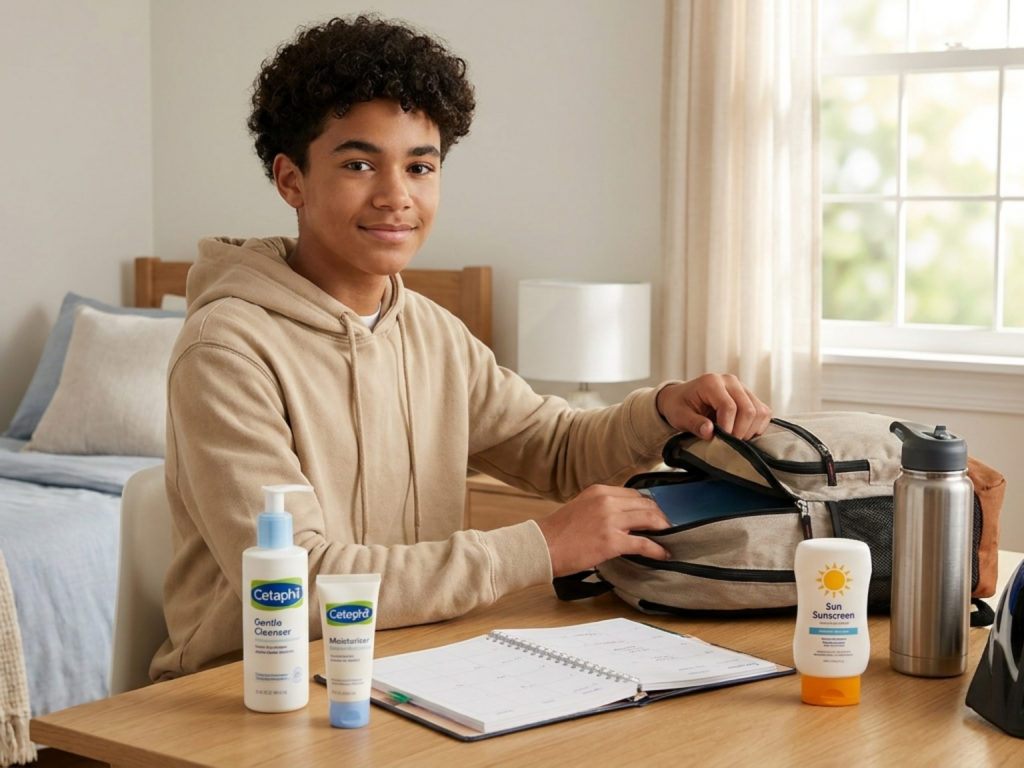
Skin care is one of the most heavily marketed product categories for tweens and teens. The American Academy of Pediatrics emphasizes that many young people do best with a simple routine: gentle cleansing, moisturizing, and daily sun protection. This is especially important because the adolescent skin barrier can be irritated by harsh products, frequent exfoliation, fragrance, and multiple active ingredients used at once.
A practical teen skin care gear list can include:
- Gentle cleanser: choose a fragrance-free, pH-balanced, non-abrasive cleanser. It should remove sweat, sunscreen, and sebum without leaving the skin tight or burning.
- Lightweight moisturizer: look for non-comedogenic formulas that support barrier function. Ingredients such as glycerin, ceramides, and hyaluronic acid are commonly used to help retain water and reduce dryness.
- Broad-spectrum sunscreen: daily SPF 30 or higher is a core product. Mineral sunscreens can be a good option for many teens, particularly when irritation is a concern.
- Sports or school backup: a small travel cleanser, sunscreen stick, or non-fragranced moisturizer can help after practice, swimming, or outdoor activities.
Products to approach cautiously include physical scrubs, high-alcohol toners, strong fragrances, and sulfate-heavy cleansers, because they may worsen dryness or irritation. If acne is persistent, painful, scarring, or emotionally distressing, families should not rely only on over-the-counter trends. A pediatrician or dermatologist can discuss evidence-based options without shaming the teen.
Hygiene, body care, and puberty supplies
Puberty changes sweat, sebum production, hair growth, menstruation, genital hygiene needs, and body odor. The goal is to give teens private, nonjudgmental access to supplies before they urgently need them. This supports dignity and reduces embarrassment at school or during activities.
Useful body care products may include a mild body wash, deodorant or antiperspirant, unscented lotion, lip balm with SPF, a soft towel for sports, and a compact hygiene pouch. Teens who menstruate may benefit from a choice of pads, tampons, period underwear, or menstrual cups, depending on comfort, maturity, anatomy, cultural preferences, and access to safe changing facilities. They should also have a discreet way to carry supplies and a plan for leaks, pain, or unexpected bleeding at school.
For shaving or hair removal, prioritize skin protection rather than perfection. A clean razor, shave gel or cream, and moisturizer may reduce irritation. Teens should be told not to share razors because of infection risk. For any rash, recurrent folliculitis, genital irritation, severe menstrual pain, very heavy bleeding, or concerning discharge, it is safer to consult a clinician than to keep trying new products.
Dental gear is also part of puberty care. A soft-bristled toothbrush, fluoride toothpaste, floss or interdental brushes, orthodontic wax if needed, and a mouthguard for contact sports can support oral health. Teens with braces may need a small school kit to clean comfortably after meals.
School organization gear that reduces cognitive load
Adolescents are developing executive functions such as planning, working memory, prioritization, and inhibition. Even capable students can struggle when assignments, extracurriculars, sleep debt, and digital notifications collide. The best school gear should make routines visible and repeatable.
Helpful school-age organization tools for teenagers include a supportive backpack with padded straps, a planner or digital calendar, labeled folders, a simple pencil case, a water bottle, noise-reducing headphones where permitted, and a charging system for approved devices. A small “reset kit” can be useful: tissues, lip balm, menstrual products if relevant, a spare mask if needed by school policy or health status, and emergency contact information.
Backpack fit matters. A bag that is too heavy or poorly adjusted can contribute to discomfort, especially if the teen walks long distances or carries sports gear. Encourage teens to use both straps, clean out unnecessary items weekly, and use lockers or digital materials when available.
For neurodivergent teens, students with anxiety, or those with chronic medical conditions, organization products may be part of a broader support plan. Visual schedules, medication reminder systems, or sensory tools should be discussed respectfully and, when relevant, coordinated with school staff or clinicians. Products should never substitute for legally appropriate accommodations, mental health care, or medical care.
Sleep, recovery, and room essentials
Teenagers often experience a biologically later sleep phase, while early school start times and evening screens can compress total sleep. Products cannot solve all sleep problems, but the right environment can lower barriers to rest. A supportive mattress and pillow, breathable bedding, blackout curtains or an eye mask, and a reliable alarm can all help create a consistent sleep setting.
A charging station outside the bed area is one of the most practical teen room products. It reduces the temptation to scroll late at night and supports family agreements about notifications, homework, and downtime. If a teen uses a phone as an alarm, consider a separate alarm clock so the phone can remain away from the pillow.
Other useful items include a dimmable lamp for evening reading, a laundry hamper that is easy to use, a small trash bin, and storage that supports independence rather than perfection. The goal is a room that helps the teen recover, study, and manage personal care with less conflict.
Persistent insomnia, loud snoring, witnessed breathing pauses, severe daytime sleepiness, restless legs, or mood changes associated with sleep disruption should be discussed with a healthcare professional. These may require medical evaluation rather than more sleep products.
Movement, sports, and outdoor safety products
Teenagers benefit from safe opportunities to move, play, commute, and participate in sports or recreation. Must-have gear depends on the activity, but proper fit and consistent use matter more than brand. For cycling, skating, scooters, or similar activities, a certified helmet that fits correctly is essential. For organized sports, teens may need sport-specific protective equipment such as mouthguards, eye protection, shin guards, or supportive footwear.
A reusable water bottle, weather-appropriate layers, sunscreen, and a small first-aid kit can make outdoor activity easier. Teens who train intensely may need guidance on hydration, fueling, injury prevention, and recovery from a coach, athletic trainer, physician, or dietitian. Products marketed for performance, weight change, or muscle gain should be approached with caution, especially supplements. Some may contain undisclosed ingredients or interact with medications.
For teens who walk, bike, or use public transportation, visibility and communication tools can be useful: reflective details, a charged phone, emergency contacts, and agreed-upon check-in plans. Families should balance safety with autonomy. The most effective gear is paired with skills: road awareness, consent and boundary education, emergency planning, and knowing when to call a trusted adult.
Digital, mental health, and independence tools
Teen gear is not only physical. Adolescents need tools for digital boundaries, health literacy, emotional regulation, and gradually increasing independence. Useful adolescent health literacy tools may include a private symptom or cycle tracker, a medication list, a notes app for questions before medical visits, and reliable education resources recommended by clinicians or schools.
For digital wellbeing, consider a family charging station, app limits, privacy settings, password management, and a clear plan for online harassment or unsafe contact. These tools work best when teens understand the reason behind them. Framing digital safety as skill-building rather than surveillance can preserve trust.
Emotional regulation products can be simple: a journal, art supplies, calming music access, a weighted blanket if the teen finds it comfortable, or sensory items that are allowed at school. However, products should not be presented as a cure for anxiety, depression, trauma, eating disorders, self-harm, or substance use concerns. If a teen shows persistent sadness, withdrawal, panic symptoms, self-injury, disordered eating, or thoughts of death, prompt professional support is necessary.
Independence gear can include a wallet, transit card holder, home key plan, basic cooking tools, laundry supplies, and a medical information card if the teen has allergies or chronic conditions. These items communicate confidence: “You are growing, and we will help you practice safely.”
A practical must-have checklist for most teenagers
A balanced teen must-have list should be short enough to maintain and flexible enough to personalize. Start with the essentials, then add items for sports, menstruation, braces, chronic conditions, climate, school requirements, or sensory preferences.
- Skin care: gentle fragrance-free cleanser, lightweight non-comedogenic moisturizer, broad-spectrum SPF 30+ sunscreen.
- Hygiene: deodorant or antiperspirant, mild body wash, dental kit, lip balm, menstrual supplies if needed, and a discreet pouch.
- School: ergonomic backpack, planner or calendar, folders, water bottle, pencil case, approved headphones, and charging supplies.
- Sleep: comfortable bedding, alarm clock, dim light, phone charging area away from the bed, and simple room organization.
- Safety and activity: correctly fitted helmet when relevant, sport-specific protective gear, sunscreen for outdoor activities, reflective items, and emergency contacts.
- Independence: wallet, keys, medication list if applicable, basic laundry supplies, and a plan for contacting caregivers or clinicians.
Review the list with the teen every few months. Bodies, schedules, schools, friend groups, and activities change quickly during adolescence. The “best” product is the one that is safe, acceptable, and used consistently, not the one most promoted online.
When to pause and seek professional guidance
- Severe, painful, scarring, or persistent acne should be discussed with a pediatrician or dermatologist.
- Stop using a skin product if it causes burning, swelling, blistering, or worsening rash, and seek medical advice.
- Heavy menstrual bleeding, severe pelvic pain, fainting, or recurrent school absence due to periods deserves clinical evaluation.
- Sleep problems with loud snoring, breathing pauses, or major daytime impairment should not be managed only with products.
- Any self-harm, suicidal thoughts, disordered eating, or substance use concern requires prompt professional support.
Tools & Assistance
- Create a teen-approved checklist for school, hygiene, sleep, and activity gear.
- Ask a pediatrician or dermatologist before using strong acne actives or multiple exfoliating products.
- Keep a written medication, allergy, and emergency contact list in an accessible place.
- Schedule periodic backpack, skincare, and sleep-routine reviews with the teen.
- Use school nurses, counselors, athletic trainers, or primary care clinicians as support partners when appropriate.
FAQ
What are the most essential skin care products for a teenager?
For many teens, the basics are a gentle fragrance-free cleanser, a lightweight non-comedogenic moisturizer, and broad-spectrum SPF 30+ sunscreen.
Should teenagers use complicated skin care routines from social media?
Usually no. Multiple active ingredients, scrubs, fragrance, and harsh toners can irritate the skin barrier. A clinician can advise if acne or another skin concern needs treatment.
What gear helps teens become more independent?
A planner or calendar, wallet, keys, transit tools, hygiene pouch, medication or allergy list if relevant, and basic laundry supplies can support safe independence.
How often should parents update a teenager’s must-have list?
Review it every few months or when school schedules, sports, puberty needs, medical conditions, or climate demands change.
Sources
- American Academy of Pediatrics — Trendy Skin Care for Tweens & Teens: Is It Safe?
- Clinikally — Best skin care products for teens suggested according to dermatologists
- New York Magazine, The Strategist — Best Skin-Care Routine for Teens and Tweens
Disclaimer
This article is for general educational purposes and does not diagnose, treat, or prescribe. Consult a qualified healthcare professional for personal medical concerns or product-related reactions.












Please log in to leave a comment.