
Intro
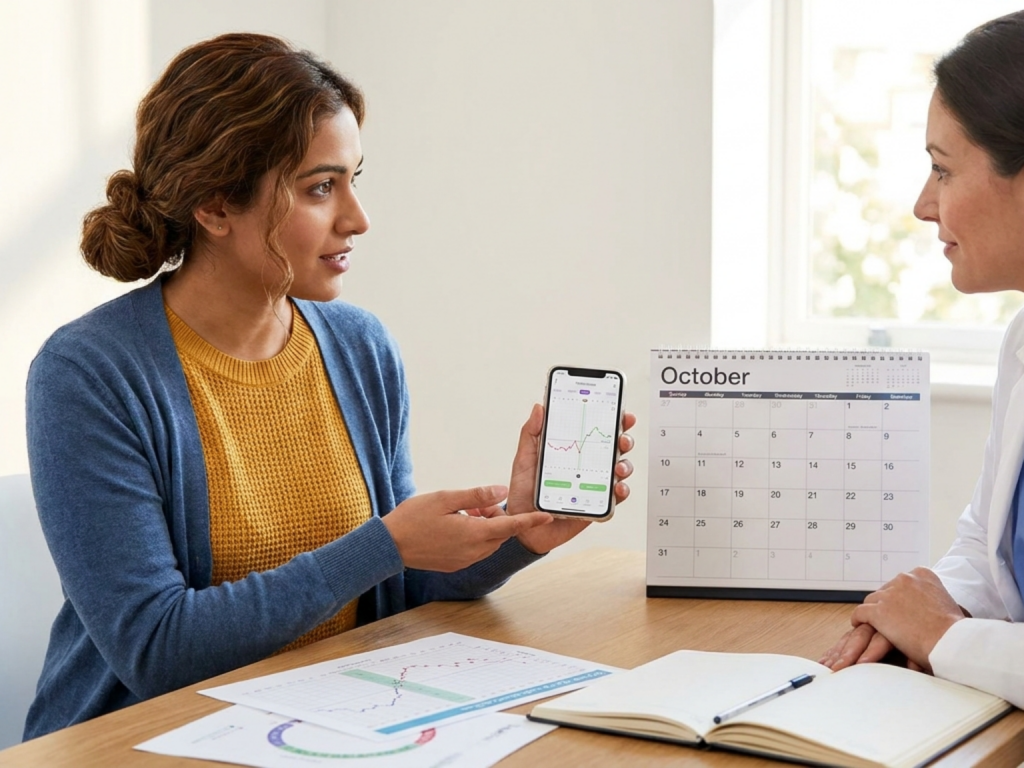
Fertility apps can be useful companions when you are trying to understand your cycle, time intercourse more intentionally, or organize information for a fertility evaluation. The best ones do more than draw a calendar. They help you collect reliable data, interpret it cautiously, and turn it into something you can actually use with a clinician.
If you are evaluating apps, think less about promises and more about clinical usefulness: accurate cycle logging, flexible tracking, secure sharing, and features that respect the limits of prediction. A well-designed app can support both natural fertility awareness and fertility treatment, while still acknowledging that conception is never fully predictable.
Highlights
The most useful fertility apps help you track real biological signals, not just calendar dates.
Look for tools that support the fertile window, ovulation test data, basal body temperature, and cervical mucus logging.
Good apps make it easier to prepare for appointments, share records, and follow treatment timelines.
Transparent cost, privacy, and success-rate information matters as much as visual design.
The best apps support emotional well-being without overpromising results.
Start with accuracy, not hype
The first feature to look for is honest positioning. A strong fertility app should explain what it can estimate, what it cannot know, and how it generates its predictions. Apps that rely on the menstrual cycle alone may be helpful for basic organization, but cycle dates are only one part of the picture. Fertility is influenced by ovulation timing, cycle variability, and whether the app allows you to add biologic signs instead of guessing from dates alone.
For people trying to conceive, the key question is whether the app helps identify the fertile window in a way that is understandable and appropriately cautious. Apps should not imply certainty where none exists. In practice, that means showing confidence ranges, explaining assumptions, and making room for irregular cycles. If your cycles are not predictable, a rigid calendar-only app can be misleading. The better choice is a tool that treats prediction as a probability, not a promise.
Track the signals that matter in real life
Strong fertility apps let you log the data that reproductive specialists actually use to understand cycle patterns. That includes bleeding days, spotting, cervical changes, ovulation symptoms, and test results from an ovulation test or ovulation predictor kits. If you use fertility-awareness methods, the app should also support basal body temperature entries and cervical mucus observations without forcing you into a one-size-fits-all template.
Look for flexible input fields rather than overly simple checkboxes. For example, an app should let you note whether the cervix feels dry, sticky, creamy, or egg-white-like, and whether temperature readings were taken at the same time each morning. If the app supports basal body temperature tracking, it should display trends clearly and preserve raw data so you can review patterns yourself. The goal is not to turn every user into a diagnostician. The goal is to make the data useful enough to discuss with a clinician and accurate enough to avoid false reassurance.
Choose features that support action, not just observation
The best apps help you do something with the information you collect. That may include reminders for medication, prompts to record intercourse timing, or guidance on timing intercourse around ovulation when you are trying to conceive. Evidence-based timing support is especially helpful because fertile days are limited and easy to miss when life is busy. A clear calendar, daily reminders, and a simple interface can make the difference between tracking data and actually using it.
Apps are also more valuable when they help you prepare for appointments. Mayo Clinic recommends keeping lists of medications and supplements, writing down questions for visits, and organizing records related to evaluation and treatment. A practical fertility app can mirror that workflow with a medication list, appointment checklist, lab result storage, and treatment timeline. If you are in active care, features for injections, monitoring visits, procedure dates, and embryo freezing records can reduce the risk of missing an important step. In other words, the app should work like a calm administrative assistant, not a noisy notification machine.
A thoughtfully designed app may also flag when you have enough information to ask about a fertility evaluation after 12 months of trying, or earlier if your clinician has advised sooner review. That kind of nudge is useful only when it is framed as a suggestion to discuss with a professional, not as a diagnosis.
Make sure it supports clinician communication
Continuity of care is one of the most overlooked features in fertility apps. People often move between a primary care clinician, an OB-GYN, a reproductive endocrinologist, a laboratory, and sometimes a counselor or nutrition specialist. An app becomes more useful when it helps those parts of care talk to each other. Exportable reports, PDF summaries, and clear trend charts can make appointments more productive because you spend less time reconstructing dates from memory.
Look for secure sharing options that let you control what is shared and with whom. A good app should support readable summaries of cycle patterns, medication changes, symptom trends, and test dates. It is even better if the app lets you store questions for the next visit, note side effects, and keep a timeline of procedures or lab results. That kind of continuity is especially valuable when there are several months between appointments. Instead of forcing you to start over each time, the app should preserve the story of your care in a way that is clinically useful and easy to review.
Look closely at cost, transparency, and privacy
Cost matters, especially when fertility care already includes expensive testing or treatment. Research on patient priorities in fertility care shows that people care deeply about out-of-pocket costs, success rates, side effects, counseling or peer support, and continuity. A strong app reflects those priorities by being transparent about subscription fees, trial periods, in-app purchases, and which features are behind a paywall. If you are comparing apps, the question is not whether the app is free. It is whether the paid features are actually useful to you.
Success-rate dashboards should also be treated carefully. If an app shows outcomes, it should explain how the numbers are calculated, what the denominator is, and whether the data come from clinical studies, user reports, or marketing claims. Fertility outcomes are influenced by age, diagnosis, treatment type, and many other factors, so oversimplified percentages can be misleading. Privacy is equally important. Look for clear information about data encryption, account deletion, and whether your reproductive data are shared with advertisers or third parties. When data are this personal, a vague privacy policy is a red flag rather than a small print detail.
Support the emotional side of fertility care
Fertility tracking can become emotionally intense very quickly, so the best apps offer support without becoming judgmental. Features such as mood logging, journaling, reminder customization, and access to educational or peer-support resources can help people stay engaged without feeling overwhelmed. This is not a replacement for counseling, but it can be a meaningful bridge between appointments. The point is to make space for uncertainty, not to erase it.
Personalization matters here as well. A good app should adapt to your stage of care, whether you are simply learning your cycle, timing intercourse, or tracking a treatment protocol. It should let you choose the reminders you want, hide the ones you do not, and change language that feels too rigid or medical for your needs. People also benefit when the app recognizes that different cycles require different levels of detail. Someone with predictable ovulation may want light-touch reminders, while someone with irregular cycles or active treatment may need more robust support. The best fertility apps respect that difference instead of pushing every user through the same experience.
Finally, choose an app that encourages appropriate clinical follow-up. If charts become confusing, symptoms change, or you feel pressure from app outputs that do not match your lived experience, a healthcare professional can help interpret the data in context. Technology is strongest when it supports the conversation, not when it tries to replace it.
When to be cautious
- Do not treat an app prediction as a medical diagnosis of ovulation or infertility.
- Be wary of apps that guarantee pregnancy, exact ovulation dates, or one-size-fits-all advice.
- Seek medical review if cycles are very irregular, painful, or suddenly change.
- Bring app data to a clinician when results conflict with symptoms or test results.
- Use privacy settings carefully if the app stores sensitive reproductive health information.
Tools & Assistance
- A reproductive endocrinology or OB-GYN clinic for personalized review of cycle data
- A secure patient portal for sharing app summaries and lab results
- A medication and supplement list you can update before appointments
- A simple note template for fertility questions and symptom tracking
FAQ
Can a fertility app tell me exactly when I ovulate?
Not exactly. The best apps estimate patterns using cycle data, temperature trends, cervical mucus, and test results, but ovulation can still vary from cycle to cycle.
What data should I log first?
Start with cycle start dates, bleeding days, ovulation test results, and any basal body temperature or cervical mucus observations you are already collecting.
Are paid fertility apps better than free ones?
Not automatically. Paid apps may offer better exports, reminders, or privacy controls, but the most important question is whether the features match your needs.
When should I share app data with a clinician?
Share it whenever you are preparing for evaluation, starting treatment, or noticing irregular patterns, side effects, or confusing results.
Sources
- PubMed Central (PMC) — What Features of Fertility Treatment do Patients Value?
- Mayo Clinic — Infertility - Diagnosis and treatment
- American Society for Reproductive Medicine — Optimizing natural fertility: a committee opinion (2022)
Disclaimer
This article is for general educational purposes only and is not a substitute for individualized medical advice, diagnosis, or treatment. Please consult a qualified healthcare professional for questions about fertility, cycle changes, or treatment decisions.
















Please log in to leave a comment.