
Intro
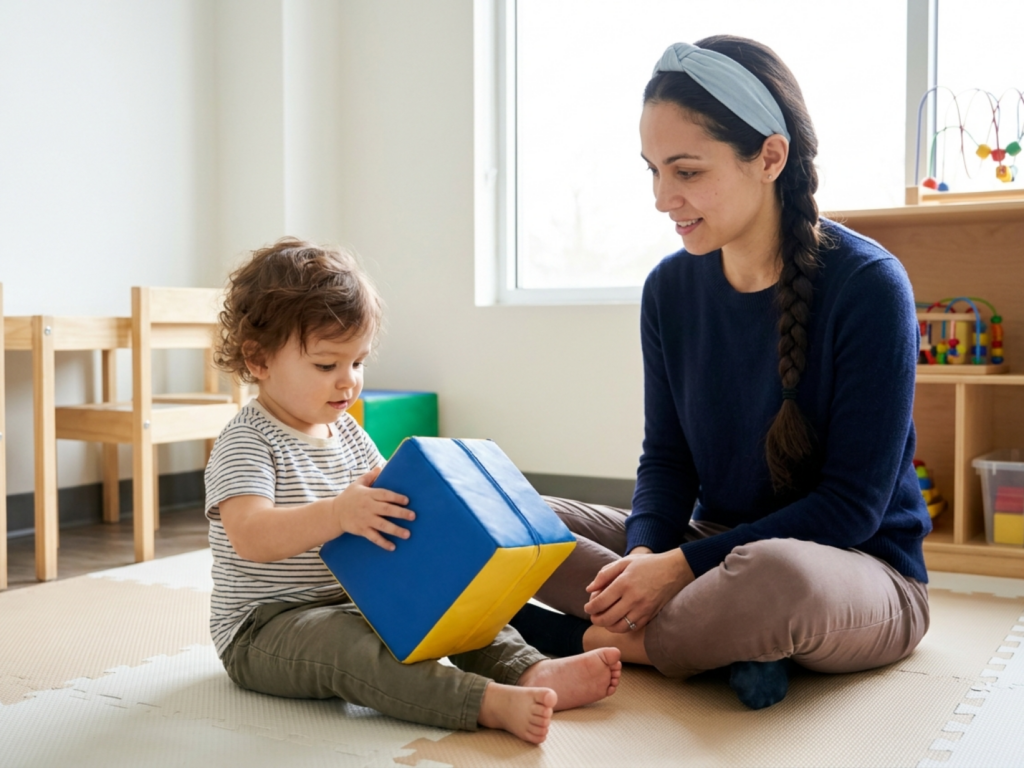
When a baby bangs two blocks, spoons, cups, or rattles together, it can look noisy, repetitive, or even a little chaotic. Developmentally, however, this behavior is often a sophisticated form of early learning: the baby is testing force, sound, texture, timing, body position, and social response all at once.
This article explains why banging objects together is usually a normal part of infant exploration, how it relates to motor and perceptual development, how caregivers can support it safely, and when it may be worth discussing concerns with a pediatrician, developmental specialist, occupational therapist, or physical therapist.
Highlights
Banging objects together is commonly part of exploratory play, not simply random noise.
This action helps babies connect movement, sensation, sound, object properties, and social feedback.
Caregivers can support learning with safe materials, calm observation, and responsive interaction.
Medical or developmental guidance is appropriate if banging is accompanied by loss of skills, persistent asymmetry, unusually limited exploration, or safety-compromising behavior.
Why Banging Is Meaningful
Banging objects together during infancy is often a normal expression of sensorimotor exploration. A baby is not only making noise; they are gathering information through vision, touch, proprioception, hearing, and movement. Each strike gives rapid feedback: the object feels hard or soft, the sound is sharp or muted, the surface resists or moves, and the baby’s hands learn how much force is needed.
In developmental science, this fits within perception-action learning, the process by which infants learn that their movements change what they perceive. When a baby hits a wooden block against a tray and then tries the same motion with a soft fabric toy, the contrast teaches object properties. Hard objects may create a louder sound and a clearer vibration, while soft objects may absorb impact. These differences help the baby learn affordances, meaning what an object allows the body to do with it.
This behavior also builds foundations for later tool use. Before a child can intentionally use a spoon, hammer-shaped toy, crayon, or shape sorter, they need repeated practice controlling the arm, wrist, hand, grip, and timing of contact. Banging is one early route into that control. It may look simple, but it involves coordinated motor planning, bilateral hand use, postural stability, and attention.
How The Skill Emerges
Exploratory banging changes across the first year and beyond. Younger infants may begin with broad, less controlled arm movements that accidentally bring an object into contact with a surface. With repetition, the action becomes more organized. The baby may pause, look, adjust their grip, lift the object higher, or change the rhythm. These small changes show that the child is not merely repeating a reflexive motion but refining control.
Research on infant object manipulation suggests that babies adapt banging to the physical situation. They may bang differently depending on whether the surface is soft, rigid, flat, angled, noisy, or unstable. They may also alter force when an object is heavy, light, smooth, easy to grasp, or awkward. This is clinically interesting because it shows early integration of sensory feedback and motor output.
Posture matters too. A baby lying on the floor, sitting with support, sitting independently, or standing at a low table has different degrees of stability and reach. A stable trunk frees the arms for more precise hand use, while an unstable posture may make banging less controlled. This is one reason safe floor space for movement and varied, supervised positions can support richer exploration without requiring formal teaching.
What Babies Learn From Sound And Impact
Banging objects together creates immediate cause-and-effect learning. The baby moves, something happens, and the result can be repeated or changed. This loop strengthens attention, prediction, and problem-solving. If the same motion creates the same sound, the baby begins to anticipate the result. If a new object changes the sound, the baby notices novelty and may experiment again.
The auditory component can be especially engaging. A metal spoon against a plastic bowl, a soft block against a mat, and two wooden blocks together all produce different acoustic feedback. These contrasts help babies discriminate intensity, pitch, duration, and rhythm in everyday play. For families interested in sound and music activities baby routines can include gentle tapping, clapping, shaking, and caregiver singing, as long as the volume stays comfortable.
Impact play also supports fine motor skills. Babies practice grasp strength, finger opening and closing, midline play, hand-to-hand transfer, and bilateral coordination. When two hands hold two objects and bring them together, the brain must coordinate both sides of the body around a shared target. That coordination later supports feeding, dressing, drawing, stacking, and many other daily skills.
Setting Up Safe Exploration
The goal is not to stop banging but to make it safe, tolerable, and developmentally useful. Offer objects that are large enough not to be a choking hazard, sturdy enough not to break, and light enough for the baby to control. Age-appropriate objects might include soft blocks, silicone cups, wooden rings, stacking cups, large rattles, or baby-safe textured toys. Avoid glass, sharp edges, brittle plastic, small detachable pieces, heavy metal objects, and anything with button batteries or loose magnets.
Sound level matters. Babies vary in sensory reactivity, and some become distressed by sudden loud noise. Choose low-volume materials first, such as soft blocks or lightweight cups, and observe the baby’s cues. Turning away, crying, stiffening, blinking repeatedly, or seeming overwhelmed may mean the activity needs to pause or become quieter. If sound sensitivity in infants is persistent, intense, or affects feeding, sleep, or daily care, it is reasonable to raise it with a pediatric clinician.
- Use direct supervision, especially when the baby is seated, near furniture, or exploring new objects.
- Create a clear play area away from cords, breakable objects, hot drinks, pets’ bowls, and older siblings’ small toys.
- Rotate materials rather than offering too many at once, which can overwhelm attention.
- Choose safe instruments for babies, such as soft shakers or sturdy baby drums, when exploring rhythm.
Supporting Without Taking Over
Caregivers can support banging play most effectively by joining the baby’s curiosity without controlling every movement. A responsive relationship matters more than a perfect activity. Sit nearby, watch what the baby is already trying, and narrate simply: “That was loud,” “You tapped the cup,” or “The soft block is quiet.” This gives language to sensory experiences without turning play into a performance.
Imitation can be powerful. If the baby bangs two cups together, the adult can copy the rhythm once, pause, and wait. The pause invites turn-taking, joint attention, and early communication. The baby may look back, smile, repeat the movement, or change the sound. These small back-and-forth exchanges support social development as well as motor learning.
For families wondering How to use toys effectively, the key is to offer simple choices and then let the baby test them. Expensive toys are not necessary. A few safe household materials can be just as useful when they differ in texture, weight, shape, and sound. Activities to encourage baby milestones should feel like warm opportunities, not drills. If the baby loses interest, mouths the object, drops it repeatedly, or crawls away, that is still exploration.
When To Seek Guidance
Most banging during exploration is not concerning by itself. It becomes more important to look at the whole developmental picture: movement quality, social engagement, sensory tolerance, play variety, feeding, sleep, hearing, vision, and progression of skills over time. No single play behavior can diagnose a developmental condition, and caregivers should not be expected to interpret it alone.
Consider discussing concerns with a healthcare professional if banging is accompanied by developmental regression, such as loss of previously acquired babbling, reaching, sitting, eye contact, or social interaction. Guidance is also appropriate for persistent infant movement asymmetry, such as consistently using only one hand, keeping one fist closed, turning the head mostly to one side, or showing a clear difference in strength or coordination between sides.
Other reasons to seek review include very limited curiosity about objects, inability to grasp or release objects at an expected age, extreme distress with ordinary sounds, repeated self-injury, or play that is so rigid that the baby cannot shift attention to people, feeding, soothing, or sleep. A pediatrician may recommend observation, developmental screening, hearing or vision evaluation, occupational therapy, physical therapy, or early intervention services for infants. Early support is not a label; it is a way to understand the baby’s needs and make daily routines easier.
When To Get Help
- Seek urgent care for head injury, suspected swallowed objects, choking, breathing difficulty, or severe bleeding.
- Ask a pediatric clinician about loss of previously acquired motor, language, or social skills.
- Discuss persistent one-sided hand use, stiffness, floppiness, or marked movement asymmetry.
- Review intense sound distress, repeated self-injury, or unsafe repetitive banging with a healthcare professional.
- Use only supervised, age-appropriate objects and avoid small parts, button batteries, magnets, glass, and heavy items.
Tools & Assistance
- Observe the baby's posture, grip, rhythm, and response to different object textures.
- Offer two or three safe objects at a time in a supervised floor play area.
- Use quiet, durable household materials such as stacking cups or soft blocks.
- Track concerns over time and bring specific examples to pediatric visits.
- Contact early intervention services if a clinician or caregiver has developmental concerns.
FAQ
Is banging objects together normal for babies?
Often, yes. It is commonly part of exploratory play and can support motor control, sensory learning, and cause-and-effect understanding.
Should I stop my baby from banging toys?
Usually no, unless the objects are unsafe, the noise is too intense, or the baby is hurting themselves or others. Redirect to safer, quieter materials.
What objects are safest for this type of play?
Large, sturdy, lightweight, washable objects without sharp edges, small parts, batteries, magnets, or breakable pieces are safest.
Can banging be a sign of a developmental problem?
Banging alone does not diagnose anything. Seek professional guidance if it occurs with regression, persistent asymmetry, limited interaction, extreme sensory distress, or repeated injury.
Sources
- PubMed Central — Young Children's Interactions with Objects: Play as Practice and Tool Use
- PubMed Central — Building Tool Use From Object Manipulation: A Perception-Action Perspective
- PubMed Central — Object exploration is facilitated by the physical and social environment
Disclaimer
This article is for general educational purposes only and is not a diagnosis or treatment plan. Consult a qualified healthcare professional for concerns about a baby's development, safety, hearing, vision, or behavior.














Please log in to leave a comment.