
Intro
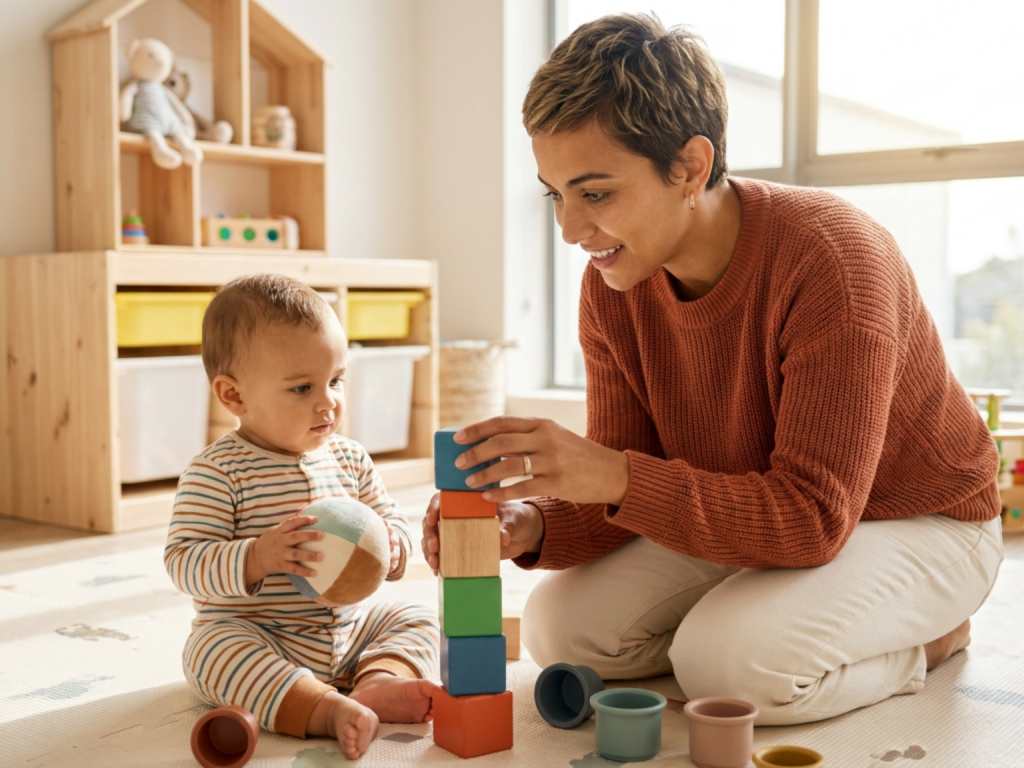
Toys can do far more than keep a baby occupied. When chosen and used thoughtfully, they can support sensory exploration, motor practice, early problem-solving, and warm back-and-forth interaction with a caregiver. The key is not the number of toys, but how they fit the baby’s developmental stage, attention span, and safety needs.
For medically literate readers, it can help to think of toys as developmental tools rather than entertainment objects. The best toys are usually simple, age-appropriate, and flexible enough to invite repeated engagement. That said, toys are only one part of a baby’s learning environment, and they work best alongside responsive caregiving, conversation, and safe physical play.
Highlights
Effective toy use is about matching the toy to the baby’s developmental stage, not buying the most stimulating option.
Open-ended toys often support creativity, persistence, and parent-infant interaction better than toys that do everything for the child.
Safety matters every time: check for choking hazards, battery compartments, toxic materials, and wear before use.
Short, repeated play sessions are often more useful than long sessions that leave a baby overstimulated.
Toys are most effective when adults use them as a shared activity, not just a distraction.
Start with the baby’s current abilities
The most effective toy is one that fits what the baby can already do and what they are just beginning to practice. For infants and young toddlers, that often means toys that can be grasped, mouthed safely, banged, stacked, or manipulated in a simple way. A baby does not need a toy to be advanced or expensive; they need a toy that is developmentally appropriate.
A helpful rule is to ask what the toy invites the child to do. A rattle may support reaching and auditory attention. A soft block may support grasping and transferring between hands. A set of cups may support nesting, dumping, and early spatial reasoning. When the toy matches the child’s current motor and cognitive level, the baby is more likely to stay engaged and learn from repetition.
Choose open-ended toys whenever possible
Open-ended toys are those that can be used in multiple ways. Examples include blocks, nesting cups, balls, simple dolls, fabric pieces, and household-safe objects such as spoons, containers, or measuring cups. These materials tend to encourage experimentation, flexible thinking, and longer periods of attention because the toy does not dictate a single correct action.
Research summaries on play suggest that the features of a toy can affect behavior during play, including attention, peer interaction, and creative expression. In practical terms, that means a toy that lets the child decide what to do often does more for development than a toy that flashes, talks, and completes the action for them. Open-ended play also gives caregivers more opportunities to narrate, imitate, and extend the baby’s ideas.
Use toys to support specific developmental goals
Different toy types can support different areas of development. Sensory toys may help babies explore texture, sound, and movement. Toys that can be grasped, shaken, stacked, pulled apart, or pushed support fine and gross motor development. Pretend-play materials, even simple ones, can support social-emotional growth and early symbolic thinking.
It helps to be intentional. If you want to encourage hand-to-hand transfer, offer a toy that is light and easy to hold with both hands. If you want to encourage problem-solving, choose a container-and-object game such as putting blocks in and taking them out. If you want to support language, pair the toy with simple labeling and turn-taking: “You found the ball,” “Now it rolls,” or “Your turn.” The toy becomes more effective when it is tied to a clear developmental opportunity.
Keep play interactive, not performative
Babies learn most from toys when an adult is present, responsive, and observant. That does not mean directing every move. Instead, the caregiver can notice what catches the baby’s attention, wait for a response, and then add just enough language or movement to keep the exchange going. This style of interaction supports attachment and helps babies learn that their actions have an effect.
Try to resist the urge to constantly demonstrate the “right” way to use a toy. A baby may shake a toy, mouth it, drop it, or pass it from hand to hand dozens of times before using it in a more obvious way. Those repetitions are meaningful. If the baby loses interest, pause and reintroduce the toy later rather than pushing for continued engagement. Quality of interaction matters more than the duration of the session.
Watch for overstimulation and fatigue
Even very good toys can become too much if they are loud, bright, or used for too long. Babies differ in their tolerance for sensory input. Some enjoy movement and sound; others become distressed quickly. Signs that play should pause may include looking away, arching, fussing, crying, turning the head, or becoming unusually quiet and withdrawn.
A good toy session is usually short, calm, and responsive. If a toy has music, lights, or multiple functions, use those features sparingly. Simpler play often improves attention because the infant can focus on one experience at a time. This is especially important for very young babies, who can become overstimulated more easily than older toddlers.
Make safety checks part of every play routine
Safety is not a one-time task. Inspect toys before use and regularly afterward. Small parts, loose eyes, broken seams, chipped paint, cords, ribbons, and damaged batteries can all create hazards. For babies, anything that can fit into the mouth is especially concerning because of choking risk.
Choose toys that are large enough to avoid being swallowed, durable enough to withstand mouthing and banging, and made from non-toxic materials. Battery compartments should be secure. Soft toys should not shed stuffing or fibers. If a toy becomes cracked, damaged, or difficult to clean, stop using it. A toy that is no longer safe is no longer effective, no matter how educational it once seemed.
Rotate and simplify the toy environment
Babies do not benefit from having every toy available at once. Too many choices can make play less focused and more chaotic. A smaller, rotated selection often supports deeper engagement because the baby can return to familiar materials and notice new possibilities each time.
Rotation also helps caregivers observe what the baby truly prefers. Some babies are drawn to objects they can shake; others prefer stacking or mouthing-safe objects; others enjoy pushing or carrying items. Rotating toys every few days or weeks can revive interest without adding clutter. It also makes cleaning and safety checks easier, which is especially important in homes with multiple children or frequent visitors.
Use everyday materials when appropriate
Household materials can be just as useful as store-bought toys when they are safe and supervised. For many infants and toddlers, simple objects such as clean plastic containers, wooden spoons, fabric scraps, or cardboard tubes can support exploration, imitation, and early problem-solving. These materials are often more open-ended than electronic toys and may be easier for caregivers to replace or modify.
The same principles still apply: age-appropriateness, supervision, and safety. Avoid items with sharp edges, small detachable pieces, or coatings that may flake. Keep the goal in mind. If the material invites the baby to explore texture, cause and effect, or object permanence, it may be a useful tool for play even if it does not look like a traditional toy.
When to be cautious
- Do not give toys with small parts to babies who still mouth objects.
- Stop using any toy with cracks, loose pieces, or damaged batteries.
- Avoid toys made from questionable or toxic materials.
- Do not leave a baby unattended with toys that can entangle or trap.
- Seek professional advice if you are unsure whether a toy is age-appropriate.
Tools & Assistance
- Ask your pediatrician or child health clinician if you have safety concerns about a specific toy.
- Review manufacturer age labels and warning statements before first use.
- Use a simple rotation system to limit clutter and maintain interest.
- Inspect toys regularly during cleaning for wear, damage, or loose parts.
FAQ
Are expensive toys better for babies?
Not necessarily. Simple, age-appropriate toys often support more active exploration than expensive electronic toys.
How many toys should a baby have out at one time?
Usually only a small selection. Fewer toys can improve focus and make play more meaningful.
Should I help my baby use every toy?
You can support play by observing, narrating, and waiting, but avoid overdirecting. Babies often learn by experimenting on their own.
Are household objects safe as toys?
Some are, if they are clean, large enough, non-toxic, and closely supervised. Avoid anything with small parts, sharp edges, or breakable pieces.
When should I replace a toy?
Replace it when it becomes damaged, cannot be cleaned safely, or no longer meets age-safety needs.
Sources
- NAEYC — What the Research Says: Impact of Specific Toys on Play
- Bank Street College of Education — Using Toys to Support Infant-Toddler Learning and Development
- PubMed Central — Children's only profession: Playing with toys
Disclaimer
This article is for general educational purposes and does not replace individualized medical or developmental advice. If you have concerns about your baby’s safety, development, or toy selection, consult a pediatrician or other qualified health professional.














Please log in to leave a comment.