
Intro
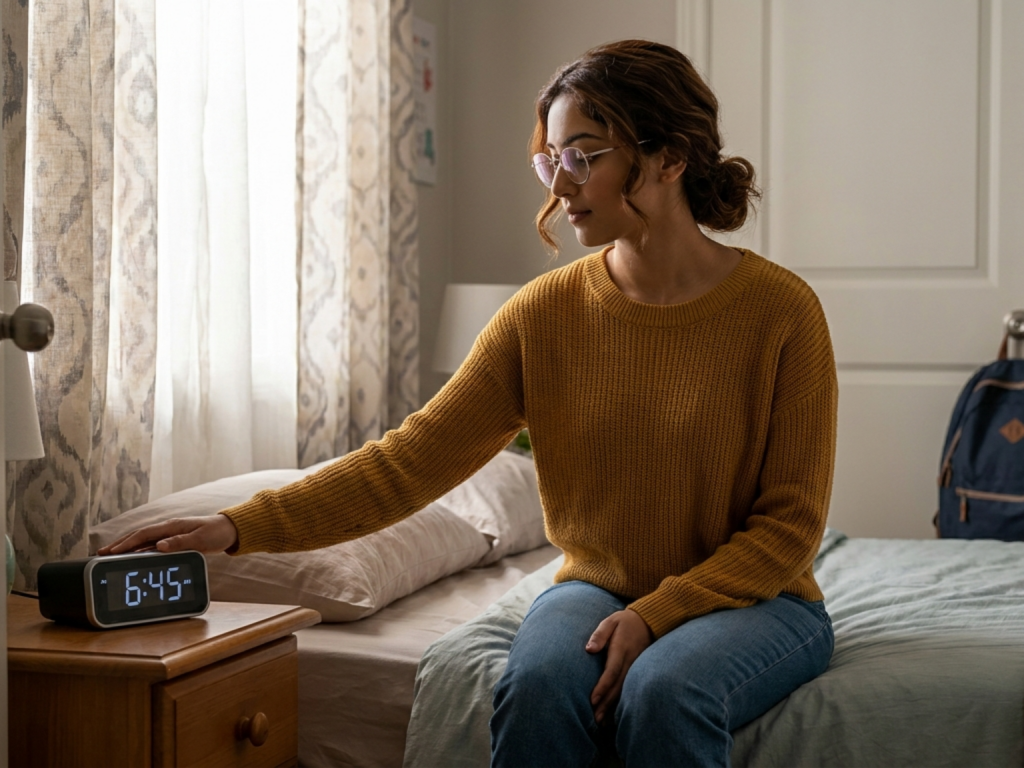
Teen sleep can be frustrating for families: a young person may seem wide awake late at night, exhausted in the morning, and then sleep for hours on weekends. This pattern is not simply laziness or poor motivation. Adolescence brings real neurobiological shifts in circadian timing, sleep pressure, learning demands, emotional regulation, and independence.
A supportive approach combines realistic expectations, consistent routines, medical awareness, and collaboration with the teen. The goal is not to force sleep, but to protect enough sleep opportunity so the brain and body can do the work of growth, recovery, cognition, and mood regulation.
Highlights
Most teenagers need about 8 to 10 hours of sleep per night, and some need closer to 9 to 9.5 hours or even slightly more during periods of rapid growth or heavy demands.
Puberty commonly shifts the circadian rhythm later, making earlier bedtimes biologically difficult even when a teen is trying.
Chronic sleep restriction is linked with poorer attention, learning, emotional regulation, anxiety symptoms, depressive symptoms, and risk-taking.
A consistent wake time, morning light, reduced evening stimulation, and family-wide sleep habits are often more effective than lectures or punishment.
Persistent insomnia, loud snoring, excessive daytime sleepiness, or major mood changes should prompt discussion with a healthcare professional.
How much sleep teenagers need
Most adolescents need more sleep than many families expect. A practical target is 8 to 10 hours per night, with many pediatric sleep experts advising that teens often function best around 9 to 9.5 hours. Some may need up to about 11 hours during high growth periods, intense training, recovery from illness, or heavy cognitive demands. The right number is not determined only by age; it is also reflected in daytime function.
A teen who wakes reasonably easily, stays alert in class, regulates emotions, and does not rely on long weekend recovery sleep is probably closer to meeting their biologic need. In contrast, frequent morning battles, unplanned naps, falling asleep in class, headaches, irritability, or sleeping several extra hours on weekends can suggest accumulated sleep debt.
Sleep supports synaptic remodeling, memory consolidation, endocrine regulation, immune function, appetite signaling, and emotional processing. During adolescence, these systems are under heavy developmental load. Even modest nightly restriction can become clinically meaningful when repeated across the school week. Research has described a pattern in which adolescents lose substantial sleep across school years, with some data suggesting approximately 90 minutes less sleep per school night beginning around grade 6. That loss can accumulate quietly until exhaustion feels normal.
Why teens naturally fall asleep later
Teen sleep timing is shaped by two interacting systems: circadian rhythm and homeostatic sleep pressure. The circadian rhythm is the internal clock that helps determine when the brain expects wakefulness or sleep. Sleep pressure is the gradual buildup of the need to sleep after time awake. In puberty, melatonin secretion and circadian preference tend to shift later. This is often called teen circadian phase delay or adolescent circadian delay.
Because of this shift, a teen may not feel sleepy at 9:00 p.m. even if they are sleep deprived. Their brain may be sending a strong alerting signal at the exact time adults expect them to wind down. If school requires a 6:00 a.m. wake time, the teen is caught between a later biologic night and an early social morning.
This does not mean schedules are hopeless. Circadian rhythms are responsive to cues, especially light. Bright light soon after waking can help anchor the clock earlier, while bright light and emotionally stimulating activity late at night can push it later. Consistency matters because the circadian system responds to patterns, not isolated good intentions. A teen who sleeps from 2:00 a.m. to noon on weekends may feel temporarily relieved, but the delayed wake time can make Sunday night and Monday morning much harder.
What an effective teen sleep schedule looks like
An effective schedule starts with the required wake time and counts backward. If a teen must wake at 6:30 a.m. and needs about 9 hours of sleep, the sleep window should begin around 9:30 p.m. In reality, many teens need a gradual transition, such as moving bedtime and wake time earlier by 15 to 30 minutes every few nights. The schedule should include enough time for homework, hygiene, decompression, and a predictable pre-sleep routine.
A useful weekday framework may include:
- A consistent wake time, ideally varying by less than 1 hour across the week.
- Morning outdoor light or bright indoor light soon after waking.
- Physical activity earlier in the day when possible.
- Caffeine avoidance in the late afternoon and evening.
- A wind-down period of 30 to 60 minutes before bed.
- A bedroom that is cool, dark, quiet, and associated mainly with sleep.
Weekend recovery is understandable, but very late sleeping can worsen circadian misalignment. Instead of sleeping until midday, some teens do better with a short afternoon nap, typically about 20 to 30 minutes, if it does not interfere with nighttime sleep. Long evening naps often reduce sleep pressure and perpetuate late sleep onset.
The schedule should be collaborative. Teens are more likely to engage when sleep is connected to their own goals: athletic performance, mood stability, appearance, driving safety, test performance, creativity, or less conflict in the morning. A schedule imposed as punishment often triggers resistance and misses the developmental need for autonomy.
Common barriers: school, screens, caffeine, and overscheduling
Many sleep problems in adolescence are not caused by one behavior. They are produced by a system that asks teens to perform early while their biology favors later sleep. Early school start times are a major contributor. Evidence supports delaying school start times as a public health intervention that increases weeknight sleep and can improve academic outcomes. Families can advocate for healthier school schedules while also working within current constraints.
Digital devices are another common barrier, but the issue is broader than blue light alone. Screens can delay sleep through light exposure, social engagement, gaming reward loops, distressing content, and the sense that a teen must remain available. A realistic plan might include charging devices outside the bed area, using app limits, lowering brightness, and agreeing on a communication cutoff with friends. For some teens, music, audiobooks, or relaxation audio may help; for others, any device access keeps the brain activated.
Caffeine deserves direct attention. Coffee drinks, energy drinks, pre-workout products, iced tea, and some sodas can impair sleep even when consumed hours before bedtime. Adolescents vary in caffeine sensitivity, and sleep-deprived teens may use caffeine to function, creating a reinforcing cycle.
Activities also matter. Advanced coursework, jobs, sports, caregiving, and social commitments may leave too little sleep opportunity. A medically literate way to frame this is that the teen cannot obtain adequate sleep if the schedule does not contain adequate sleep opportunity. Before assuming insomnia, it is worth asking whether the calendar realistically permits 8 to 10 hours in bed.
Sleep, learning, mood, and safety
Insufficient sleep affects the adolescent brain in ways families often notice before teens do. Attention becomes less stable, working memory is reduced, and emotional reactivity increases. A sleep-restricted teen may look oppositional, apathetic, or disorganized when the underlying issue is impaired executive function.
Sleep is also linked to mental health. In non-clinical adolescent samples, insufficient sleep has been associated with poorer emotional functioning, including increased depressive symptoms, hopelessness, and anxiety. This does not mean sleep loss is the only cause of mood symptoms, and it should never be used to dismiss a teen’s distress. Rather, sleep is one modifiable physiologic factor that can worsen or improve emotional resilience.
Safety is another reason to take teen sleep seriously. Drowsiness impairs reaction time, vigilance, and judgment. For teens who drive, early morning commutes after short sleep can be dangerous. Sleep deprivation may also increase impulsivity and risk-taking. Families may need to set compassionate but firm limits around driving, late practices, or work shifts when a teen is clearly sleep impaired.
Academic concerns should be viewed through this lens as well. More studying at the expense of sleep can backfire because memory consolidation and cognitive flexibility depend on adequate sleep. Protecting sleep is not a luxury competing with achievement; it is part of the biologic foundation that makes achievement sustainable.
When to consider a sleep disorder or medical concern
Not every teen sleep difficulty is explained by habits or school demands. Medical and behavioral sleep disorders can occur in adolescence and deserve evaluation. Consider speaking with a pediatrician, family physician, mental health clinician, or pediatric sleep specialist evaluation if problems are persistent, impairing, or worsening despite reasonable schedule changes.
Possible concerns include insomnia disorder, delayed sleep-wake phase disorder, restless legs syndrome, periodic limb movement disorder, obstructive sleep apnea, narcolepsy, medication effects, pain, reflux, asthma symptoms, and mental health conditions. Habitual loud snoring, witnessed pauses in breathing, gasping, morning headaches, or significant daytime sleepiness warrant particular attention. Sleep apnea can occur in teens of different body sizes and should not be excluded based on appearance alone.
Delayed sleep-wake phase disorder may be suspected when a teen consistently cannot fall asleep until very late and has extreme difficulty waking for school, yet sleeps well and feels better when allowed a later schedule. Management may involve careful timing of light exposure, behavioral scheduling, and sometimes medical guidance. Families should avoid experimenting with supplements or medications without clinician input, especially if the teen has depression, bipolar disorder risk, epilepsy, chronic illness, or takes other medicines.
A sleep diary for children and teens can be very helpful before an appointment. Track bedtime, estimated sleep onset, awakenings, wake time, naps, caffeine, medications, exercise, screen cutoff, and daytime sleepiness for 1 to 2 weeks. This information helps distinguish insufficient sleep opportunity from circadian delay, insomnia, hypersomnia, or fragmented sleep.
How parents can help without turning sleep into a battle
Support works better than blame. Many teens already know they are tired and may feel ashamed, criticized, or trapped by obligations. Parents can begin by validating the difficulty: the teen brain really does tend to run later, and early school mornings are hard. From there, the family can problem-solve.
Parents can model the same principles they recommend: regular sleep and wake times, limited late caffeine, device boundaries, and respect for wind-down time. A family culture that treats sleep as basic health, not weakness, is more persuasive than repeated reminders directed only at the teen.
Useful questions include: What time do you need to wake to feel less rushed? Which evening obligation is most likely to push bedtime later? What helps your brain power down? What would make mornings less miserable? The answers may reveal solvable barriers such as late laundry, homework starting too late, phone notifications, anxiety before tests, or an overly long commute.
Some teens benefit from environmental scaffolding rather than direct control. Examples include a visible charging station outside bedrooms, a morning light routine, alarms placed across the room, prepared breakfast options, and a quiet household period near bedtime. If conflict is intense, consider involving a healthcare professional, therapist, or school counselor. Sleep is a health behavior, but it is also embedded in family dynamics, academic pressure, and adolescent autonomy.
When to seek professional help
- A teen regularly sleeps in class, cannot stay awake while driving, or has dangerous drowsiness.
- Loud habitual snoring, gasping, witnessed breathing pauses, or morning headaches are present.
- Sleep problems occur with depression, anxiety, self-harm thoughts, mania-like symptoms, or major behavior change.
- Insomnia, delayed sleep timing, or daytime sleepiness persists despite consistent sleep opportunity.
- Do not start sleep medications, melatonin, or supplements for a teen without clinician guidance.
Tools & Assistance
- Keep a 1- to 2-week sleep diary including bedtime, wake time, naps, caffeine, screens, and daytime sleepiness.
- Schedule a pediatric or family medicine visit if sleep problems are persistent or impairing.
- Ask the school counselor about workload, start-time advocacy, and schedule adjustments when sleep loss is severe.
- Create a family charging station outside bedrooms for overnight devices.
- Use morning sunlight exposure and a consistent wake time as circadian anchors.
FAQ
Is it normal for a teenager to stay up late?
A later sleep preference is common after puberty because the circadian rhythm shifts later. However, chronic short sleep, severe morning impairment, or inability to function during the day should not be ignored.
Should teens sleep in on weekends?
Some recovery sleep is understandable, but sleeping several hours later can shift the body clock and make school nights harder. A consistent wake time with only modest weekend variation is usually more helpful.
Are naps good or bad for teenagers?
Short afternoon naps of about 20 to 30 minutes may help some sleep-deprived teens. Long naps or evening naps can reduce sleep pressure and worsen late bedtime.
How do I know if my teen is getting enough sleep?
Look at daytime function: alertness, mood regulation, school performance, morning waking, and need for catch-up sleep. If concerns persist, discuss them with a healthcare professional.
Can lack of sleep affect teen mental health?
Yes. Insufficient sleep is associated with poorer emotional functioning, including more anxiety and depressive symptoms, although it is not the only possible cause. Mood symptoms deserve careful professional attention.
Sources
- National Center for Biotechnology Information (NCBI) / PubMed Central — Sleep in adolescence: physiology, cognition and mental health
- Johns Hopkins Medicine — Teenagers and Sleep: How Much Sleep Is Enough?
- National Sleep Foundation — What To Know about Teens and Sleep
Disclaimer
This article is for general educational purposes only and does not diagnose or treat medical conditions. For persistent sleep problems, mood concerns, breathing symptoms during sleep, or medication questions, consult a qualified healthcare professional.


















Please log in to leave a comment.